Slab Leak Detection in Rancho Palos Verdes, CA
In Short
Slab leak detection finds hidden water line failures beneath your home's concrete foundation before they cause major damage. In Rancho Palos Verdes, CA, the first step is a short call: describe the signs you have noticed, and we will connect you with an independent local specialist who pinpoints the leak.
Signs of a Slab Leak and What Causes Them
A slab leak is a pressurized water line failure beneath your home's concrete foundation. Because the pipe itself is buried and invisible, the first clues are almost always indirect. Rancho Palos Verdes homeowners most often notice one or more of these warning signs:
- A water bill that climbs steadily with no change in household usage.
- The sound of running or hissing water when every tap and appliance is off.
- Warm or damp spots on tile, stone, or wood floors.
- Carpet that feels damp, or flooring that looks discolored or buckled.
- A water heater that cycles far more often than it used to.
- Noticeably low water pressure at sinks and showers.
- New cracks in tile, concrete, or stucco near the base of walls.
- A persistent musty odor along baseboards or in low rooms.
Under-slab pipes fail for several reasons. Age leads the list: much of the Palos Verdes Peninsula was built from the 1950s through the 1970s with copper water lines run directly beneath the slab, and after five or six decades that copper can develop pinhole leaks. Water chemistry is the second culprit — mineral-heavy or chemically aggressive water corrodes copper from the inside out. Outside the pipe, shifting soil stresses rigid lines, and in parts of Rancho Palos Verdes, especially around Portuguese Bend, the ground is known to move. High static water pressure, original installation shortcuts, and abrasion where pipe rubs against concrete round out the common causes.
If you recognize these signs, the next move is straightforward: Call Now at (833) 713-2101 and describe what you are seeing. You will be connected with an independent local plumbing professional serving Rancho Palos Verdes who can confirm whether a slab leak is really the problem.
How Professional Slab Leak Detection Works, Step by Step
Professional detection is a process of elimination that narrows the leak down to a precise spot — not a guess, and not exploratory demolition. Here is how an independent specialist typically works through it:
- Intake and history. When you call, you will be asked what you have noticed: the water bill trend, sounds, warm spots, and the age of the home. This history tells the technician where to start.
- Meter test. With all water off in the house, the technician watches the water meter. A spinning meter with no fixtures running confirms water is escaping somewhere.
- Main isolation. Shutting the house main and watching the meter separates a service-line leak (between meter and house) from a leak under the slab.
- Hot versus cold isolation. Valves at the water heater isolate the hot side from the cold side, identifying which line is losing pressure.
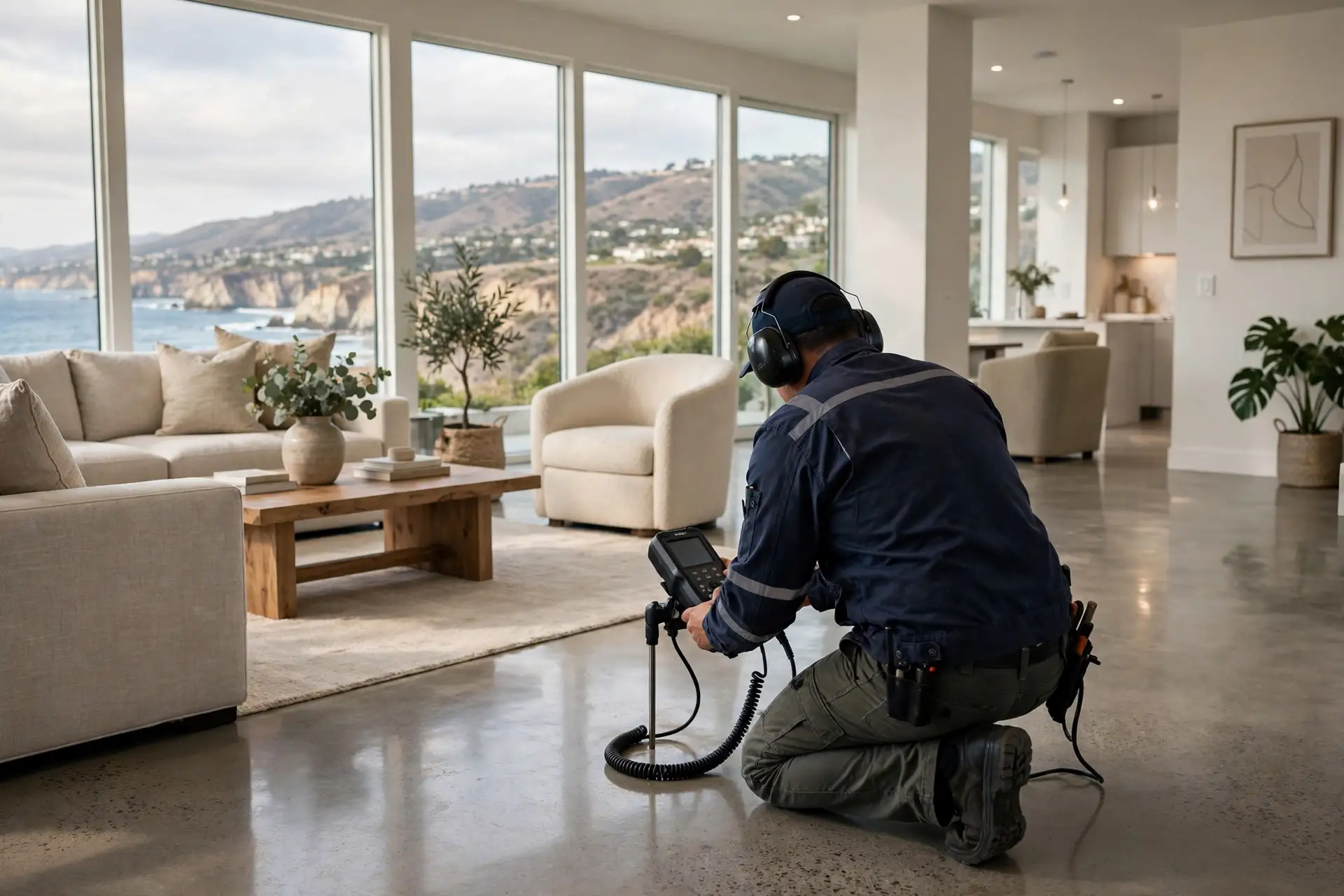
- Acoustic survey. Sensitive ground microphones listen through the slab for the distinct hiss of pressurized water escaping. The loudest point marks the leak's neighborhood.
- Confirmation. Thermal imaging, pressure testing, or tracer gas verifies the acoustic finding before anyone talks about opening concrete.
- Marking and reporting. The confirmed location is marked on the floor and documented in a written findings report you can keep for repair quotes or insurance records.
The whole point of this sequence is to avoid unnecessary damage. Concrete gets opened only after the leak's location is confirmed, and only as much as the repair requires. To start the process, Ask a Pro at (833) 713-2101 — a short conversation is all it takes to get a qualified specialist pointed at your home.
Equipment Used to Find Slab Leaks
Modern slab leak detection relies on instruments, not hunches. The independent professionals we connect you with use professional-grade equipment chosen for accuracy through concrete and flooring:
- Acoustic ground microphones and electronic amplifiers. These pick up the high-frequency sound of water escaping a pressurized pipe and help triangulate the loudest point.
- Leak noise correlators. Sensors placed at two contact points compare the arrival time of leak noise to calculate the leak's position along a pipe run.
- Thermal infrared cameras. These visualize temperature differences through flooring — especially useful for hot water line leaks, which show up as warm trails.
- Pin and pinless moisture meters. These map how far dampness has spread through flooring and sub-base, which helps separate the leak point from migrated water.
- Pressure gauges and test rigs. Isolated line segments are pressurized and monitored for decay, proving which branch is compromised.
- Tracer gas systems. A safe hydrogen-nitrogen mix introduced into a drained line escapes at the breach and is detected at the surface with a sensitive sniffer.
- Electromagnetic pipe locators. These trace the path of metallic pipe under the slab so findings can be mapped against the actual pipe layout.
No single instrument does the whole job. A thorough technician cross-checks at least two methods before marking a location, because cutting concrete in the wrong place is expensive for everyone. If you want this level of rigor applied to your home, Book Service at (833) 713-2101 and get connected with a specialist who works this way.
Safety and Precautions During Detection
Detection itself is non-invasive — nobody should be breaking concrete during the diagnostic visit — but there are still safety matters worth knowing about before and during the appointment:
- Water near electricity. If water is surfacing near outlets, appliances, or the electrical panel, stay clear and mention it on the call so the technician can plan accordingly.
- Do not demolish on a hunch. Jackhammering a slab without a confirmed location risks hitting post-tension cables, electrical conduit, or drain lines — and it will not be covered as a professional mistake if you did it yourself.
- Older flooring deserves caution. Many 1950s–1970s Rancho Palos Verdes homes have original vinyl tile or sheet flooring that may contain asbestos. A reputable professional will not grind or demolish suspect flooring without proper handling.
- Know your shutoffs. Before the visit, locate your house main shutoff valve (often near the front hose bib or in the garage) and the water heater shutoff. If the leak worsens, you can stop the flow in seconds.
- Limit the water damage. Move rugs, boxes, and furniture off damp areas, and run fans if you have them. Detection finds the leak; mitigation limits what it ruins while you wait.
- Verify before authorizing repairs. A marked location plus a written findings report is what a repair quote should be based on. Do not approve concrete work from a verbal "it's probably here."
These precautions protect your home, your health, and your wallet. When you are ready for a careful, methodical diagnosis rather than guesswork, Contact Us Now at (833) 713-2101.
Slab Leaks in Rancho Palos Verdes: Local Factors
Rancho Palos Verdes presents a specific set of conditions that make slab leaks both more likely and more worth catching early:
- 1950s–1970s construction. The great majority of Peninsula homes were built in this window with copper supply lines buried beneath the slab. That pipe is now 50 to 70 years old — squarely in the age range where pinhole leaks begin.
- Hillside lots and soil movement. Many RPV homes sit on graded hillside pads. Seasonal soil expansion and contraction flex rigid copper lines, and the Portuguese Bend area is famous for slow landslide movement that stresses everything buried, including plumbing.
- Expansive clay soils. Portions of the Peninsula sit on clay that swells when wet and shrinks when dry. That cycle heaves and settles slabs, working joints and stressing pipe.
- Long pipe runs. Sprawling single-story ranch homes — the dominant local architecture — mean long under-slab runs with more joints and more pipe exposed to soil conditions.
- High-value finishes. Travertine, hardwood, and stone floors are common in local homes. Finding the leak precisely matters more here because every unnecessary square foot of demolition is costly to restore.
- Water chemistry. Local supplies can be moderately hard and treated with chloramines, both of which contribute to interior copper corrosion over decades.
None of this means a slab leak is inevitable — but it does mean the classic signs deserve prompt attention rather than a wait-and-see approach. An independent local specialist who works these neighborhoods weekly understands these patterns. Call Now at (833) 713-2101 to get one pointed at your home.
→ electronic methods that pinpoint the leak to within inches
→ what to do when water is actively coming through the floor
→ repair options once the leak is located
Suspect a Slab Leak? Talk to a Specialist Today
One call connects you with a local slab leak professional serving Rancho Palos Verdes, CA — day or night.
Call (833) 713-2101