Hot Water Line Slab Leak Repair in Rancho Palos Verdes, CA
In Short
Hot water line slab leak repair fixes failures in the heated supply lines running beneath your foundation — the cause behind warm floors and water heaters that never shut off. In Rancho Palos Verdes, CA, the first step is a call to (833) 713-2101, and we will connect you with an independent local specialist.
Telltale Signs of a Hot Water Slab Leak
Hot-side slab leaks have a signature that cold-side leaks do not: heat. If you notice any of the following, the hot water line under your slab belongs at the top of the suspect list:
- Warm or hot spots on the floor. Bare feet find these before eyes do — a patch of tile or wood that is inexplicably warm, often near bathrooms or the kitchen.
- A water heater that never rests. The burner or elements cycle constantly because heated water is pouring out under the slab as fast as the tank makes it.
- Soaring gas or electric bills. You are paying to heat water that never reaches a tap. Many homeowners discover the leak from the utility bill, not the floor.
- Hot water that runs out fast — or takes forever to arrive. Both can indicate the hot line is losing volume underground.
- The sound of running water near the water heater. With all fixtures off, a hiss or rush around the heater area points at the hot distribution piping.
- Damp, warm carpet or buckling wood. Moisture plus warmth together is a near-certain hot-side indicator.
- Cracks in tile with warm edges. Sustained heat cycling can stress flooring directly above the leak.
Hot leaks waste money faster than cold leaks because every gallon lost was paid to heat. If several of these signs line up, do not wait for visible flooding — Call Now at (833) 713-2101 and get an independent local specialist on it.
Why Hot Lines Fail Under Slabs
Hot water lines live a harder life than cold lines, and under a slab that difference compounds:
- Thermal cycling. Hot lines expand when the heater fires and contract as they cool, thousands of times a year. That constant movement works joints, abrades pipe where it touches concrete, and fatigues copper at stress points.
- Accelerated corrosion. Heat speeds every chemical reaction, including the pitting corrosion that perforates copper. Hot-side copper of the same age as cold-side copper is consistently in worse condition.
- Recirculation loops. Homes with instant-hot recirculation pumps keep hot water moving through the loop continuously — more flow hours, more erosion-corrosion, and faster wear at elbows and tees.
- Water heater pressure and temperature. Overly high tank temperature or a failed expansion control raises pressure spikes in the hot system, hammering weak points.
- Original 1950s–1970s copper. The Peninsula's mid-century homes ran bare copper hot lines directly under slabs with no sleeving — five-plus decades of heat cycling on unsleeved copper is exactly the recipe for pinhole failures.
- Dielectric corrosion at the heater. Where steel tank nipples meet copper lines without proper dielectric separation, galvanic corrosion attacks the joint — sometimes the first failure point in the whole hot system.
Understanding the cause shapes the fix: a leak driven by thermal cycling in 60-year-old copper argues differently than a single bad joint. A specialist diagnoses the mechanism, not just the hole. Ask a Pro at (833) 713-2101 to get that diagnosis.
The Hot Water Line Repair Process, Step by Step
- Confirm it is the hot side. Closing the water heater's outlet or inlet valve and watching the meter proves the loss is on the hot distribution piping — not the cold lines, not the service line.
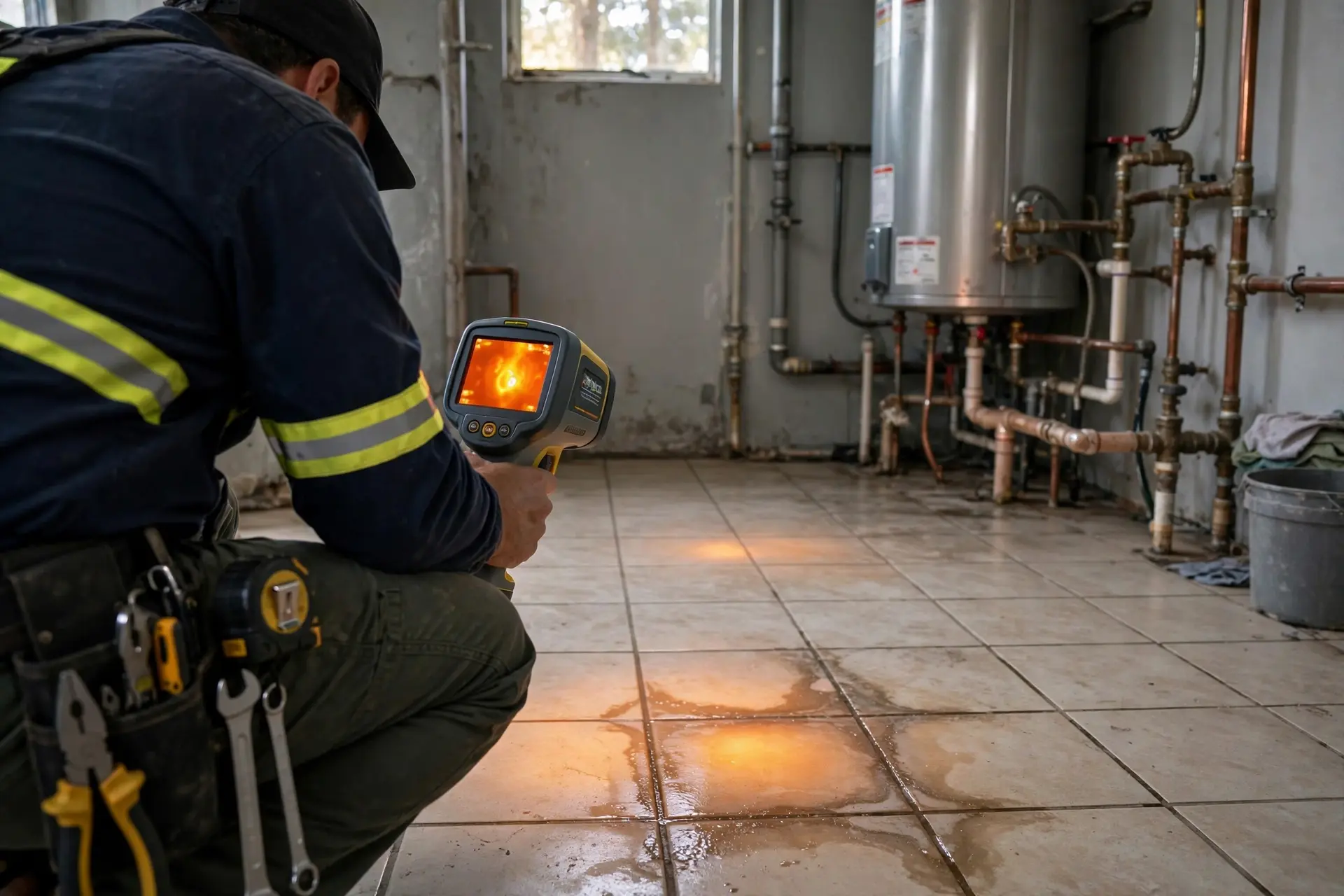
- Thermal tracing. An infrared camera scans floors for the warm plume escaping water creates. On hot leaks this is often dramatically clear, tracing the leaking run like a map.
- Acoustic confirmation. Ground microphones verify the thermal finding — two methods in agreement before anything is marked.
- Repair-versus-reroute decision. Hot lines are prime reroute candidates: running a new insulated line overhead through the attic abandons the failing under-slab copper entirely and removes it from thermal cycling stress. Spot repair through the slab remains appropriate for isolated failures in otherwise sound pipe.
- Water heater check. The heater is inspected as part of the job — a constantly-firing heater may have a scaled tank or failing controls that contributed to the failure, and the expansion tank (if present) is checked.
- Execution and insulation. Whether the fix is a spot repair or a reroute, new hot piping is insulated to reduce heat loss and thermal movement — the original bare runs are not repeated.
- Pressure test and verification. The hot system is pressurized, held, and verified; the heater is restarted properly and checked for normal cycling before the job closes.
Hot-side work has one extra dimension cold-side work does not: the water heater itself is part of the system under repair. Make sure whoever does the job treats it that way. Book Service at (833) 713-2101 to get connected.
Equipment and Materials for Hot Line Repairs
- Infrared thermal cameras. The defining instrument for hot-side work — they render the escaping heat as a visible trail through flooring, often locating the run before acoustic gear is even unpacked.
- Acoustic ground microphones. Confirm the thermal indication and tighten the mark to inches.
- Insulated PEX or sleeved copper. Replacement hot piping is insulated — reducing standby heat loss, quieting expansion noise, and protecting against the thermal cycling that helped kill the original line.
- Expansion tanks. Where thermal expansion has been hammering the system, a properly sized and pressurized expansion tank absorbs the pressure spikes.
- Recirculation controls. If a recirc pump contributed to erosion-corrosion, timer or demand controls reduce its run hours without sacrificing convenience.
- Dielectric fittings. Correct separation where copper meets the steel heater nipples stops galvanic attack at the tank.
- Pressure test rigs. The repaired hot system is tested at pressure before burial or close-up — same standard as any slab repair.
The material details matter more on hot lines because heat punishes every shortcut. If you want the repair specified for hot service rather than generic pipe work, Contact Us Now at (833) 713-2101.
Safety Precautions for Hot Water Slab Leaks
- Scalding risk is real. Water escaping a hot line can be 130°F or hotter. Keep bare feet, children, and pets off warm wet flooring, and do not handle the water with unprotected hands.
- Water heater shutdown procedure. Close the cold inlet valve first, then turn the gas control to pilot or off — or switch off the electric breaker. A heater firing with its water draining away can overheat and become dangerous.
- Do not relight gas equipment yourself. After the repair, the professional restarts and verifies the heater. Relighting and venting checks belong to qualified hands.
- Pressure relief awareness. Never cap, plug, or valve off a water heater's temperature-and-pressure relief line. If the relief valve is discharging, that is the heater telling you something is wrong — report it, do not silence it.
- Steam and humidity. A hot leak under flooring drives warm moisture into wall cavities — drying after the repair matters as much as the pipe fix to prevent mold.
- Electrical caution. As with any slab leak, keep water away from outlets and appliances, and de-energize wet areas from a dry position.
Hot water adds an injury dimension that cold leaks do not have — treat warm flooding with more respect, not less. For professional handling, Call Now at (833) 713-2101.
Hot Water Slab Leaks in Rancho Palos Verdes Homes
- Garage-sited water heaters. The typical RPV layout puts the heater in the garage with long hot runs under the slab to distant bathrooms — long runs mean more pipe exposed to thermal cycling and more joints.
- Mid-century bare copper. Original hot lines from the 1950s–1970s were run unsleeved directly in contact with concrete and soil — the worst-case combination for heat-driven corrosion, and now 50-plus years into service.
- High-value flooring over hot runs. Travertine and stone conduct heat beautifully, which helps thermal detection — but sustained heat from an undetected leak can also damage adhesives and finishes, another reason not to delay.
- Summer attic heat and reroutes. When rerouting is chosen, new hot lines run through attics that get extremely hot in Peninsula summers — proper insulation and strapping for expansion are non-negotiable details a local specialist plans for.
- Hard water scale. Mineral-heavy local water scales heater tanks and elements, making heaters work harder and run hotter — compounding stress on already-aged hot distribution piping.
- Pressure zones. Elevated streets see higher static pressure; combined with thermal expansion spikes, hot-side weak points fail sooner. Pressure measurement during the visit often guides the full repair plan.
Local homes fail in local patterns, and hot lines are where those patterns show first. An independent specialist who works the Peninsula weekly recognizes them on sight. Ask a Pro at (833) 713-2101.
→ how electronic location pinpoints hot lines
→ rerouting as an alternative to breaking the slab
→ general slab leak warning signs
Suspect a Slab Leak? Talk to a Specialist Today
One call connects you with a local slab leak professional serving Rancho Palos Verdes, CA — day or night.
Call (833) 713-2101