Foundation Leak Repair in Rancho Palos Verdes, CA
In Short
Foundation leak repair addresses water entering through cracks, cold joints, and footings — distinct from pressurized pipe leaks under the slab. In Rancho Palos Verdes, CA, where hillside drainage and soil movement stress foundations, the first step is a call to (833) 713-2101, and we will connect you with an independent local specialist for assessment.
Slab Pipe Leaks vs. Foundation Water Intrusion
Two completely different problems get called "slab leaks," and the fix for one does nothing for the other:
- Pressurized pipe leak. A supply line under the slab breaches; water is forced out continuously, the meter spins with everything off, and the leak runs whether it rains or not. The fix is plumbing: locate, repair, reroute, or repipe.
- Foundation water intrusion. Groundwater or surface water enters through cracks, cold joints, or porous concrete — typically after rain or irrigation, intermittent rather than constant, and the water meter does not move. The fix is waterproofing and drainage, not plumbing.
Treating intrusion as a pipe leak means cutting concrete to find plumbing that is not leaking; treating a pipe leak as intrusion means sealing cracks while pressurized water keeps escaping. The diagnostic question — "does the meter spin with everything off?" — separates them in minutes, and every competent assessment starts there. If you are unsure which problem you have, Ask a Pro at (833) 713-2101 — describing whether the wetness follows rain or is constant will point the specialist the right way.
Signs of Foundation Water Problems
- Dampness at the wall-floor joint. Water wicking up where the slab meets the foundation wall or stem wall is the classic intrusion signature.
- Efflorescence. White, chalky mineral deposits on concrete or masonry — proof that water has been moving through the material, even if it is dry today.
- Cracks that leak after rain. Foundation or slab cracks that weep or drip following storms, then dry out between them.
- Musty odor in low rooms. Persistent dampness feeding mold or mildew where ventilation is poorest.
- Staining and discoloration. Rust-colored or dark stains tracking down foundation walls or across slab edges.
- Water after irrigation. Wetness that appears on watering days implicates surface water management rather than plumbing.
- Heaving or uneven slabs. Expansive soil plus chronic moisture can lift slab sections — a structural symptom, not just a wet one.
Note the pattern: intrusion signs are intermittent and weather-linked, while pipe-leak signs are constant. Tracking when the wetness appears is genuinely useful diagnostic information — keep a simple log before the assessment visit. Call Now at (833) 713-2101 when you are ready for that assessment.
What Causes Foundation Leaks
- Hillside water pressure. On sloped Peninsula lots, groundwater and irrigation runoff move downhill and press against the uphill foundation — hydrostatic pressure that exploits every crack and joint.
- Poor grading. Soil sloping toward the foundation instead of away from it delivers roof and surface water directly to the footing. This is the most common correctable cause.
- Foundation cracks. Shrinkage cracks, settlement cracks, and stress cracks from soil movement all become water paths once hydrostatic pressure exists behind them.
- Failed or absent waterproofing. Mid-century foundations often have minimal original waterproofing, long since deteriorated — they were built in an era of different standards.
- Soil movement. In movement-prone areas, shifting ground opens new cracks and widens old ones faster than static soil ever would.
- Irrigation against the house. Sprinklers soaking the foundation perimeter create artificial hydrostatic pressure — a homeowner-correctable cause worth checking first.
- Clogged or missing drainage. Failed footing drains, clogged area drains, or downspouts discharging at the foundation all concentrate water where it does the most harm.
Most intrusion has a water-management cause and a water-management solution — the repair addresses where the water comes from, not just where it appears. For an assessment that traces the water to its source, Book Service at (833) 713-2101.
The Foundation Repair Process, Step by Step
- Source diagnosis. Meter test first (ruling pipe leaks in or out), then moisture mapping, grading inspection, and drainage review. The assessment identifies the water's path, not just its entry point.
- Water management corrections. Grading adjusted to slope away from the foundation; downspouts extended; irrigation redirected. These are often the highest-value steps in the entire project.
- Crack repair. Structural and leaking cracks are addressed by epoxy or polyurethane injection — materials injected under pressure that fill the crack through the wall's full depth and bond or flex with it.
- Joint and penetration sealing. Cold joints, pipe penetrations, and the wall-footing junction get proper sealant systems where they are the entry paths.
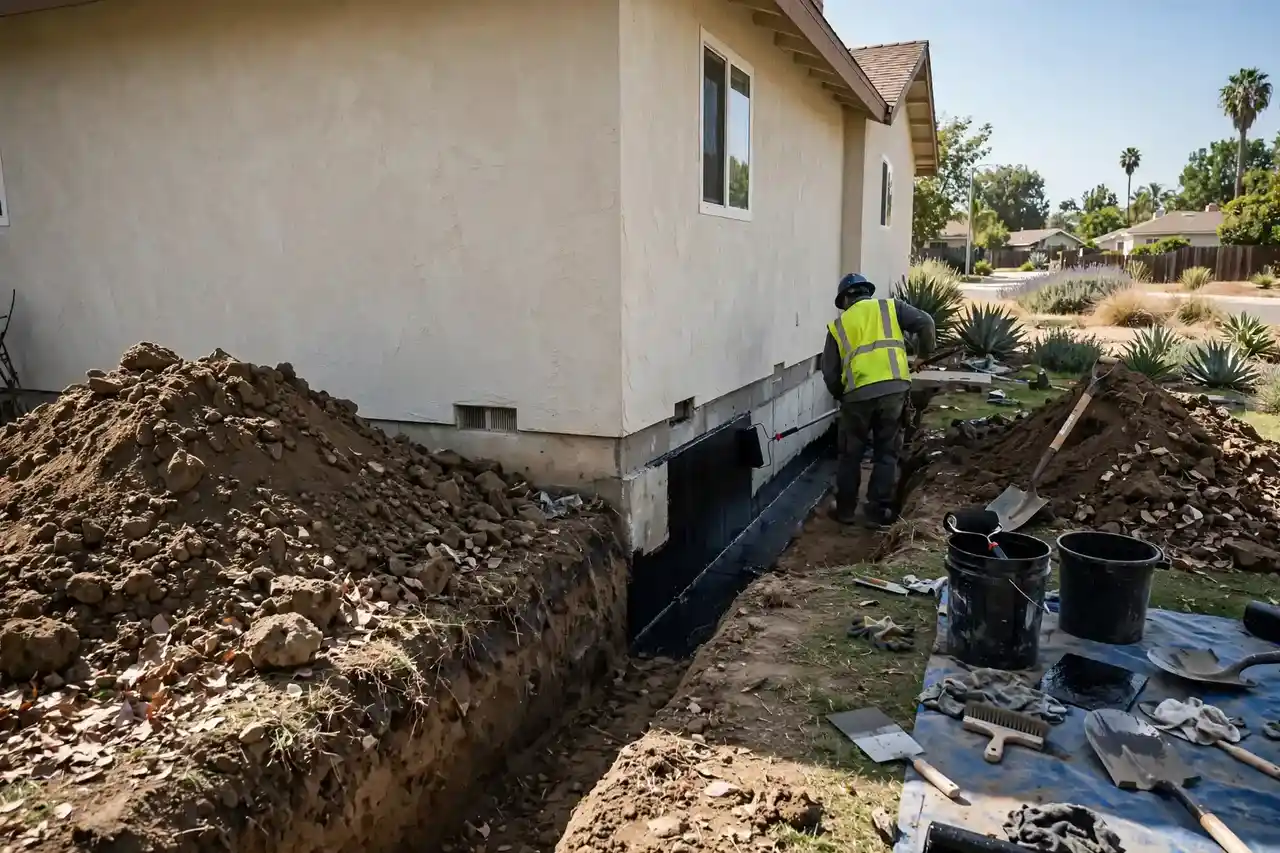
- Exterior waterproofing. Where conditions warrant, the foundation's exterior is excavated, cleaned, and waterproofed with membrane systems, plus drainage board and footing drains to carry water away.
- Interior drainage. Where exterior work is impractical — finished hardscaping, zero lot lines — interior perimeter drainage with a sump system manages water that enters, directing it out before it reaches living space.
- Verification. Post-repair, the foundation is monitored through wet weather; moisture readings confirm the intrusion path is closed.
The sequence matters: sealing cracks without fixing the water pressure behind them fails; managing water without sealing the paths leaves entry points. A complete proposal addresses both. Contact Us Now at (833) 713-2101 to get that complete assessment.
Materials, Equipment, and Methods
- Epoxy injection. For structural cracks — low-viscosity epoxy injected under pressure fills the full crack depth and restores the concrete's monolithic strength.
- Polyurethane injection. For actively leaking cracks — expanding foam that chases water through the crack and seals it, remaining flexible with minor movement.
- Waterproofing membranes. Sheet or fluid-applied membranes on excavated exterior foundation walls — the positive-side barrier that stops water before it enters.
- Drainage board and footing drains. Dimpled drainage mats plus perforated pipe at the footing that intercept groundwater and carry it to daylight or a sump.
- Sump systems. For interior drainage: perimeter channel, sealed sump basin, pump with battery backup — the mechanical answer where gravity drainage is impossible.
- Grading and drainage hardware. Sometimes the most important "material" is a shovel and a level — regrading soil and extending downspouts solves a remarkable share of intrusion cases.
- Moisture verification meters. Pin meters and thermal imaging confirm the repair actually dried the assembly — not just that it looks better.
Method selection follows the diagnosis: injection for cracks, membranes for walls, drainage for hydrostatic pressure, grading for surface water. Anyone proposing a single method for every foundation has one tool and sees every problem as its nail. For diagnosis-driven recommendations, Call Now at (833) 713-2101.
Foundation Water Issues in Rancho Palos Verdes
- Hillside hydrology dominates. Most RPV homes sit on slopes where subsurface water moves laterally against uphill foundations — hydrostatic pressure here is a design condition, not an anomaly.
- Portuguese Bend movement. In the slow-landslide zone, foundations experience ongoing micro-movement that opens and widens cracks; flexible polyurethane injection and movement-tolerant detailing suit these conditions better than rigid repairs.
- Mid-century waterproofing. 1950s–1970s foundations typically have minimal original damp-proofing, long past its service life — intrusion in these homes is often simply the original protection expiring.
- Winter rain concentration. Peninsula rainfall arrives in intense winter bursts; drainage systems sized for averages fail during cloudbursts, and that is when intrusion appears.
- Irrigation culture. Lush Peninsula landscaping means heavy irrigation against foundations — a major, correctable contributor that the assessment always checks.
- Expansive clays. Wet-dry cycling heaves slabs and stresses foundation walls, opening the cracks that become tomorrow's leak paths.
Peninsula foundations live in a demanding environment, and the repairs that last are the ones designed for it. Get an assessment from someone who works these hillsides regularly — Ask a Pro at (833) 713-2101.
→ how to tell a pipe leak from other water problems
→ documenting water damage for insurance
→ tunneling for under-slab pipe replacement
Suspect a Slab Leak? Talk to a Specialist Today
One call connects you with a local slab leak professional serving Rancho Palos Verdes, CA — day or night.
Call (833) 713-2101