How Long Do Copper Water Lines Last Under a Slab?
How Long Do Copper Water Lines Last Under a Slab?
Read the full guide →
Published October 2, 2026 • Slab Leak Repair Professionals
The most overlooked pipe-killer is invisible, measurable in five minutes, and fixable in an afternoon. If you've never checked your water pressure, this is your sign.
Ask peninsula homeowners what causes slab leaks and you'll hear "hillside soil" or "old copper." You'll rarely hear "water pressure" — yet excessive pressure is the threat multiplier behind a huge share of failures. Invisible, measurable in five minutes, correctable in an afternoon.
Residential plumbing is designed for 40-80 PSI, with 50-60 ideal. Above 80, you're in the danger zone: fixtures wear faster, heaters labor, and every joint and pipe wall — including buried ones — takes stress beyond design. Peninsula elevation changes create pressure variations lot to lot; homes downhill of pressure zones can run surprisingly high.
High pressure accelerates every cause. Corrosion: drives more water through each pit, turning slow pinholes into active leaks. Soil movement: joints fatigued by hillside creep hold at 55 PSI and fail at 95 — the ground made the weakness, pressure pulled the trigger. Seismic stress: quake-weakened joints fail sooner under high pressure. Defects: marginal joints fail years early.
Gauge on a hose bib, no water running, read in the morning. Consistently above 80? You need regulation. Test twice, days apart.
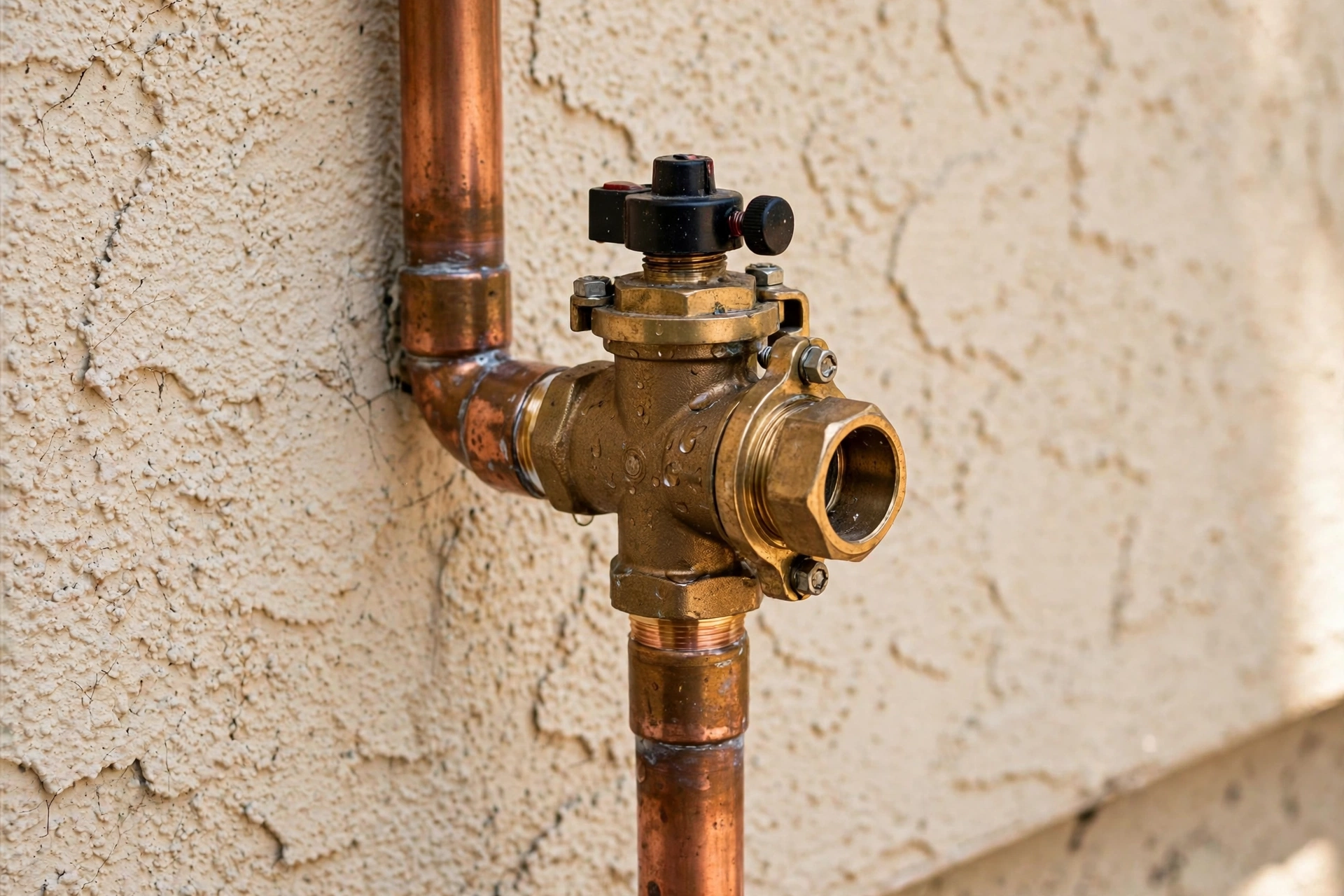
A pressure-reducing valve (PRV) at the entry holds household pressure at 55-65 PSI regardless of municipal swings. Long-lived but not immortal: components wear, mineral scale accumulates. A decade-old regulator can "creep" upward silently — annual re-testing matters. Pair it with a thermal expansion tank: a regulator with a check valve creates a closed system where heated water spikes pressure, and the tank absorbs it.
Banging pipes on shutoff, toilets refilling oddly, relief valves dripping, supply hoses failing repeatedly, pinholes in "young" copper. Any of these earns a gauge test this week.
Regulation guards all plumbing investments: heaters, repipes, reroutes, appliances. After any slab leak repair, verify pressure; fixing the pipe without addressing the pressure that helped kill it is half a job.
Never checked your pressure? Call (833) 713-2101 — we'll test it and set things right.
Peninsula topography creates pressure variations lot to lot — homes downhill of municipal pressure zones can run significantly higher than homes uphill. If your street spans an elevation grade, don't assume your pressure matches your neighbor's; test your own. New buyers should test during inspection, not after closing.
Also consider pressure when evaluating any plumbing work: a repipe or reroute without pressure verification is an incomplete job, and in high-pressure zones the regulator is as important as the pipe material. Ask your plumber to document the pressure reading with every major job — it's a five-minute measurement that belongs in the file.
Make pressure checks an annual habit, logged with dates. Regulators creep, municipal conditions shift, and the slow upward trend across years is visible only to those who watch. The gauge is fifteen dollars; the habit is priceless.
If you test and find high pressure, mention it proactively at every future plumbing visit — water heater service, fixture replacement, anything. Pressure affects the longevity of all plumbing work, and good plumbers factor it into every recommendation they make.
Also check whether your home has a thermal expansion tank paired with the regulator. A regulator with a check valve creates a closed system where heated water spikes pressure every cycle; the expansion tank absorbs those spikes. The two are a system — one without the other is half a job, and many peninsula homes have exactly that half.
Test twice, days apart, before acting — municipal pressure fluctuates, and morning readings run highest. You want the real pattern.
The gauge is fifteen dollars; the habit of checking annually is priceless.
Log every reading with the date; trends reveal what single readings cannot.
Five minutes, once a year.
Your pipes endure the peak every day — make sure the peak is one they were designed for.
Talk to a Peninsula specialist — detection, honest advice, and upfront pricing.
Call (833) 713-2101Residential plumbing is designed for 40-80 PSI, with 50-60 considered ideal. Above 80 PSI consistently, you need a pressure-reducing valve. Many peninsula homes — especially those on elevation grades — run higher than their owners realize.
Screw a pressure gauge (inexpensive at any hardware store) onto an outdoor hose bib. With no water running, open the bib fully and read the gauge — morning is best, when municipal pressure peaks. Test twice, days apart, to rule out transient spikes.
It multiplies every other cause: it drives more water through corrosion pits, finishes off joints weakened by hillside soil movement, and exposes installation defects years early. It's also hard on water heaters, appliances, and fixtures. Regulation protects the entire system.
How Long Do Copper Water Lines Last Under a Slab?
Read the full guide →Earthquake Country Plumbing: Seismic Shutoffs and Slab Leaks
Read the full guide →Slab Leak Detection Technology: From Acoustic to AI
Read the full guide →