Water Damage Restoration After a Slab Leak
Water Damage Restoration After a Slab Leak
Read the full guide →
Published October 10, 2026 • Slab Leak Repair Professionals
A slab leak's most personal consequence isn't the water bill — it's biological. Even in coastal California, chronic moisture inside your walls becomes a mold colony. What to know and watch for.
Coastal air feels fresh — until a slab leak creates a microclimate of constant moisture inside your walls. Then the ocean breeze doesn't matter. Chronic under-slab moisture wicking into wall cavities is a mold incubator anywhere, and the health consequences are real. Here's the honest picture.
Mold needs moisture, food, and warmth. A leak supplies constant moisture; drywall, wood, carpet backing, and dust supply food; the wall cavity supplies stable warmth. Colonization can begin within 24-48 hours of materials staying damp — and a slow slab leak keeps materials damp for weeks before discovery. The marine layer's humidity doesn't help; it keeps ambient moisture high enough that nothing dries quickly on its own.
Musty odors concentrated in certain rooms; allergy symptoms improving when you leave the house; spotting along baseboards; paint bubbling on lower walls; stone or tile floors that stay cool and damp in one zone. Don't dismiss localized mustiness — it's reporting something.
For healthy adults: irritation — sneezing, itchy eyes, throat irritation, headaches. For children, the elderly, and asthmatics: asthma attacks, allergic reactions, respiratory infections. The medical consensus is unsensational: mold isn't cause for panic, but it is cause for remediation. Mention suspected exposure to your doctor.
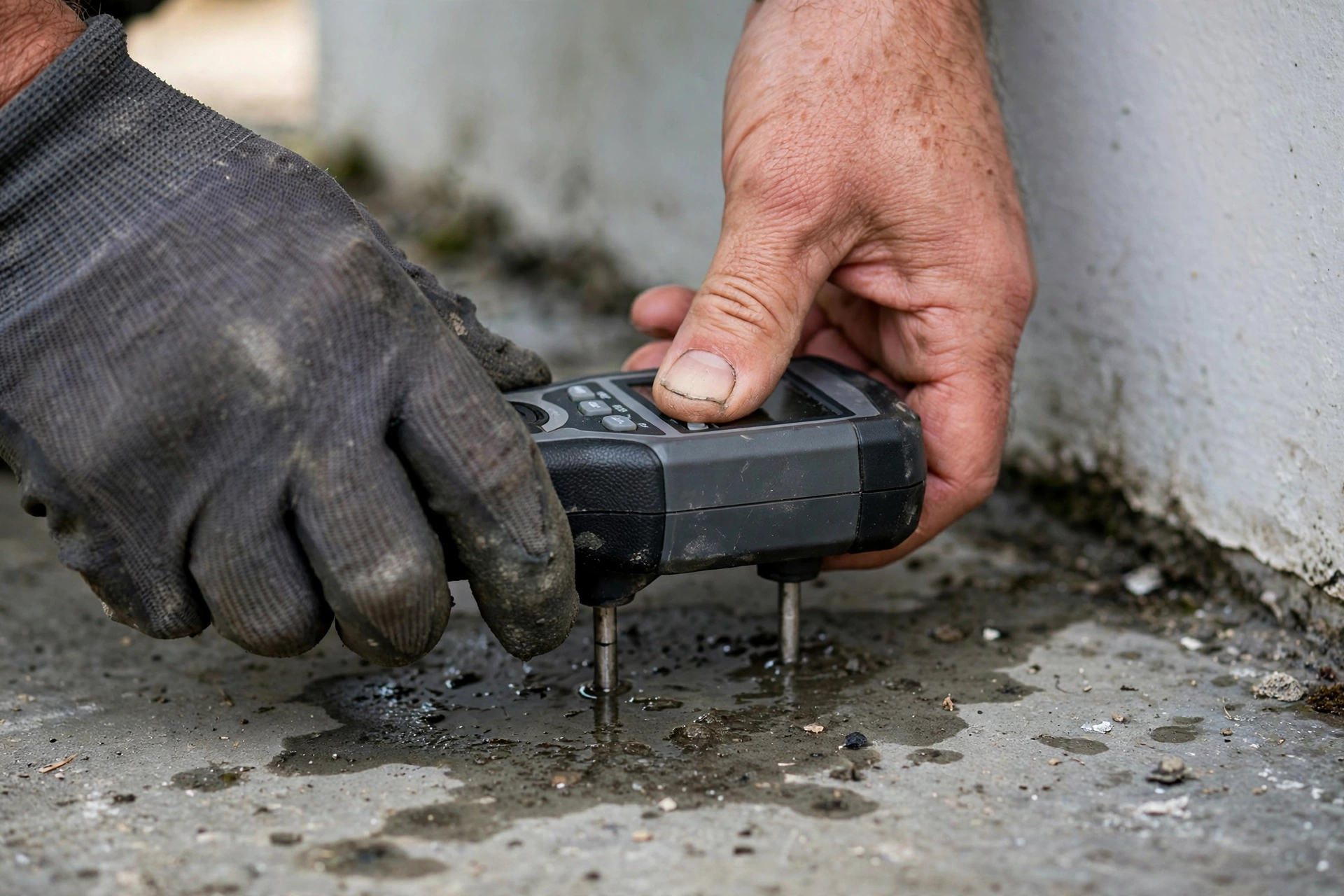
First, fix the leak. Second, dry completely — professional dehumidification with moisture-meter verification, not surface drying. Wall cavities dry slowly; verify with meters, not touch. Third, remediate — remove affected porous materials, HEPA-clean, address cavities. For extensive growth, hire licensed remediators with proper containment (sealed area, negative air pressure) — California has specific regulations for mold remediation work.
Many policies limit or exclude mold remediation while covering the leak's water damage. Read your mold provisions before you need them, document the moisture-to-mold chain with dated photos, and remediate promptly regardless — waiting converts a manageable job into a major one.
Worried about moisture or mold? Call (833) 713-2101 for fast detection.
California regulates mold remediation work with specific requirements for larger projects — including assessment, containment, and clearance standards. For significant mold growth, hire remediators familiar with California's requirements, not just general contractors. The regulatory framework exists because improper remediation spreads contamination; compliance protects your home, not just your legal standing.
Document everything with California's disclosure culture in mind: this state requires extensive seller disclosures, and mold history will come up at sale. A complete file — leak report, drying logs with meter readings, remediation scope, clearance documentation — turns a disclosure obligation into a non-event. Incomplete documentation turns it into a negotiation.
If you're a tenant, know that California law provides strong habitability protections. Report moisture issues to your landlord in writing, keep copies, and document symptoms. The state's tenant protections are meaningful — but they run on documentation, not verbal complaints.
If family members have symptoms you suspect are mold-related, bring it to your doctor explicitly: 'We had a slab leak with moisture intrusion and I'm concerned about mold exposure.' Keep a simple symptom log — who, what, when, whether it improves away from home — alongside your moisture notes. Patterns tracking occupancy are meaningful both medically and practically.
After remediation, consider independent verification when warranted — particularly with health symptoms involved or when selling. A post-remediation check confirms completion rather than appearance. Keep the full chain permanently: detection report, repair invoices, drying logs with meter readings, remediation scope and clearance.
Treat any returning localized mustiness as an early warning, not background odor — early-caught moisture is a mop-up; late-caught is a project.
Fix the leak, verify drying with meters, remediate properly — in that order, always.
Vigilance is the cheaper path — always.
Act early, document everything.
Talk to a Peninsula specialist — detection, honest advice, and upfront pricing.
Call (833) 713-2101Yes. Constant moisture wicking through the slab into wall cavities creates ideal mold conditions — moisture, food (drywall, wood, dust), and stable warmth. Colonization can begin within 24-48 hours of materials staying damp, and a slow leak keeps materials damp for weeks before discovery.
For healthy adults: irritation — sneezing, itchy eyes, throat irritation, headaches. For children, the elderly, and asthmatics: asthma attacks, allergic reactions, respiratory infections. Mention suspected exposure to your doctor if symptoms are present.
Always fix the leak first, then verify complete drying with moisture meters, then remediate. Remediating while water still intrudes is mopping with the tap running — and surfaces must be meter-verified dry before remediation begins, or mold regrows within weeks.
Water Damage Restoration After a Slab Leak
Read the full guide →Slab Leaks Under Marble and Stone Flooring
Read the full guide →Hillside Homes and Slab Leaks: Drainage and Soil Movement
Read the full guide →