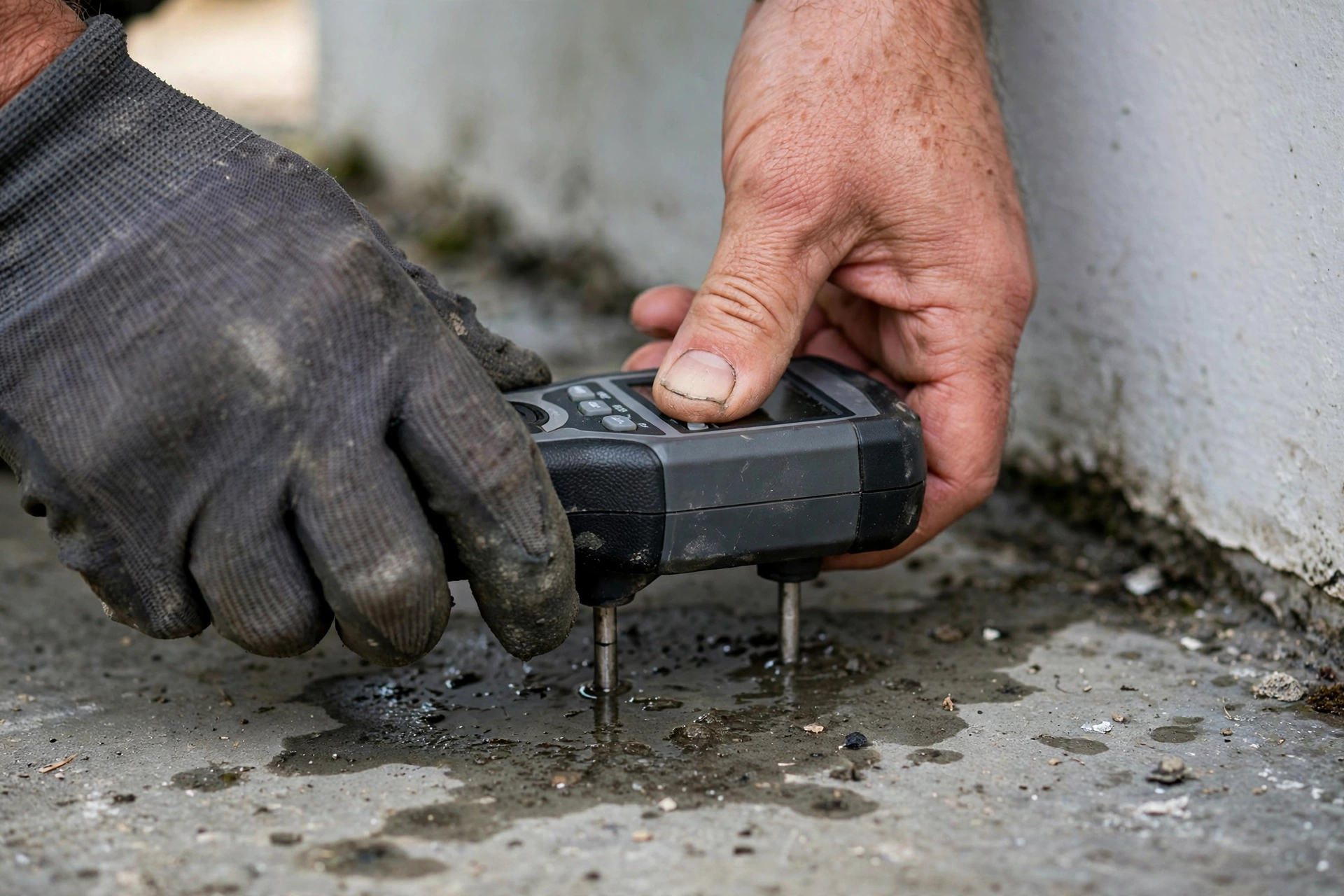
Hillside Homes and Slab Leaks: Drainage and Soil Movement
Hillside Homes and Slab Leaks: Drainage and Soil Movement
Read the full guide →
Published September 18, 2026 • Slab Leak Repair Professionals
Water under your slab comes from two completely different systems — and on the peninsula, hillside drainage issues can mimic both. How to tell a supply leak from a sewer failure.
Moisture through your slab triggers one alarm with two possible sources: a pressurized supply line leaking clean water continuously, or a drain/sewer line leaking wastewater intermittently. The tests differ, the repairs differ, the health risks differ, and insurance treats them differently. On the Palos Verdes Peninsula, there's even a third mimic — hillside drainage — making correct diagnosis especially valuable.
A slab leak is supply-side: clean water under 40-80 PSI escaping day and night. A sewer leak is drain-side: wastewater escaping a cracked, separated, or root-invaded drain pipe, flowing only when fixtures drain. Constant versus episodic — every symptom difference follows from this.
Turn off everything; watch the meter for 15 minutes. Movement means a supply leak. Stillness means the supply lines are intact and the problem is drain-side — or drainage, not plumbing at all. No home test is more decisive.
Supply leaks are constant — damp at 3 a.m. with nothing running. Sewer leaks follow usage: after showers, laundry, dishwasher cycles. Log the pattern for a few days. The nose test is conclusive: supply water is odorless; sewer leaks carry wastewater's unmistakable signature. Any sewage odor ends the debate and escalates urgency.
Hillside lots with poor drainage can push groundwater against and under slabs, producing dampness, efflorescence, and musty odors that mimic both leak types. Distinguishing features: drainage moisture often tracks rainfall and irrigation, appears at the slab's downhill edge, and — critically — doesn't move the water meter. If your meter is still and camera inspection is clean, look uphill at your drainage before assuming the worst.
Supply: isolate and pressure-test each line. Drain: camera the sewer through the cleanout. Drainage: assess grading, gutters, and subsurface water paths. When you call, report the meter result, timing pattern, and any odors — those three facts usually point the right way.
Unsure which problem you have? Call (833) 713-2101 — we'll make sure the right test shows up.
If symptoms point drain-side, the definitive test is a sewer camera inspection: a camera fed through a cleanout shows cracks, separated joints, bellies, scale, and root intrusion in real time. It takes under an hour and produces a video record you keep — documentation for repair quotes, a baseline for resale, evidence for insurance.
On peninsula hillsides, ask the technician to note the pipe's grade and bedding, not just its interior condition. Hillside sewer lines fail from the outside in — soil movement separating joints — as often as from interior deterioration. A camera operator who understands hillside installations reads the footage differently, and more usefully.
One caution: cameras show the interior, not leaks through the wall into surrounding soil. Experienced technicians go slowly at joints and correlate with your symptom pattern. If the camera is clean but episodic dampness persists after heavy fixture use, a second look is reasonable.
On peninsula hillsides, ask the camera technician to note the pipe's grade and bedding, not just its interior. Hillside sewer lines fail from the outside in — soil movement separating joints — as often as from interior deterioration. An operator who understands hillside installations reads the footage more usefully.
Also walk your yard before the technician arrives. A soggy strip between house and street with a dry interior points to the service lateral, not either under-slab system. What you see on the meter-to-house path focuses the visit before it starts.
When you call, report the meter result, the timing pattern, and any odors — those three facts usually point the right way before a single tool is unpacked.
The meter test takes fifteen minutes and determines which specialist your job needs — run it before you call anyone.
Talk to a Peninsula specialist — detection, honest advice, and upfront pricing.
Call (833) 713-2101Run the water meter test: turn off everything and watch the meter for 15 minutes. Movement means a pressurized supply leak; stillness points to the drain side. Timing also helps — supply leaks are constant, sewer leaks follow fixture use — and any sewage odor confirms the drain side immediately.
Yes. On peninsula hillsides, poor drainage can drive groundwater against and under the slab, producing dampness that mimics plumbing leaks. The meter test distinguishes them: groundwater doesn't spin your meter, but a supply leak does.
They're bad in different ways. Supply leaks waste water continuously and erode soil; sewer leaks introduce wastewater with sanitation risks. Sewer leaks also tend to face tougher insurance exclusions. Both deserve prompt professional diagnosis.
Hillside Homes and Slab Leaks: Drainage and Soil Movement
Read the full guide →Water Damage Restoration After a Slab Leak
Read the full guide →Slab Leak Detection Technology: From Acoustic to AI
Read the full guide →