Earthquake Country Plumbing: Seismic Shutoffs and Slab Leaks
Earthquake Country Plumbing: Seismic Shutoffs and Slab Leaks
Read the full guide →
Published October 6, 2026 • Slab Leak Repair Professionals
Water's coming up through the floor and the plumber is on the way. Those waiting hours feel endless — but they're when smart action prevents most of the damage. Here's the exact sequence.
It's late, water is seeping through the floor, and help won't arrive until morning. Those hours feel endless — but they're also when smart action prevents most of the damage. Here's exactly what to do, in order.
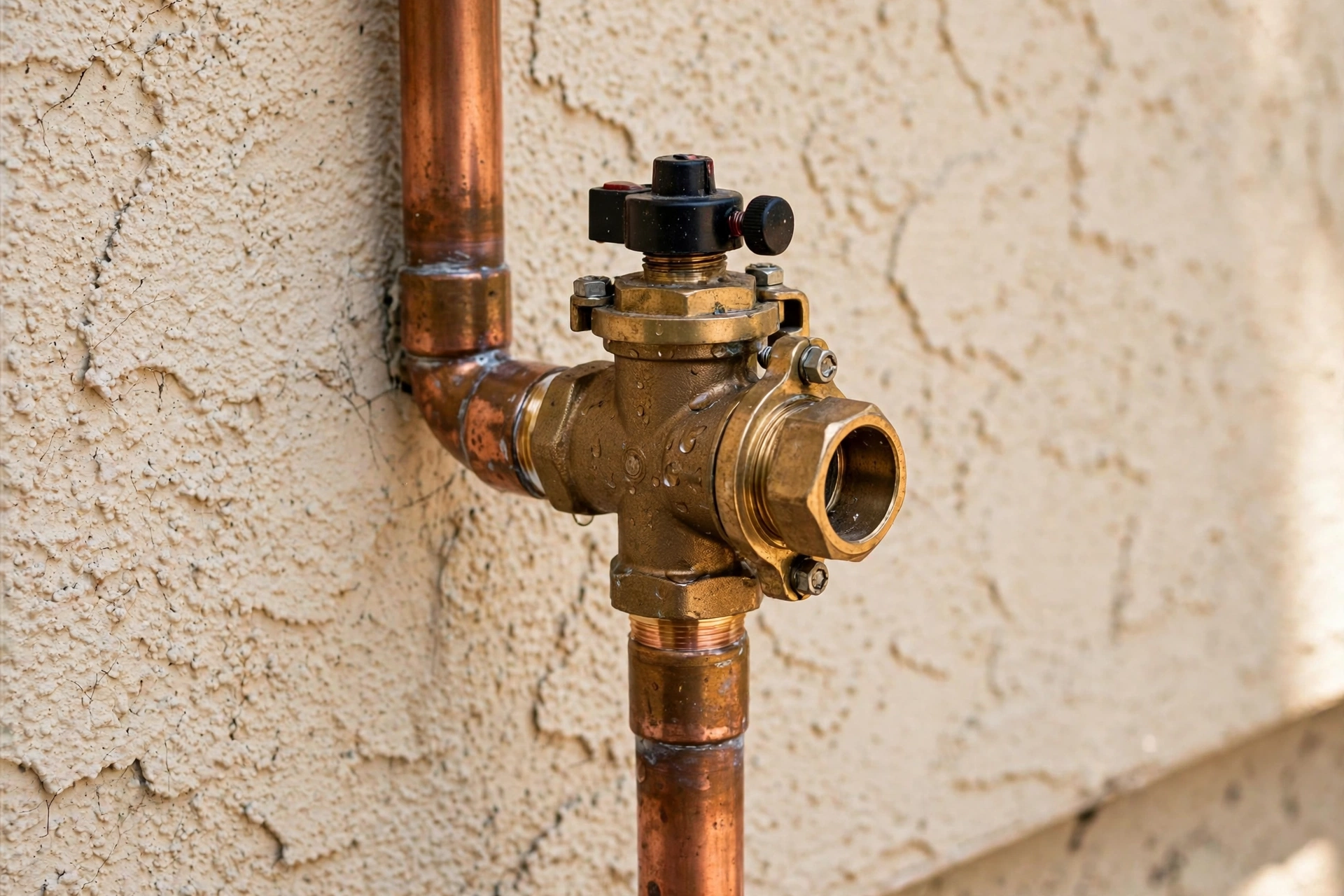
Find your main shutoff — near the meter, in the garage, or on an exterior wall — and turn it clockwise until it stops. If the valve is seized (common in coastal air), don't force it to breaking; call the water utility's emergency line for a meter shutoff. Every gallon stopped now is a gallon that doesn't go under your slab. If you have a seismic shutoff valve, verify its status too — in earthquake country, it's part of your emergency plumbing.
If only the hot side leaks and you need cold water overnight, shut the water heater's inlet valve instead — but when in doubt, kill the main.
If water nears outlets, the water heater's connections, or appliances, switch off the relevant breakers. Don't wade through standing water to reach a panel — if the panel is threatened, call the utility or fire department's non-emergency line.
Move furniture, rugs, electronics, and valuables off wet floors and away from damp walls. Peninsula homes often have stone and hardwood floors — get water off them fast; stone can stain and wood cups quickly. Lift what you can't move onto blocks. Get papers and photos to high ground.
Mop or wet-vac standing water. Run every fan across wet surfaces; run a dehumidifier if you have one. Don't tear out drywall or pull flooring yourself — disturbed materials complicate professional assessment and insurance documentation.
Before cleaning too thoroughly, photograph and video everything: water on floors, damp walls, the meter showing flow, damaged belongings. Note discovery and shutoff times. This record founds any insurance claim — and in California's disclosure environment, it becomes part of the home's permanent record.
Don't jackhammer your own slab. Don't pour leak-seal chemicals into plumbing. Don't crank the water heater to "push through." And don't wait until morning to call — get on the schedule now and get phone guidance.
Facing an emergency right now? Call (833) 713-2101 — we'll talk you through it.
If your emergency follows an earthquake, add seismic checks to the routine: inspect the water heater strapping (California code requires it — verify it held), check gas connections for odor (if you smell gas, leave and call the gas utility), and look for new cracks in walls and slab. Earthquake-triggered plumbing damage may fall under earthquake coverage rather than standard homeowner's policy — document the quake connection carefully, with the event date and your symptom timeline.
Don't restore water service until you've checked for damage. After a significant quake, run the meter test before using water normally — a broken line pressurized blindly can flood for hours before anyone notices. The patient sequence (inspect, test, then restore) prevents the second disaster.
Keep your seismic shutoff valve maintained — test it according to the manufacturer's schedule. It's the device that prevents the quake-plus-away-from-home flooding scenario, and like any safety device, it needs verification to be trustworthy.
The morning after, shift from emergency to project mode. Review your photos and add notes while details are fresh — when you noticed water, what you did, who you called. This contemporaneous record is more credible than reconstructed memories and founds both the repair plan and any claim.
Resist pressure to authorize major work while exhausted. Stabilization was the nighttime job; the permanent repair deserves daylight. Get the diagnosis in writing and decide in the morning — any reputable company will tell you the same.
Talk to a Peninsula specialist — detection, honest advice, and upfront pricing.
Call (833) 713-2101In most peninsula homes it's near the water meter at the property line, in the garage, or on an exterior wall. Find it before an emergency — not during one — and confirm the valve operates. If it's seized, have it replaced; a working shutoff is the single most important valve in your plumbing.
A seismic shutoff valve automatically stops water (or gas) flow when it detects earthquake shaking. In earthquake country, they're valuable protection — a quake that breaks a pipe while you're away can flood a home for hours. If you don't have one, ask your plumber about installation.
No. Don't jackhammer the slab, don't pour leak-seal chemicals into the plumbing, don't dismantle anything. Your job is: stop the water, protect belongings, document the damage, and keep the scene intact for professional diagnosis. Anything more risks making it worse.
Earthquake Country Plumbing: Seismic Shutoffs and Slab Leaks
Read the full guide →Water Damage Restoration After a Slab Leak
Read the full guide →Slab Leak Repair Permits: What California Requires
Read the full guide →