How Long Do Copper Water Lines Last Under a Slab?
How Long Do Copper Water Lines Last Under a Slab?
Read the full guide →
Published October 12, 2026 • Slab Leak Repair Professionals
The ocean view comes with an invisible tax: salt air that corrodes metal relentlessly. How coastal corrosion attacks your plumbing system — and the defenses that actually work.
Life near the ocean corrodes everything metal — patio furniture, cars, railings. Your plumbing is no exception. Salt air is an accelerated corrosion environment, and while buried pipes are shielded from the air itself, the coastal setting attacks your plumbing system at every exposed point and compounds the interior chemistry story. Here's the complete coastal corrosion picture.
Water heaters: the most visible victims. Connections, valves, and jackets in garages or exterior closets show green and white corrosion buildup years before inland equivalents. Inspect annually; the connections fail before the tank.
Hose bibs and exterior fixtures: constant salt exposure pits and seizes them. Stiff or weeping hose bibs are the early warning — replace them before they become the leak.
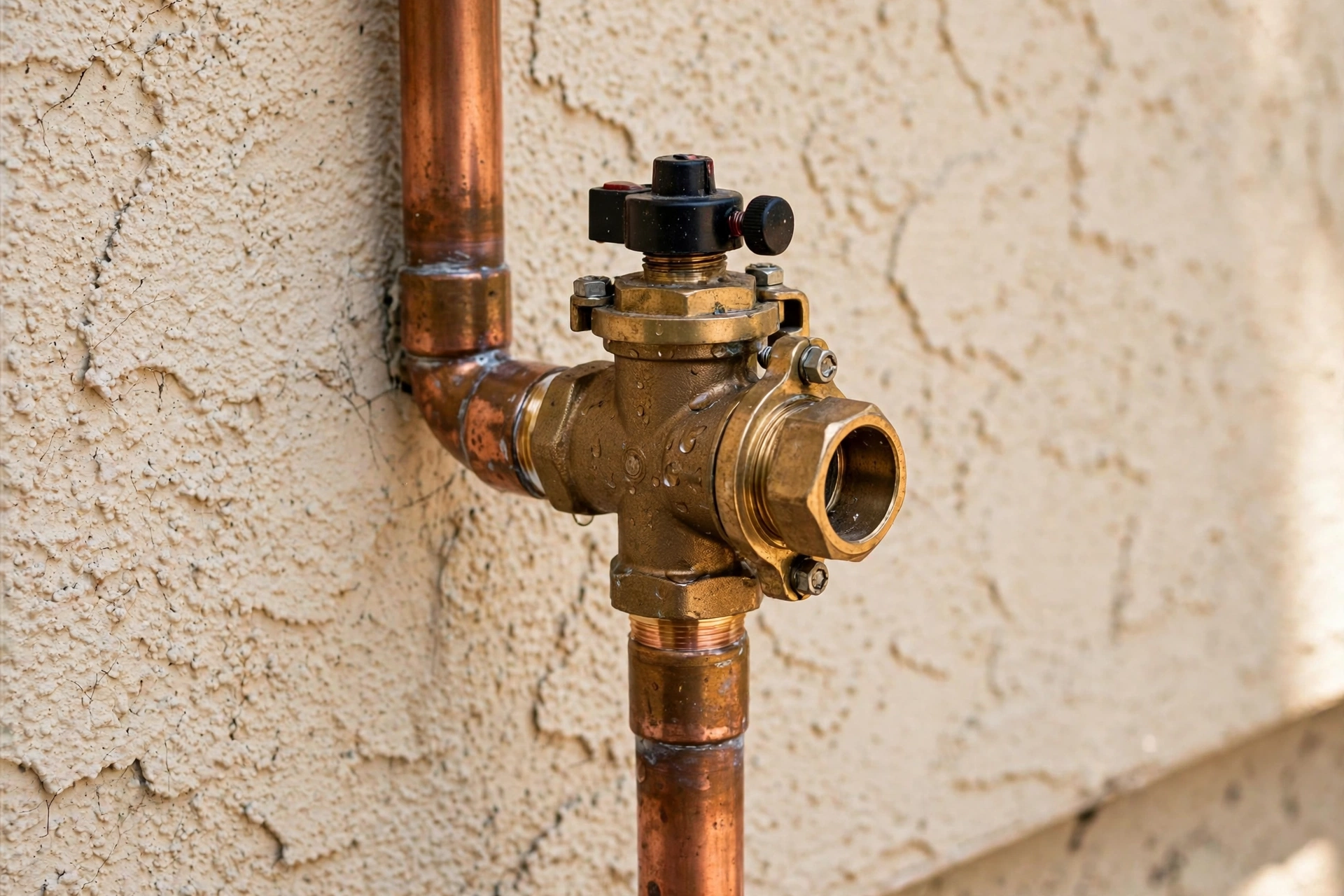
Exposed piping: any copper in ventilated crawl spaces, attics with gable vents facing the ocean, or exterior runs corrodes from the outside in. Green patina is normal oxidation; powdery white-green buildup at joints is active corrosion worth addressing.
Appliance connections: washing machine valves, dishwasher supplies, refrigerator lines — the small connections fail first and flood quietly.
Salt air doesn't reach inside your pipes, but coastal water supplies have their own chemistry — and the combination of exterior and interior attack shortens system life from both directions. If your copper shows pitting, get the water tested: the interior chemistry determines whether new copper is a durable choice or a repeat of the same failure.
Material choice: PEX doesn't corrode — inside or out — making it the natural repipe material for coastal homes. If staying with copper, eliminate dissimilar-metal contact (dielectric unions), insulate exterior runs, and ventilate without direct ocean-wind exposure.
Water treatment: conditioning aggressive water protects the interior of whatever pipe you have. Test first, treat appropriately.
Inspection rhythm: annual visual checks of the water heater, exterior fixtures, and any exposed piping. Coastal corrosion is progressive and visible — the homeowners who catch it early replace a valve; those who don't replace a water heater (or a floor).
Proactive replacement: water heaters, supply hoses, and exterior fixtures have shorter coastal lifespans. Replacing braided supply hoses every 5-7 years and heaters at end-of-life (not beyond) prevents the most common coastal floods.
Under-slab copper is protected from salt air but not from water chemistry or soil conditions. When it fails from pitting, the coastal-correct replacement is PEX overhead (reroute) — immune to corrosion, accessible for the future, and free from both the soil and the air. It's the material the environment is telling you to choose.
Seeing corrosion on your plumbing? Call (833) 713-2101 for an assessment.
Coastal plumbing ages faster — plan for it rather than reacting to it. Water heaters: 8-12 years coastal (not the 15 inland units sometimes reach). Supply hoses: replace every 5-7 years proactively. Exterior fixtures: inspect annually, replace at the first sign of active corrosion rather than waiting for failure. Hose bibs: the early warning system — stiff or weeping bibs mean the corrosion is advancing.
Budget on this accelerated schedule and the replacements become routine maintenance rather than emergencies. The peninsula homeowners with the fewest plumbing crises aren't lucky — they're the ones who replace the water heater at year ten instead of mopping at year thirteen.
Keep a simple replacement log: what was installed, when, what brand, warranty terms. When the next replacement comes due, the log answers every question — and when you sell, it's part of the meticulous-ownership file that peninsula buyers expect.
Inspect your water heater connections annually for the green-white buildup that signals active coastal corrosion — the connections fail before the tank, and catching them early means replacing a valve instead of a water heater.
When buried copper fails from pitting here, the coastal-correct replacement is PEX overhead: immune to corrosion inside and out, accessible for the future, free from both soil and air. It's the material the environment is telling you to choose.
Talk to a Peninsula specialist — detection, honest advice, and upfront pricing.
Call (833) 713-2101Directly, it attacks exposed metal: water heater connections, hose bibs, exterior fixtures, and any piping in ventilated crawl spaces. Indirectly, the coastal environment's humidity keeps everything damper, accelerating all corrosion. Buried pipe is shielded from the air itself but faces the same water chemistry as everywhere.
Inspect connections annually for green/white corrosion buildup, ensure the area is ventilated but not directly exposed to ocean wind, consider a corrosion-resistant pan and quality anode rod maintenance, and replace the unit proactively at end of life rather than waiting for a corrosive failure.
For repipes, PEX sidesteps the corrosion question entirely — it doesn't corrode, inside or out. If staying with copper, ensure proper installation (no dissimilar-metal contact), consider water treatment for aggressive water, and protect any exterior runs. The material choice matters more on the coast than inland.
How Long Do Copper Water Lines Last Under a Slab?
Read the full guide →Earthquake Country Plumbing: Seismic Shutoffs and Slab Leaks
Read the full guide →Water Damage Restoration After a Slab Leak
Read the full guide →