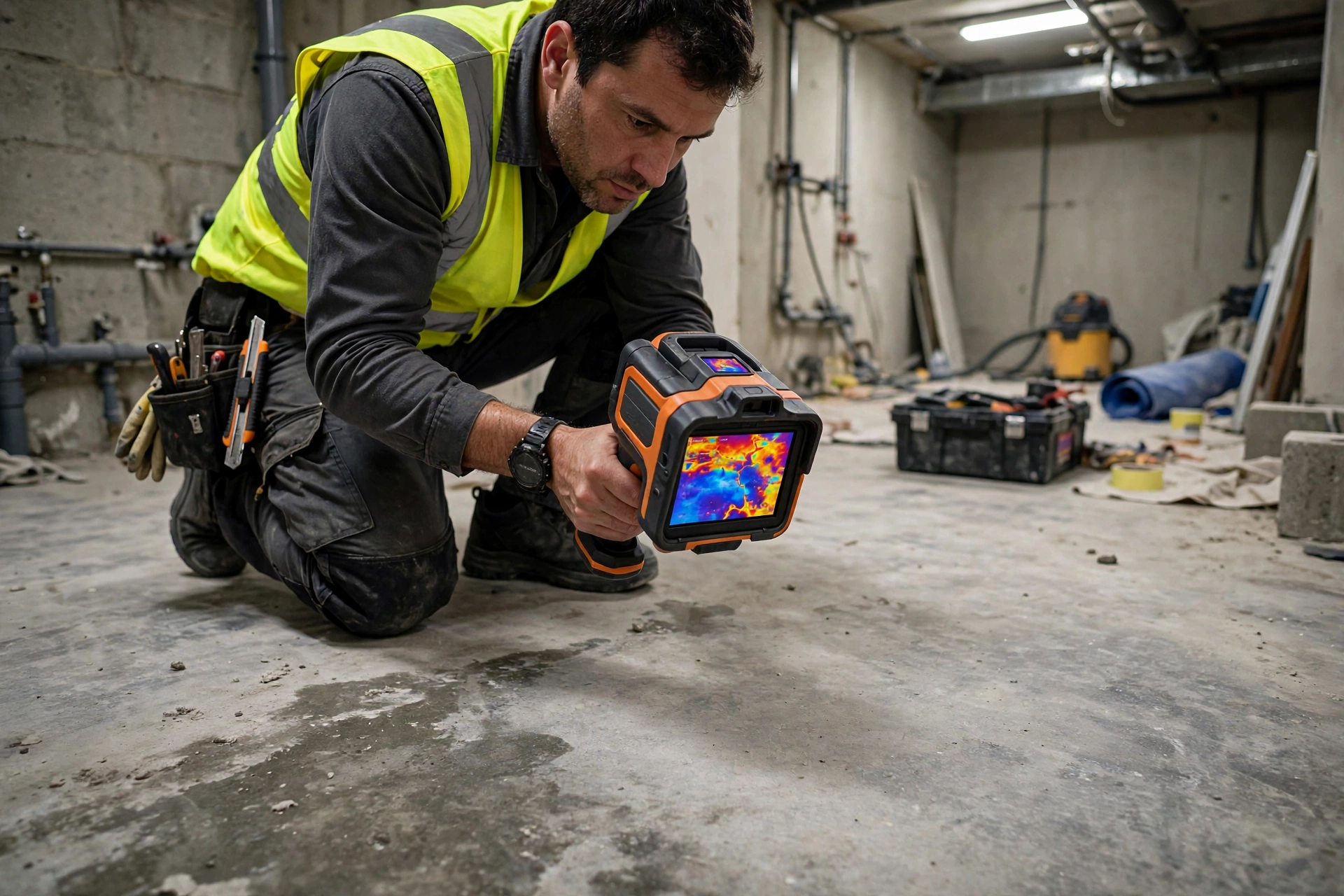
Slab Leak Detection Technology: From Acoustic to AI
Slab Leak Detection Technology: From Acoustic to AI
Read the full guide →
Published September 24, 2026 • Slab Leak Repair Professionals
A hot-line leak announces itself with warmth; a cold-line leak whispers. Learning the distinct fingerprints of each helps you describe the problem precisely — and helps your technician arrive prepared.
Two plumbing worlds run beneath your slab: the hot-water loop and the cold-water lines. When one springs a leak, the symptoms diverge in readable ways. Learning the differences helps you describe the problem precisely — and helps your technician arrive with the right expectations.
Hot-water leaks are the majority, and the most detectable.
Warm spots on the floor. The classic sign. On the tile and stone floors common in peninsula homes, barefoot detection works beautifully — stone conducts heat well and the contrast is obvious.
The water heater works overtime. A hot-side leak forces continuous reheating. The unit cycles far more than normal, energy bills climb with water bills, and you may hear it firing when no hot water has been used for hours.
Faster secondary damage. Warmth plus moisture is mold's paradise — musty odors and mildew appear faster and more aggressively with hot leaks.
Bills spike; heater behaves. Usage jumps, meter spins with everything off — but floors feel normal and the heater cycles normally. The cold side's fingerprint.
Dampness without warmth. Moisture wicking through the slab, damp areas at ambient temperature. Don't dismiss localized persistent dampness.
Sound takes center stage. Without heat to image, acoustic detection becomes primary — and your own late-night listen (everything off, ear near the floor) is genuinely useful reconnaissance.
Marble and stone — peninsula staples — interact with leaks distinctively. They telegraph heat beautifully (great for hot-leak detection) but they're also expensive and difficult to patch invisibly, which raises the stakes of accurate location. Precise pinpointing matters more under a premium stone floor than under carpet. Mention your flooring when booking; it affects method choice.
Symptoms suggest; pressure tests prove. Competent detection isolates and tests hot and cold independently — aging systems can leak on both sides, and the obvious hot leak can mask a quieter cold one.
Warm floors, a running heater, or a climbing bill? Call (833) 713-2101.
Marble and stone floors raise the stakes of every plumbing decision. During detection, confirm the technician's locating precision — under expensive stone, "approximately here" isn't good enough; you want the layered-method convergence that pinpoints within inches. Ask how the mark will be preserved until the repair crew arrives.
For the repair itself, discuss stone preservation explicitly: can the repair be done via tunneling or rerouting to avoid cutting the stone? If cutting is unavoidable, who handles the stone restoration, and can they source matching material? Get the restoration scope in writing with the plumbing scope — stone work is a specialty, and the plumber's "we'll patch it" may not meet your floor's standards.
Photograph the floors extensively before any work begins — the documentation protects you if restoration falls short and supports any insurance claim for the flooring damage. In luxury homes, the floor is often worth more than the plumbing repair; treat it accordingly.
When both sides leak at once — and in aging systems they can — the picture gets muddy: warmth from the hot leak plus a bill spike bigger than the hot side explains. This is why competent detection tests both systems independently. If your symptoms point both ways, say so when booking.
Two simultaneous leaks in an older system also reshape the repair decision from 'fix this spot' to 'replace the system.' That's the pivot where many homeowners stop paying for detection every couple of years and invest once in a reroute or repipe.
Mention your flooring type when booking — stone, tile, and wood each affect which detection methods work best.
Good symptom reporting doesn't replace pressure testing, but it makes the testing faster and more conclusive.
Talk to a Peninsula specialist — detection, honest advice, and upfront pricing.
Call (833) 713-2101Warm spots on the floor, a water heater that runs excessively, and climbing water and energy bills together. On tile or stone floors — common in RPV homes — the warmth is easy to detect barefoot, and thermal imaging confirms it quickly.
No warmth: just a spinning meter, spiking bills, and dampness at ambient temperature, with the water heater behaving normally. Cold leaks rely on acoustic detection and moisture mapping rather than thermal imaging.
Yes — especially in aging systems where both lines share the same age, materials, and soil conditions. Finding one leak should always prompt testing the other side. Simultaneous leaks often signal it's time to think about system replacement rather than spot repairs.
Slab Leak Detection Technology: From Acoustic to AI
Read the full guide →How Long Do Copper Water Lines Last Under a Slab?
Read the full guide →Slab Leaks Under Marble and Stone Flooring
Read the full guide →