Under-Slab Tunneling in Torrance, CA 90505
If you need under-slab tunneling in Torrance 90505, start with a call to (833) 713-2101.
In Short
If you need under-slab tunneling in Torrance 90505, start with a call to (833) 713-2101. Slab Leak Repair Experts connects South Torrance, Hillside and Southwood Riviera homeowners with local specialists; we confirm the 90505 ZIP, review your symptoms, and the first step is a no-obligation phone assessment of your symptoms, floor layout, and exterior access.
Torrance 90505 Ground, Pipes and Homes: What It Means for Under-Slab Tunneling
Every 90505 tunneling plan starts from the same local facts. South Torrance - 1950s-60s ranch and split-level homes, including hillside homes with views, typically built 1953-1962. Beneath those slabs runs Copper supply; cast-iron drains. Slab prevalence is Very high; stepped slabs are common on hillside lots. That combination - mid-century copper at failure age under slab - is exactly the profile tunneling was designed for, provided detection confirms a repairable single-point failure.
In Torrance 90505, under-slab tunneling gets complicated by elevation. Stepped slabs on terraced hillside lots mean the tunnel may need to account for changes in slab level between steps - the access pit, the tunnel grade and the work space all get planned around the terrace geometry, and retaining walls limit where pits can go. That complexity is manageable, but it has to be surveyed rather than assumed. The other 90505 wrinkle is diagnostic: hillside water movement can hide or mimic slab-leak symptoms, so pressure testing decides whether there is even a pipe leak to tunnel to. When the answer is yes - 1950s-60s copper at failure age under a stepped slab - tunneling still beats breaking through the home's interior levels, provided the plan respects the steps.
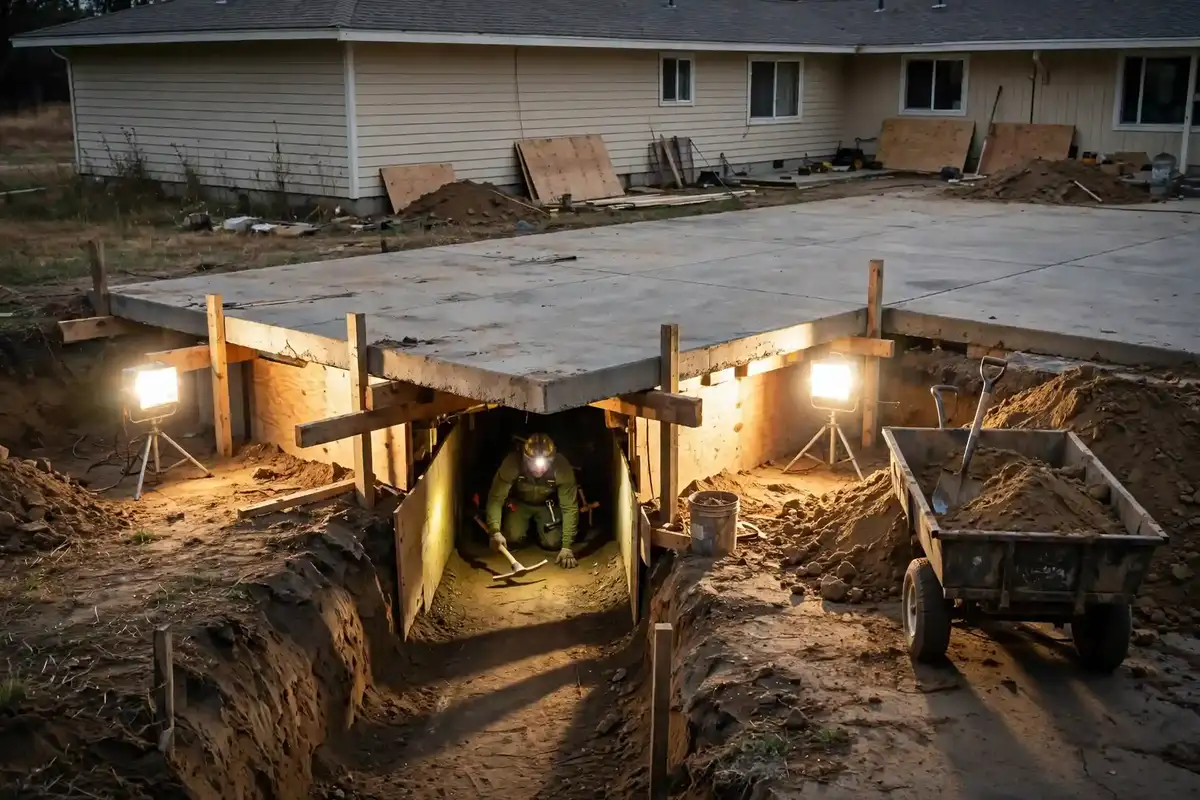
Under-slab tunneling reaches a leaking pipe by digging a small horizontal tunnel beneath the foundation from outside the home, instead of jackhammering through interior floors. The leaking section is repaired or replaced from below, the tunnel is backfilled and compacted, and your tile, hardwood or stone floors stay intact. In Torrance, the tunnel plan adapts to local soil: Hillside grade rising toward the Peninsula with terraced lots; runoff concentrates at retaining walls. Access pits go where the lot allows, the tunnel advances to the electronically located leak, the damaged section is replaced, and everything is pressure-tested before backfill and compaction.
What tunneling is not: a way to avoid diagnosis. In Torrance, the properties where tunneling disappoints are the ones where it was prescribed before detection - a tunnel to the wrong place is just an expensive hole. Insist on the sequence: locate first, then choose the method. When the location is certain and the site allows, tunneling in 90505 is routinely the least disruptive path from leak to repair.
When to Call About Under-Slab Tunneling in Torrance 90505
Tunneling is usually discussed after electronic detection pinpoints a leak under the slab: a warm spot on the floor, the sound of running water with fixtures off, a water bill that jumped, or a hot-water line that never seems to rest. It is the preferred path when interior floors are expensive to restore - tile, hardwood, polished concrete - or when the leak sits far from any practical interior access point. The 90505 pattern adds local flavor: Terraced lots mean equipment and material staging has to be planned around retaining walls and elevation changes between slab steps. Either way, the sequence holds - symptoms lead to detection, detection leads to the method decision, and tunneling earns its place only when the location is certain.
How Under-Slab Tunneling Works on a Torrance Property
First the leak is located electronically to within inches. Then a small exterior access pit is dug at the foundation edge and a hand-dug tunnel is advanced under the slab to the leak point, typically just tall enough to work in. The damaged pipe section is cut out and replaced, the repair is pressure-tested, and the tunnel is backfilled in lifts and compacted to support the slab again. Hillside grade rising toward the Peninsula with terraced lots; runoff concentrates at retaining walls. That soil reality shapes the tunnel: shoring where needed, dewatering where the water table intrudes, and a careful eye on anything the tunnel passes near. Backfill is compacted in lifts so the slab ends up supported as it was found.
Why Torrance's Ground and Housing Stock Shape Under-Slab Tunneling
Torrance 90505 sits on Hillside grade rising toward the Peninsula with terraced lots; runoff concentrates at retaining walls. Same rain pattern; hillside lots shed winter rain fast, which is good drainage but puts slope pressure on foundations. Homes here: South Torrance - 1950s-60s ranch and split-level homes, including hillside homes with views, typically built 1953-1962. Pipe underneath: Copper supply; cast-iron drains. Slab-on-grade prevalence is Very high; stepped slabs are common on hillside lots. The key local fact for under-slab tunneling: Stepped slabs on terraced lots make tunneling and rerouting more complex because access and elevation changes matter. 1950s-60s copper is at failure age, and hillside water movement can hide or mimic slab-leak symptoms - pressure testing decides. On the ground that means: Terraced lots mean equipment and material staging has to be planned around retaining walls and elevation changes between slab steps. And for reference: On stepped slabs, a leak at the lower step can present as dampness at the upper step's wall base, which is why isolation testing matters more here than on flat lots.
Tunneling vs. Breaking the Slab vs. Rerouting in Torrance
The three-way choice in 90505 comes down to floors, pipe age, and access. Interior spot repair through the slab suits leaks under restorable floors. Tunneling suits confirmed single leaks under floors worth preserving, where terraced lots mean equipment and material staging has to be planned around retaining walls and elevation changes between slab steps. Rerouting suits aging systems - copper supply - where the next pinhole is a matter of time. A straight assessment in Torrance lays out all three with the trade-offs in plain language, because the right answer varies house to house even on the same street.
Talk to a Slab-Leak Specialist Serving 90505
Calling (833) 713-2101 connects you to a real conversation, not a phone tree. We confirm Torrance 90505, review what's happening at your home near South Torrance, Hillside and Southwood Riviera, and connect you - through Slab Leak Repair Experts' referral network - with a local specialist in under-slab tunneling. You'll know the next step before you hang up, whether that's a detection visit, a documentation checklist, or simply a better understanding of your options. Talk to a specialist at (833) 713-2101: (833) 713-2101.
Suspect a Slab Leak? Talk to a Specialist Today
One call connects you with a local slab leak professional serving Rancho Palos Verdes, CA — day or night.
Call (833) 713-2101Frequently Asked Questions
What should I ask a tunneling specialist before approving the work in 90505?
Ask these five: Has the leak been electronically located, or are we digging on a guess? Is there workable exterior access for a pit on my lot? What does my soil mean for the tunnel plan - shoring, dewatering? What happens if the exposed pipe is worse than expected? And how does the total compare with rerouting, given my pipe's age (Copper supply; cast-iron drains.)? In Torrance, the specialist who welcomes those questions is the one to hire.
How is the leak located before anyone digs a tunnel in Torrance?
Tunneling is prescribed after electronic location, never before. The sequence is: meter testing to confirm water loss, pressure isolation to identify the failed line, then acoustic and thermal instruments to pinpoint the leak - typically within inches. In 90505, that precision matters even more because Stepped slabs on terraced lots make tunneling and rerouting more complex because access and elevation changes matter. Only when the location is certain does the tunnel plan get drawn.
What if the tunnel reveals the pipe is worse than expected?
This happens, especially with Copper supply; cast-iron drains. in 90505. A good tunnel plan includes a decision point: if the exposed line shows systemic corrosion or multiple thin spots, the specialist stops and talks to you before proceeding - because tunneling to save one section of a dying line is poor value next to rerouting. That conversation is part of an honest assessment, and it's why the pipe's generation and age are evaluated before the method is chosen, not during.
What should I ask a tunneling specialist before approving the work in 90505?
Ask these five: Has the leak been electronically located, or are we digging on a guess? Is there workable exterior access for a pit on my lot? What does my soil mean for the tunnel plan - shoring, dewatering? What happens if the exposed pipe is worse than expected? And how does the total compare with rerouting, given my pipe's age (Copper supply; cast-iron drains.)? In Torrance, the specialist who welcomes those questions is the one to hire.