Under-Slab Tunneling in Torrance, CA 90501
Need under-slab tunneling in Torrance, CA? We serve 90501 - Old Torrance and central neighborhoods - through local slab-leak specialists.
In Short
Need under-slab tunneling in Torrance, CA? We serve 90501 - Old Torrance and central neighborhoods - through local slab-leak specialists. On your first call we verify the ZIP, listen to what you're seeing, and the first step is a no-obligation phone assessment of your symptoms, floor layout, and exterior access. Reach us at (833) 713-2101.
How Under-Slab Tunneling Works Differently in Torrance 90501
Start with what the ground and the houses give you. Central and east Torrance including Old Torrance downtown - 1920s-40s bungalows near Torrance High and postwar 1950s tracts east of Hawthorne Boulevard. The pipe underneath is typically 1920s-40s homes carry galvanized steel and cast iron; 1950s tracts carry copper. Slab-on-grade prevalence is Mixed - raised foundations in the oldest stock, slab in postwar tracts. In 90501, tunneling is a repair method for confirmed slab leaks - so the first job is confirming the slab, the pipe, and the leak location, in that order.
In Torrance 90501, under-slab tunneling starts with a question, not a shovel: what era is this house? A 1950s copper-slab tract home east of Hawthorne Boulevard is a natural tunnel candidate when detection pinpoints a single leak under finished floors. A 1930s bungalow near Torrance High with galvanized pipe and a raised foundation may not need tunneling at all - its pipes are reachable from the crawlspace. The era mix that defines 90501 is exactly why the assessment establishes pipe material and foundation type before recommending anything. Where tunneling fits, the flat alluvial lots make for simple pit placement and staging. Where it doesn't, saying so early saves the homeowner from paying for the wrong method.
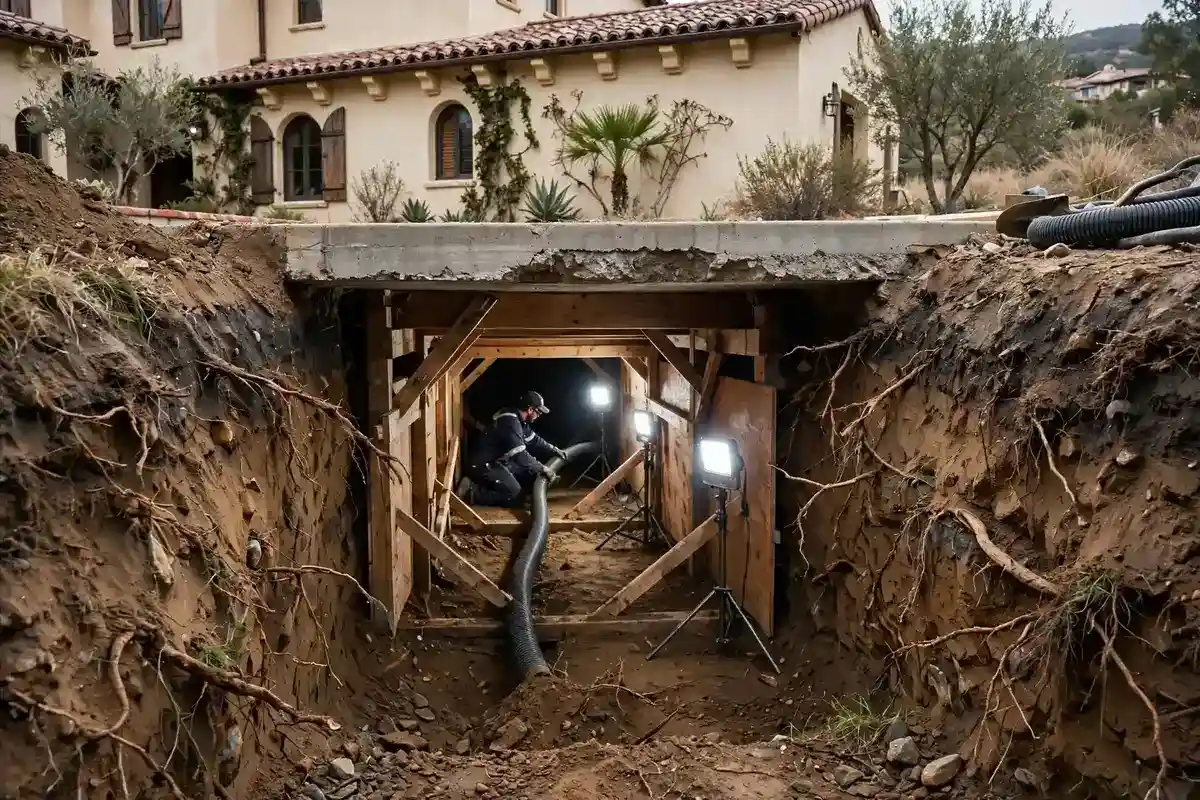
Under-slab tunneling reaches a leaking pipe by digging a small horizontal tunnel beneath the foundation from outside the home, instead of jackhammering through interior floors. The leaking section is repaired or replaced from below, the tunnel is backfilled and compacted, and your tile, hardwood or stone floors stay intact. The 90501 version of that plan respects Torrance Boulevard, Carson Street, Hawthorne Boulevard and Western Avenue serve the area, near Downtown/Old Torrance, Torrance High School and Wilson Park. - equipment reaches the property along those routes, and staging works around the lot's realities. Older downtown lots can have narrow side-yard access, while the postwar tracts are straightforward - the first site visit determines which playbook applies.
The decision framework for Torrance 90501 homeowners is straightforward: confirm the slab, confirm the pipe material, confirm the leak location electronically, confirm exterior access - then choose tunneling when the floors are worth preserving and the rest of the line still has life. When any of those confirmations fails, the honest recommendation changes: reroute, spot repair, or a different investigation entirely. A specialist who walks through those gates with you on the first call is the one to trust.
When to Call About Under-Slab Tunneling in Torrance 90501
Tunneling is usually discussed after electronic detection pinpoints a leak under the slab: a warm spot on the floor, the sound of running water with fixtures off, a water bill that jumped, or a hot-water line that never seems to rest. It is the preferred path when interior floors are expensive to restore - tile, hardwood, polished concrete - or when the leak sits far from any practical interior access point. In Torrance 90501, homeowners also watch for the local tells: The era mix is the story: a 90501 call could be a 1930s galvanized system that is a repipe candidate or a 1950s copper slab leak suited to spot repair or reroute. When any of those appear, the next step is detection - tunneling is prescribed after locating, never before.
How Under-Slab Tunneling Works on a Torrance Property
First the leak is located electronically to within inches. Then a small exterior access pit is dug at the foundation edge and a hand-dug tunnel is advanced under the slab to the leak point, typically just tall enough to work in. The damaged pipe section is cut out and replaced, the repair is pressure-tested, and the tunnel is backfilled in lifts and compacted to support the slab again. On a Torrance 90501 property, the crew serving Old Torrance and central neighborhoods stages along Torrance Boulevard, Carson Street, Hawthorne Boulevard and Western Avenue and works the plan around the lot: Older downtown lots can have narrow side-yard access, while the postwar tracts are straightforward - the first site visit determines which playbook applies. The homeowner's role is simple - clear the work area, keep pets and kids clear of the pit, and let the crew work.
Why Torrance's Ground and Housing Stock Shape Under-Slab Tunneling
Torrance 90501 sits on Coastal-plain alluvium, mostly flat, with some slope near the 90505 border. Mediterranean climate with November-to-March rain. Homes here: Central and east Torrance including Old Torrance downtown - 1920s-40s bungalows near Torrance High and postwar 1950s tracts east of Hawthorne Boulevard. Pipe underneath: 1920s-40s homes carry galvanized steel and cast iron; 1950s tracts carry copper. Slab-on-grade prevalence is Mixed - raised foundations in the oldest stock, slab in postwar tracts. The key local fact for under-slab tunneling: The era mix is the story: a 90501 call could be a 1930s galvanized system that is a repipe candidate or a 1950s copper slab leak suited to spot repair or reroute. Detection must first establish pipe material and foundation type, because the repair paths diverge completely. On the ground that means: Older downtown lots can have narrow side-yard access, while the postwar tracts are straightforward - the first site visit determines which playbook applies. And for reference: A 1953-built home on West 230th Street is typical of the postwar tract stock here: copper under slab, now 70-plus years old and squarely in the failure window.
Tunneling vs. Breaking the Slab vs. Rerouting in Torrance
Tunneling, breaking the slab, and rerouting each have a Torrance use case. Breaking the slab (interior spot repair) is fastest when the leak sits under an unfinished or easily restored floor - a garage or utility room - because the restoration cost is minimal. Tunneling wins when interior floors are expensive: tile, hardwood, or stone you'd rather not demolish, with workable exterior access. Rerouting - abandoning the under-slab line for a new overhead run - wins when the pipe is systemically tired: 1950s-70s copper with multiple pinholes, or 1920s-40s homes carry galvanized steel and cast iron, where fixing one spot just schedules the next leak. In 90501, the assessment weighs all three against your floors, your pipe's age, and your lot's access - and recommends the one that fits, not the one that's habit.
Your First Call: What to Expect in Torrance
Your call to (833) 713-2101 starts simply: we verify the 90501 ZIP, hear the symptoms in your words, and note anything already tried. Then Slab Leak Repair Experts - a referral service connecting Torrance homeowners with local specialists - pairs you with a specialist who knows under-slab tunneling on Old Torrance and central neighborhoods-area homes like yours. The specialist takes it from there: questions, a visit if needed, and a plain-spoken plan. Get answers at (833) 713-2101 at (833) 713-2101.
Suspect a Slab Leak? Talk to a Specialist Today
One call connects you with a local slab leak professional serving Rancho Palos Verdes, CA — day or night.
Call (833) 713-2101Frequently Asked Questions
How long does an under-slab tunnel repair take in Torrance?
Most single-leak tunnel repairs complete in one to three working days once detection is done: a day for the pit and tunnel, a day for the pipe repair and testing, and backfill/compaction. Timelines stretch when soil needs shoring, when dewatering runs continuously, or when 90501's lot constraints complicate access. Detection itself is usually a separate, shorter visit. Your specialist gives you a straight timeline for your specific property before work starts - not a generic promise.
Is tunneling more expensive than just breaking the slab in Torrance?
The pipe repair itself is comparable; the difference is restoration. Breaking the slab is cheaper on day one but can be far more expensive once you add tile, hardwood, or stone restoration - in 90501, interior floor restoration often exceeds the plumbing cost. Tunneling shifts the cost to excavation instead of restoration. For homes with basic or unfinished floors over the leak, interior spot repair may genuinely be the economical choice. The assessment should price the whole job - repair plus restoration - so you're comparing honestly.
Will tunneling work in 90501's soil?
It depends on which Torrance soil we're talking about. Coastal-plain alluvium, mostly flat, with some slope near the 90505 border. In stable clay and shale, tunnels hold well. In beach sand - common in the beach cities - the tunnel needs shoring to stay open safely. Where the water table is high, as in the harbor-plain areas, the plan includes dewatering so the tunnel doesn't become a sump. Your lot's soil is part of the pre-work assessment, not an afterthought.
How long does an under-slab tunnel repair take in Torrance?
Most single-leak tunnel repairs complete in one to three working days once detection is done: a day for the pit and tunnel, a day for the pipe repair and testing, and backfill/compaction. Timelines stretch when soil needs shoring, when dewatering runs continuously, or when 90501's lot constraints complicate access. Detection itself is usually a separate, shorter visit. Your specialist gives you a straight timeline for your specific property before work starts - not a generic promise.