Under-Slab Tunneling in Rolling Hills, CA 90274
If you need under-slab tunneling in Rolling Hills 90274, start with a call to (833) 713-2101.
In Short
If you need under-slab tunneling in Rolling Hills 90274, start with a call to (833) 713-2101. Slab Leak Repair Experts connects the gated equestrian community homeowners with local specialists; we confirm the 90274 ZIP, review your symptoms, and the first step is a no-obligation phone assessment of your symptoms, floor layout, and exterior access.
Rolling Hills 90274 Ground, Pipes and Homes: What It Means for Under-Slab Tunneling
Every 90274 tunneling plan starts from the same local facts. Gated equestrian city with ranch-style homes on 1-acre-plus lots, mostly 1950s-1970s, set behind white rail fences with horse properties throughout. Beneath those slabs runs 1950s-70s copper supply under slab; cast-iron or ABS drains. Slab prevalence is Very high for the ranch stock. That combination - mid-century copper at failure age under slab - is exactly the profile tunneling was designed for, provided detection confirms a repairable single-point failure.
In Rolling Hills 90274, under-slab tunneling solves a distance problem. Acre-plus lots mean under-slab pipe runs can stretch dozens of feet from the meter, and when a leak sits far from any interior access point, tunneling from the foundation edge beats tearing up finished floors across a sprawling ranch home. The large lots are actually an advantage here: generous staging room for the access pit and spoil, with no neighbor's fence inches away. Two local wrinkles matter. First, horse-property outbuildings and barns sometimes share the water service, so detection must confirm the leak is under the house slab and not in a line to an outbuilding - tunneling at the wrong building helps nobody. Second, equestrian fill areas around graded pads can be softer than native soil, which the tunnel plan accounts for.
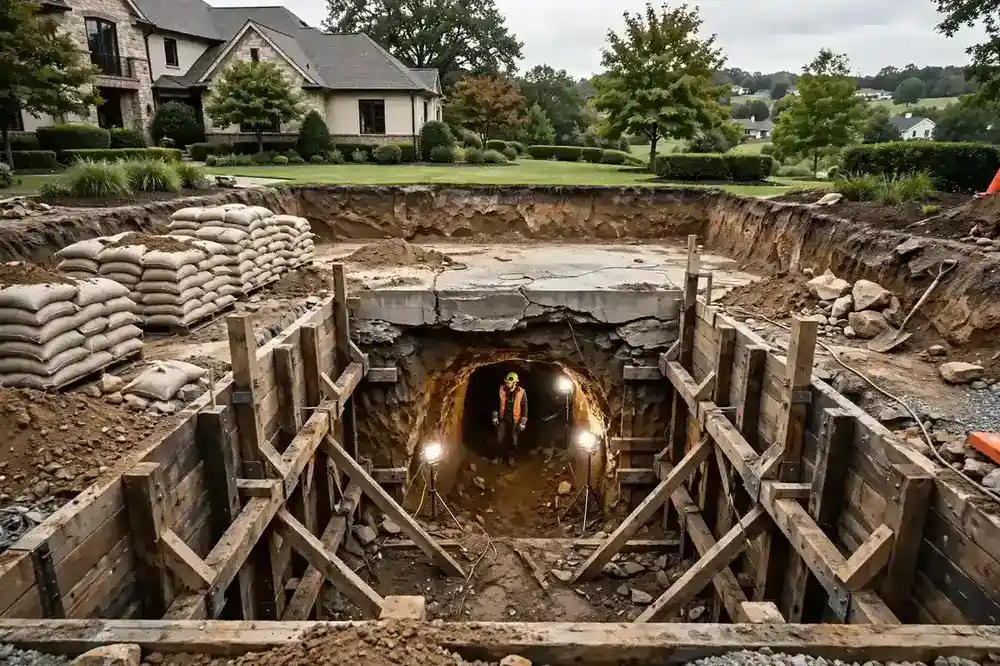
Under-slab tunneling reaches a leaking pipe by digging a small horizontal tunnel beneath the foundation from outside the home, instead of jackhammering through interior floors. The leaking section is repaired or replaced from below, the tunnel is backfilled and compacted, and your tile, hardwood or stone floors stay intact. The 90274 version of that plan respects Private gated roads serve the community, with Rolling Hills City Hall and an extensive private equestrian trail system nearby; the city sits at about 1,276 feet elevation. - equipment reaches the property along those routes, and staging works around the lot's realities. Gated access means appointments need gate clearance arranged in advance, and equipment staging areas are generous thanks to the large lots.
For 90274 homeowners weighing options, the questions to ask are: is my home on a slab, what pipe generation is under it, has the leak been electronically located (not just guessed from a wet spot), and is there workable exterior access for a pit? The answers sort tunneling candidates from reroute candidates quickly. Private gated roads serve the community, with Rolling Hills City Hall and an extensive private equestrian trail system nearby; the city sits at about 1,276 feet elevation. - the crews serving this area know these streets and these lots, which shortens the learning curve on every job.
90274 Warning Signs That Point Toward Under-Slab Tunneling
Tunneling is usually discussed after electronic detection pinpoints a leak under the slab: a warm spot on the floor, the sound of running water with fixtures off, a water bill that jumped, or a hot-water line that never seems to rest. It is the preferred path when interior floors are expensive to restore - tile, hardwood, polished concrete - or when the leak sits far from any practical interior access point. In Rolling Hills 90274, homeowners also watch for the local tells: Acre-plus lots mean very long under-slab pipe runs - a single leak can sit dozens of feet from the meter, and rerouting is often cheaper than chasing it through the slab. When any of those appear, the next step is detection - tunneling is prescribed after locating, never before.
What Under-Slab Tunneling Looks Like Step by Step in 90274
First the leak is located electronically to within inches. Then a small exterior access pit is dug at the foundation edge and a hand-dug tunnel is advanced under the slab to the leak point, typically just tall enough to work in. The damaged pipe section is cut out and replaced, the repair is pressure-tested, and the tunnel is backfilled in lifts and compacted to support the slab again. On a Rolling Hills 90274 property, the crew serving the gated equestrian community stages along Private gated roads and works the plan around the lot: Gated access means appointments need gate clearance arranged in advance, and equipment staging areas are generous thanks to the large lots. The homeowner's role is simple - clear the work area, keep pets and kids clear of the pit, and let the crew work.
90274 Soil, Water and Pipe Facts Behind Local Under-Slab Tunneling Calls
Rolling Hills 90274 sits on Hilltop terrain on Monterey shale with large graded pads, equestrian footing and fill areas; long driveway aprons and extensive hardscape concentrate runoff. Slightly cooler hilltop microclimate with the same November-to-March rain pattern, plus hillside runoff across the graded pads. Homes here: Gated equestrian city with ranch-style homes on 1-acre-plus lots, mostly 1950s-1970s, set behind white rail fences with horse properties throughout. Pipe underneath: 1950s-70s copper supply under slab; cast-iron or ABS drains. Slab-on-grade prevalence is Very high for the ranch stock. The key local fact for under-slab tunneling: Acre-plus lots mean very long under-slab pipe runs - a single leak can sit dozens of feet from the meter, and rerouting is often cheaper than chasing it through the slab. Horse-property outbuildings and barns sometimes share the water service, so a slab-leak call can turn out to be a failed line to an outbuilding. On the ground that means: Gated access means appointments need gate clearance arranged in advance, and equipment staging areas are generous thanks to the large lots. And for reference: Because lots exceed an acre, the water service line from the street meter to the house can itself be hundreds of feet long and is a frequent leak point independent of the under-slab plumbing.
Tunneling vs. Breaking the Slab vs. Rerouting in Rolling Hills
Tunneling, breaking the slab, and rerouting each have a Rolling Hills use case. Breaking the slab (interior spot repair) is fastest when the leak sits under an unfinished or easily restored floor - a garage or utility room - because the restoration cost is minimal. Tunneling wins when interior floors are expensive: tile, hardwood, or stone you'd rather not demolish, with workable exterior access. Rerouting - abandoning the under-slab line for a new overhead run - wins when the pipe is systemically tired: 1950s-70s copper with multiple pinholes, or 1950s-70s copper supply under slab, where fixing one spot just schedules the next leak. In 90274, the assessment weighs all three against your floors, your pipe's age, and your lot's access - and recommends the one that fits, not the one that's habit.
Talk to a Slab-Leak Specialist Serving 90274
Calling (833) 713-2101 connects you to a real conversation, not a phone tree. We confirm Rolling Hills 90274, review what's happening at your home near the gated equestrian community, and connect you - through Slab Leak Repair Experts' referral network - with a local specialist in under-slab tunneling. You'll know the next step before you hang up, whether that's a detection visit, a documentation checklist, or simply a better understanding of your options. Call (833) 713-2101 to get started: (833) 713-2101.
Suspect a Slab Leak? Talk to a Specialist Today
One call connects you with a local slab leak professional serving Rancho Palos Verdes, CA — day or night.
Call (833) 713-2101Frequently Asked Questions
What if the tunnel reveals the pipe is worse than expected?
This happens, especially with 1950s-70s copper supply under slab; cast-iron or ABS drains. in 90274. A good tunnel plan includes a decision point: if the exposed line shows systemic corrosion or multiple thin spots, the specialist stops and talks to you before proceeding - because tunneling to save one section of a dying line is poor value next to rerouting. That conversation is part of an honest assessment, and it's why the pipe's generation and age are evaluated before the method is chosen, not during.
What should I ask a tunneling specialist before approving the work in 90274?
Ask these five: Has the leak been electronically located, or are we digging on a guess? Is there workable exterior access for a pit on my lot? What does my soil mean for the tunnel plan - shoring, dewatering? What happens if the exposed pipe is worse than expected? And how does the total compare with rerouting, given my pipe's age (1950s-70s copper supply under slab; cast-iron or ABS drains.)? In Rolling Hills, the specialist who welcomes those questions is the one to hire.
How is the leak located before anyone digs a tunnel in Rolling Hills?
Tunneling is prescribed after electronic location, never before. The sequence is: meter testing to confirm water loss, pressure isolation to identify the failed line, then acoustic and thermal instruments to pinpoint the leak - typically within inches. In 90274, that precision matters even more because Acre-plus lots mean very long under-slab pipe runs - a single leak can sit dozens of feet from the meter, and rerouting is often cheaper than chasing it through the slab. Only when the location is certain does the tunnel plan get drawn.
What if the tunnel reveals the pipe is worse than expected?
This happens, especially with 1950s-70s copper supply under slab; cast-iron or ABS drains. in 90274. A good tunnel plan includes a decision point: if the exposed line shows systemic corrosion or multiple thin spots, the specialist stops and talks to you before proceeding - because tunneling to save one section of a dying line is poor value next to rerouting. That conversation is part of an honest assessment, and it's why the pipe's generation and age are evaluated before the method is chosen, not during.