Under-Slab Tunneling in Redondo Beach, CA 90278
Looking for under-slab tunneling in Redondo Beach, CA 90278? Slab Leak Repair Experts connects you with local specialists serving South Redondo and nearby neighborhoods.
In Short
Looking for under-slab tunneling in Redondo Beach, CA 90278? Slab Leak Repair Experts connects you with local specialists serving South Redondo and nearby neighborhoods. We confirm your 90278 ZIP, review your symptoms on the call, and the first step is a no-obligation phone assessment of your symptoms, floor layout, and exterior access. Call (833) 713-2101 to get started.
Under-Slab Tunneling in Redondo Beach, CA 90278: How Local Conditions Change the Work
The housing stock sets the stage. South Redondo - beach cottages from the 1920s-40s near the water, mid-century infill and modern rebuilds, with denser multifamily near the pier. Under-slab pipe here is 1920s-40s homes carry galvanized and cast iron; 1950s and later carry copper, and many homes were replumbed during rebuilds. Slab-on-grade prevalence is Mixed - raised in the oldest cottages, slab in postwar homes. Those facts decide whether tunneling is even on the table: it exists for slab homes with a confirmed under-slab leak, and the 90278 assessment verifies both before discussing methods.
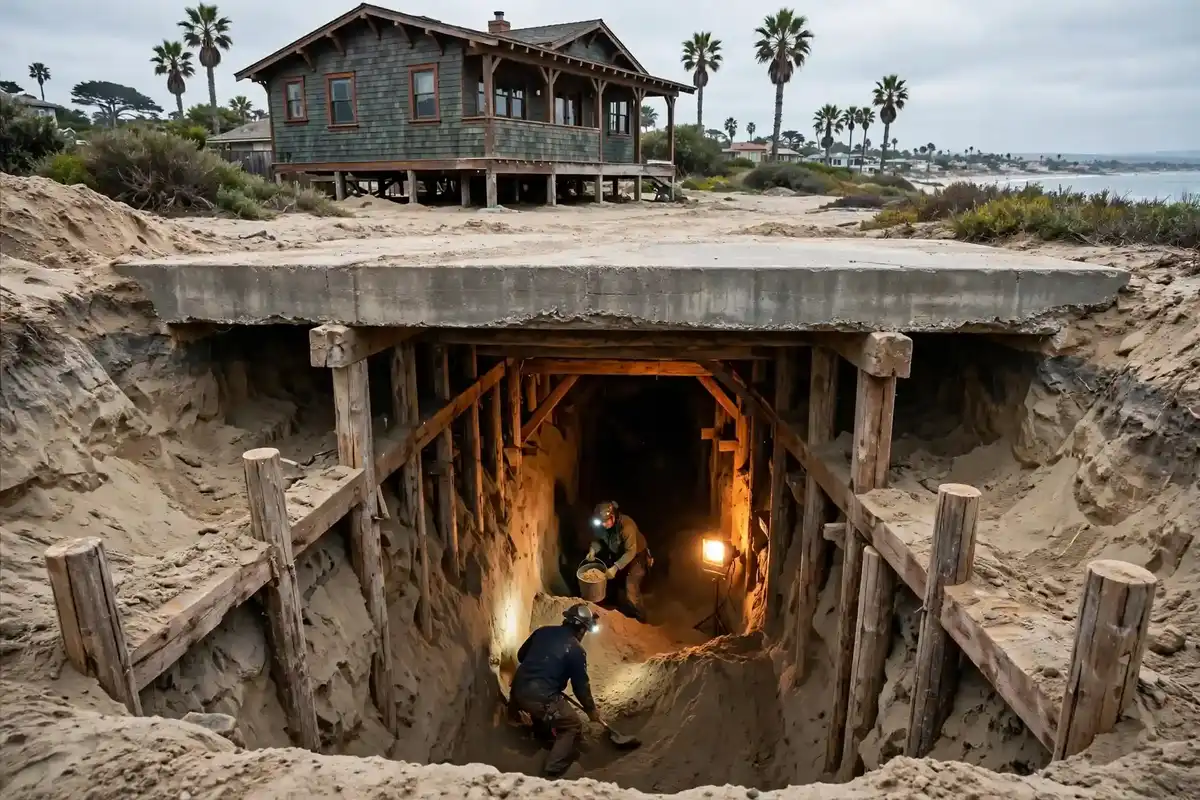
In Redondo Beach 90278, under-slab tunneling contends with sand and salt. Beach sand over alluvium drains fast - which is why leaks here travel far before surfacing - and any tunnel dug in sand needs shoring to stay open and safe. Salt air has been attacking the copper for decades, so beachside homes show slab leaks roughly a decade earlier than the same pipe would inland; the tunnel assessment should look hard at whether the line has one failure or many coming. Detection does the heavy lifting before any digging: in sand, chasing wet spots visually fails, and the tunnel is only as good as the electronic location behind it. Where access works on tight beach-cottage lots, tunneling still beats demolishing interiors - but the plan respects the sand every foot of the way.
Under-slab tunneling reaches a leaking pipe by digging a small horizontal tunnel beneath the foundation from outside the home, instead of jackhammering through interior floors. The leaking section is repaired or replaced from below, the tunnel is backfilled and compacted, and your tile, hardwood or stone floors stay intact. What makes tunneling attractive in Redondo Beach is what it doesn't touch: no jackhammer through the living room, no demolition of finishes that would cost more to restore than the pipe repair itself. Beach-cottage lots can be tight with limited staging room, and sandy soil needs shoring wherever the ground is opened.
For 90278 homeowners weighing options, the questions to ask are: is my home on a slab, what pipe generation is under it, has the leak been electronically located (not just guessed from a wet spot), and is there workable exterior access for a pit? The answers sort tunneling candidates from reroute candidates quickly. Pacific Coast Highway, Catalina Avenue and The Esplanade serve the area, near the Redondo Beach Pier, King Harbor and Veterans Park. - the crews serving this area know these streets and these lots, which shortens the learning curve on every job.
When to Call About Under-Slab Tunneling in Redondo Beach 90278
Tunneling is usually discussed after electronic detection pinpoints a leak under the slab: a warm spot on the floor, the sound of running water with fixtures off, a water bill that jumped, or a hot-water line that never seems to rest. It is the preferred path when interior floors are expensive to restore - tile, hardwood, polished concrete - or when the leak sits far from any practical interior access point. The 90278 pattern adds local flavor: Beach-cottage lots can be tight with limited staging room, and sandy soil needs shoring wherever the ground is opened. Either way, the sequence holds - symptoms lead to detection, detection leads to the method decision, and tunneling earns its place only when the location is certain.
How Under-Slab Tunneling Works on a Redondo Beach Property
First the leak is located electronically to within inches. Then a small exterior access pit is dug at the foundation edge and a hand-dug tunnel is advanced under the slab to the leak point, typically just tall enough to work in. The damaged pipe section is cut out and replaced, the repair is pressure-tested, and the tunnel is backfilled in lifts and compacted to support the slab again. Beach sand over alluvium near the coast; excellent drainage but salt-laden air and soil moisture. That soil reality shapes the tunnel: shoring where needed, dewatering where the water table intrudes, and a careful eye on anything the tunnel passes near. Backfill is compacted in lifts so the slab ends up supported as it was found.
90278 Soil, Water and Pipe Facts Behind Local Under-Slab Tunneling Calls
Redondo Beach 90278 sits on Beach sand over alluvium near the coast; excellent drainage but salt-laden air and soil moisture. Direct marine exposure with salt air year-round and November-to-March rain. Homes here: South Redondo - beach cottages from the 1920s-40s near the water, mid-century infill and modern rebuilds, with denser multifamily near the pier. Pipe underneath: 1920s-40s homes carry galvanized and cast iron; 1950s and later carry copper, and many homes were replumbed during rebuilds. Slab-on-grade prevalence is Mixed - raised in the oldest cottages, slab in postwar homes. The key local fact for under-slab tunneling: Salt-air corrosion attacks exposed and shallow copper faster than inland - beachside homes show slab leaks a decade earlier than the same pipe would inland. Sandy soil drains fast, so leaks travel far before surfacing; electronic detection beats visual hunting here. On the ground that means: Beach-cottage lots can be tight with limited staging room, and sandy soil needs shoring wherever the ground is opened. And for reference: In beach sand, a slab leak can surface ten or more feet from its source, which is why chasing wet spots visually fails here and electronic location earns its keep.
Tunneling vs. Breaking the Slab vs. Rerouting in Redondo Beach
The three-way choice in 90278 comes down to floors, pipe age, and access. Interior spot repair through the slab suits leaks under restorable floors. Tunneling suits confirmed single leaks under floors worth preserving, where beach-cottage lots can be tight with limited staging room, and sandy soil needs shoring wherever the ground is opened. Rerouting suits aging systems - 1920s-40s homes carry galvanized and cast iron - where the next pinhole is a matter of time. A straight assessment in Redondo Beach lays out all three with the trade-offs in plain language, because the right answer varies house to house even on the same street.
Talk to a Slab-Leak Specialist Serving 90278
When you call (833) 713-2101, here's what happens. First, we confirm you're in our Redondo Beach 90278 service area and listen to what you're seeing - the symptoms, the timeline, any detection already done. Then we match you with a local slab-leak specialist experienced with under-slab tunneling and South Redondo properties. Slab Leak Repair Experts is a referral service: we connect you with the local specialist, who handles the visit, the diagnosis, and the work directly with you. Talk to a specialist at (833) 713-2101 at (833) 713-2101 - the call costs nothing and the guidance is straightforward.
Suspect a Slab Leak? Talk to a Specialist Today
One call connects you with a local slab leak professional serving Rancho Palos Verdes, CA — day or night.
Call (833) 713-2101Frequently Asked Questions
How do I know tunneling is right for my Redondo Beach home instead of breaking through the floor?
The deciding factors are floor value, leak count, and exterior access. Tunneling makes sense when detection has pinpointed a single leak under finished floors - tile, hardwood, stone - that would be expensive to demolish and restore, and when your 90278 lot allows an exterior access pit. It makes less sense when the pipe is systemically failing (1920s-40s homes carry galvanized and cast iron; 1950s and later carry copper, and many homes were replumbed during rebuilds.), when there's no side yard for a pit, or when the leak hasn't been electronically located yet. A straight assessment weighs all three options - tunnel, interior spot repair, reroute - against your specific house.
Does tunneling damage the foundation or the yard in 90278?
A properly executed tunnel doesn't compromise the slab: the tunnel is hand-dug to working height, the repair is pressure-tested, and the tunnel is backfilled in compacted lifts so the slab ends up supported as it was found. The yard impact is limited to the access pit area at the foundation edge, which is restored afterward. In Redondo Beach, pit placement also respects local constraints - Beach-cottage lots can be tight with limited staging room, and sandy soil needs shoring wherever the ground is opened.
Can tunneling be done while we live in the house?
Usually yes - that's one of its main advantages. The work happens outside and beneath, not through your living room, so most Redondo Beach households stay put during a tunnel repair. You'll want to keep kids and pets clear of the access pit area, and there will be equipment noise during digging hours. Interior disruption is minimal compared to jackhammering through finished floors, which is exactly why 90278 homeowners with updated interiors choose it.
How do I know tunneling is right for my Redondo Beach home instead of breaking through the floor?
The deciding factors are floor value, leak count, and exterior access. Tunneling makes sense when detection has pinpointed a single leak under finished floors - tile, hardwood, stone - that would be expensive to demolish and restore, and when your 90278 lot allows an exterior access pit. It makes less sense when the pipe is systemically failing (1920s-40s homes carry galvanized and cast iron; 1950s and later carry copper, and many homes were replumbed during rebuilds.), when there's no side yard for a pit, or when the leak hasn't been electronically located yet. A straight assessment weighs all three options - tunnel, interior spot repair, reroute - against your specific house.