Under-Slab Tunneling in Rancho Palos Verdes, CA 90275
Need under-slab tunneling in Rancho Palos Verdes, CA? We serve 90275 - Portuguese Bend and Lunada Bay - through local slab-leak specialists.
In Short
Need under-slab tunneling in Rancho Palos Verdes, CA? We serve 90275 - Portuguese Bend and Lunada Bay - through local slab-leak specialists. On your first call we verify the ZIP, listen to what you're seeing, and the first step is a no-obligation phone assessment of your symptoms, floor layout, and exterior access. Reach us at (833) 713-2101.
How Under-Slab Tunneling Works Differently in Rancho Palos Verdes 90275
Start with what the ground and the houses give you. Predominantly single-family detached homes, most built in the 1960s, with 1950s-1970s ranch and split-level homes on terraced hillside lots, plus ocean-view and bluff-top properties. The pipe underneath is typically 1960s-70s copper supply lines under slab (Type M/L); early-1950s pockets may still carry galvanized steel; cast-iron or ABS drains. Slab-on-grade prevalence is Very high - postwar slab-on-grade is the norm for 1950s-70s tracts. In 90275, tunneling is a repair method for confirmed slab leaks - so the first job is confirming the slab, the pipe, and the leak location, in that order.
In Rancho Palos Verdes 90275, under-slab tunneling is the repair method most shaped by moving ground. Inside and near the Portuguese Bend landslide complex, creeping bentonite clay shears under-slab copper and re-stresses slabs season after season - so a tunnel repair here has to be planned with soil movement in mind, not just pipe condition. Outside the slide zone, tunneling earns its keep differently: 1960s ranch homes on terraced hillside lots often carry expensive tile and stone floors that homeowners understandably refuse to jackhammer, and tunneling from the foundation edge reaches the leak while those floors stay untouched. Either way, detection must first rule out hillside groundwater seepage, because tunneling to fix a seep is tunneling at the wrong problem.
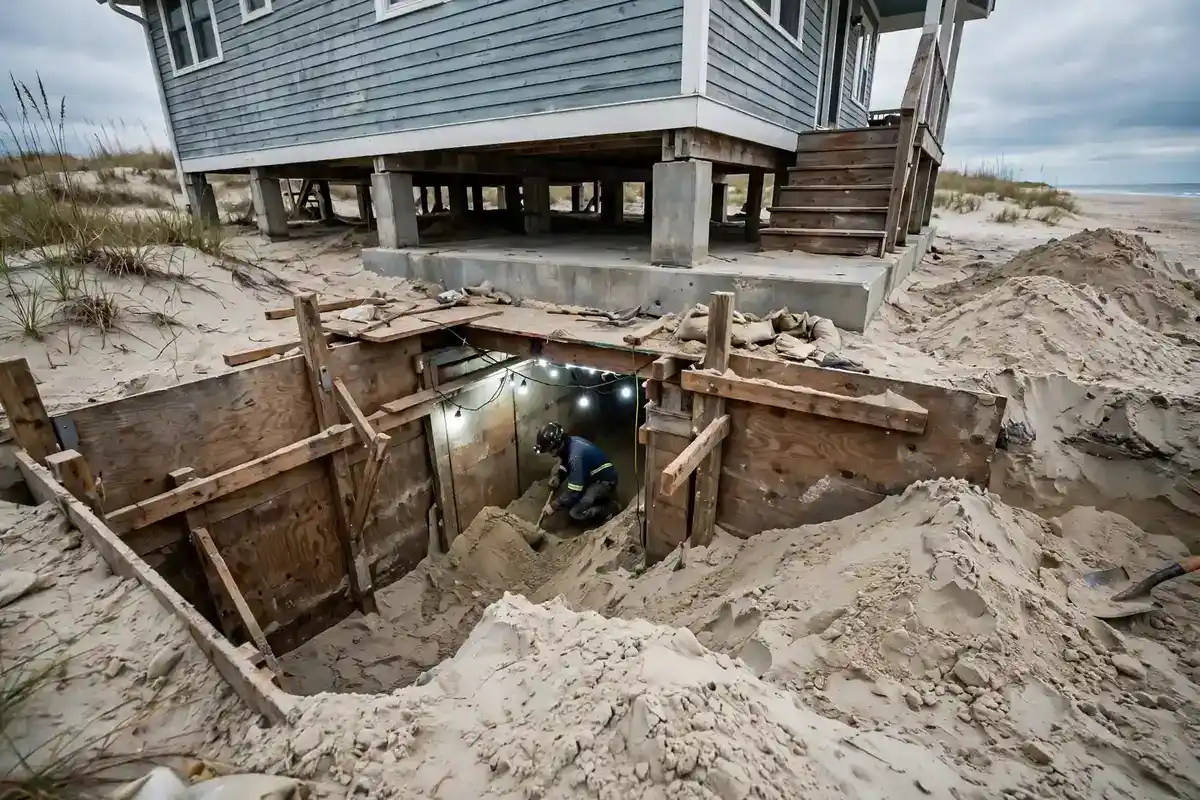
Under-slab tunneling reaches a leaking pipe by digging a small horizontal tunnel beneath the foundation from outside the home, instead of jackhammering through interior floors. The leaking section is repaired or replaced from below, the tunnel is backfilled and compacted, and your tile, hardwood or stone floors stay intact. The 90275 version of that plan respects Palos Verdes Drive South, Hawthorne Boulevard and Crenshaw Boulevard serve the area, with Lunada Bay, the Portuguese Bend Reserve and Forrestal Preserve, Wayfarers Chapel, Trump National Golf Club, and the Point Vicente Lighthouse nearby. - equipment reaches the property along those routes, and staging works around the lot's realities. Detection work here must rule out hillside groundwater seepage versus a true pipe leak, and any repair plan must account for ongoing soil movement - a spot repair in the slide zone can be re-stressed by the next rainy season.
For 90275 homeowners weighing options, the questions to ask are: is my home on a slab, what pipe generation is under it, has the leak been electronically located (not just guessed from a wet spot), and is there workable exterior access for a pit? The answers sort tunneling candidates from reroute candidates quickly. Palos Verdes Drive South, Hawthorne Boulevard and Crenshaw Boulevard serve the area, with Lunada Bay, the Portuguese Bend Reserve and Forrestal Preserve, Wayfarers Chapel, Trump National Golf Club, and the Point Vicente Lighthouse nearby. - the crews serving this area know these streets and these lots, which shortens the learning curve on every job.
Signs Your Rancho Palos Verdes Home May Need Under-Slab Tunneling
Tunneling is usually discussed after electronic detection pinpoints a leak under the slab: a warm spot on the floor, the sound of running water with fixtures off, a water bill that jumped, or a hot-water line that never seems to rest. It is the preferred path when interior floors are expensive to restore - tile, hardwood, polished concrete - or when the leak sits far from any practical interior access point. The 90275 pattern adds local flavor: Detection work here must rule out hillside groundwater seepage versus a true pipe leak, and any repair plan must account for ongoing soil movement - a spot repair in the slide zone can be re-stressed by the next rainy season. Either way, the sequence holds - symptoms lead to detection, detection leads to the method decision, and tunneling earns its place only when the location is certain.
How Under-Slab Tunneling Works on a Rancho Palos Verdes Property
First the leak is located electronically to within inches. Then a small exterior access pit is dug at the foundation edge and a hand-dug tunnel is advanced under the slab to the leak point, typically just tall enough to work in. The damaged pipe section is cut out and replaced, the repair is pressure-tested, and the tunnel is backfilled in lifts and compacted to support the slab again. Monterey Formation bedrock (Middle Miocene to Early Pliocene shale) with Altamira Shale and bentonite clay from the Portuguese Tuff, under surficial marine terrace soils, alluvium, colluvium and fill. That soil reality shapes the tunnel: shoring where needed, dewatering where the water table intrudes, and a careful eye on anything the tunnel passes near. Backfill is compacted in lifts so the slab ends up supported as it was found.
Why Rancho Palos Verdes's Ground and Housing Stock Shape Under-Slab Tunneling
Rancho Palos Verdes 90275 sits on Monterey Formation bedrock (Middle Miocene to Early Pliocene shale) with Altamira Shale and bentonite clay from the Portuguese Tuff, under surficial marine terrace soils, alluvium, colluvium and fill. Hilly terrain rising to about 1,276 feet near the Rolling Hills border, with bluffs along Palos Verdes Drive South. Semi-arid climate with roughly 13-15 inches of rain, nearly all of it November through March; winter storms saturate the slide mass and accelerate land movement. Homes here: Predominantly single-family detached homes, most built in the 1960s, with 1950s-1970s ranch and split-level homes on terraced hillside lots, plus ocean-view and bluff-top properties. Pipe underneath: 1960s-70s copper supply lines under slab (Type M/L); early-1950s pockets may still carry galvanized steel; cast-iron or ABS drains. Slab-on-grade prevalence is Very high - postwar slab-on-grade is the norm for 1950s-70s tracts. The key local fact for under-slab tunneling: This is the one area in the service footprint where the ground itself moves. The Greater Portuguese Bend Landslide Complex, roughly 700 acres, is actively creeping on a bentonite clay slide plane; 2023-24 storms accelerated movement to inches per week, dewatering wells are in operation, and Ordinance 692 (2025) permanently bans new residential construction inside the complex. Creeping land shears under-slab copper and stresses slabs beyond what corrosion alone explains, and wet winters make it worse. On the ground that means: Detection work here must rule out hillside groundwater seepage versus a true pipe leak, and any repair plan must account for ongoing soil movement - a spot repair in the slide zone can be re-stressed by the next rainy season. And for reference: California Water Service (Cal Water) is the area's water provider, and City of Rancho Palos Verdes Building & Safety at 30940 Hawthorne Blvd is the permit authority for plumbing work.
Tunneling vs. Breaking the Slab vs. Rerouting in Rancho Palos Verdes
The three-way choice in 90275 comes down to floors, pipe age, and access. Interior spot repair through the slab suits leaks under restorable floors. Tunneling suits confirmed single leaks under floors worth preserving, where detection work here must rule out hillside groundwater seepage versus a true pipe leak, and any repair plan must account for ongoing soil movement - a spot repair in the slide zone can be re-stressed by the next rainy season. Rerouting suits aging systems - 1960s-70s copper supply lines under slab (type m/l) - where the next pinhole is a matter of time. A straight assessment in Rancho Palos Verdes lays out all three with the trade-offs in plain language, because the right answer varies house to house even on the same street.
Your First Call: What to Expect in Rancho Palos Verdes
Your call to (833) 713-2101 starts simply: we verify the 90275 ZIP, hear the symptoms in your words, and note anything already tried. Then Slab Leak Repair Experts - a referral service connecting Rancho Palos Verdes homeowners with local specialists - pairs you with a specialist who knows under-slab tunneling on Portuguese Bend and Lunada Bay-area homes like yours. The specialist takes it from there: questions, a visit if needed, and a plain-spoken plan. Reach us at (833) 713-2101 at (833) 713-2101.
Suspect a Slab Leak? Talk to a Specialist Today
One call connects you with a local slab leak professional serving Rancho Palos Verdes, CA — day or night.
Call (833) 713-2101Frequently Asked Questions
How long does an under-slab tunnel repair take in Rancho Palos Verdes?
Most single-leak tunnel repairs complete in one to three working days once detection is done: a day for the pit and tunnel, a day for the pipe repair and testing, and backfill/compaction. Timelines stretch when soil needs shoring, when dewatering runs continuously, or when 90275's lot constraints complicate access. Detection itself is usually a separate, shorter visit. Your specialist gives you a straight timeline for your specific property before work starts - not a generic promise.
Is tunneling more expensive than just breaking the slab in Rancho Palos Verdes?
The pipe repair itself is comparable; the difference is restoration. Breaking the slab is cheaper on day one but can be far more expensive once you add tile, hardwood, or stone restoration - in 90275, interior floor restoration often exceeds the plumbing cost. Tunneling shifts the cost to excavation instead of restoration. For homes with basic or unfinished floors over the leak, interior spot repair may genuinely be the economical choice. The assessment should price the whole job - repair plus restoration - so you're comparing honestly.
Will tunneling work in 90275's soil?
It depends on which Rancho Palos Verdes soil we're talking about. Monterey Formation bedrock (Middle Miocene to Early Pliocene shale) with Altamira Shale and bentonite clay from the Portuguese Tuff, under surficial marine terrace soils, alluvium, colluvium and fill. Hilly terrain rising to about 1,276 feet near the Rolling Hills border, with bluffs along Palos Verdes Drive South. In stable clay and shale, tunnels hold well. In beach sand - common in the beach cities - the tunnel needs shoring to stay open safely. Where the water table is high, as in the harbor-plain areas, the plan includes dewatering so the tunnel doesn't become a sump. Your lot's soil is part of the pre-work assessment, not an afterthought.
How long does an under-slab tunnel repair take in Rancho Palos Verdes?
Most single-leak tunnel repairs complete in one to three working days once detection is done: a day for the pit and tunnel, a day for the pipe repair and testing, and backfill/compaction. Timelines stretch when soil needs shoring, when dewatering runs continuously, or when 90275's lot constraints complicate access. Detection itself is usually a separate, shorter visit. Your specialist gives you a straight timeline for your specific property before work starts - not a generic promise.