Under-Slab Tunneling in Lawndale, CA 90260
Looking for under-slab tunneling in Lawndale, CA 90260? Slab Leak Repair Experts connects you with local specialists serving the Heart of the South Bay.
In Short
Looking for under-slab tunneling in Lawndale, CA 90260? Slab Leak Repair Experts connects you with local specialists serving the Heart of the South Bay. We confirm your 90260 ZIP, review your symptoms on the call, and the first step is a no-obligation phone assessment of your symptoms, floor layout, and exterior access. Call (833) 713-2101 to get started.
Under-Slab Tunneling in Lawndale, CA 90260: How Local Conditions Change the Work
The housing stock sets the stage. Lawndale, the Heart of the South Bay - most homes built in the 1950s on small lots, with 57 percent renter occupancy. Under-slab pipe here is 1950s copper and galvanized; cast-iron drains. Slab-on-grade prevalence is Very high. Those facts decide whether tunneling is even on the table: it exists for slab homes with a confirmed under-slab leak, and the 90260 assessment verifies both before discussing methods.
In Lawndale 90260, under-slab tunneling is quick when it's right - and often unnecessary when a reroute is cheaper. Small 1950s lots with short pipe runs make for short tunnels and fast jobs, and tunneling preserves interiors in the owner-occupied homes. But the same short runs make Lawndale one of the most economical places in the service area for a full hot-and-cold reroute, so the assessment honestly compares: tunnel the single pinhole, or reroute the whole 1950s run for not much more? With 57 percent renter occupancy, leaks arrive late and often with mold scope attached - the tunnel plan accounts for the damage around the leak, not just the pipe. Clear photo documentation matters here because the reporter and the authorizer are often different people.
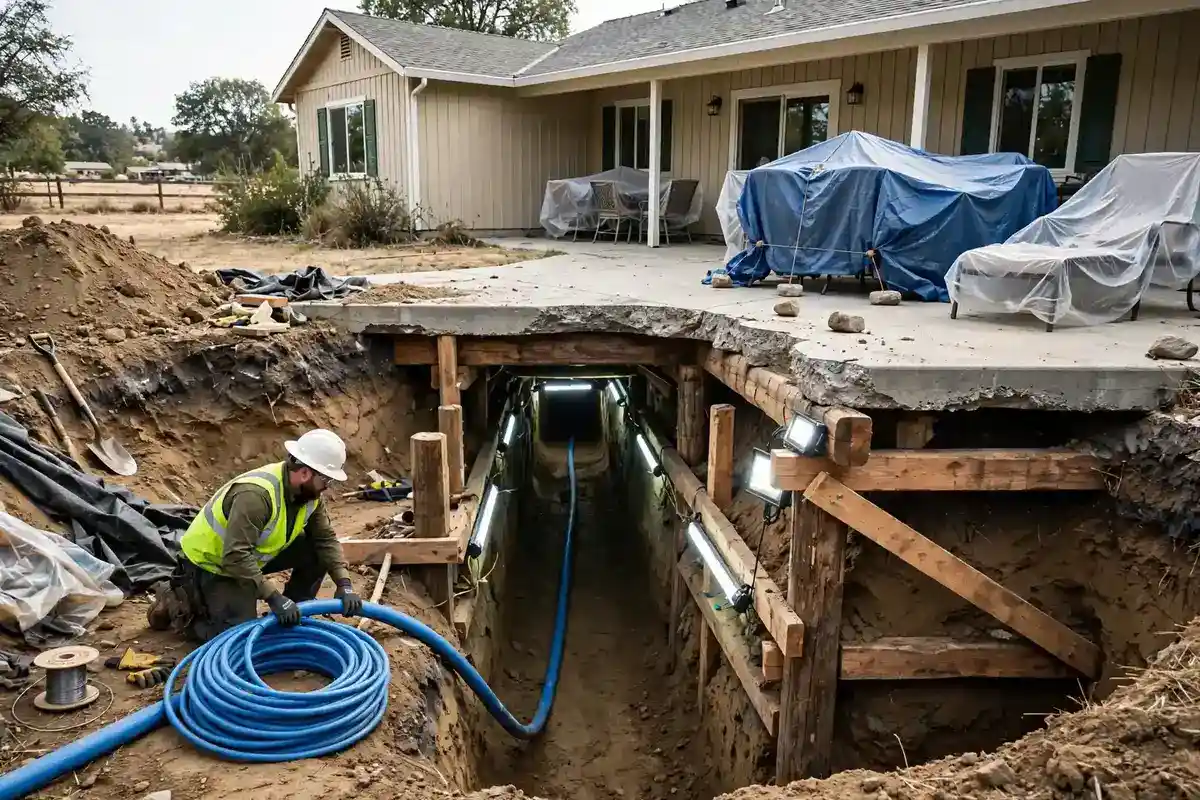
Under-slab tunneling reaches a leaking pipe by digging a small horizontal tunnel beneath the foundation from outside the home, instead of jackhammering through interior floors. The leaking section is repaired or replaced from below, the tunnel is backfilled and compacted, and your tile, hardwood or stone floors stay intact. In Lawndale, the tunnel plan adapts to local soil: Flat 1.97-square-mile city at about 59 feet elevation with alluvial soils. Access pits go where the lot allows, the tunnel advances to the electronically located leak, the damaged section is replaced, and everything is pressure-tested before backfill and compaction.
What tunneling is not: a way to avoid diagnosis. In Lawndale, the properties where tunneling disappoints are the ones where it was prescribed before detection - a tunnel to the wrong place is just an expensive hole. Insist on the sequence: locate first, then choose the method. When the location is certain and the site allows, tunneling in 90260 is routinely the least disruptive path from leak to repair.
Signs Your Lawndale Home May Need Under-Slab Tunneling
Tunneling is usually discussed after electronic detection pinpoints a leak under the slab: a warm spot on the floor, the sound of running water with fixtures off, a water bill that jumped, or a hot-water line that never seems to rest. It is the preferred path when interior floors are expensive to restore - tile, hardwood, polished concrete - or when the leak sits far from any practical interior access point. In Lawndale 90260, homeowners also watch for the local tells: Small 1950s lots with short pipe runs mean fast, affordable jobs - but 57 percent renter occupancy means leaks are reported late, after flooring and drywall damage. When any of those appear, the next step is detection - tunneling is prescribed after locating, never before.
The Under-Slab Tunneling Process in Lawndale, CA 90260
First the leak is located electronically to within inches. Then a small exterior access pit is dug at the foundation edge and a hand-dug tunnel is advanced under the slab to the leak point, typically just tall enough to work in. The damaged pipe section is cut out and replaced, the repair is pressure-tested, and the tunnel is backfilled in lifts and compacted to support the slab again. On a Lawndale 90260 property, the crew serving the Heart of the South Bay stages along Hawthorne Boulevard, Marine Avenue, Inglewood Avenue and Redondo Beach Boulevard and works the plan around the lot: With most residents renting, the leak reporter and the repair authorizer are often different people - clear photo documentation bridges that gap. The homeowner's role is simple - clear the work area, keep pets and kids clear of the pit, and let the crew work.
Why Lawndale's Ground and Housing Stock Shape Under-Slab Tunneling
Lawndale 90260 sits on Flat 1.97-square-mile city at about 59 feet elevation with alluvial soils. Mediterranean climate with November-to-March rain. Homes here: Lawndale, the Heart of the South Bay - most homes built in the 1950s on small lots, with 57 percent renter occupancy. Pipe underneath: 1950s copper and galvanized; cast-iron drains. Slab-on-grade prevalence is Very high. The key local fact for under-slab tunneling: Small 1950s lots with short pipe runs mean fast, affordable jobs - but 57 percent renter occupancy means leaks are reported late, after flooring and drywall damage. Slab-leak work here often pairs with mold remediation scope. On the ground that means: With most residents renting, the leak reporter and the repair authorizer are often different people - clear photo documentation bridges that gap. And for reference: Short pipe runs make Lawndale one of the most economical places in the service area for a full reroute - when the 1950s copper starts failing, replacing the run beats chasing pinholes.
Tunneling vs. Breaking the Slab vs. Rerouting in Lawndale
Tunneling, breaking the slab, and rerouting each have a Lawndale use case. Breaking the slab (interior spot repair) is fastest when the leak sits under an unfinished or easily restored floor - a garage or utility room - because the restoration cost is minimal. Tunneling wins when interior floors are expensive: tile, hardwood, or stone you'd rather not demolish, with workable exterior access. Rerouting - abandoning the under-slab line for a new overhead run - wins when the pipe is systemically tired: 1950s-70s copper with multiple pinholes, or 1950s copper and galvanized, where fixing one spot just schedules the next leak. In 90260, the assessment weighs all three against your floors, your pipe's age, and your lot's access - and recommends the one that fits, not the one that's habit.
Your First Call: What to Expect in Lawndale
When you call (833) 713-2101, here's what happens. First, we confirm you're in our Lawndale 90260 service area and listen to what you're seeing - the symptoms, the timeline, any detection already done. Then we match you with a local slab-leak specialist experienced with under-slab tunneling and the Heart of the South Bay properties. Slab Leak Repair Experts is a referral service: we connect you with the local specialist, who handles the visit, the diagnosis, and the work directly with you. Start with a call to (833) 713-2101 at (833) 713-2101 - the call costs nothing and the guidance is straightforward.
Suspect a Slab Leak? Talk to a Specialist Today
One call connects you with a local slab leak professional serving Rancho Palos Verdes, CA — day or night.
Call (833) 713-2101Frequently Asked Questions
How do I know tunneling is right for my Lawndale home instead of breaking through the floor?
The deciding factors are floor value, leak count, and exterior access. Tunneling makes sense when detection has pinpointed a single leak under finished floors - tile, hardwood, stone - that would be expensive to demolish and restore, and when your 90260 lot allows an exterior access pit. It makes less sense when the pipe is systemically failing (1950s copper and galvanized; cast-iron drains.), when there's no side yard for a pit, or when the leak hasn't been electronically located yet. A straight assessment weighs all three options - tunnel, interior spot repair, reroute - against your specific house.
Does tunneling damage the foundation or the yard in 90260?
A properly executed tunnel doesn't compromise the slab: the tunnel is hand-dug to working height, the repair is pressure-tested, and the tunnel is backfilled in compacted lifts so the slab ends up supported as it was found. The yard impact is limited to the access pit area at the foundation edge, which is restored afterward. In Lawndale, pit placement also respects local constraints - With most residents renting, the leak reporter and the repair authorizer are often different people - clear photo documentation bridges that gap.
Can tunneling be done while we live in the house?
Usually yes - that's one of its main advantages. The work happens outside and beneath, not through your living room, so most Lawndale households stay put during a tunnel repair. You'll want to keep kids and pets clear of the access pit area, and there will be equipment noise during digging hours. Interior disruption is minimal compared to jackhammering through finished floors, which is exactly why 90260 homeowners with updated interiors choose it.
How do I know tunneling is right for my Lawndale home instead of breaking through the floor?
The deciding factors are floor value, leak count, and exterior access. Tunneling makes sense when detection has pinpointed a single leak under finished floors - tile, hardwood, stone - that would be expensive to demolish and restore, and when your 90260 lot allows an exterior access pit. It makes less sense when the pipe is systemically failing (1950s copper and galvanized; cast-iron drains.), when there's no side yard for a pit, or when the leak hasn't been electronically located yet. A straight assessment weighs all three options - tunnel, interior spot repair, reroute - against your specific house.