Under-Slab Tunneling in Harbor City, CA 90710
If you need under-slab tunneling in Harbor City 90710, start with a call to (833) 713-2101.
In Short
If you need under-slab tunneling in Harbor City 90710, start with a call to (833) 713-2101. Slab Leak Repair Experts connects the 2.3-square-mile harbor community homeowners with local specialists; we confirm the 90710 ZIP, review your symptoms, and the first step is a no-obligation phone assessment of your symptoms, floor layout, and exterior access.
Harbor City 90710 Ground, Pipes and Homes: What It Means for Under-Slab Tunneling
Every 90710 tunneling plan starts from the same local facts. Most homes built in the 1970s, a mix of single-family and multifamily in a compact 2.3-square-mile community. Beneath those slabs runs 1970s copper supply; ABS drains. Slab prevalence is Very high. That combination - mid-century copper at failure age under slab - is exactly the profile tunneling was designed for, provided detection confirms a repairable single-point failure.
In Harbor City 90710, under-slab tunneling has a multifamily prerequisite: map the lines first. One slab leak in a multifamily building can affect multiple units, and a tunnel dug to the wrong line - or a repair on a shared line authorized by only one unit's owner - creates problems bigger than the leak. Detection here must establish shared versus dedicated lines before anyone authorizes concrete or soil work. The 1970s copper is old enough for pinhole failures, especially where the high water table keeps soil saturated, and saturated soil can flood a tunnel the same way it does in Wilmington and San Pedro - dewatering goes into the plan. For single-family 1970s homes on flat lots, tunneling is straightforward: short runs, easy pits, floors preserved.
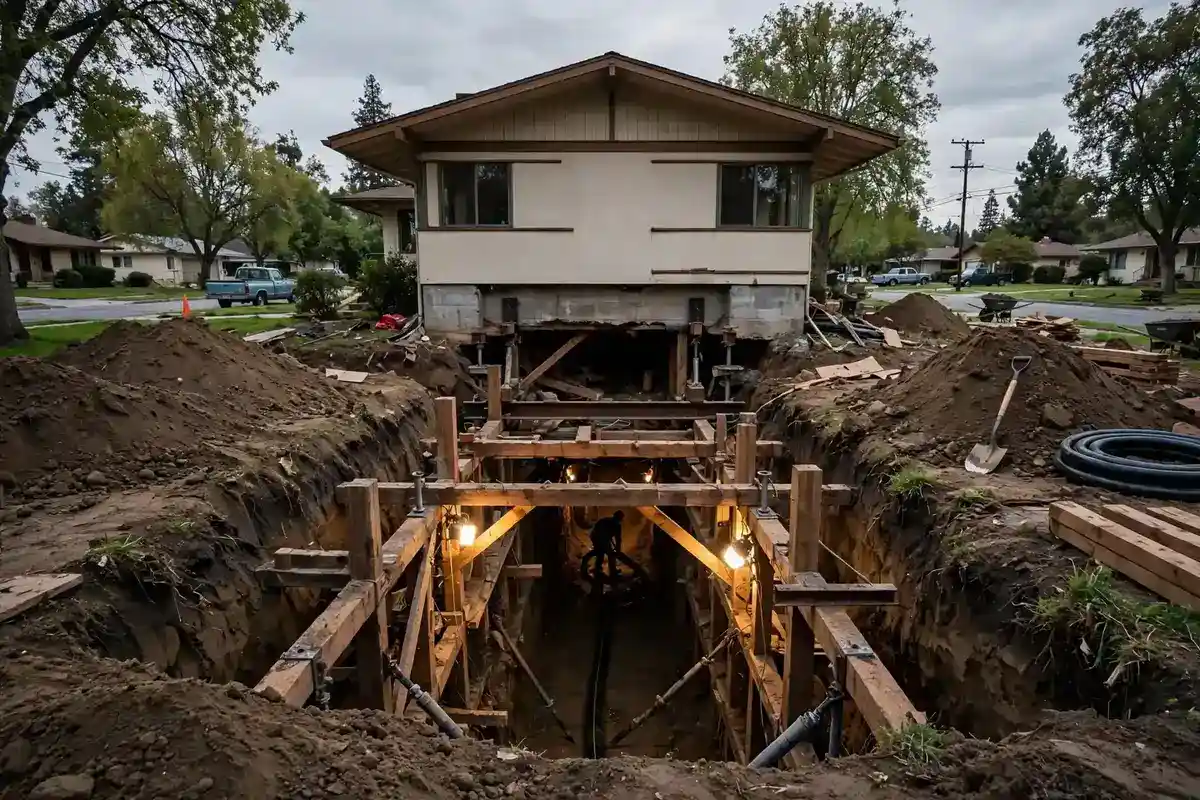
Under-slab tunneling reaches a leaking pipe by digging a small horizontal tunnel beneath the foundation from outside the home, instead of jackhammering through interior floors. The leaking section is repaired or replaced from below, the tunnel is backfilled and compacted, and your tile, hardwood or stone floors stay intact. The 90710 version of that plan respects Pacific Coast Highway, Vermont Avenue, Normandie Avenue and 257th Street serve the area, near Ken Malloy Harbor Regional Park. - equipment reaches the property along those routes, and staging works around the lot's realities. In multifamily buildings, access and authorization get complicated - the leak, the shutoff, and the damaged unit are not always in the same home.
The decision framework for Harbor City 90710 homeowners is straightforward: confirm the slab, confirm the pipe material, confirm the leak location electronically, confirm exterior access - then choose tunneling when the floors are worth preserving and the rest of the line still has life. When any of those confirmations fails, the honest recommendation changes: reroute, spot repair, or a different investigation entirely. A specialist who walks through those gates with you on the first call is the one to trust.
Signs Your Harbor City Home May Need Under-Slab Tunneling
Tunneling is usually discussed after electronic detection pinpoints a leak under the slab: a warm spot on the floor, the sound of running water with fixtures off, a water bill that jumped, or a hot-water line that never seems to rest. It is the preferred path when interior floors are expensive to restore - tile, hardwood, polished concrete - or when the leak sits far from any practical interior access point. The 90710 pattern adds local flavor: In multifamily buildings, access and authorization get complicated - the leak, the shutoff, and the damaged unit are not always in the same home. Either way, the sequence holds - symptoms lead to detection, detection leads to the method decision, and tunneling earns its place only when the location is certain.
The Under-Slab Tunneling Process in Harbor City, CA 90710
First the leak is located electronically to within inches. Then a small exterior access pit is dug at the foundation edge and a hand-dug tunnel is advanced under the slab to the leak point, typically just tall enough to work in. The damaged pipe section is cut out and replaced, the repair is pressure-tested, and the tunnel is backfilled in lifts and compacted to support the slab again. Flat coastal-plain alluvium with a high water table near the harbor. That soil reality shapes the tunnel: shoring where needed, dewatering where the water table intrudes, and a careful eye on anything the tunnel passes near. Backfill is compacted in lifts so the slab ends up supported as it was found.
90710 Soil, Water and Pipe Facts Behind Local Under-Slab Tunneling Calls
Harbor City 90710 sits on Flat coastal-plain alluvium with a high water table near the harbor. Marine-influenced with November-to-March rain; harbor proximity keeps the water table high. Homes here: Most homes built in the 1970s, a mix of single-family and multifamily in a compact 2.3-square-mile community. Pipe underneath: 1970s copper supply; ABS drains. Slab-on-grade prevalence is Very high. The key local fact for under-slab tunneling: 1970s copper is younger than the 1950s stock but old enough for pinhole failures, especially where a high water table keeps soil saturated. Multifamily buildings mean one slab leak can affect multiple units - detection must map shared versus dedicated lines before anyone authorizes concrete work. On the ground that means: In multifamily buildings, access and authorization get complicated - the leak, the shutoff, and the damaged unit are not always in the same home. And for reference: A pinhole leak in 1970s copper can run for months before it shows, because saturated soil wicks the water away instead of letting it surface.
Tunneling vs. Breaking the Slab vs. Rerouting in Harbor City
The three-way choice in 90710 comes down to floors, pipe age, and access. Interior spot repair through the slab suits leaks under restorable floors. Tunneling suits confirmed single leaks under floors worth preserving, where in multifamily buildings, access and authorization get complicated - the leak, the shutoff, and the damaged unit are not always in the same home. Rerouting suits aging systems - 1970s copper supply - where the next pinhole is a matter of time. A straight assessment in Harbor City lays out all three with the trade-offs in plain language, because the right answer varies house to house even on the same street.
What Happens When You Call (833) 713-2101
Calling (833) 713-2101 connects you to a real conversation, not a phone tree. We confirm Harbor City 90710, review what's happening at your home near the 2.3-square-mile harbor community, and connect you - through Slab Leak Repair Experts' referral network - with a local specialist in under-slab tunneling. You'll know the next step before you hang up, whether that's a detection visit, a documentation checklist, or simply a better understanding of your options. Get answers at (833) 713-2101: (833) 713-2101.
Suspect a Slab Leak? Talk to a Specialist Today
One call connects you with a local slab leak professional serving Rancho Palos Verdes, CA — day or night.
Call (833) 713-2101Frequently Asked Questions
What if the tunnel reveals the pipe is worse than expected?
This happens, especially with 1970s copper supply; ABS drains. in 90710. A good tunnel plan includes a decision point: if the exposed line shows systemic corrosion or multiple thin spots, the specialist stops and talks to you before proceeding - because tunneling to save one section of a dying line is poor value next to rerouting. That conversation is part of an honest assessment, and it's why the pipe's generation and age are evaluated before the method is chosen, not during.
What should I ask a tunneling specialist before approving the work in 90710?
Ask these five: Has the leak been electronically located, or are we digging on a guess? Is there workable exterior access for a pit on my lot? What does my soil mean for the tunnel plan - shoring, dewatering? What happens if the exposed pipe is worse than expected? And how does the total compare with rerouting, given my pipe's age (1970s copper supply; ABS drains.)? In Harbor City, the specialist who welcomes those questions is the one to hire.
How is the leak located before anyone digs a tunnel in Harbor City?
Tunneling is prescribed after electronic location, never before. The sequence is: meter testing to confirm water loss, pressure isolation to identify the failed line, then acoustic and thermal instruments to pinpoint the leak - typically within inches. In 90710, that precision matters even more because 1970s copper is younger than the 1950s stock but old enough for pinhole failures, especially where a high water table keeps soil saturated. Only when the location is certain does the tunnel plan get drawn.
What if the tunnel reveals the pipe is worse than expected?
This happens, especially with 1970s copper supply; ABS drains. in 90710. A good tunnel plan includes a decision point: if the exposed line shows systemic corrosion or multiple thin spots, the specialist stops and talks to you before proceeding - because tunneling to save one section of a dying line is poor value next to rerouting. That conversation is part of an honest assessment, and it's why the pipe's generation and age are evaluated before the method is chosen, not during.