Trenchless Slab Leak Repair in San Pedro, CA
Trenchless Slab Leak Repair in San Pedro, CA 90732 repairs or replaces failing under-slab water lines — with no floor demolition and no trench across your yard.
In Short
Trenchless Slab Leak Repair in San Pedro, CA 90732 repairs or replaces failing under-slab water lines — with no floor demolition and no trench across your yard. San Pedro's 1950s–70s hillside homes with copper at prime failure age are prime candidates. Call (833) 713-2101: first a symptom review with a specialist, then testing to confirm the leak.
Trenchless Slab Leak Repair in San Pedro 90732: What Local Homes Need to Know
San Pedro 90732 is the hillside counterpart to 90731's flats — Point Fermin, Cabrillo, White Point, and Vista del Oro, where 1950s–70s homes sit on coastal bluffs and terraced streets like Paseo del Mar. It is the second-most geotechnically sensitive area we serve, after Rancho Palos Verdes itself: slope drainage and bluff-edge moisture complicate every diagnosis, stepped slabs complicate repairs, and 1960s copper is at prime failure age with salt air shortening it further. Trenchless Slab Leak Repair here is planned around the hill, not in spite of it.
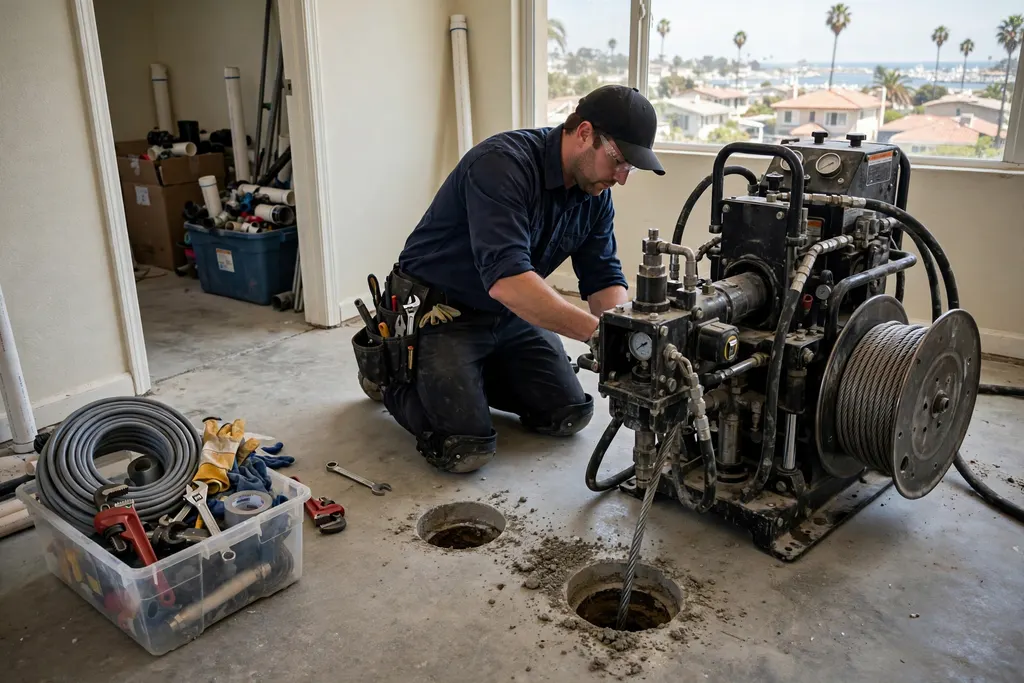
Trenchless slab leak repair fixes or replaces a failing water line under your slab without opening the floor. Depending on what the camera shows, the specialist either pulls a resin-saturated liner through the old pipe and cures it in place, or bursts the old pipe apart while pulling a new line through the same path. Both approaches work through small access points — often a cleanout or a single careful excavation outside the slab — so tile, hardwood, and driveways stay intact.
The appeal is direct: no jackhammer in the hallway, no floor replacement, no trench across the yard. In San Pedro 90732, where bluff-edge terraces make excavation awkward and risky, the no-dig approach is not just convenient — it is often the most practical way to do the job well.
A note on how this works: Slab Leak Repair Experts is a referral service. When you call (833) 713-2101, we connect you with an independent local specialist serving San Pedro — the specialist performs the diagnosis and the repair, and you approve the plan before any work begins.
Contact Us Now — describe your symptoms and get connected with a San Pedro specialist.
Why San Pedro Changes How This Repair Works
South and west San Pedro holds 1950s–1970s hillside single-family homes — 53.6% detached — on coastal bluffs with ocean exposure. Pipe stock is 1950s–70s copper with cast-iron or ABS drains, under slab-on-grade that is frequently stepped to follow the grade. The ground is bluff and hillside: slope-drainage pressure, terraced streets, bluff-edge erosion, salt air. Diagnosis has to separate three lookalikes — true pipe leaks, slope-drainage moisture, and bluff-edge seepage — and pressure testing is the arbiter. Repairs contend with stepped slabs and terraced access: excavation is awkward, tunneling follows grade badly, and every method gets planned around elevation changes. The copper itself is at prime failure age, and the marine exposure compresses the timeline.
Trenchless follows the existing pipe path, so stepped slabs and terraces that defeat tunneling do not matter — the liner or bursting head goes where the pipe already goes. Small access points avoid excavating into bluff-edge lots. In 90732's terrain, 'follow the pipe' beats 'fight the hill.'
That is the San Pedro calculation with trenchless: the repair stays underground, but the demolition disappears. Whether it fits your home comes down to pipe condition, access, and what the ground is doing — exactly what the on-site diagnosis is for.
How Trenchless Repair Works — Without Tearing Up Your Home
Every trenchless job starts with electronic detection and a camera inspection — no one should line or burst a pipe they have not seen. The camera shows the pipe's material, diameter, and condition: pitting, cracks, offsets, bellies. If the pipe is a candidate for lining, it gets cleaned and descaled first; a liner saturated with epoxy resin is then inverted or pulled into place and cured until it hardens into a smooth new pipe inside the old one. If the pipe is too far gone for a liner but the path is sound, pipe bursting is the alternate route: a bursting head breaks the old pipe outward while a new line follows right behind it through the same underground path. Either way, the entry and exit points are small. Inside the house, floors stay down. Outside, landscaping takes a fraction of the disturbance that open trenching would cause. For under-slab copper supply lines, lining is the more common trenchless answer; bursting tends to serve longer lateral and service-line runs.
Preparing for the visit takes ten minutes and saves more: clear access to the water meter, the water heater, and any cleanouts you know about. Locate your main shutoff valve — if you cannot find it, say so on the call, because shutting off the water quickly is the most useful thing a homeowner can do when a leak is suspected. Gather any history you have: prior slab leaks, previous repairs, remodels that moved plumbing. That background often aims the camera correctly before it ever enters the pipe, which shortens the diagnostic and gets the repair plan in your hands sooner.
What Happens When You Call (833) 713-2101
Step 1: The Call
Call (833) 713-2101. You will reach our referral line, where we connect you with an independent local specialist serving San Pedro. Expect a few direct questions: warm spots on the floor, the sound of running water with taps off, a water bill that jumped, low pressure. Those answers tell the specialist what to test first.
Step 2: The Diagnosis
On site, the specialist pressure-tests the lines, listens electronically, and runs a camera through the suspect pipe. For trenchless work this step is decisive — the camera footage determines whether your pipe can be lined, needs bursting, or is not a trenchless candidate at all.
Step 3: The Plan
You get a plain-language explanation of what was found and which repair paths fit — Trenchless Slab Leak Repair among them — before any work is authorized. No work starts on a guess.
When Trenchless Repair Isn't the Right Fix
Trenchless is not universal. A pipe that has fully collapsed cannot be lined — the liner needs a host pipe to take its shape. Severe offsets or separated joints can stop a liner or a bursting head alike. Lines with tight bends, heavy bellies holding standing water, or extensive buildup at joints may also rule it out. And when the camera shows a whole system at end of life — pitting everywhere, not one bad section — lining a single run is patching a failing system; rerouting or a fuller replacement is the honest recommendation. A straight camera inspection is what separates the candidates from the not-candidates, which is why the diagnosis step is never skipped.
Serving San Pedro 90732: Neighborhoods We Cover
Serving San Pedro 90732 — Point Fermin, Cabrillo, White Point, and Vista del Oro, along Gaffey Street, 25th Street, and Paseo del Mar, near the Point Fermin Lighthouse, Cabrillo Marine Aquarium, and the Korean Bell of Friendship. Hillside or bluff-edge lot? Lead with that when you call — the diagnostic builds drainage checks in from the start.
Suspect a Slab Leak? Talk to a Specialist Today
One call connects you with a local slab leak professional serving Rancho Palos Verdes, CA — day or night.
Call (833) 713-2101Frequently Asked Questions
Our bluff-edge home has damp floors. Pipe leak or bluff moisture?
In 90732 that is the defining diagnostic question — bluff-edge seepage and slope drainage mimic pipe leaks closely. Pressure testing and meter isolation give the definitive answer: pressurized-line loss means plumbing, holding pressure means groundwater. Insist on that test before any repair plan. That is precisely where trenchless methods pay off — the repair happens through small access points instead of open excavation.
What is a stepped slab and why does it matter?
Hillside 90732 homes often sit on slabs poured in levels following the grade. Stepped slabs complicate tunneling and excavation, but methods like Trenchless Repair — which work through the pipe path or interior routes — are largely unaffected. The diagnostic maps the slab before recommending anything. For trenchless work, this is decided by the camera inspection: the footage shows whether the pipe can be lined or needs bursting.
Our home was built in 1965. How urgent is this?
1960s copper is at prime failure age, and 90732's salt air compresses the timeline — pinhole leaks are expected, not surprising. Urgency depends on the leak's size and what the moisture is reaching, which the diagnostic establishes. Do not let it run: hillside moisture plus pipe water is a bad combination. Because trenchless follows the existing pipe path, none of this requires regrading or reworking the lot.
Can equipment reach our terraced street?
Terraced streets like Paseo del Mar complicate heavy excavation — another reason Trenchless Slab Leak Repair is the default here. Small access points or interior routes replace trenching. Describe your street's grade and parking when you call so the visit is planned correctly. That is precisely where trenchless methods pay off — the repair happens through small access points instead of open excavation.
Will the repair hold if the hill keeps moving?
Bluff-edge lots do shift, which is why the method matters: repairs locked into moving ground get re-stressed, while reroutes into the building envelope — or liners assessed against the lot's movement — are planned with the hill in mind. Raise the concern on the call; the specialist factors it into the recommendation. For trenchless work, this is decided by the camera inspection: the footage shows whether the pipe can be lined or needs bursting.
Will trenchless repair really save my floors?
That is the central reason homeowners choose it. Lining and bursting both work through small access points — usually a cleanout or a compact excavation outside the slab — so tile, hardwood, and concrete inside the home stay in place. There are small openings where the new line ties in, and the specialist will show you exactly where before work begins.
How do I know if my pipe can be lined instead of burst?
The camera decides. A pipe with pitting, pinholes, and cracks but intact shape is a lining candidate. A pipe that is crushed, fully collapsed, or separated at joints usually is not — bursting or another method takes over. No reputable specialist recommends one method without showing you the footage first.