Trenchless Slab Leak Repair in Redondo Beach, CA
Trenchless Slab Leak Repair in Redondo Beach, CA 90278 repairs or replaces failing under-slab water lines — with no floor demolition and no trench across your yard.
In Short
Trenchless Slab Leak Repair in Redondo Beach, CA 90278 repairs or replaces failing under-slab water lines — with no floor demolition and no trench across your yard. Redondo Beach's 1920s–60s beachside homes with salt-aged copper and galvanized are prime candidates. Call (833) 713-2101: first a symptom review with a specialist, then testing to confirm the leak.
Trenchless Slab Leak Repair in Redondo Beach 90278: What Local Homes Need to Know
South Redondo 90278 puts salt air, beach sand, and century-spanning housing stock together. Salt corrosion attacks copper faster than inland air — beachside homes can show slab leaks a decade earlier than the same pipe would inland. The sand drains fast, so leaks travel far before surfacing, which makes visual leak-hunting nearly useless. Electronic detection beats eyes here every time. And Trenchless Repair beats excavation in sand that collapses back into the trench.
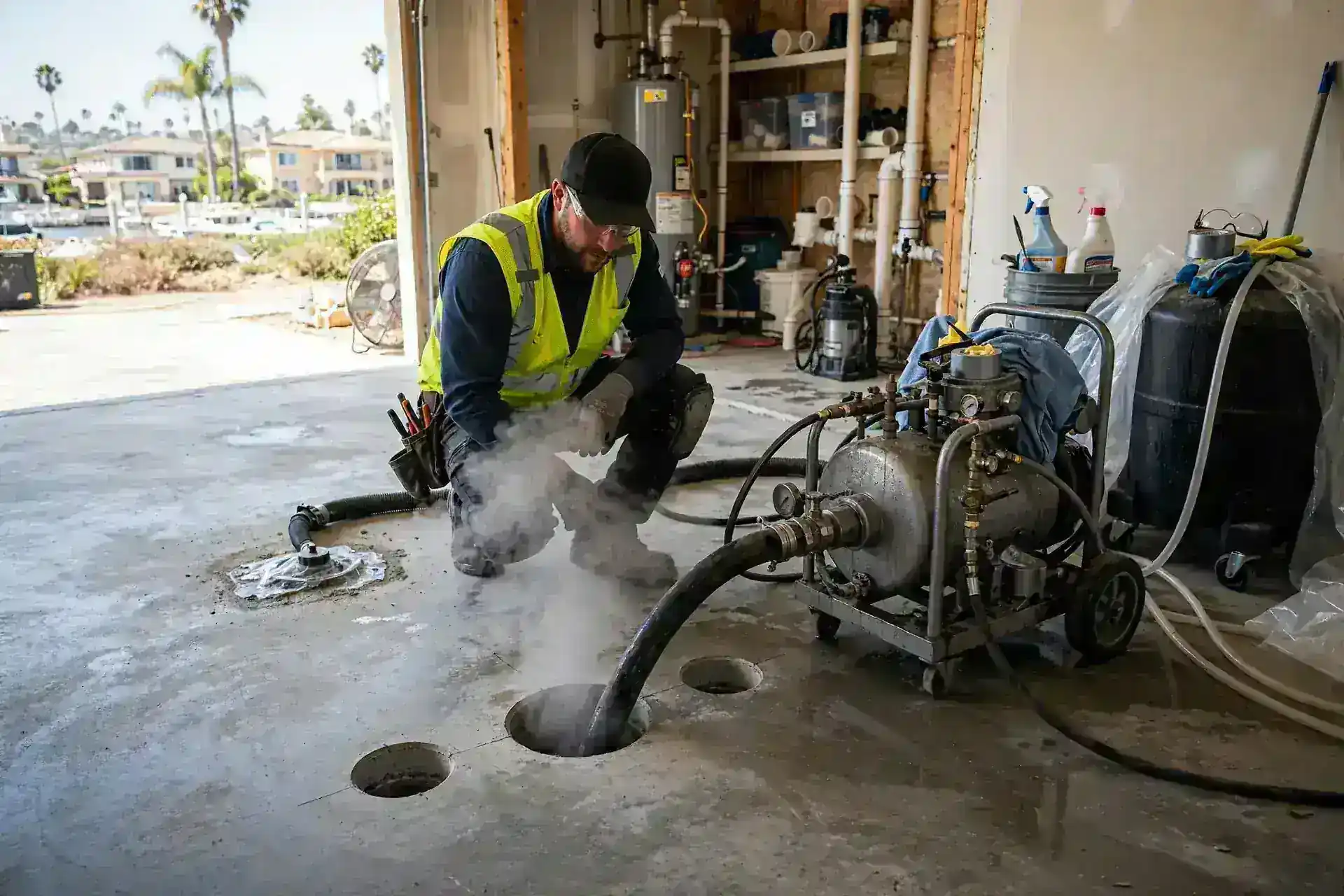
Trenchless slab leak repair fixes or replaces a failing water line under your slab without opening the floor. Depending on what the camera shows, the specialist either pulls a resin-saturated liner through the old pipe and cures it in place, or bursts the old pipe apart while pulling a new line through the same path. Both approaches work through small access points — often a cleanout or a single careful excavation outside the slab — so tile, hardwood, and driveways stay intact.
The appeal is direct: no jackhammer in the hallway, no floor replacement, no trench across the yard. In Redondo Beach 90278, where beach sand collapses every trench you dig in it, the no-dig approach is not just convenient — it is often the most practical way to do the job well.
A note on how this works: Slab Leak Repair Experts is a referral service. When you call (833) 713-2101, we connect you with an independent local specialist serving Redondo Beach — the specialist performs the diagnosis and the repair, and you approve the plan before any work begins.
Call (833) 713-2101 — describe your symptoms and get connected with a Redondo Beach specialist.
Why Redondo Beach Changes How This Repair Works
South Redondo mixes 1920s–40s beach cottages near the water, mid-century infill, modern rebuilds, and denser multifamily near the pier. Pipe stock follows the eras: galvanized and cast iron in the oldest cottages (many replumbed during rebuilds), copper from the 1950s on. Foundations are mixed — raised in the oldest cottages, slab in postwar construction. The ground is beach sand over alluvium: excellent drainage, but salt-laden air and soil moisture. Two consequences: salt accelerates copper pitting from the outside, so beachside copper fails younger; and fast-draining sand lets leaks migrate far from the break, so the damp spot is rarely above the leak. Electronic location — acoustic, thermal, pressure — is mandatory; digging where the water appears is guessing.
Trenchless in sand is a double win: no trench walls to collapse, and no guessing where to dig since the method follows the pipe path. Lining seals salt-pitted copper; bursting replaces runs too far gone — both without opening beach-cottage floors.
That is the Redondo Beach calculation with trenchless: the repair stays underground, but the demolition disappears. Whether it fits your home comes down to pipe condition, access, and what the ground is doing — exactly what the on-site diagnosis is for.
How Trenchless Repair Works — Without Tearing Up Your Home
Every trenchless job starts with electronic detection and a camera inspection — no one should line or burst a pipe they have not seen. The camera shows the pipe's material, diameter, and condition: pitting, cracks, offsets, bellies. If the pipe is a candidate for lining, it gets cleaned and descaled first; a liner saturated with epoxy resin is then inverted or pulled into place and cured until it hardens into a smooth new pipe inside the old one. If the pipe is too far gone for a liner but the path is sound, pipe bursting is the alternate route: a bursting head breaks the old pipe outward while a new line follows right behind it through the same underground path. Either way, the entry and exit points are small. Inside the house, floors stay down. Outside, landscaping takes a fraction of the disturbance that open trenching would cause. For under-slab copper supply lines, lining is the more common trenchless answer; bursting tends to serve longer lateral and service-line runs.
Preparing for the visit takes ten minutes and saves more: clear access to the water meter, the water heater, and any cleanouts you know about. Locate your main shutoff valve — if you cannot find it, say so on the call, because shutting off the water quickly is the most useful thing a homeowner can do when a leak is suspected. Gather any history you have: prior slab leaks, previous repairs, remodels that moved plumbing. That background often aims the camera correctly before it ever enters the pipe, which shortens the diagnostic and gets the repair plan in your hands sooner.
What Happens When You Call (833) 713-2101
Step 1: The Call
Call (833) 713-2101. You will reach our referral line, where we connect you with an independent local specialist serving Redondo Beach. Expect a few direct questions: warm spots on the floor, the sound of running water with taps off, a water bill that jumped, low pressure. Those answers tell the specialist what to test first.
Step 2: The Diagnosis
On site, the specialist pressure-tests the lines, listens electronically, and runs a camera through the suspect pipe. For trenchless work this step is decisive — the camera footage determines whether your pipe can be lined, needs bursting, or is not a trenchless candidate at all.
Step 3: The Plan
You get a plain-language explanation of what was found and which repair paths fit — Trenchless Slab Leak Repair among them — before any work is authorized. No work starts on a guess.
When Trenchless Repair Isn't the Right Fix
Trenchless is not universal. A pipe that has fully collapsed cannot be lined — the liner needs a host pipe to take its shape. Severe offsets or separated joints can stop a liner or a bursting head alike. Lines with tight bends, heavy bellies holding standing water, or extensive buildup at joints may also rule it out. And when the camera shows a whole system at end of life — pitting everywhere, not one bad section — lining a single run is patching a failing system; rerouting or a fuller replacement is the honest recommendation. A straight camera inspection is what separates the candidates from the not-candidates, which is why the diagnosis step is never skipped.
Serving Redondo Beach 90278: Neighborhoods We Cover
Connecting South Redondo 90278 — the beach cottage streets, the Esplanade, the Catalina Avenue and Pacific Coast Highway corridors, and the neighborhoods around the Redondo Beach Pier, King Harbor, and Veterans Park. Salt air on your block? It is a diagnostic factor, not just weather — mention your proximity to the water when you call.
Suspect a Slab Leak? Talk to a Specialist Today
One call connects you with a local slab leak professional serving Rancho Palos Verdes, CA — day or night.
Call (833) 713-2101Frequently Asked Questions
Our beachside home's pipes failed 'early.' Why?
Salt air and salt-laden soil moisture accelerate copper corrosion — beachside pipe can fail a decade earlier than identical pipe inland. It is environmental, not defective plumbing. The fix (Trenchless Repair) accounts for it; a reroute out of the soil is the most durable long-term answer. That is precisely where trenchless methods pay off — the repair happens through small access points instead of open excavation.
The damp spot is nowhere near where we hear water. Why?
Beach sand drains fast and leaks travel — water migrates far from the break before surfacing, so the visible symptom misleads. Electronic detection traces the actual pipe path instead of chasing the puddle. Never authorize digging at the damp spot without electronic confirmation. For trenchless work, this is decided by the camera inspection: the footage shows whether the pipe can be lined or needs bursting.
Our cottage was rebuilt in the 2000s. Are we safe?
Mostly — rebuilds with new plumbing rarely generate slab-leak calls. But verify what was actually replaced: some rebuilds keep original underground lines. If the re-plumb covered everything, your risk is low; if the buried lines are original, the salt clock is still ticking. Because trenchless follows the existing pipe path, none of this requires regrading or reworking the lot.
Can you work in sand without the trench collapsing?
Open trenches in beach sand are exactly as bad as you imagine — which is why Trenchless Slab Leak Repair is the default here. Small access points or interior routes replace trenching entirely. The sand stays where it is. That is precisely where trenchless methods pay off — the repair happens through small access points instead of open excavation.
We are in a multifamily building near the pier. Any difference?
Shared lines and more units mean the diagnostic maps the system first — which lines serve which units — before any repair. Trenchless Slab Leak Repair works in multifamily, with planning to keep other units' water on. Have building contacts ready when you call. For trenchless work, this is decided by the camera inspection: the footage shows whether the pipe can be lined or needs bursting.
Will trenchless repair really save my floors?
That is the central reason homeowners choose it. Lining and bursting both work through small access points — usually a cleanout or a compact excavation outside the slab — so tile, hardwood, and concrete inside the home stay in place. There are small openings where the new line ties in, and the specialist will show you exactly where before work begins.
How do I know if my pipe can be lined instead of burst?
The camera decides. A pipe with pitting, pinholes, and cracks but intact shape is a lining candidate. A pipe that is crushed, fully collapsed, or separated at joints usually is not — bursting or another method takes over. No reputable specialist recommends one method without showing you the footage first.