Slab Leak Pipe Rerouting in Torrance, CA
Slab Leak Pipe Rerouting in Torrance, CA 90503 abandons and replaces failing under-slab water lines — with a new overhead line that never touches the soil again.
In Short
Slab Leak Pipe Rerouting in Torrance, CA 90503 abandons and replaces failing under-slab water lines — with a new overhead line that never touches the soil again. Torrance's 1950s homes with 70-year-old copper are prime candidates. Call (833) 713-2101: first a symptom review with a specialist, then testing to confirm the leak.
Slab Leak Pipe Rerouting in Torrance 90503: What Local Homes Need to Know
West Torrance 90503 — Southwood, Delthorne, the West Torrance cottage and ranch streets — is textbook slab-leak age. The 1955-vintage copper under these slabs is now past 70 years old, and warm-floor hot-line leaks are the signature call. High owner-occupancy means decisions get made fast once detection pinpoints the leak. Slab Leak Pipe Rerouting here is usually a straightforward proposition: confirm it, fix it, protect the floors.
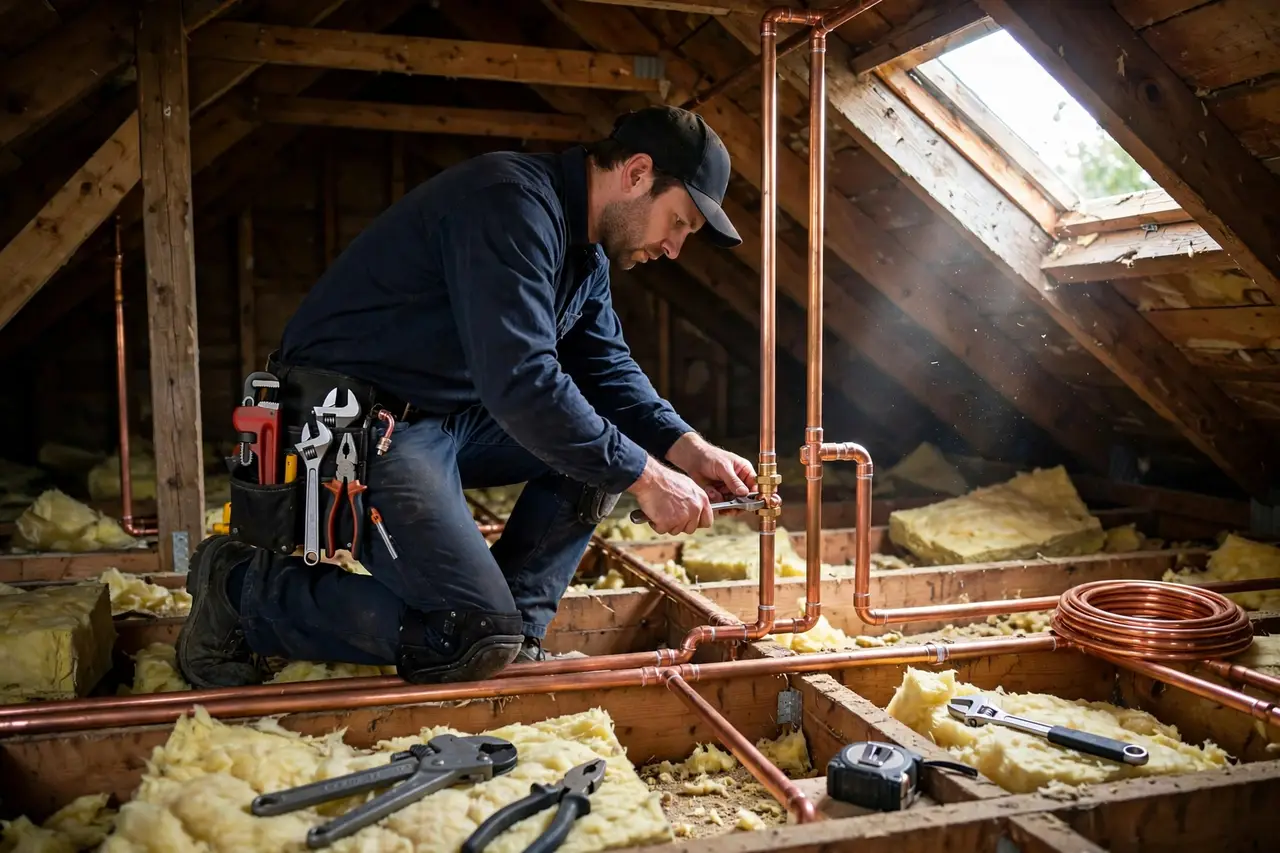
Pipe rerouting abandons the leaking under-slab line and installs a brand-new water line through the walls, ceiling, or attic. The old pipe stays buried under the slab, capped and dead. Your water takes a new, accessible path that never touches the soil again — which means the corrosion, ground movement, or whatever killed the old line cannot reach the new one.
The appeal is direct: no concrete cutting, no trench, and a new pipe that never touches the soil again. In Torrance 90503, where the quiet soil and standard tract lots make for clean, predictable work, getting the water lines out of the ground is often the most durable answer.
How it works here: we are the connector, not the crew. Your call to (833) 713-2101 reaches our referral line, and we match you with an independent slab-leak specialist who works in Torrance 90503. The specialist diagnoses, you approve the plan, and only then does work start.
Prefer to talk it through? Contact Us Now and tell us what you are seeing in your Torrance home.
Why Torrance Changes How This Repair Works
The 90503 housing stock is 1950s–60s: cottages, bungalows, ranches, and Craftsman-influenced homes in West Torrance, mid-century homes in Southwood — many built around 1955. Pipe stock is 1950s–60s copper supply under slab-on-grade, with cast-iron or early ABS drains. The ground is flat coastal plain with good drainage; no hillside, no high water table, no salt air — just age. Seventy-year-old copper fails by pitting from the inside, and hot-water lines go first because heat accelerates the chemistry. That is why the warm spot on the floor is the 90503 cliché: it is the sound of a hot line pinholing under the slab. Detection is usually clean here — quiet soil, accessible tract lots — and repairs follow the book.
For hot-water lines that keep failing, rerouting through the attic is the permanent answer — the new line never touches the soil, and future access needs no concrete work. When the camera shows the system failing in multiple runs, rerouting the supply solves all of it at once.
For many Torrance homes, rerouting is the cleanest exit from under-slab plumbing trouble: the failed line is retired, the new line is reachable for any future work, and the soil under the slab stops being your problem. The on-site visit confirms whether your home's layout makes it the right call.
How Pipe Rerouting Works — Without Tearing Up Your Home
Rerouting starts the same way every repair should: with confirmed detection. Once the leaking run is identified, the specialist maps a new route — commonly through the attic and down inside walls, or along ceiling joists boxed into a soffit. The new line is installed along that path, connected at both ends to the existing system, and pressure-tested before the old under-slab line is permanently capped and abandoned. Inside, the work means opening sections of drywall to run and secure the pipe, then patching. There is no concrete cutting, no trench through the slab, and no excavation in the yard. Because the new pipe runs inside the building envelope rather than in the ground, it is protected from the soil conditions that damaged the original line. One practical upside: the new line is accessible. If anything ever needs attention decades from now, it will not require breaking concrete.
Before the visit, think about attic access — clear the scuttle or pull-down stairs if you can, since the specialist will want to see the proposed route. Note which walls back onto plumbing (kitchens, baths, laundry); those are the likely tie-in points. If rooms were recently remodeled, say so: fresh finishes deserve extra care in the patching plan. And locate the main shutoff valve. None of this is mandatory — the specialist works with what is there — but it makes the route planning faster and the drywall patching cleaner.
What Happens When You Call (833) 713-2101
Step 1: The Call
Call (833) 713-2101. You will reach our referral line, where we connect you with an independent local specialist serving Torrance. Expect a few direct questions: warm spots on the floor, the sound of running water with taps off, a water bill that jumped, low pressure. Those answers tell the specialist what to test first.
Step 2: The Diagnosis
On site, the specialist confirms the leak with pressure testing and electronic location, then maps your home's layout for a new pipe route — attic access, wall chases, and where the new line will tie in.
Step 3: The Plan
You get a plain-language explanation of what was found and which repair paths fit — Slab Leak Pipe Rerouting among them — before any work is authorized. No work starts on a guess.
When Pipe Rerouting Isn't the Right Fix
Rerouting is not always the answer either. A single pinhole leak in an otherwise healthy, accessible line can be a straightforward spot repair — abandoning a good system to reroute around one defect is overkill. Rerouting is a supply-line solution; drain and sewer problems follow different repair paths. And foundation type matters: if the leak turns out to be in an accessible crawlspace or exterior line rather than under the slab, the repair gets simpler, not harder — the diagnostic visit sorts that out before any plan is made
Serving Torrance 90503: Neighborhoods We Cover
Serving Torrance 90503 — Southwood, Delthorne, and West Torrance along Hawthorne Boulevard, Sepulveda Boulevard, and Torrance Boulevard, near the Del Amo Fashion Center, Delthorne Park, and the Madrona Marsh Preserve. Warm spot on the floor? Say so when you call — it tells the specialist to prioritize the hot-water lines in testing.
Suspect a Slab Leak? Talk to a Specialist Today
One call connects you with a local slab leak professional serving Rancho Palos Verdes, CA — day or night.
Call (833) 713-2101Frequently Asked Questions
There is a warm spot on our living room floor. Is that a slab leak?
Very likely a hot-water line leak — escaping hot water warms the flooring above, and it is the signature 90503 symptom in 70-year-old copper. Pressure testing the hot lines confirms it in short order. Once confirmed, Pipe Rerouting options are evaluated against what the camera shows. This is why rerouting is often the recommended path here: abandon the buried line and stop fighting the ground.
Our home was built in 1955. How much life is left in the copper?
At 70-plus years, 1950s copper is living on borrowed time — pitting is a when, not an if. One leak often means the run is broadly pitted, which is why the diagnostic assesses the whole run rather than just the loudest pinhole. The result points to Pipe Rerouting or to replacement. With a reroute, the new pipe's environment is the building interior — none of these underground conditions apply.
Should we fix just the leaking section?
Sometimes — a single pinhole in an otherwise sound run is a legitimate spot repair. But 70-year-old copper with system-wide pitting will keep producing leaks, and that is where rehabilitating or abandoning the run (Pipe Rerouting) beats playing whack-a-mole. The camera footage makes the case either way. Rerouting removes this variable completely — the new line runs inside the house, not through that soil.
Will the repair damage our original hardwood floors?
That is exactly what Slab Leak Pipe Rerouting is designed to prevent — the work happens through small access points or interior routes, not through your floors. Original 1950s finishes are worth protecting, and the specialist will show you the access plan before work begins. This is why rerouting is often the recommended path here: abandon the buried line and stop fighting the ground.
How fast can this be diagnosed?
Detection in 90503 is usually clean — quiet soil and accessible lots make for accurate testing. Call, describe the symptoms, and the specialist will lay out the diagnostic steps on arrival. No work is authorized until testing confirms the leak and its location. With a reroute, the new pipe's environment is the building interior — none of these underground conditions apply.
Will you have to cut open a lot of my walls?
Openings are made where the new line needs to pass and tie in — typically modest sections of drywall that get patched afterward. Compared with jackhammering a slab and replacing flooring, the interior patching from a reroute is minor. The specialist will walk the planned route with you before any cutting starts.
Does rerouting fix the leak, or just go around it?
It goes around it permanently — and that is the point. The failed line is retired from service entirely. Your water travels a new pipe on a new path, so the corrosion or ground stress that caused the leak cannot recur in the same place.