Slab Leak Pipe Rerouting in San Pedro, CA
Slab Leak Pipe Rerouting in San Pedro, CA 90731 abandons and replaces failing under-slab water lines — with a new overhead line that never touches the soil again.
In Short
Slab Leak Pipe Rerouting in San Pedro, CA 90731 abandons and replaces failing under-slab water lines — with a new overhead line that never touches the soil again. San Pedro's 1940s–70s homes with galvanized and copper in high-groundwater soil are prime candidates. Call (833) 713-2101: first a symptom review with a specialist, then testing to confirm the leak.
Slab Leak Pipe Rerouting in San Pedro 90731: What Local Homes Need to Know
San Pedro 90731 sits on flat coastal-plain alluvium near the Port of Los Angeles — and the water table sits high. That combination accelerates copper corrosion under the slab and makes electronic detection noisier, because groundwater conducts sound. The housing stock along the Gaffey Street corridor and downtown is 1940s–70s, where 1940s–50s galvanized is failing from the inside out. The classic 90731 call: a pressure drop with no visible water anywhere. Slab Leak Pipe Rerouting has to work in wet ground — and the right method does.
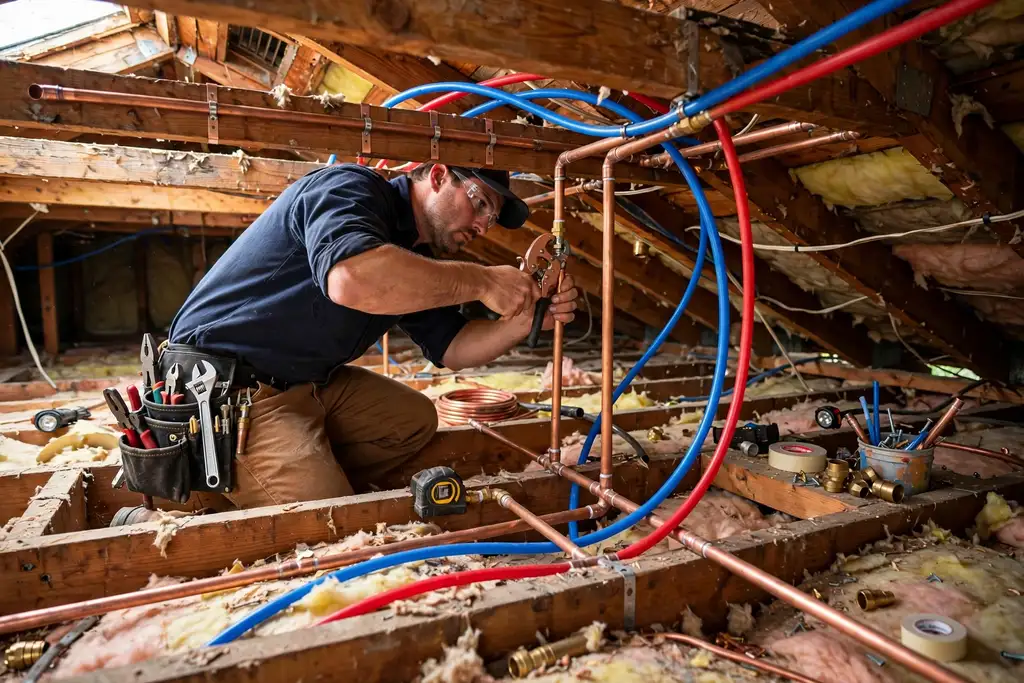
Pipe rerouting abandons the leaking under-slab line and installs a brand-new water line through the walls, ceiling, or attic. The old pipe stays buried under the slab, capped and dead. Your water takes a new, accessible path that never touches the soil again — which means the corrosion, ground movement, or whatever killed the old line cannot reach the new one.
The appeal is direct: no concrete cutting, no trench, and a new pipe that never touches the soil again. In San Pedro 90731, where the high water table fights every open excavation, getting the water lines out of the ground is often the most durable answer.
How it works here: we are the connector, not the crew. Your call to (833) 713-2101 reaches our referral line, and we match you with an independent slab-leak specialist who works in San Pedro 90731. The specialist diagnoses, you approve the plan, and only then does work start.
Prefer to talk it through? Call (833) 713-2101 and tell us what you are seeing in your San Pedro home.
Why San Pedro Changes How This Repair Works
Central and east San Pedro — downtown, the Gaffey Street corridor, the port-adjacent flats — is denser and flatter than the 90732 hillside. Homes are 1940s–1970s single-family and multifamily. Early stock carries galvanized steel supply lines with cast-iron drains; later tracts transitioned to copper. Slab prevalence is high in the postwar tracts. The ground is coastal-plain alluvium, flat lowland near the harbor with a high water table. Two consequences follow. First, damp alluvial soil keeps copper wet and corrosion never sleeps — pinhole failures arrive on schedule. Second, groundwater masks small leaks and conducts acoustic signals, so electronic listening alone can mislead; meter testing and pressure isolation carry more weight here than in drier areas. Galvanized lines from the 40s and 50s fail from the inside out, which is why the signature symptom is pressure loss with no puddle.
Rerouting gets the supply lines out of saturated, corrosive soil and into the building — the single most durable answer where the ground itself is the enemy. For 1940s–50s galvanized at end of life, abandoning the buried system beats rehabilitating it.
For many San Pedro homes, rerouting is the cleanest exit from under-slab plumbing trouble: the failed line is retired, the new line is reachable for any future work, and the soil under the slab stops being your problem. The on-site visit confirms whether your home's layout makes it the right call.
How Pipe Rerouting Works — Without Tearing Up Your Home
Rerouting starts the same way every repair should: with confirmed detection. Once the leaking run is identified, the specialist maps a new route — commonly through the attic and down inside walls, or along ceiling joists boxed into a soffit. The new line is installed along that path, connected at both ends to the existing system, and pressure-tested before the old under-slab line is permanently capped and abandoned. Inside, the work means opening sections of drywall to run and secure the pipe, then patching. There is no concrete cutting, no trench through the slab, and no excavation in the yard. Because the new pipe runs inside the building envelope rather than in the ground, it is protected from the soil conditions that damaged the original line. One practical upside: the new line is accessible. If anything ever needs attention decades from now, it will not require breaking concrete.
Before the visit, think about attic access — clear the scuttle or pull-down stairs if you can, since the specialist will want to see the proposed route. Note which walls back onto plumbing (kitchens, baths, laundry); those are the likely tie-in points. If rooms were recently remodeled, say so: fresh finishes deserve extra care in the patching plan. And locate the main shutoff valve. None of this is mandatory — the specialist works with what is there — but it makes the route planning faster and the drywall patching cleaner.
What Happens When You Call (833) 713-2101
Step 1: The Call
Call (833) 713-2101. You will reach our referral line, where we connect you with an independent local specialist serving San Pedro. Expect a few direct questions: warm spots on the floor, the sound of running water with taps off, a water bill that jumped, low pressure. Those answers tell the specialist what to test first.
Step 2: The Diagnosis
On site, the specialist confirms the leak with pressure testing and electronic location, then maps your home's layout for a new pipe route — attic access, wall chases, and where the new line will tie in.
Step 3: The Plan
You get a plain-language explanation of what was found and which repair paths fit — Slab Leak Pipe Rerouting among them — before any work is authorized. No work starts on a guess.
When Pipe Rerouting Isn't the Right Fix
Rerouting is not always the answer either. A single pinhole leak in an otherwise healthy, accessible line can be a straightforward spot repair — abandoning a good system to reroute around one defect is overkill. Rerouting is a supply-line solution; drain and sewer problems follow different repair paths. And foundation type matters: if the leak turns out to be in an accessible crawlspace or exterior line rather than under the slab, the repair gets simpler, not harder — the diagnostic visit sorts that out before any plan is made
Serving San Pedro 90731: Neighborhoods We Cover
Connecting San Pedro 90731 — the Gaffey Street corridor, downtown, Pacific Avenue, Harbor Boulevard, and the port-adjacent neighborhoods around the Vincent Thomas Bridge, the Los Angeles Maritime Museum, and Ports O' Call. High water table on your street? The specialist already expects it; mention any history of damp soil or sump pumps when you call.
Suspect a Slab Leak? Talk to a Specialist Today
One call connects you with a local slab leak professional serving Rancho Palos Verdes, CA — day or night.
Call (833) 713-2101Frequently Asked Questions
Our water pressure dropped but there is no visible leak. What is happening?
That is the classic 90731 presentation: 1940s–50s galvanized failing from the inside out, or copper pinholing under the slab where high groundwater hides the evidence. Pressure testing and meter isolation find what eyes cannot. Do not wait for a puddle — by the time water surfaces in saturated soil, the damage is advanced. This is why rerouting is often the recommended path here: abandon the buried line and stop fighting the ground.
Why is leak detection harder near the port?
Groundwater conducts sound, which makes acoustic listening noisier and less precise in the harbor lowlands. Good diagnosticians compensate with pressure isolation, meter tests, and thermal imaging rather than relying on listening alone. If someone proposes slab work in 90731 based on listening only, get a second method. With a reroute, the new pipe's environment is the building interior — none of these underground conditions apply.
Our home has galvanized pipes from the 1940s. Can they be saved?
Sometimes a section can, but 80-year-old galvanized is at the end of its design life — interior corrosion narrows the pipe and weakens the wall simultaneously. The camera shows the truth. Where the system is failing broadly, Pipe Rerouting or a full abandonment-and-reroute is the honest recommendation rather than nursing the old pipe along. Rerouting removes this variable completely — the new line runs inside the house, not through that soil.
Will groundwater flood the work area?
Open excavations in 90731 can absolutely take on water — one more reason minimal-dig methods dominate here. Slab Leak Pipe Rerouting works through small access points or interior routes, keeping the repair out of the water table. The specialist plans access around your lot's drainage on the diagnostic visit. This is why rerouting is often the recommended path here: abandon the buried line and stop fighting the ground.
We are in a multifamily building. Does that change things?
Yes — shared lines mean one leak can affect multiple units, and the diagnostic has to map which lines serve which units before any work is authorized. Slab Leak Pipe Rerouting can still apply, but the plan has to account for keeping other units' water on. Mention the building layout when you call. With a reroute, the new pipe's environment is the building interior — none of these underground conditions apply.
Will you have to cut open a lot of my walls?
Openings are made where the new line needs to pass and tie in — typically modest sections of drywall that get patched afterward. Compared with jackhammering a slab and replacing flooring, the interior patching from a reroute is minor. The specialist will walk the planned route with you before any cutting starts.
Does rerouting fix the leak, or just go around it?
It goes around it permanently — and that is the point. The failed line is retired from service entirely. Your water travels a new pipe on a new path, so the corrosion or ground stress that caused the leak cannot recur in the same place.