Slab Leak Pipe Rerouting in Rolling Hills, CA
Slab Leak Pipe Rerouting in Rolling Hills, CA 90274 abandons and replaces failing under-slab water lines — with a new overhead line that never touches the soil again.
In Short
Slab Leak Pipe Rerouting in Rolling Hills, CA 90274 abandons and replaces failing under-slab water lines — with a new overhead line that never touches the soil again. Rolling Hills's 1950s–70s ranch homes with long runs of under-slab copper are prime candidates. Call (833) 713-2101: first a symptom review with a specialist, then testing to confirm the leak.
Slab Leak Pipe Rerouting in Rolling Hills 90274: What Local Homes Need to Know
Rolling Hills 90274 is all acre-plus equestrian lots, 1950s–70s ranch homes, and very long pipe runs. On a one-acre lot, a single under-slab leak can sit dozens of feet from the water meter — and chasing it through the slab is rarely the smart move. Add horse-property outbuildings and barns that sometimes share the water service, and a 'slab leak' call here occasionally turns out to be a failed line to an outbuilding. Slab Leak Pipe Rerouting fits this landscape: fix the pipe without tearing up the ranch.
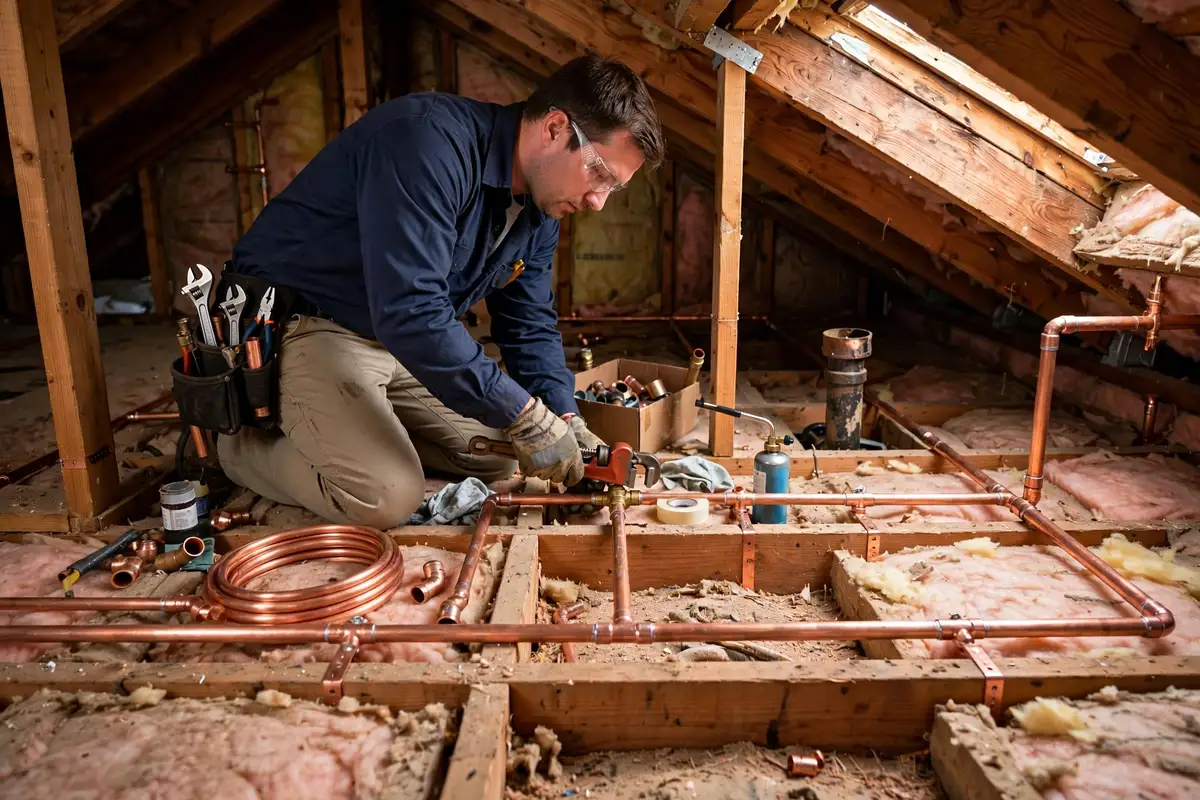
Pipe rerouting abandons the leaking under-slab line and installs a brand-new water line through the walls, ceiling, or attic. The old pipe stays buried under the slab, capped and dead. Your water takes a new, accessible path that never touches the soil again — which means the corrosion, ground movement, or whatever killed the old line cannot reach the new one.
The appeal is direct: no concrete cutting, no trench, and a new pipe that never touches the soil again. In Rolling Hills 90274, where acre-plus lots turn every trench into a major project, getting the water lines out of the ground is often the most durable answer.
One thing to know upfront: Slab Leak Repair Experts connects homeowners with independent local specialists. Call (833) 713-2101 and we will put you in touch with a pro serving Rolling Hills — every finding gets explained and every repair gets your approval before it happens.
Ready for a straight answer? Request Service Today — we will connect you with an independent specialist serving Rolling Hills 90274.
Why Rolling Hills Changes How This Repair Works
The housing stock is 1950s–1970s ranch-style homes on gated, one-acre-plus lots at around 1,276 feet elevation — hilltop terrain on Monterey shale with large graded pads, equestrian footing, fill areas, and long driveway aprons. Under-slab pipe is predominantly 1950s–70s copper, now 50–70 years old, and slab-on-grade prevalence is very high. The defining feature for repairs is distance: long runs from meter to house, long runs under the slab itself, and extensive hardscape that concentrates runoff. Pinpointing matters because every foot of concrete opened is costly — and in many cases the practical choice is abandoning a long buried run rather than rehabilitating it. The outbuilding wrinkle is real: barns and guest houses sharing the service can produce 'slab leak' symptoms — a spinning meter, low pressure — with no leak under the main house at all, so isolation testing comes before any slab work.
Rerouting is often the winning move on acre lots — running a new overhead line is frequently more practical than rehabilitating 80 feet of buried copper, and it cleanly separates the house supply from outbuilding lines. When the meter-to-house run itself is the leaker, a reroute abandons it without a trench across the property.
For many Rolling Hills homes, rerouting is the cleanest exit from under-slab plumbing trouble: the failed line is retired, the new line is reachable for any future work, and the soil under the slab stops being your problem. The on-site visit confirms whether your home's layout makes it the right call.
How Pipe Rerouting Works — Without Tearing Up Your Home
Rerouting starts the same way every repair should: with confirmed detection. Once the leaking run is identified, the specialist maps a new route — commonly through the attic and down inside walls, or along ceiling joists boxed into a soffit. The new line is installed along that path, connected at both ends to the existing system, and pressure-tested before the old under-slab line is permanently capped and abandoned. Inside, the work means opening sections of drywall to run and secure the pipe, then patching. There is no concrete cutting, no trench through the slab, and no excavation in the yard. Because the new pipe runs inside the building envelope rather than in the ground, it is protected from the soil conditions that damaged the original line. In single-story ranch homes — the dominant style across much of the South Bay — attic reroutes are especially straightforward.
Before the visit, think about attic access — clear the scuttle or pull-down stairs if you can, since the specialist will want to see the proposed route. Note which walls back onto plumbing (kitchens, baths, laundry); those are the likely tie-in points. If rooms were recently remodeled, say so: fresh finishes deserve extra care in the patching plan. And locate the main shutoff valve. None of this is mandatory — the specialist works with what is there — but it makes the route planning faster and the drywall patching cleaner.
What Happens When You Call (833) 713-2101
Step 1: The Call
Call (833) 713-2101. You will reach our referral line, where we connect you with an independent local specialist serving Rolling Hills. Expect a few direct questions: warm spots on the floor, the sound of running water with taps off, a water bill that jumped, low pressure. Those answers tell the specialist what to test first.
Step 2: The Diagnosis
On site, the specialist confirms the leak with pressure testing and electronic location, then maps your home's layout for a new pipe route — attic access, wall chases, and where the new line will tie in.
Step 3: The Plan
You get a plain-language explanation of what was found and which repair paths fit — Slab Leak Pipe Rerouting among them — before any work is authorized. No work starts on a guess.
When Pipe Rerouting Isn't the Right Fix
Rerouting is not always the answer either. A single pinhole leak in an otherwise healthy, accessible line can be a straightforward spot repair — abandoning a good system to reroute around one defect is overkill. Rerouting is a supply-line solution; drain and sewer problems follow different repair paths. And foundation type matters: if the leak turns out to be in an accessible crawlspace or exterior line rather than under the slab, the repair gets simpler, not harder — the diagnostic visit sorts that out before any plan is made
Serving Rolling Hills 90274: Neighborhoods We Cover
Service across gated Rolling Hills 90274 — the private roads, the equestrian trail system, and the ranch properties around Rolling Hills City Hall. Gate access: mention your gate procedures when you call so the specialist's visit is not delayed at the entrance. If you have barns or outbuildings on the same water service, say so — it changes the diagnostic plan.
Suspect a Slab Leak? Talk to a Specialist Today
One call connects you with a local slab leak professional serving Rancho Palos Verdes, CA — day or night.
Call (833) 713-2101Frequently Asked Questions
Our lot is over an acre. Does the distance change the repair?
Completely. Long meter-to-house and under-slab runs mean a leak can sit far from where symptoms appear, and opening concrete along a long run gets costly fast. That distance is exactly why low-excavation methods and rerouting dominate in Rolling Hills — the repair economics favor abandoning or rehabilitating long buried runs over chasing them. With a reroute, the new pipe's environment is the building interior — none of these underground conditions apply.
Could the leak be in the line to our barn, not under the house?
It happens here more than anywhere else: outbuildings sharing the water service can produce a spinning meter and low pressure with no leak under the main slab. Isolation testing — shutting off branches one by one — finds the real culprit before anyone touches concrete. Always mention outbuildings when you call. Rerouting removes this variable completely — the new line runs inside the house, not through that soil.
Will the work disturb our horses or the equestrian footing?
That is a fair concern on a horse property, and it is another argument for minimal-excavation methods. Slab Leak Pipe Rerouting works through small access points, not open trenches across paddocks or arenas. Tell the specialist about animals and footing areas on the call so access points are planned away from them. This is why rerouting is often the recommended path here: abandon the buried line and stop fighting the ground.
Our home is 1960s copper. Line it, burst it, or reroute it?
The camera and pressure tests decide, but the pattern in Rolling Hills is consistent: a single bad section is a repair candidate, length-wide pitting favors lining the run or rerouting it, and a failing meter-to-house service line usually gets burst or rerouted rather than dug up. The diagnostic visit lays out which bucket your home falls into. With a reroute, the new pipe's environment is the building interior — none of these underground conditions apply.
How do you even find a leak under that much slab?
Electronic listening, pressure isolation by branch, and meter testing narrow it down before any concrete is discussed — and for Pipe Rerouting, pinpoint precision matters less than an accurate map of the run, since the work happens through small access points or a new overhead route. Long runs reward methodical testing, not guesswork. Rerouting removes this variable completely — the new line runs inside the house, not through that soil.
Is a rerouted line as reliable as the original?
It is typically more reliable going forward: new pipe, accessible routing, and no contact with the soil that damaged the old line. Future maintenance, if ever needed, happens without breaking concrete.
Can rerouting handle a whole house with multiple leaks?
Yes — and that is one of its strengths. When pressure tests show the under-slab system failing in more than one place, rerouting the affected runs solves all of them at once instead of chasing leaks one slab opening at a time.