Slab Leak Pipe Rerouting in Manhattan Beach, CA
Slab Leak Pipe Rerouting in Manhattan Beach, CA 90266 abandons and replaces failing under-slab water lines — with a new overhead line that never touches the soil again.
In Short
Slab Leak Pipe Rerouting in Manhattan Beach, CA 90266 abandons and replaces failing under-slab water lines — with a new overhead line that never touches the soil again. Manhattan Beach's 1950s originals homes with 70-year-old copper are prime candidates. Call (833) 713-2101: first a symptom review with a specialist, then testing to confirm the leak.
Slab Leak Pipe Rerouting in Manhattan Beach 90266: What Local Homes Need to Know
Manhattan Beach 90266 is two markets in one ZIP: un-remodeled 1950s originals with 70-year-old copper at end of life, and teardown rebuilds from the 2000s with new piping that rarely call. The first question on every 90266 call is build year — a 1954 original and a 2012 rebuild get completely different diagnoses. Slab Leak Pipe Rerouting belongs to the first market; the second barely needs us.
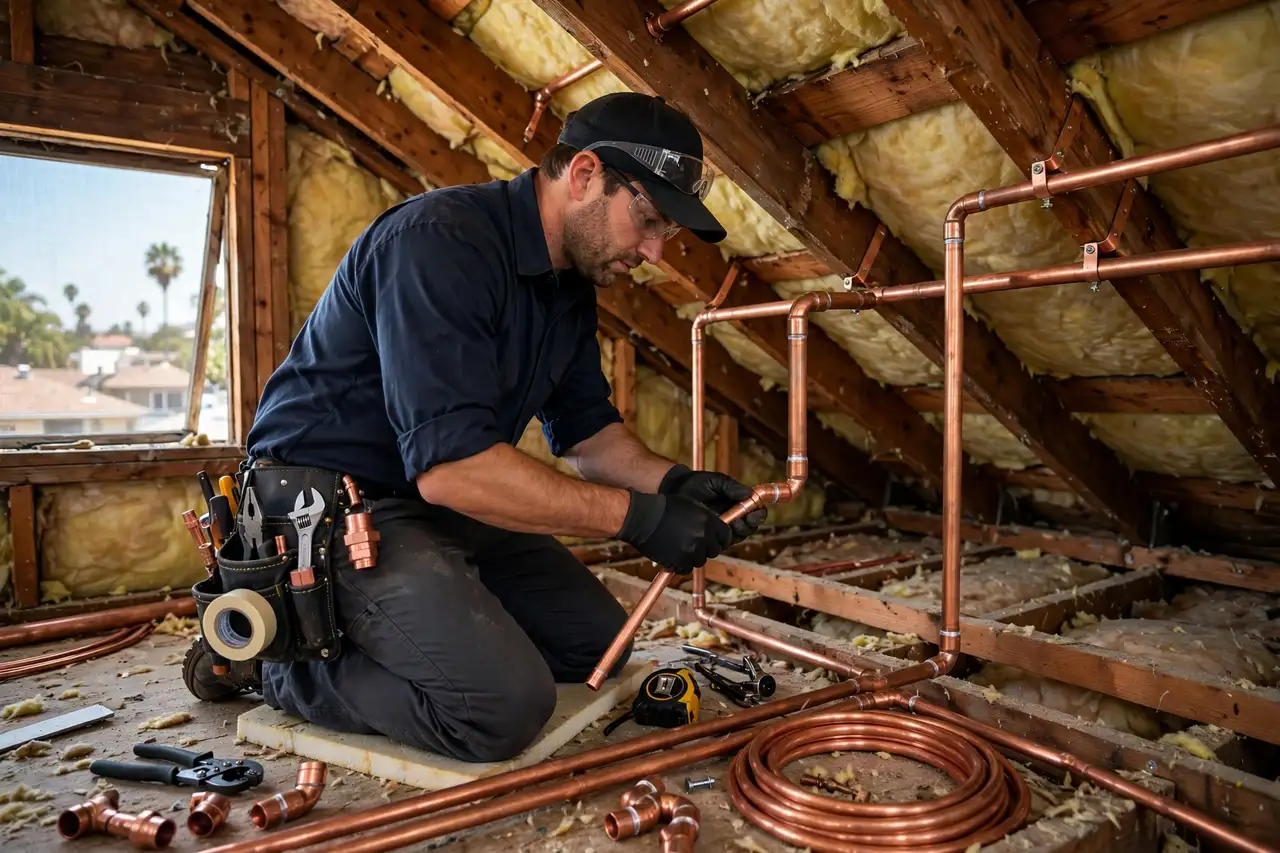
Pipe rerouting abandons the leaking under-slab line and installs a brand-new water line through the walls, ceiling, or attic. The old pipe stays buried under the slab, capped and dead. Your water takes a new, accessible path that never touches the soil again — which means the corrosion, ground movement, or whatever killed the old line cannot reach the new one.
The appeal is direct: no concrete cutting, no trench, and a new pipe that never touches the soil again. In Manhattan Beach 90266, where the 1950s originals need pipe renewal without disturbing updated interiors, getting the water lines out of the ground is often the most durable answer.
A note on how this works: Slab Leak Repair Experts is a referral service. When you call (833) 713-2101, we connect you with an independent local specialist serving Manhattan Beach — the specialist performs the diagnosis and the repair, and you approve the plan before any work begins.
Talk to a Specialist — describe your symptoms and get connected with a Manhattan Beach specialist.
Why Manhattan Beach Changes How This Repair Works
Most Manhattan Beach homes were originally built in the 1950s, but heavy teardown and rebuild activity means many lots now carry 2000s-era homes. Surviving 1950s stock: copper supply at 70 years, under slab-on-grade, in a marine environment with salt air — prime slab-leak candidates. Rebuilt homes: modern piping, rarely a factor. The ground is beach sand near the water and alluvium inland, with the Hill Section sloping upward. For the 1950s originals, the failure pattern is classic pinholing, accelerated by salt. For rebuilds, a 'slab leak' symptom usually traces to something else — a fixture, an appliance line, or a specific installation issue. Stating the build year on the call focuses the entire diagnostic.
Rerouting pairs naturally with remodels: while walls are open, new supply lines go in overhead and the old buried copper is retired. For 1950s originals not yet remodeled, a standalone reroute still ends the underground failure cycle permanently.
For many Manhattan Beach homes, rerouting is the cleanest exit from under-slab plumbing trouble: the failed line is retired, the new line is reachable for any future work, and the soil under the slab stops being your problem. The on-site visit confirms whether your home's layout makes it the right call.
How Pipe Rerouting Works — Without Tearing Up Your Home
Rerouting starts the same way every repair should: with confirmed detection. Once the leaking run is identified, the specialist maps a new route — commonly through the attic and down inside walls, or along ceiling joists boxed into a soffit. The new line is installed along that path, connected at both ends to the existing system, and pressure-tested before the old under-slab line is permanently capped and abandoned. Inside, the work means opening sections of drywall to run and secure the pipe, then patching. There is no concrete cutting, no trench through the slab, and no excavation in the yard. Because the new pipe runs inside the building envelope rather than in the ground, it is protected from the soil conditions that damaged the original line. Attic runs get insulated to protect against temperature swings, and the specialist will walk you through the planned path before any drywall is opened.
Before the visit, think about attic access — clear the scuttle or pull-down stairs if you can, since the specialist will want to see the proposed route. Note which walls back onto plumbing (kitchens, baths, laundry); those are the likely tie-in points. If rooms were recently remodeled, say so: fresh finishes deserve extra care in the patching plan. And locate the main shutoff valve. None of this is mandatory — the specialist works with what is there — but it makes the route planning faster and the drywall patching cleaner.
What Happens When You Call (833) 713-2101
Step 1: The Call
Call (833) 713-2101. You will reach our referral line, where we connect you with an independent local specialist serving Manhattan Beach. Expect a few direct questions: warm spots on the floor, the sound of running water with taps off, a water bill that jumped, low pressure. Those answers tell the specialist what to test first.
Step 2: The Diagnosis
On site, the specialist confirms the leak with pressure testing and electronic location, then maps your home's layout for a new pipe route — attic access, wall chases, and where the new line will tie in.
Step 3: The Plan
You get a plain-language explanation of what was found and which repair paths fit — Slab Leak Pipe Rerouting among them — before any work is authorized. No work starts on a guess.
When Pipe Rerouting Isn't the Right Fix
Rerouting is not always the answer either. A single pinhole leak in an otherwise healthy, accessible line can be a straightforward spot repair — abandoning a good system to reroute around one defect is overkill. Rerouting is a supply-line solution; drain and sewer problems follow different repair paths. And foundation type matters: if the leak turns out to be in an accessible crawlspace or exterior line rather than under the slab, the repair gets simpler, not harder — the diagnostic visit sorts that out before any plan is made
Serving Manhattan Beach 90266: Neighborhoods We Cover
Serving Manhattan Beach 90266 — the beachside streets, the downtown Manhattan Avenue corridor, and the Hill Section along Sepulveda Boulevard, Manhattan Beach Boulevard, and Rosecrans Avenue, near the Manhattan Beach Pier. Know your build year? It is the single most useful fact on the call — mention it first when you dial.
Suspect a Slab Leak? Talk to a Specialist Today
One call connects you with a local slab leak professional serving Rancho Palos Verdes, CA — day or night.
Call (833) 713-2101Frequently Asked Questions
Our home was built in 1954 and never re-piped. What are we facing?
Seventy-year-old copper in salt air — the highest-risk combination in 90266. Expect the diagnostic to find system-wide pitting, not just one pinhole. At that point the conversation is Pipe Rerouting for the failing runs or full replacement thinking. The camera footage will make the scope clear. Rerouting removes this variable completely — the new line runs inside the house, not through that soil.
Our home is a 2010 rebuild with a suspected slab leak. Is that possible?
Unlikely to be a classic slab failure — modern piping does not pinhole in a decade. The symptom usually traces to a fixture supply, an appliance connection, or an installation defect. Say 'rebuild' when you call so the diagnostic starts from the right hypothesis. This is why rerouting is often the recommended path here: abandon the buried line and stop fighting the ground.
We are mid-remodel. Should we address the old pipes now?
Yes — open walls are the most practical time to retire failing underground lines. A reroute or re-pipe coordinated with the remodel avoids opening finished walls later. Tell the specialist the remodel timeline on the call so the plumbing plan syncs with the construction schedule. With a reroute, the new pipe's environment is the building interior — none of these underground conditions apply.
Does salt air really matter this far from the beach?
Across 90266 the marine influence is real even blocks inland — salt accelerates exterior copper corrosion everywhere in the ZIP, just more so near the water. Combined with 70-year-old pipe, it is why Manhattan Beach originals fail on schedule. Rerouting removes this variable completely — the new line runs inside the house, not through that soil.
Our Hill Section home has a damp downhill wall. Slab leak?
Maybe — or hillside drainage. The Hill Section's grade means subsurface water moves toward the downhill side and mimics pipe leaks. Pressure testing separates the two definitively. In the hills, that test comes before any repair discussion. This is why rerouting is often the recommended path here: abandon the buried line and stop fighting the ground.
Will the new pipe run through my attic? Is that okay?
Attic routing is the most common reroute path in South Bay ranch homes, and it is standard practice. The new line is secured, insulated, and pressure-tested. Because it runs inside the building envelope instead of in the soil, it is protected from the ground conditions that destroyed the original line.
What happens to the old leaking pipe under the slab?
It stays where it is — capped at both ends and permanently abandoned. There is no reason to excavate a dead line. Once isolated from water pressure, it cannot leak again.