Slab Leak Pipe Rerouting in Gardena, CA
Slab Leak Pipe Rerouting in Gardena, CA 90247 abandons and replaces failing under-slab water lines — with a new overhead line that never touches the soil again.
In Short
Slab Leak Pipe Rerouting in Gardena, CA 90247 abandons and replaces failing under-slab water lines — with a new overhead line that never touches the soil again. Gardena's 1940s–60s homes with galvanized and copper are prime candidates. Call (833) 713-2101: first a symptom review with a specialist, then testing to confirm the leak.
Slab Leak Pipe Rerouting in Gardena 90247: What Local Homes Need to Know
Gardena 90247 is flat, dense, postwar South Bay — 1940s–60s single-family and multifamily on the coastal plain, with galvanized giving way to copper across the decades. Many small rental properties mean absentee owners and leaks that run longer before discovery: 90247 calls skew toward bigger damage — mold, flooring loss — than owner-occupied cities. Slab Leak Pipe Rerouting fixes the pipe; the diagnostic tells you how far the water got.
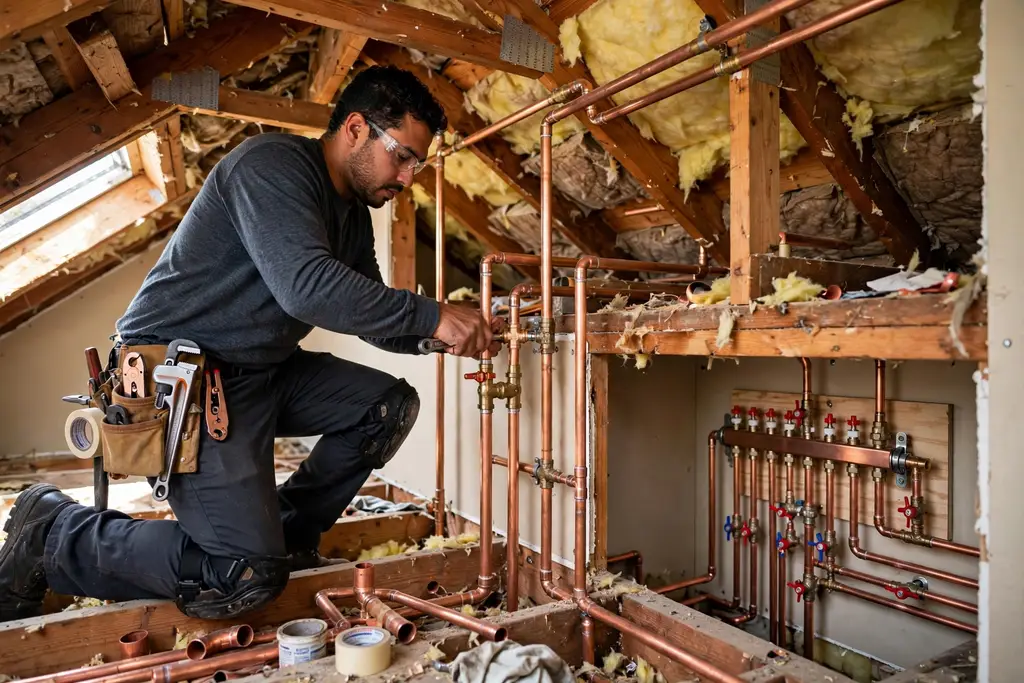
Pipe rerouting abandons the leaking under-slab line and installs a brand-new water line through the walls, ceiling, or attic. The old pipe stays buried under the slab, capped and dead. Your water takes a new, accessible path that never touches the soil again — which means the corrosion, ground movement, or whatever killed the old line cannot reach the new one.
The appeal is direct: no concrete cutting, no trench, and a new pipe that never touches the soil again. In Gardena 90247, where occupied rentals need repairs without displacement, getting the water lines out of the ground is often the most durable answer.
How it works here: we are the connector, not the crew. Your call to (833) 713-2101 reaches our referral line, and we match you with an independent slab-leak specialist who works in Gardena 90247. The specialist diagnoses, you approve the plan, and only then does work start.
Prefer to talk it through? Call (833) 713-2101 and tell us what you are seeing in your Gardena home.
Why Gardena Changes How This Repair Works
Gardena's central 90247 holds postwar single-family and multifamily stock from the 1940s through the 1960s. Pipe materials run from early galvanized to later copper, with cast-iron drains, under slab-on-grade in most homes. The ground is flat coastal plain at about 49 feet elevation — alluvial soils, no grade complications, no water-table drama. The defining feature is occupancy, not geology: a high share of small rentals with absentee owners. Leaks get reported late — by tenants noticing damage, not owners catching symptoms — so the jobs here more often include mold remediation scope and flooring replacement alongside the pipe repair. Detection itself is straightforward on flat lots; the variable is how long the leak ran.
Rerouting between tenancies is efficient: new overhead lines, patched drywall, done — and the next leak, if it ever comes, will not require breaking concrete in someone's living room. For owners with multiple 90247 properties, it standardizes the plumbing going forward.
For many Gardena homes, rerouting is the cleanest exit from under-slab plumbing trouble: the failed line is retired, the new line is reachable for any future work, and the soil under the slab stops being your problem. The on-site visit confirms whether your home's layout makes it the right call.
How Pipe Rerouting Works — Without Tearing Up Your Home
Rerouting starts the same way every repair should: with confirmed detection. Once the leaking run is identified, the specialist maps a new route — commonly through the attic and down inside walls, or along ceiling joists boxed into a soffit. The new line is installed along that path, connected at both ends to the existing system, and pressure-tested before the old under-slab line is permanently capped and abandoned. Inside, the work means opening sections of drywall to run and secure the pipe, then patching. There is no concrete cutting, no trench through the slab, and no excavation in the yard. Because the new pipe runs inside the building envelope rather than in the ground, it is protected from the soil conditions that damaged the original line. One practical upside: the new line is accessible. If anything ever needs attention decades from now, it will not require breaking concrete.
Before the visit, think about attic access — clear the scuttle or pull-down stairs if you can, since the specialist will want to see the proposed route. Note which walls back onto plumbing (kitchens, baths, laundry); those are the likely tie-in points. If rooms were recently remodeled, say so: fresh finishes deserve extra care in the patching plan. And locate the main shutoff valve. None of this is mandatory — the specialist works with what is there — but it makes the route planning faster and the drywall patching cleaner.
What Happens When You Call (833) 713-2101
Step 1: The Call
Call (833) 713-2101. You will reach our referral line, where we connect you with an independent local specialist serving Gardena. Expect a few direct questions: warm spots on the floor, the sound of running water with taps off, a water bill that jumped, low pressure. Those answers tell the specialist what to test first.
Step 2: The Diagnosis
On site, the specialist confirms the leak with pressure testing and electronic location, then maps your home's layout for a new pipe route — attic access, wall chases, and where the new line will tie in.
Step 3: The Plan
You get a plain-language explanation of what was found and which repair paths fit — Slab Leak Pipe Rerouting among them — before any work is authorized. No work starts on a guess.
When Pipe Rerouting Isn't the Right Fix
Rerouting is not always the answer either. A single pinhole leak in an otherwise healthy, accessible line can be a straightforward spot repair — abandoning a good system to reroute around one defect is overkill. Rerouting is a supply-line solution; drain and sewer problems follow different repair paths. And foundation type matters: if the leak turns out to be in an accessible crawlspace or exterior line rather than under the slab, the repair gets simpler, not harder — the diagnostic visit sorts that out before any plan is made
Serving Gardena 90247: Neighborhoods We Cover
Covering Gardena 90247 — the postwar neighborhoods along Vermont Avenue, Western Avenue, Redondo Beach Boulevard, and Artesia Boulevard, near the I-110/SR-91/I-405 corridors. Property owner with tenants? Mention occupancy when you call — the specialist plans the work around the tenancy.
Suspect a Slab Leak? Talk to a Specialist Today
One call connects you with a local slab leak professional serving Rancho Palos Verdes, CA — day or night.
Call (833) 713-2101Frequently Asked Questions
Our tenant just reported a damp floor. How bad could it be?
In 90247, later-reported leaks often mean wider damage — water migrates under flooring for weeks before anyone notices. The pipe repair (Pipe Rerouting) is step one; the diagnostic will also show how far moisture traveled so flooring and mold scope can be assessed. Document everything with photos now. This is why rerouting is often the recommended path here: abandon the buried line and stop fighting the ground.
We own several rentals in Gardena. Should we check the others?
If they are the same era and pipe stock, yes — proactively pressure-testing sister properties catches the next leak before it becomes a damage claim. Mention the portfolio when you call; testing multiple units in one visit is efficient. With a reroute, the new pipe's environment is the building interior — none of these underground conditions apply.
Will the repair require our tenants to move out?
Slab Leak Pipe Rerouting is designed for occupied homes — small access points or interior routes, no slab demolition. Most jobs do not require relocation, though the specialist will confirm based on your unit's layout. Coordinate access timing on the call. Rerouting removes this variable completely — the new line runs inside the house, not through that soil.
Our building is 1940s galvanized. Repair or replace?
At 80 years, galvanized is at end of life — the camera will show whether any of it is worth saving. In 90247's rental stock, replacement thinking (Pipe Rerouting or rerouting) usually beats nursing old pipe, because the next leak means another tenant disruption. This is why rerouting is often the recommended path here: abandon the buried line and stop fighting the ground.
There is a musty smell but no visible water. What is it?
Likely long-running moisture under flooring or in wall bases — the classic late-reported 90247 presentation. Moisture mapping during the diagnostic shows the extent. The pipe fix stops the source; the smell resolves once the area dries and affected materials are addressed. With a reroute, the new pipe's environment is the building interior — none of these underground conditions apply.
Will you have to cut open a lot of my walls?
Openings are made where the new line needs to pass and tie in — typically modest sections of drywall that get patched afterward. Compared with jackhammering a slab and replacing flooring, the interior patching from a reroute is minor. The specialist will walk the planned route with you before any cutting starts.
Does rerouting fix the leak, or just go around it?
It goes around it permanently — and that is the point. The failed line is retired from service entirely. Your water travels a new pipe on a new path, so the corrosion or ground stress that caused the leak cannot recur in the same place.