Slab Leak Insurance Claim Help in Torrance, CA 90501
Looking for slab leak insurance claim help in Torrance, CA 90501? Slab Leak Repair Experts connects you withspecialists serving Old Torrance and central neighborhoods.
In Short
Looking for slab leak insurance claim help in Torrance, CA 90501? Slab Leak Repair Experts connects you withspecialists serving Old Torrance and central neighborhoods. We confirm your 90501 ZIP, review your symptoms, and the first step is a documentation checklist tailored to your home, your damage, and where you are in the claims process. Call (833) 713-2101 to get started.
Slab Leak Insurance Claim Help in Torrance, CA 90501: How Local Conditions Change the Work
The housing stock sets the claim's backdrop. Central and east Torrance including Old Torrance downtown - 1920s-40s bungalows near Torrance High and postwar 1950s tracts east of Hawthorne Boulevard. Under-slab pipe here is 1920s-40s homes carry galvanized steel and cast iron; 1950s tracts carry copper. Slab-on-grade prevalence is Mixed - raised foundations in the oldest stock, slab in postwar tracts. In 90501, those facts shape the documentation: the pipe's age frames the sudden-versus-gradual question, and the soil and drainage facts anticipate the alternative explanations an adjuster may raise.
In Torrance 90501, slab-leak insurance documentation starts with establishing which house you have. The era mix - 1930s galvanized bungalows near Torrance High versus 1950s copper tracts east of Hawthorne - produces two very different claim narratives. A sudden copper pinhole in a 1955 tract home is the clean sudden-failure case. A 1930s galvanized system failing at 90-plus years invites the wear-and-tear response, and the file has to work harder: the event timeline, evidence of sudden onset, and clear separation of resulting water damage from the pipe itself. Foundation type matters too - raised versus slab changes what was damaged and how. The documentation checklist adapts to the era, but the core is constant: photos before cleanup, detection report, timeline, mitigation receipts, repair estimates.
Slab leak insurance claim help is documentation and guidance support for homeowners filing a homeowner's insurance claim for slab-leak damage: what to photograph, which readings and reports to gather, how sudden water damage differs from long-term wear in an adjuster's eyes, and how to present a clear, organized file. It is practical help with the paperwork side of a stressful event - not claims adjusting and not legal advice. The 90501 file a homeowner assembles includes dated photos of every affected area, the leak-detection report, meter readings, a written timeline from first symptom to shutoff, and receipts for emergency mitigation. Older downtown lots can have narrow side-yard access, while the postwar tracts are straightforward - the first site visit determines which playbook applies.
For 90501 homeowners, the questions to bring to the first call are: what happened and when, what does the policy situation look like, and what evidence exists right now? The answers shape a checklist for your specific home - not a generic form. And remember the boundary: documentation help organizes your claim; coverage decisions belong to your insurer, and denied or underpaid claims deserve a licensed public adjuster or attorney.
90501 Warning Signs That Point Toward Slab Leak Insurance Claim Help
Homeowners usually seek this help right after discovery: the floor is warm, the meter is spinning, or a plumber has just confirmed a leak under the slab - and now there is a claim number to feed with evidence. The most valuable documentation is gathered in the first 48 hours: photos of damage, meter readings, the detection report, and a written timeline. In Torrance 90501, the documentation clock starts at discovery: photograph the damage before anything is cleaned or dried, note the date and time, and keep the water bill showing the spike. The era mix is the story: a 90501 call could be a 1930s galvanized system that is a repipe candidate or a 1950s copper slab leak suited to spot repair or reroute.
The Slab Leak Insurance Claim Help Process in Torrance, CA 90501
The process starts with a discovery call about what happened and what the policy situation looks like. Then comes a documentation checklist tailored to the home: photos and video of every affected area, moisture and thermal readings where available, the leak-detection report, repair estimates, and receipts for emergency mitigation like water shutoff or drying. Everything is organized into a claim file the homeowner can hand to their adjuster. For a Torrance 90501 homeowner, the checklist is built around your specific situation - the home's era (central and east torrance including old torrance downtown - 1920s-40s bungalows near torrance high and postwar 1950s tracts east of hawthorne boulevard), the damage observed, and where you stand with your insurer. Older downtown lots can have narrow side-yard access, while the postwar tracts are straightforward - the first site visit determines which playbook applies.
Why Torrance's Ground and Housing Stock Shape Slab Leak Insurance Claim Help
Torrance 90501 sits on Coastal-plain alluvium, mostly flat, with some slope near the 90505 border. Mediterranean climate with November-to-March rain. Homes here: Central and east Torrance including Old Torrance downtown - 1920s-40s bungalows near Torrance High and postwar 1950s tracts east of Hawthorne Boulevard. Pipe underneath: 1920s-40s homes carry galvanized steel and cast iron; 1950s tracts carry copper. Slab-on-grade prevalence is Mixed - raised foundations in the oldest stock, slab in postwar tracts. The key local fact for slab leak insurance claim help: The era mix is the story: a 90501 call could be a 1930s galvanized system that is a repipe candidate or a 1950s copper slab leak suited to spot repair or reroute. Detection must first establish pipe material and foundation type, because the repair paths diverge completely. On the ground that means: Older downtown lots can have narrow side-yard access, while the postwar tracts are straightforward - the first site visit determines which playbook applies. And for reference: A 1953-built home on West 230th Street is typical of the postwar tract stock here: copper under slab, now 70-plus years old and squarely in the failure window.
Your First-48-Hours Documentation Checklist in Torrance 90501
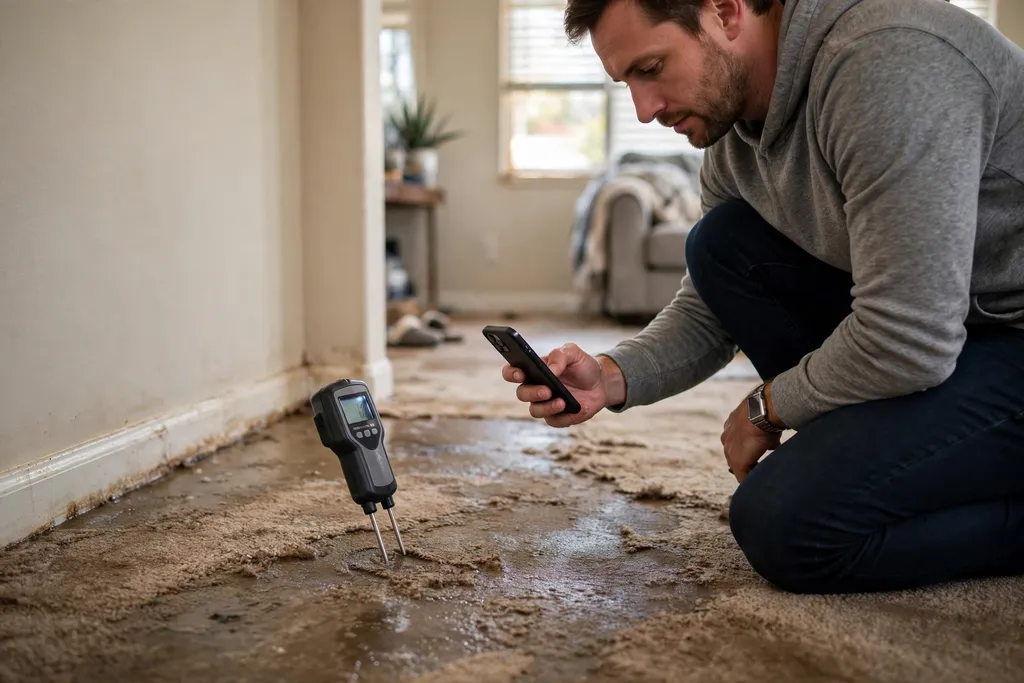
The first-48-hours checklist for Torrance 90501: (1) Photograph and video every affected area before cleanup - floors, walls, baseboards, the water's path - with dates. (2) Write the timeline: when you first noticed, what you saw, when you shut the water off. (3) Save the water bill showing the spike and note meter readings. (4) Get the leak-detection report in writing - the era mix is the story: a 90501 call could be a 1930s galvanized system that is a repipe candidate or a 1950s copper slab leak suited to spot repair or reroute. (5) Keep receipts for everything: emergency plumber, water shutoff, drying equipment, temporary repairs. (6) Don't discard the failed pipe section - photograph it and keep it. Organized early, this file answers the adjuster's questions before they're asked.
Your First Call: What to Expect in Torrance
When you call (833) 713-2101, here's what happens. First, we confirm you're in our Torrance 90501 service area and listen to what you're seeing - the symptoms, the timeline, any detection already done. Then we match you with a local slab-leak specialist experienced with slab leak insurance claim help and Old Torrance and central neighborhoods properties. Slab Leak Repair Experts is a referral service: we connect you with the local specialist, who handles the visit, the diagnosis, and the work directly with you. Get answers at (833) 713-2101 at (833) 713-2101 - the call costs nothing and the guidance is straightforward.
Suspect a Slab Leak? Talk to a Specialist Today
One call connects you with a local slab leak professional serving Rancho Palos Verdes, CA — day or night.
Call (833) 713-2101Frequently Asked Questions
How does documentation differ for a rental property in Torrance?
The discovery story carries extra weight. Document when the leak was discovered, by whom, what was visible at discovery, and what was done immediately - because with 1920s-40s homes carry galvanized steel and cast iron; 1950s tracts carry copper. and 90501's housing mix, late discovery is common and adjusters scrutinize it. Keep the tenant's report, the owner's response timeline, and all mitigation receipts. Older downtown lots can have narrow side-yard access, while the postwar tracts are straightforward - the first site visit determines which playbook applies. The file must show prompt action from the moment of discovery, even if the leak itself ran longer unknown.
What should I photograph first after discovering a slab leak in my Torrance home?
Before anything is cleaned, dried, or moved: wide shots of every affected room, close-ups of damage - buckled flooring, wet baseboards, stains - the water's visible path, and the water meter and any readings. In 90501, also photograph the failed pipe section once exposed, and keep the section itself. The era mix is the story: a 90501 call could be a 1930s galvanized system that is a repipe candidate or a 1950s copper slab leak suited to spot repair or reroute. Dated photos taken before mitigation are the backbone of the file; everything else supports them.
What goes into a complete slab-leak claim file in 90501?
The full kit: dated photos and video of all damage before cleanup; a written timeline from first symptom through water shutoff; the electronic leak-detection report; meter readings and the spiked water bill; receipts for every mitigation expense - emergency plumber, drying equipment, temporary repairs; repair estimates; and the failed pipe section, photographed and kept. In Torrance, add the local context: A 1953-built home on West 230th Street is typical of the postwar tract stock here: copper under slab, now 70-plus years old and squarely in the failure window. A complete file handed over at once moves faster than evidence dribbled out over weeks.
How does documentation differ for a rental property in Torrance?
The discovery story carries extra weight. Document when the leak was discovered, by whom, what was visible at discovery, and what was done immediately - because with 1920s-40s homes carry galvanized steel and cast iron; 1950s tracts carry copper. and 90501's housing mix, late discovery is common and adjusters scrutinize it. Keep the tenant's report, the owner's response timeline, and all mitigation receipts. Older downtown lots can have narrow side-yard access, while the postwar tracts are straightforward - the first site visit determines which playbook applies. The file must show prompt action from the moment of discovery, even if the leak itself ran longer unknown.