Slab Leak Insurance Claim Help in San Pedro, CA 90732
Need slab leak insurance claim help in San Pedro, CA? We serve 90732 - Point Fermin, Cabrillo and the bluff neighborhoods - throughslab-leak specialists.
In Short
Need slab leak insurance claim help in San Pedro, CA? We serve 90732 - Point Fermin, Cabrillo and the bluff neighborhoods - throughslab-leak specialists. On your first call we verify the ZIP, listen to what you're seeing, and the first step is a documentation checklist tailored to your home, your damage, and where you are in the claims process. Reach.
How Slab Leak Insurance Claim Help Works Differently in San Pedro 90732
Start with what the file must establish. South and west San Pedro - Point Fermin, Cabrillo, White Point and Vista del Oro, with 1950s-1970s hillside single-family homes (about 53.6 percent detached). The pipe underneath is typically 1950s-70s copper; cast-iron or ABS drains. Slab-on-grade prevalence is Very high; stepped slabs on hillside lots. A 90732 claim file weaves those facts into the narrative honestly - the home's age, the pipe's generation, the local soil - so the adjuster sees a complete, credible picture instead of a bare damage list.
In San Pedro 90732, slab-leak insurance documentation must defeat the bluff-moisture defense. Ocean-bluff lots with slope drainage give an adjuster a ready alternative explanation for any dampness - hillside moisture, not plumbing - and the file has to carry the diagnostic proof that closes that door: pressure-isolation results, moisture mapping tied to the pipe run, the detection report, and photos of the actual failed section. Thermal-camera images alone won't do it here, since bluff moisture can mimic a leak thermally; the file pairs them with isolation evidence. Stepped slabs mean the water's path along the terraces should be mapped and photographed. As the second-most geotechnically sensitive area after Rancho Palos Verdes, 90732 claims live or die on the cause evidence - document the diagnosis as rigorously as the damage.
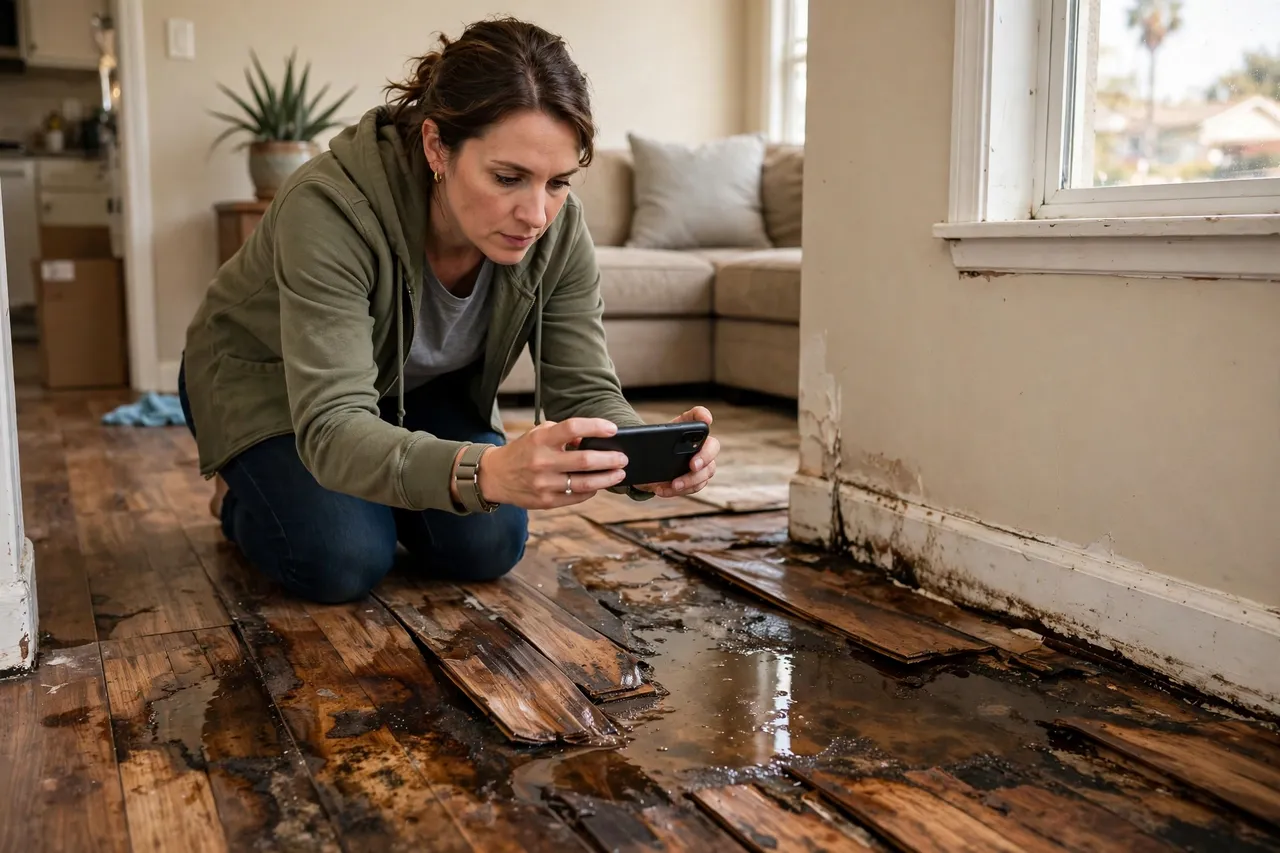
Slab leak insurance claim help is documentation and guidance support for homeowners filing a homeowner's insurance claim for slab-leak damage: what to photograph, which readings and reports to gather, how sudden water damage differs from long-term wear in an adjuster's eyes, and how to present a clear, organized file. It is practical help with the paperwork side of a stressful event - not claims adjusting and not legal advice. The 90732 file a homeowner assembles includes dated photos of every affected area, the leak-detection report, meter readings, a written timeline from first symptom to shutoff, and receipts for emergency mitigation. Terraced bluff streets limit equipment staging, and bluff-edge moisture means every damp spot gets a drainage-versus-leak verdict before repair planning.
For 90732 homeowners, the questions to bring to the first call are: what happened and when, what does the policy situation look like, and what evidence exists right now? The answers shape a checklist for your specific home - not a generic form. And remember the boundary: documentation help organizes your claim; coverage decisions belong to your insurer, and denied or underpaid claims deserve a licensed public adjuster or attorney.
90732 Warning Signs That Point Toward Slab Leak Insurance Claim Help
Homeowners usually seek this help right after discovery: the floor is warm, the meter is spinning, or a plumber has just confirmed a leak under the slab - and now there is a claim number to feed with evidence. The most valuable documentation is gathered in the first 48 hours: photos of damage, meter readings, the detection report, and a written timeline. The 90732 pattern adds a documentation note: Terraced bluff streets limit equipment staging, and bluff-edge moisture means every damp spot gets a drainage-versus-leak verdict before repair planning. Capture it all early - photos, readings, the detection report, and a written timeline - while the evidence is fresh.
How Slab Leak Insurance Claim Help Works on a San Pedro Property
The process starts with a discovery call about what happened and what the policy situation looks like. Then comes a documentation checklist tailored to the home: photos and video of every affected area, moisture and thermal readings where available, the leak-detection report, repair estimates, and receipts for emergency mitigation like water shutoff or drying. Everything is organized into a claim file the homeowner can hand to their adjuster. What you receive is organization, not representation: a complete, dated, photographed file you hand to your adjuster yourself. On the bluff streets above Paseo del Mar, ocean-facing rooms take wind-driven moisture that can look exactly like a slab leak on a thermal camera - isolation testing tells them apart. Local context like that goes into the file's background notes so the adjuster isn't guessing.
Why San Pedro's Ground and Housing Stock Shape Slab Leak Insurance Claim Help
San Pedro 90732 sits on Coastal bluffs and hillsides with ocean-bluff lots under slope-drainage pressure; terraced streets like Paseo del Mar. Direct ocean exposure with salt air, November-to-March rain and bluff-edge erosion. Homes here: South and west San Pedro - Point Fermin, Cabrillo, White Point and Vista del Oro, with 1950s-1970s hillside single-family homes (about 53.6 percent detached). Pipe underneath: 1950s-70s copper; cast-iron or ABS drains. Slab-on-grade prevalence is Very high; stepped slabs on hillside lots. The key local fact for slab leak insurance claim help: Hillside plus ocean bluff makes this the second-most geotechnically sensitive area after Rancho Palos Verdes itself. Slope drainage and bluff-edge moisture complicate diagnosis; stepped slabs complicate repair access. 1960s copper here is at prime failure age, and salt air shortens that further. On the ground that means: Terraced bluff streets limit equipment staging, and bluff-edge moisture means every damp spot gets a drainage-versus-leak verdict before repair planning. And for reference: On the bluff streets above Paseo del Mar, ocean-facing rooms take wind-driven moisture that can look exactly like a slab leak on a thermal camera - isolation testing tells them apart.
Your First-48-Hours Documentation Checklist in San Pedro 90732
Your 90732 documentation kit, assembled in the first two days: dated photos/video of all damage before anything is disturbed; a written timeline from first symptom through shutoff; the electronic detection report pinpointing the failure; meter readings and the spiked water bill; receipts for mitigation (drying, emergency repairs); and the failed pipe section itself, kept and photographed. Terraced bluff streets limit equipment staging, and bluff-edge moisture means every damp spot gets a drainage-versus-leak verdict before repair planning. Then the file goes to your adjuster complete - because in San Pedro, as everywhere, the best-documented claim is the fastest-moving one.
Your First Call: What to Expect in San Pedro
Your call to (833) 713-2101 starts simply: we verify the 90732 ZIP, hear the symptoms in your words, and note anything already tried. Then Slab Leak Repair Experts - a referral service connecting San Pedro homeowners with local specialists - pairs you with a specialist who knows slab leak insurance claim help on Point Fermin, Cabrillo and the bluff neighborhoods-area homes like yours. The specialist takes it from there: questions, a visit if needed, and a plain-spoken plan. Start with a call to (833) 713-2101 at (833) 713-2101.
Suspect a Slab Leak? Talk to a Specialist Today
One call connects you with a local slab leak professional serving Rancho Palos Verdes, CA — day or night.
Call (833) 713-2101Frequently Asked Questions
The adjuster says my San Pedro damage is from groundwater, not the pipe. What helps?
The diagnostic evidence that proves a plumbing failure: meter-test results showing water loss with everything off, pressure-isolation results identifying the failed line, the detection report pinpointing it, and photos of the failed section. In 90732, hillside plus ocean bluff makes this the second-most geotechnically sensitive area after Rancho Palos Verdes itself. - so the file must make the plumbing cause undeniable rather than letting dampness speak for itself. This is the single most common dispute in high-water-table areas, and it's won with instruments, not arguments.
My 90732 home has 1950s-70s copper; cast-iron or ABS drains. - will the insurer call it wear and tear?
They may ask the question, which is why the file answers it preemptively: a dated sudden-onset timeline, evidence of prior normal function, and the detection report showing a specific failure point rather than systemic decay. Hillside plus ocean bluff makes this the second-most geotechnically sensitive area after Rancho Palos Verdes itself. Age alone doesn't make a failure gradual - a 70-year-old pipe can fail suddenly - but the file has to prove this one did. Stick to facts, dates, and instruments.
How do I prove my 90732 leak was sudden and not gradual wear?
With a timeline and corroboration: the date you first noticed symptoms, how quickly they progressed, when you shut the water off, the detection report pinpointing a specific failure point, and any records of prior normal function - steady water bills, prior plumbing work. In San Pedro, hillside plus ocean bluff makes this the second-most geotechnically sensitive area after Rancho Palos Verdes itself. - which is exactly why the timeline must be written while fresh and backed by dated evidence, not reconstructed from memory weeks later.
The adjuster says my San Pedro damage is from groundwater, not the pipe. What helps?
The diagnostic evidence that proves a plumbing failure: meter-test results showing water loss with everything off, pressure-isolation results identifying the failed line, the detection report pinpointing it, and photos of the failed section. In 90732, hillside plus ocean bluff makes this the second-most geotechnically sensitive area after Rancho Palos Verdes itself. - so the file must make the plumbing cause undeniable rather than letting dampness speak for itself. This is the single most common dispute in high-water-table areas, and it's won with instruments, not arguments.