Slab Leak Insurance Claim Help in Harbor City, CA 90710
If you need slab leak insurance claim help in Harbor City 90710, start with a call to (833) 713-2101.
In Short
If you need slab leak insurance claim help in Harbor City 90710, start with a call to (833) 713-2101. Slab Leak Repair Experts connects the 2.3-square-mile harbor community homeowners withspecialists; we confirm the 90710 ZIP, review and the first step is a documentation checklist tailored to your home, your damage, and where you are in the claims process.
Harbor City 90710 Ground, Pipes and Homes: What It Means for Slab Leak Insurance Claim Help
Every 90710 claim file starts from the same local facts. Most homes built in the 1970s, a mix of single-family and multifamily in a compact 2.3-square-mile community. Beneath those slabs runs 1970s copper supply; ABS drains. Slab prevalence is Very high. Documenting the home's era and pipe generation up front prevents the adjuster from discovering them mid-review and wondering what else wasn't disclosed.
In Harbor City 90710, slab-leak insurance documentation has a multifamily layer that single-family claims skip. When one slab leak affects multiple units, the file must establish whose line failed and whose damage resulted - shared versus dedicated lines, documented by the detection mapping. Coverage questions multiply: the building owner's policy, the affected unit owners' policies, and HO-6 versus master policy boundaries in condos. Each affected unit needs its own photo documentation, and the timeline must cover discovery through notification of all parties. For single-family 1970s homes, the claim is standard - sudden pinhole, prompt discovery, clean file. For multifamily, the documentation plan starts with the plumbing topology and the parties, because the adjuster will ask about both before discussing the damage.
Slab leak insurance claim help is documentation and guidance support for homeowners filing a homeowner's insurance claim for slab-leak damage: what to photograph, which readings and reports to gather, how sudden water damage differs from long-term wear in an adjuster's eyes, and how to present a clear, organized file. It is practical help with the paperwork side of a stressful event - not claims adjusting and not legal advice. The 90710 file a homeowner assembles includes dated photos of every affected area, the leak-detection report, meter readings, a written timeline from first symptom to shutoff, and receipts for emergency mitigation. In multifamily buildings, access and authorization get complicated - the leak, the shutoff, and the damaged unit are not always in the same home.
For 90710 homeowners, the questions to bring to the first call are: what happened and when, what does the policy situation look like, and what evidence exists right now? The answers shape a checklist for your specific home - not a generic form. And remember the boundary: documentation help organizes your claim; coverage decisions belong to your insurer, and denied or underpaid claims deserve a licensed public adjuster or attorney.
90710 Warning Signs That Point Toward Slab Leak Insurance Claim Help
Homeowners usually seek this help right after discovery: the floor is warm, the meter is spinning, or a plumber has just confirmed a leak under the slab - and now there is a claim number to feed with evidence. The most valuable documentation is gathered in the first 48 hours: photos of damage, meter readings, the detection report, and a written timeline. In Harbor City 90710, the documentation clock starts at discovery: photograph the damage before anything is cleaned or dried, note the date and time, and keep the water bill showing the spike. 1970s copper is younger than the 1950s stock but old enough for pinhole failures, especially where a high water table keeps soil saturated.
What Slab Leak Insurance Claim Help Looks Like Step by Step in 90710
The process starts with a discovery call about what happened and what the policy situation looks like. Then comes a documentation checklist tailored to the home: photos and video of every affected area, moisture and thermal readings where available, the leak-detection report, repair estimates, and receipts for emergency mitigation like water shutoff or drying. Everything is organized into a claim file the homeowner can hand to their adjuster. For a Harbor City 90710 homeowner, the checklist is built around your specific situation - the home's era (most homes built in the 1970s, a mix of single-family and multifamily in a compact 2), the damage observed, and where you stand with your insurer. In multifamily buildings, access and authorization get complicated - the leak, the shutoff, and the damaged unit are not always in the same home.
Why Harbor City's Ground and Housing Stock Shape Slab Leak Insurance Claim Help
Harbor City 90710 sits on Flat coastal-plain alluvium with a high water table near the harbor. Marine-influenced with November-to-March rain; harbor proximity keeps the water table high. Homes here: Most homes built in the 1970s, a mix of single-family and multifamily in a compact 2.3-square-mile community. Pipe underneath: 1970s copper supply; ABS drains. Slab-on-grade prevalence is Very high. The key local fact for slab leak insurance claim help: 1970s copper is younger than the 1950s stock but old enough for pinhole failures, especially where a high water table keeps soil saturated. Multifamily buildings mean one slab leak can affect multiple units - detection must map shared versus dedicated lines before anyone authorizes concrete work. On the ground that means: In multifamily buildings, access and authorization get complicated - the leak, the shutoff, and the damaged unit are not always in the same home. And for reference: A pinhole leak in 1970s copper can run for months before it shows, because saturated soil wicks the water away instead of letting it surface.
Your First-48-Hours Documentation Checklist in Harbor City 90710
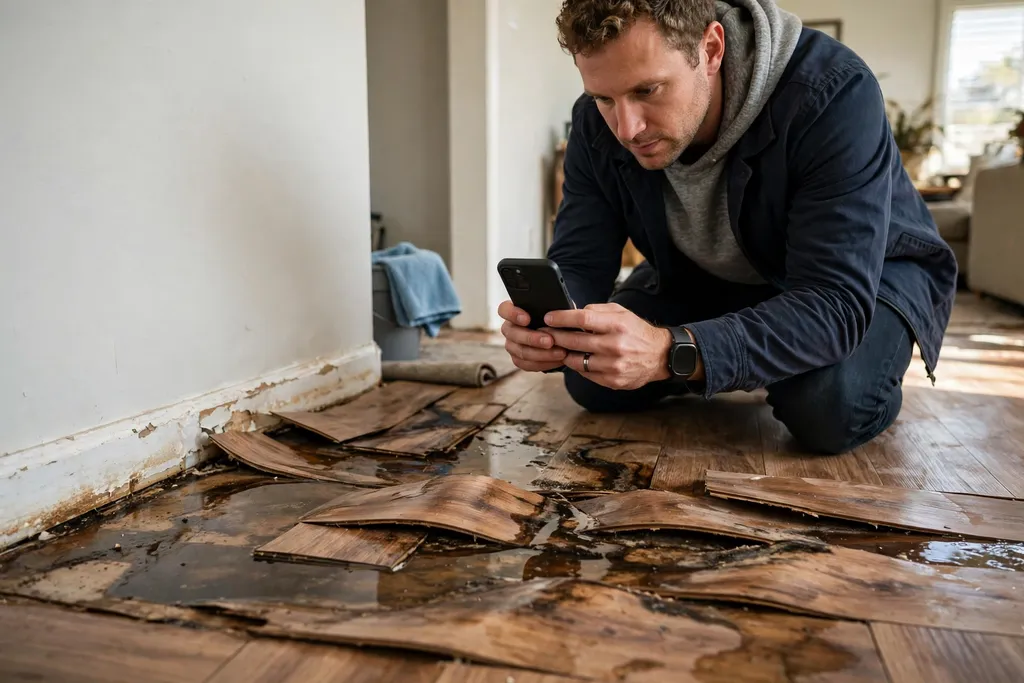
The first-48-hours checklist for Harbor City 90710: (1) Photograph and video every affected area before cleanup - floors, walls, baseboards, the water's path - with dates. (2) Write the timeline: when you first noticed, what you saw, when you shut the water off. (3) Save the water bill showing the spike and note meter readings. (4) Get the leak-detection report in writing - 1970s copper is younger than the 1950s stock but old enough for pinhole failures, especially where a high water table keeps soil saturated. (5) Keep receipts for everything: emergency plumber, water shutoff, drying equipment, temporary repairs. (6) Don't discard the failed pipe section - photograph it and keep it. Organized early, this file answers the adjuster's questions before they're asked.
What Happens When You Call (833) 713-2101
Calling (833) 713-2101 connects you to a real conversation, not a phone tree. We confirm Harbor City 90710, review what's happening at your home near the 2.3-square-mile harbor community, and connect you - through Slab Leak Repair Experts' referral network - with a local specialist in slab leak insurance claim help. You'll know the next step before you hang up, whether that's a detection visit, a documentation checklist, or simply a better understanding of your options. Reach us at (833) 713-2101: (833) 713-2101.
Suspect a Slab Leak? Talk to a Specialist Today
One call connects you with a local slab leak professional serving Rancho Palos Verdes, CA — day or night.
Call (833) 713-2101Frequently Asked Questions
Should I start repairs before the adjuster visits in 90710?
Mitigate, don't renovate. Shut off the water, stop the active damage, dry what you can - insurers expect prompt mitigation and penalize delay. But hold off on permanent repairs and demolition until the damage is fully documented and ideally seen by the adjuster. Photograph everything before and during mitigation, keep all receipts, and if emergency repair can't wait, document the before-state exhaustively first. In Harbor City, in multifamily buildings, access and authorization get complicated - the leak, the shutoff, and the damaged unit are not always in the same home. - which makes pre-repair documentation even more important.
What if my claim is denied - is documentation help still useful?
Yes - a well-organized file is exactly what a licensed public adjuster or attorney needs to evaluate an appeal. Keep everything: the full photo set, the timeline, the detection report, all correspondence with the insurer, and the denial letter itself. Documentation help doesn't handle appeals or interpret policy language as a licensed adjuster would - that's the boundary - but the file it helps you build becomes the foundation of any next step you take.
Will my homeowner's insurance cover the pipe repair itself in Harbor City?
Often the resulting water damage is covered while the pipe repair itself is not - that's the standard sudden-water-damage structure in most policies: the insurer pays for what the water ruined, not for fixing the pipe that failed. But policies vary enormously, and the sudden-versus-gradual distinction controls the outcome. Documentation help organizes your evidence; it doesn't interpret your policy. For coverage questions, read your policy's water-damage section and talk to your adjuster - and if a claim is denied or underpaid, a licensed public adjuster or attorney is the right next call.
Should I start repairs before the adjuster visits in 90710?
Mitigate, don't renovate. Shut off the water, stop the active damage, dry what you can - insurers expect prompt mitigation and penalize delay. But hold off on permanent repairs and demolition until the damage is fully documented and ideally seen by the adjuster. Photograph everything before and during mitigation, keep all receipts, and if emergency repair can't wait, document the before-state exhaustively first. In Harbor City, in multifamily buildings, access and authorization get complicated - the leak, the shutoff, and the damaged unit are not always in the same home. - which makes pre-repair documentation even more important.