Slab Leak Detection in Torrance 90503, CA
Slab Leak Detection in Torrance 90503, CA — non-destructive testing that confirms whether a hidden leak exists under your concrete slab — and which line it's on — before anyone talks about breaking concrete.
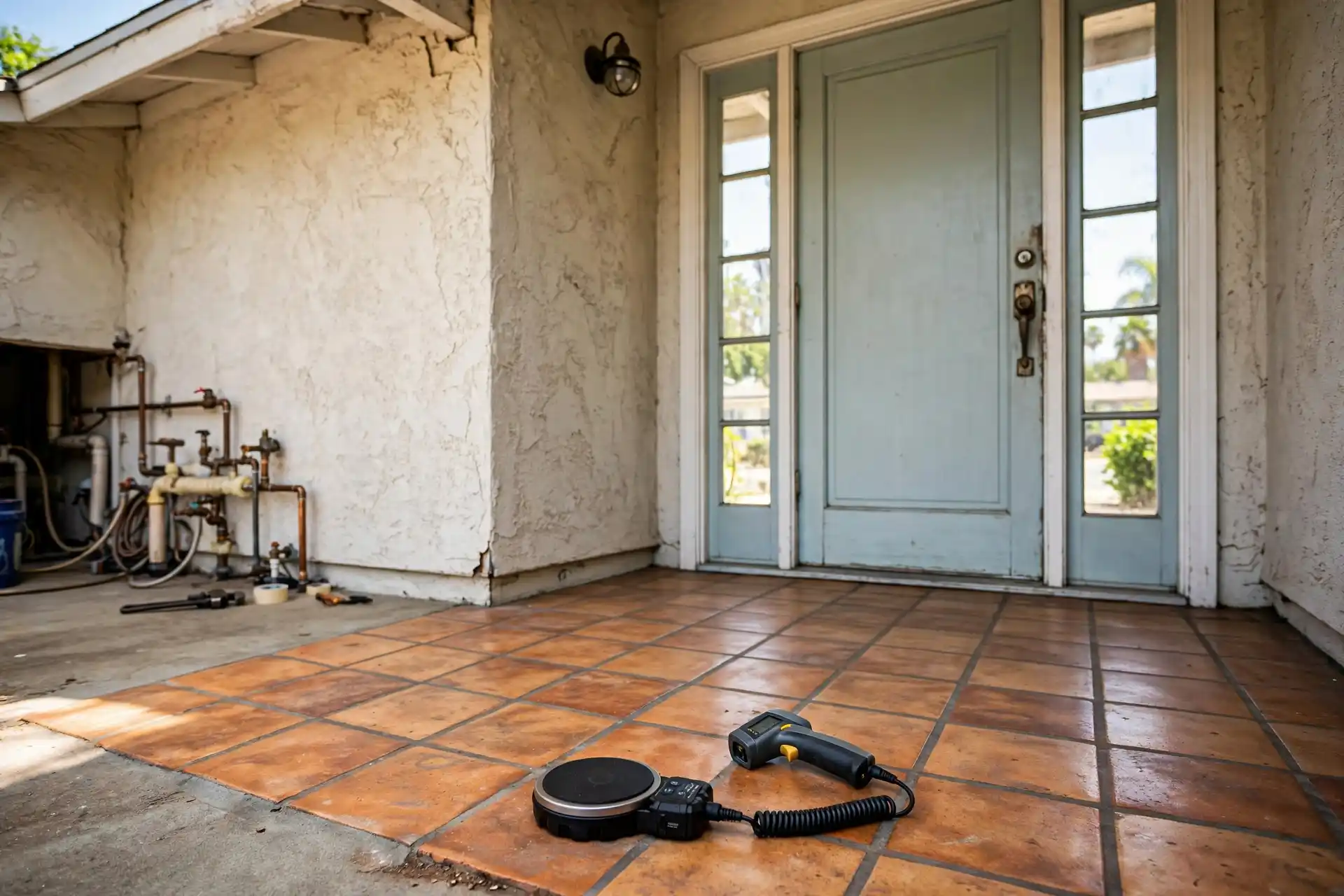
In Short
Slab Leak Detection in Torrance 90503, CA — non-destructive testing that confirms whether a hidden leak exists under your concrete slab — and which line it's on — before anyone talks about breaking concrete. Serving the 90503 ZIP: meter test, pressure isolation, acoustic listening, thermal imaging. First step when you call (833) 713-2101: a guided five-minute meter check.
What the Detection Visit Looks Like in Torrance (90503)
A detection visit in Torrance is methodical, not dramatic. Nobody brings a jackhammer on day one — the whole point is to avoid one. Here's the sequence, and how 90503's conditions shape each step.
What to Expect When We Come Out to Torrance
Plan on someone being home for the visit — we need access to the rooms above the suspected area, the water heater, and the main shutoff. Move what you can away from the walls where the listening happens; the equipment is sensitive and the visit goes faster in a quiet house. high owner-occupancy here means decisions get made fast — have your questions ready and we'll answer them on the visit
What you won't get is a jackhammer on day one. Detection is a no-dig discipline: meter, pressure gauges, microphones, and a camera. If a previous company told you they need to open the floor "just to look," that's exactly the exploratory digging electronic methods were invented to replace. Still unsure whether it's a slab leak? That's exactly what the call is for: (833) 713-2101.
Local Notes for Torrance 90503
West Torrance fills the 90503 ZIP: the cottage and bungalow streets, the Southwood mid-century tracts, and the neighborhoods around Del Amo Fashion Center. Hawthorne Boulevard, Sepulveda Boulevard, and Torrance Boulevard frame the area; Delthorne Park and the Madrona Marsh Preserve are the green landmarks. Housing is 1950s–60s single-family on flat lots — slab-on-grade throughout, copper supply lines underneath, cast-iron or early ABS drains. This is the highest-volume, most predictable slab-leak territory in Torrance, and the diagnostics here are refreshingly straightforward.
If your West Torrance home is 1950s–60s original and you've noticed a warm spot on the floor — that's the signature. Hot-water lines fail first because heat accelerates corrosion, and a warm floor is the symptom that names the line before we even test. Don't wait on it: hot-line leaks run constantly and do the most damage per day. Check your meter with fixtures off; if it moves, call (833) 713-2101. In 90503, early detection almost always means a smaller repair.
How this works: you call our line, we match you with a slab-leak specialist who serves 90503 — no fee for the call itself. Questions about slab leak detection in the 90503 ZIP? Call (833) 713-2101.
70-Year Copper at Peak Failure: Detection in West Torrance 90503
West Torrance — the Southwood and Del Amo neighborhoods — is textbook slab-leak age: 1955-vintage copper under slab is now 70-plus years old, and these homes are in the peak failure window. The signature call is the warm floor from a hot-line leak, and thermal imaging reads it beautifully on 90503's flat slabs. Flat coastal plain, quiet streets, short runs: about the cleanest detection conditions in the service area, and high owner-occupancy means once detection pinpoints the leak, decisions happen fast.
The detection sequence here is the classic one, and it works: guided meter check by phone, on-site meter confirmation with every fixture off, hot-side versus cold-side pressure isolation to name the failing line, acoustic listening to narrow the section, thermal as the cross-check. At 70-year copper age, we pressure-map the full system rather than stopping at the first anomaly — when one run has failed, its neighbors are the same age, and the homeowner deserves the full inventory before choosing between spot repair and reroute.
If your Southwood or West Torrance home is a 1950s original and the floor has gone warm in one spot, don't wait for the bill to confirm it — at this age, the warm floor is the confirmation. The detection visit is typically quick here, the geometry is forgiving, and the repair options are standard on flat lots. Call and describe the symptom; if it fits the 90503 pattern, we'll have you scheduled and answered within the week.
Suspect a Slab Leak? Talk to a Specialist Today
One call connects you with a local slab leak professional serving Rancho Palos Verdes, CA — day or night.
Call (833) 713-2101Frequently Asked Questions
My floor feels warm in one spot. Is that really a slab-leak sign?
In 90503, it's the signature. A warm patch on the floor — especially in a hallway or bedroom — is the classic symptom of a hot-water line leaking under the slab. Hot lines corrode faster than cold ones because heat accelerates the chemistry, and 1950s–60s copper here is 70-plus years into that process. Slab Leak Detection will confirm it with pressure isolation (hot side versus cold side) in minutes. Don't wait on a warm floor — hot-line leaks run around the clock.
Why do hot-water lines fail before cold lines?
Heat speeds corrosion — it's that simple. The same copper that lasts decades on the cold side gives up years earlier on the hot side, which is why the warm-floor symptom is so diagnostic: it names the failing line before any test. In 90503's 1955-vintage stock, hot-line pinholes are the most common failure we confirm. Slab Leak Detection treats hot-side and cold-side as separate suspects from the first pressure test.
How fast do decisions usually go in West Torrance?
Fast — and that's a compliment to the neighborhood. High owner-occupancy means the person with the symptoms is usually the person who authorizes the work, so detection visits in 90503 often move straight to repair planning the same week. We'll give you the findings, the options, and the trade-offs on the visit; most homeowners here decide quickly because the facts are clear.
Are irrigation leaks ever confused with slab leaks in 90503?
Regularly — established landscaping with old sprinkler zones can produce damp soil and even damp slab edges that mimic a supply leak. The divider is the meter: irrigation runs on its own schedule and its own valve, so a meter test with the irrigation off separates the two cleanly. Slab Leak Detection always includes that separation here before any under-slab conclusions. If it's the sprinklers, we'll tell you — that's a landscaper's fix, not ours.
How long does a typical detection visit take in Torrance?
Most visits run one to two hours on site, plus the phone triage beforehand. 1950s–60s cottage, bungalow, ranch, and Craftsman homes — 1955-vintage copper now past 70 years old — the meter test and pressure isolation are quick; the acoustic and thermal survey takes the time it takes. What stretches a visit in the 90503 ZIP is usually access: rooms that need clearing, or a water heater tucked somewhere awkward. We'll tell you what to have ready when we schedule.
Will you have to break my concrete to find the leak?
No. Detection is deliberately non-destructive — that's its whole job. We find the leak's line and its general location with meters, pressure, sound, and heat. Concrete only gets discussed after detection, when the repair plan is being chosen, and even then the goal is the smallest possible opening. If someone wants to cut first and diagnose second, that's backwards.
My water meter spins but I can't find any water. Is that a slab leak?
It's the single most common way a slab leak announces itself in Torrance: the meter moves with every fixture off, but nothing is visibly wet — because the water is escaping under the slab, into the soil. there's barely one — 1955-vintage copper at 70-plus years on flat, well-drained ground is the most predictable slab-leak profile in the South Bay, so detection here is about confirming quickly and precisely, not ruling out exotica Either way, a spinning meter with dry fixtures is worth a detection visit. It's the cheapest way to get a yes or no.