Slab Leak Detection in San Pedro 90732, CA
Slab Leak Detection in San Pedro 90732, CA — non-destructive testing that confirms whether a hidden leak exists under your concrete slab — and which line it's on — before anyone talks about breaking concrete.
In Short
Slab Leak Detection in San Pedro 90732, CA — non-destructive testing that confirms whether a hidden leak exists under your concrete slab — and which line it's on — before anyone talks about breaking concrete. Serving the 90732 ZIP: meter test, pressure isolation, acoustic listening, thermal imaging. First step when you call (833) 713-2101: a guided five-minute meter check.
What the Detection Visit Looks Like in San Pedro (90732)
A detection visit in San Pedro is methodical, not dramatic. Nobody brings a jackhammer on day one — the whole point is to avoid one. Here's the sequence, and how 90732's conditions shape each step.
What to Expect When We Come Out to San Pedro
Plan on someone being home for the visit — we need access to the rooms above the suspected area, the water heater, and the main shutoff. Move what you can away from the walls where the listening happens; the equipment is sensitive and the visit goes faster in a quiet house. if your lot is on the bluff edge or a terraced street, say so when you call — drainage gets ruled out first and access gets planned around the grade
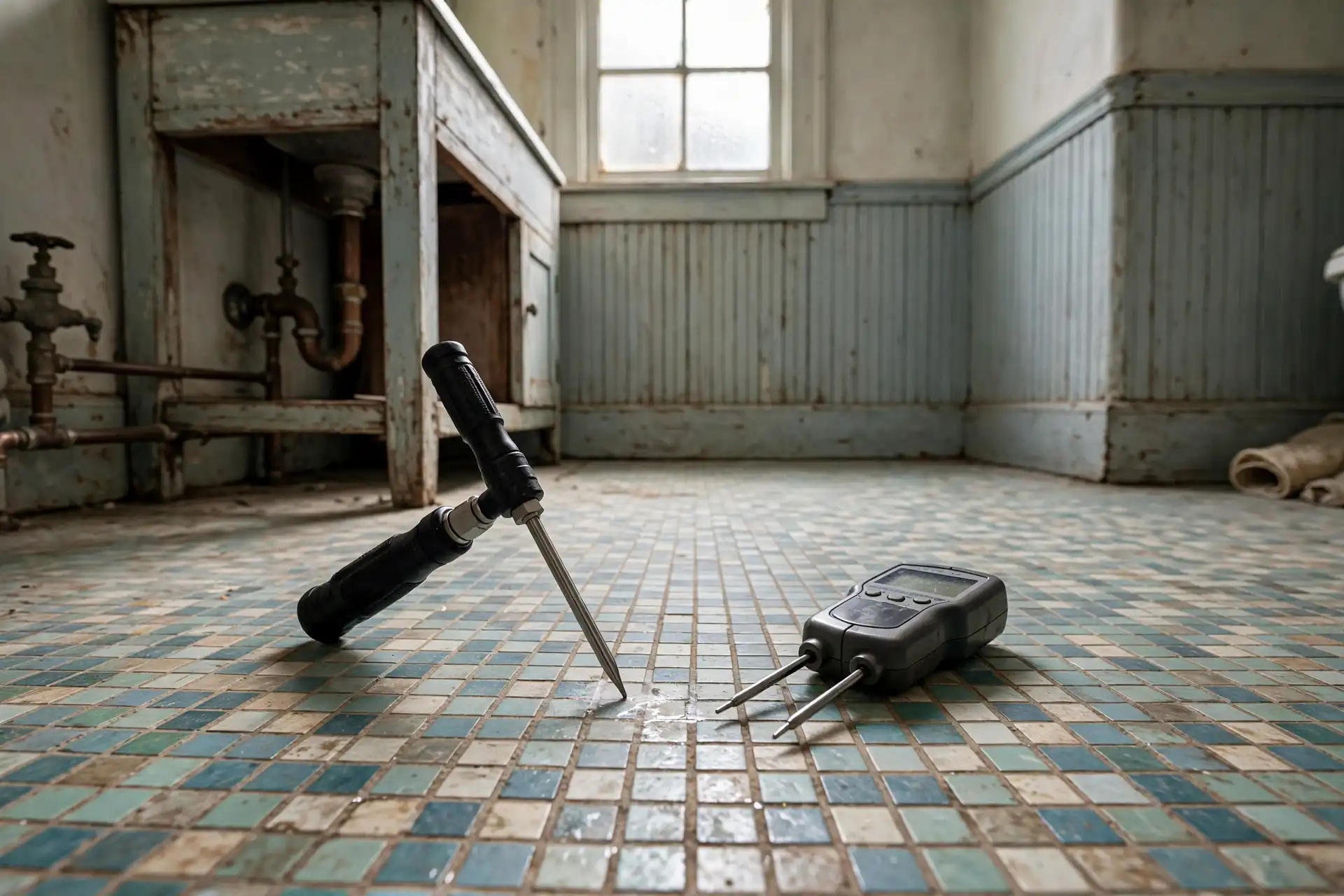
What you won't get is a jackhammer on day one. Detection is a no-dig discipline: meter, pressure gauges, microphones, and a camera. If a previous company told you they need to open the floor "just to look," that's exactly the exploratory digging electronic methods were invented to replace. Still unsure whether it's a slab leak? That's exactly what the call is for: (833) 713-2101.
Local Notes for San Pedro 90732
The 90732 ZIP covers south and west San Pedro: the Point Fermin lighthouse and park, the Cabrillo Marine Aquarium, the Korean Bell of Friendship at Angels Gate Park, and White Point/Royal Palms Beach below the bluffs. Gaffey Street and 25th Street run the grid; Paseo del Mar terraces along the bluff edge. Housing is 1950s–1970s hillside single-family — 53.6 percent detached — on coastal bluffs and hillsides with slope-drainage pressure, terraced streets, and ocean-bluff lots. Slab-on-grade is the norm but often stepped; copper supply lines from the 1950s–70s run underneath with cast-iron or ABS drains.
90732 homeowners: your two pre-emergency homework items are the shutoff route (hillside meters are usually at the street, downhill from the house — walk it once before you need it at speed) and the drainage baseline (know what's normal hillside dampness on your lot after rain, so abnormal stands out). Bluff-edge lots should treat any sudden new dampness as guilty until the meter test proves otherwise — call (833) 713-2101 and lead with the lot position. Stepped-slab homes: mention the terracing; it changes the access plan from the first minute.
How this works: you call our line, we match you with a slab-leak specialist who serves 90732 — no fee for the call itself. Questions about slab leak detection in the 90732 ZIP? Call (833) 713-2101.
Suspect a Slab Leak? Talk to a Specialist Today
One call connects you with a local slab leak professional serving Rancho Palos Verdes, CA — day or night.
Call (833) 713-2101Frequently Asked Questions
How do you separate bluff moisture from a real pipe leak?
The meter and the pressure gauge — bluff-edge moisture is the great mimic of 90732, pushing hillside water toward foundations in ways that dampen floors and smell musty, but it can't spin a water meter with the fixtures off and it can't make an isolated line lose pressure. Slab Leak Detection runs those two tests first precisely because everything else (dampness, sound, even thermal hints) can be bluff-related. If the gauges are clean, it's the hill, not the pipe.
Does the salt air shorten my pipes' life here?
Yes — direct ocean exposure with salt air accelerates outside-in copper corrosion, which effectively shortens the failure timeline for 90732's 1960s copper compared to the same vintage inland. It's the same mechanism as the beach cities: the pipe's calendar runs fast near the water. Slab Leak Detection doesn't change, but the urgency does — 1960s copper on a San Pedro bluff deserves the respect inland 1950s copper gets.
What makes 90732 different from 90731 for slab leaks?
Ground and grade, completely. 90731 is flat, dense, port-adjacent — high water table, alluvial soil, transition-era pipes, groundwater noise. 90732 is hillside and bluff — slope drainage, stepped slabs, bluff-edge moisture, salt air. Detection in 90731 fights the water table; detection in 90732 fights the hill. Same city, different diagnostic puzzles — which is why we ask for your ZIP on every call.
Should bluff-edge homeowners worry about erosion affecting pipes?
Erosion is the slow background pressure on bluff lots — it changes drainage patterns and can expose or stress buried lines over years, not days. It's not an emergency by itself, but it's a reason bluff-edge homeowners should be more attentive, not less: know your drainage baseline, watch for new dampness, and call (833) 713-2101 at the first anomaly. The pipe emergency and the erosion timeline are separate problems that share one lot — we handle the pipe side and flag anything that looks like a soils question for the right professional.
How long does a typical detection visit take in San Pedro?
Most visits run one to two hours on site, plus the phone triage beforehand. 1950s–70s hillside single-family homes, many with stepped slabs on terraced lots — the meter test and pressure isolation are quick; the acoustic and thermal survey takes the time it takes. What stretches a visit in the 90732 ZIP is usually access: rooms that need clearing, or a water heater tucked somewhere awkward. We'll tell you what to have ready when we schedule.
My water meter spins but I can't find any water. Is that a slab leak?
It's the single most common way a slab leak announces itself in San Pedro: the meter moves with every fixture off, but nothing is visibly wet — because the water is escaping under the slab, into the soil. hillside plus ocean bluff makes this the second-most geotechnically sensitive area after Rancho Palos Verdes itself — slope drainage and bluff-edge moisture complicate diagnosis, stepped slabs complicate repair access, and 1960s copper is at prime failure age with salt air shortening it further Either way, a spinning meter with dry fixtures is worth a detection visit. It's the cheapest way to get a yes or no.
What if the tests show it isn't a slab leak after all?
Then the visit still did its job — it kept you from paying for concrete work you didn't need. In San Pedro, the usual alternatives are bluff-edge moisture and slope drainage — ocean-bluff lots push hillside water toward foundations, and that moisture mimics supply leaks convincingly. We'll tell you what the evidence points to and who actually handles that kind of problem, rather than inventing a slab leak to sell a repair.