Slab Leak Detection in San Pedro 90731, CA
Slab Leak Detection in San Pedro 90731, CA — non-destructive testing that confirms whether a hidden leak exists under your concrete slab — and which line it's on — before anyone talks about breaking concrete.
In Short
Slab Leak Detection in San Pedro 90731, CA — non-destructive testing that confirms whether a hidden leak exists under your concrete slab — and which line it's on — before anyone talks about breaking concrete. Serving the 90731 ZIP: meter test, pressure isolation, acoustic listening, thermal imaging. First step when you call (833) 713-2101: a guided five-minute meter check.
What the Detection Visit Looks Like in San Pedro (90731)
A detection visit in San Pedro is methodical, not dramatic. Nobody brings a jackhammer on day one — the whole point is to avoid one. Here's the sequence, and how 90731's conditions shape each step.
What to Expect When We Come Out to San Pedro
Plan on someone being home for the visit — we need access to the rooms above the suspected area, the water heater, and the main shutoff. Move what you can away from the walls where the listening happens; the equipment is sensitive and the visit goes faster in a quiet house. if you know whether your home still has galvanized or was converted to copper, tell us — in 90731 that single fact changes the diagnostic odds
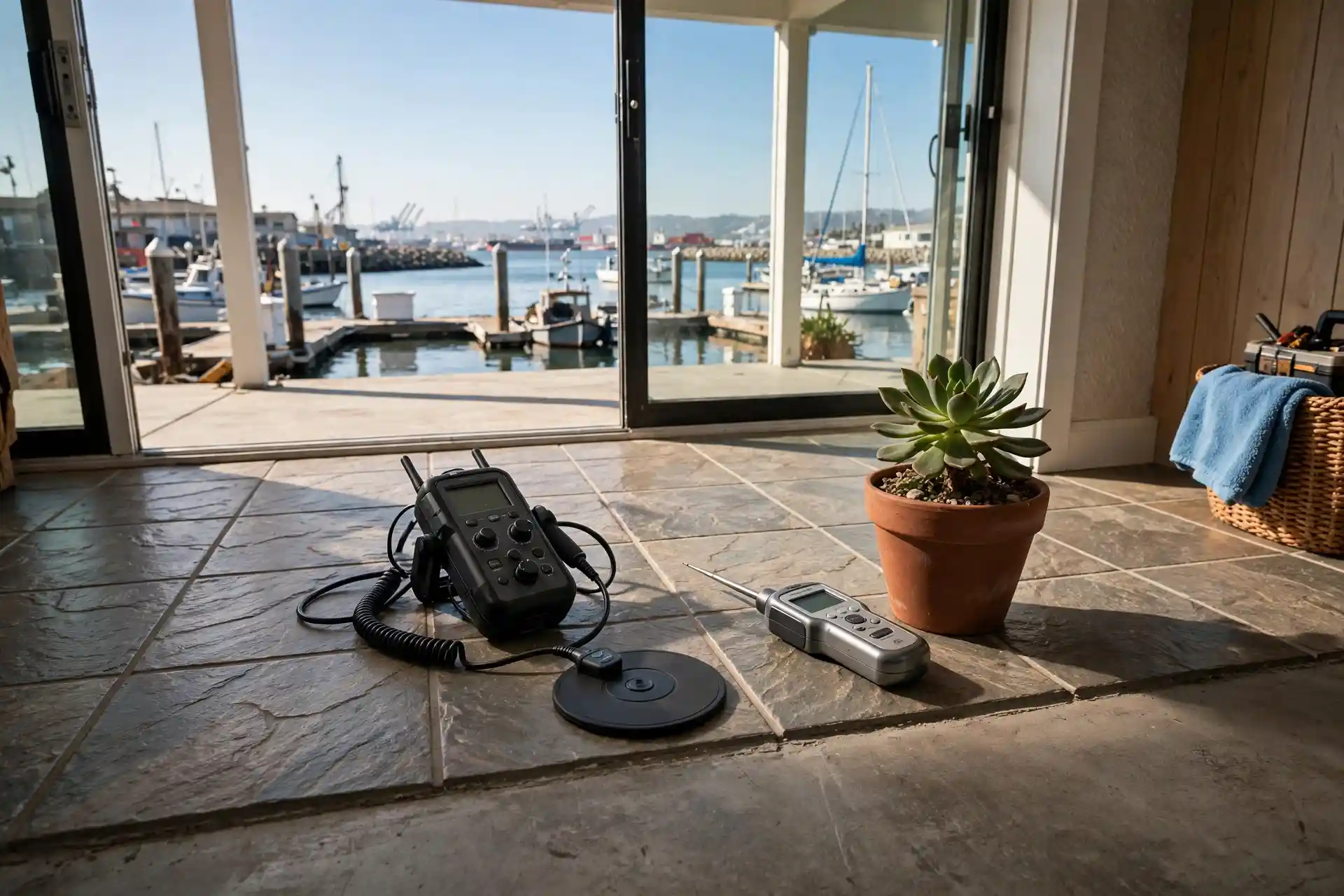
What you won't get is a jackhammer on day one. Detection is a no-dig discipline: meter, pressure gauges, microphones, and a camera. If a previous company told you they need to open the floor "just to look," that's exactly the exploratory digging electronic methods were invented to replace. Questions before you book? Call (833) 713-2101 — we'd rather answer them now than discover them mid-visit.
Local Notes for San Pedro 90731
The 90731 ZIP covers central and east San Pedro: the downtown core, the Gaffey Street corridor, Pacific Avenue and Harbor Boulevard down toward the port. You'll know the Vincent Thomas Bridge, the Los Angeles Maritime Museum, the SS Lane Victory, and the Ports O' Call area. This is the denser, flatter half of San Pedro — 1940s through 1970s single-family homes mixed with multifamily buildings — on flat coastal-plain alluvium. Slab foundations dominate the postwar tracts; the older downtown stock is more mixed.
Two 90731 realities to plan around. First, the high water table: after heavy rain, saturated soil can mimic leak symptoms, so the meter test is your arbiter — learn where your meter is and how to read the dial. Second, the galvanized-to-copper transition: if your home is 1940s–50s and never re-piped, treat pressure drops as urgent, because that pipe fails from the inside with no visible warning. In multifamily buildings, sort out which shutoff controls your unit before you need it. Call (833) 713-2101 — mention the build era and we'll calibrate from there.
We're a referral line: you talk to us, and we connect you with a slab-leak specialist serving the 90731 area. Questions about slab leak detection in the 90731 ZIP? Call (833) 713-2101.
Noisy Ground, Silent Leaks: Detection in San Pedro 90731
Central and east San Pedro sit on flat coastal-plain alluvium near the Port of Los Angeles, with a high water table that does two unhelpful things at once: it accelerates copper corrosion under the slab, and it makes electronic detection noisier, because groundwater conducts sound. The acoustic signature of a small leak dissolves into the background hum of saturated ground. Detection in 90731 leans on the meter and the pressure gauges first — the quiet leak is found by elimination, and the microphones confirm rather than lead.
The 90731 housing stock adds the galvanized factor: 1940s–50s homes transitioning from galvanized to copper, with older galvanized lines that fail from the inside out. The classic 90731 call is a pressure drop with no visible water and no warm floor — interior corrosion throttling flow and weeping into damp soil that never surfaces. Pressure isolation names the failing side; the meter proves it's active. If your San Pedro bill climbed without drama, that silent pattern fits galvanized end-of-life, and it's worth a detection visit.
Note the 90731/90732 split: 90731 is the denser, flatter port-adjacent side, while 90732 rises into the hills with stepped slabs and bluff drainage. The detection protocol shifts with the terrain — noisy flat ground here, slope-water complications there. Tell us the ZIP on the call and the triage adjusts accordingly. Either way, high water table country rewards the methodical sequence: meter, pressure, thermal, acoustic — in that order, every time.
Suspect a Slab Leak? Talk to a Specialist Today
One call connects you with a local slab leak professional serving Rancho Palos Verdes, CA — day or night.
Call (833) 713-2101Frequently Asked Questions
Why is leak detection harder near the port?
Groundwater. The harbor lowlands hold a high water table in alluvial soil, and saturated ground conducts sound — which is exactly what acoustic leak sensors listen for. The result is a 'smeared' signal: the leak's sound arrives from everywhere at once. Slab Leak Detection in 90731 compensates by leaning harder on the meter test, pressure isolation, and thermal imaging, and by triangulating the acoustic pass from multiple positions. It takes longer; it's still definitive.
My water pressure dropped but there's no water anywhere. What does that mean?
In 90731, that's the signature of 1940s–50s galvanized failing from the inside out. Galvanized pipe corrodes internally, narrowing and then breaching without any external drama — so the first symptom is pressure loss, not a puddle. Slab Leak Detection will confirm whether the loss is under the slab or in the walls, but don't wait on this symptom: inside-out failures escalate. Call (833) 713-2101 and mention the pressure drop first.
Does the high water table cause slab leaks, or just hide them?
Both, in different ways. Constantly damp alluvial soil accelerates copper corrosion from the outside — that's causation. And saturated ground smears acoustic signals and can wick moisture into slabs that looks like a leak — that's masking and mimicking. So 90731 gets more genuine corrosion failures and harder diagnoses. The meter test cuts through all of it: groundwater can't spin a meter.
I'm in a multifamily building. Does that change the visit?
It changes the first fifteen minutes. We have to establish which shutoff controls your unit and whether the leaking line is dedicated to you or shared — because opening a slab over a shared line without mapping it first is how you surprise the neighbors. Slab Leak Detection in multifamily buildings always includes that mapping step. Have your building's shutoff layout ready if you can; if you can't, we'll sort it on site.
Will you have to break my concrete to find the leak?
No. Detection is deliberately non-destructive — that's its whole job. We find the leak's line and its general location with meters, pressure, sound, and heat. Concrete only gets discussed after detection, when the repair plan is being chosen, and even then the goal is the smallest possible opening. If someone wants to cut first and diagnose second, that's backwards.
My water meter spins but I can't find any water. Is that a slab leak?
It's the single most common way a slab leak announces itself in San Pedro: the meter moves with every fixture off, but nothing is visibly wet — because the water is escaping under the slab, into the soil. the high water table near the harbor accelerates copper corrosion and makes electronic detection noisier, because groundwater conducts sound — so meter testing and pressure isolation carry more weight here than the acoustic pass alone Either way, a spinning meter with dry fixtures is worth a detection visit. It's the cheapest way to get a yes or no.
What if the tests show it isn't a slab leak after all?
Then the visit still did its job — it kept you from paying for concrete work you didn't need. In San Pedro, the usual alternatives are high-water-table dampness — the harbor lowlands keep soils saturated, and that saturation wicks into slabs without any pipe failing. We'll tell you what the evidence points to and who actually handles that kind of problem, rather than inventing a slab leak to sell a repair.