Slab Leak Detection in Rancho Palos Verdes 90275, CA
Slab Leak Detection in Rancho Palos Verdes 90275, CA — non-destructive testing that confirms whether a hidden leak exists under your concrete slab — and which line it's on — before anyone talks about breaking concrete.
In Short
Slab Leak Detection in Rancho Palos Verdes 90275, CA — non-destructive testing that confirms whether a hidden leak exists under your concrete slab — and which line it's on — before anyone talks about breaking concrete. Serving the 90275 ZIP: meter test, pressure isolation, acoustic listening, thermal imaging. First step when you call (833) 713-2101: a guided five-minute meter check.
What the Detection Visit Looks Like in Rancho Palos Verdes (90275)
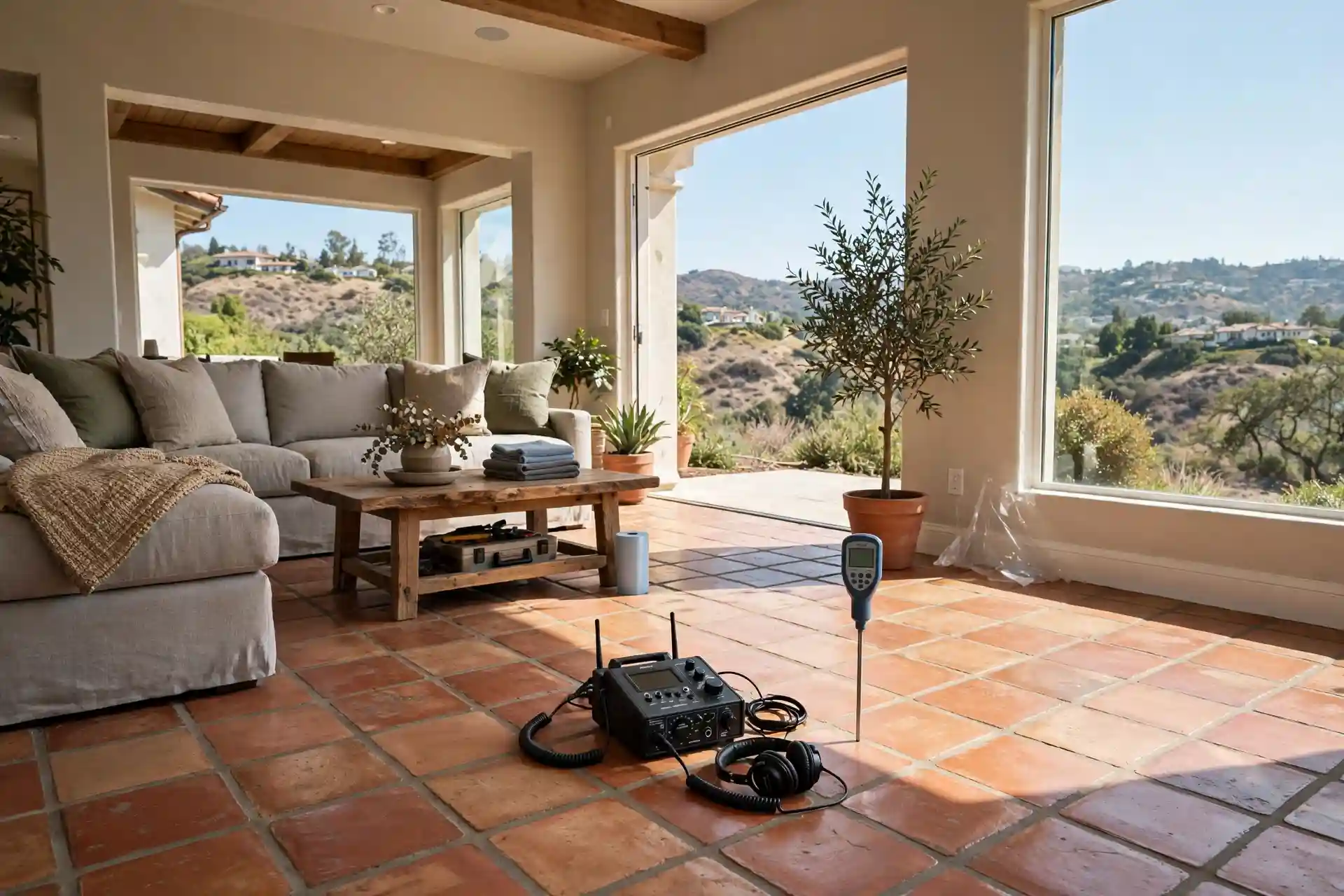
A detection visit in Rancho Palos Verdes is methodical, not dramatic. Nobody brings a jackhammer on day one — the whole point is to avoid one. Here's the sequence, and how 90275's conditions shape each step.
What to Expect When We Come Out to Rancho Palos Verdes
Plan on someone being home for the visit — we need access to the rooms above the suspected area, the water heater, and the main shutoff. Move what you can away from the walls where the listening happens; the equipment is sensitive and the visit goes faster in a quiet house. if you're inside the Portuguese Bend landslide complex, mention it when you call — it changes how we read the findings, not whether we come out
What you won't get is a jackhammer on day one. Detection is a no-dig discipline: meter, pressure gauges, microphones, and a camera. If a previous company told you they need to open the floor "just to look," that's exactly the exploratory digging electronic methods were invented to replace. Questions before you book? Call (833) 713-2101 — we'd rather answer them now than discover them mid-visit.
Local Notes for Rancho Palos Verdes 90275
We serve the full 90275 ZIP, with most slab-leak calls coming from the Portuguese Bend and Lunada Bay corridors along Palos Verdes Drive South. Hawthorne Boulevard and Crenshaw Boulevard are the main north-south routes; Palos Verdes Drive East handles the eastern edge. Landmarks you'll know: the Portuguese Bend Reserve and Forrestal Preserve, Wayfarers Chapel, Trump National Golf Club, and the Point Vicente Lighthouse. Homes here are predominantly 1960s single-family detached on terraced hillside lots, many with ocean or bluff-top views — and nearly all of that stock sits on slab-on-grade foundations with copper underneath.
If your home sits inside or adjacent to the landslide complex, tell us when you call — detection still works the same way, but we read borderline results more conservatively and we plan repairs around the reality of moving ground. Winter is the high season for calls here: November-through-March storms saturate the slide mass, and that's when both seepage lookalikes and genuine shear failures spike. Keep your meter accessible — on these hillside lots it's often at the street, downhill from the house.
We're a referral line: you talk to us, and we connect you with a slab-leak specialist serving the 90275 area. Questions about slab leak detection in the 90275 ZIP? Call (833) 713-2101.
Seepage or Slab Leak? Detection in the Moving Ground of 90275
Rancho Palos Verdes is the one area in the fleet where the ground itself moves. In and around the Portuguese Bend landslide complex — about 700 acres of actively creeping ground on a bentonite clay slide plane — shifting soil shears under-slab copper and stresses slabs beyond what corrosion alone explains, and wet winters make it worse. Detection here must first answer a question other cities never ask: is this hillside groundwater seepage, or a true pipe leak? The meter test is the decider — seepage doesn't spin the meter.
Saturated bentonite clay is acoustically difficult ground: waterlogged clay conducts sound everywhere, and a leak's hiss dissolves into the background. So the sequence here is meter first, pressure isolation second, and electronics last — the reverse of dry-ground practice. Hot-side versus cold-side isolation names the failing line, and the thermal camera reads the floor for the warm or cool anomaly that saturated soil can't quite hide. 1960s copper under these slabs is now in its failure window, and land movement can finish what corrosion started.
Any detection finding in or near the slide zone comes with a planning caveat: the ground is still moving, and a spot repair can be re-stressed by the next rainy season. We document the leak precisely and flag where the repair plan must account for ongoing soil movement — the detection visit here is also a repair-planning visit. Outside the complex, on stable Lunada Bay ground, standard detection applies. Tell us your street; we'll tell you which ground you're on.
Suspect a Slab Leak? Talk to a Specialist Today
One call connects you with a local slab leak professional serving Rancho Palos Verdes, CA — day or night.
Call (833) 713-2101Frequently Asked Questions
How do you tell hillside seepage apart from a real slab leak here?
That's the central job of Slab Leak Detection in Rancho Palos Verdes. Seepage from saturated hillside soil can dampen floors and smell musty just like a pipe leak — but seepage doesn't spin your water meter with the fixtures off, and it doesn't drop pressure on one isolated side. The meter test and hot/cold isolation separate the two before any sensor work begins. If it's seepage, we'll tell you it's a drainage problem, not a plumbing one.
Will a repair hold if the ground keeps moving?
It depends on the repair and the location. A rigid spot repair in the active slide zone can be re-stressed by the next rainy season — that's the honest physics of creeping ground. Often the smarter answer inside the complex is rerouting the line out from under the slab entirely, so future movement has nothing to shear. We'll lay out both paths with the trade-offs once Slab Leak Detection shows us what failed and where.
Does winter rain make slab leaks worse in Rancho Palos Verdes?
Winter is the high season for two different reasons: storms saturate the slide mass and accelerate land movement (which shears pipes), and saturated soil produces the seepage that mimics leaks. So November through March brings both more genuine failures and more false alarms. Either way, the meter test is the arbiter — call (833) 713-2101 and we'll start there.
My home is near Lunada Bay, not Portuguese Bend. Does the landslide still matter?
Less directly, but the same Monterey shale geology and terraced hillside construction apply across 90275. Lunada Bay homes share the 1960s copper-under-slab profile and the bluff-side drainage patterns — seepage lookalikes happen there too, especially after winter storms. The slide-zone shear risk is specific to the complex, but the detection discipline is the same everywhere in the ZIP.
Will you have to break my concrete to find the leak?
No. Detection is deliberately non-destructive — that's its whole job. We find the leak's line and its general location with meters, pressure, sound, and heat. Concrete only gets discussed after detection, when the repair plan is being chosen, and even then the goal is the smallest possible opening. If someone wants to cut first and diagnose second, that's backwards.
My water meter spins but I can't find any water. Is that a slab leak?
It's the single most common way a slab leak announces itself in Rancho Palos Verdes: the meter moves with every fixture off, but nothing is visibly wet — because the water is escaping under the slab, into the soil. in and around the Portuguese Bend slide zone, creeping ground shears copper and hillside seepage mimics leak symptoms, so the meter test has to separate a true pipe failure from groundwater before anyone quotes a repair Either way, a spinning meter with dry fixtures is worth a detection visit. It's the cheapest way to get a yes or no.
What if the tests show it isn't a slab leak after all?
Then the visit still did its job — it kept you from paying for concrete work you didn't need. In Rancho Palos Verdes, the usual alternatives are hillside groundwater seepage, which in a wet winter can dampen floors and carry the same musty signature as a pipe leak. We'll tell you what the evidence points to and who actually handles that kind of problem, rather than inventing a slab leak to sell a repair.