Slab Leak Detection in Lomita 90717, CA
Slab Leak Detection in Lomita 90717, CA — non-destructive testing that confirms whether a hidden leak exists under your concrete slab — and which line it's on — before anyone talks about breaking concrete.
In Short
Slab Leak Detection in Lomita 90717, CA — non-destructive testing that confirms whether a hidden leak exists under your concrete slab — and which line it's on — before anyone talks about breaking concrete. Serving the 90717 ZIP: meter test, pressure isolation, acoustic listening, thermal imaging. First step when you call (833) 713-2101: a guided five-minute meter check.
What the Detection Visit Looks Like in Lomita (90717)
A detection visit in Lomita is methodical, not dramatic. Nobody brings a jackhammer on day one — the whole point is to avoid one. Here's the sequence, and how 90717's conditions shape each step.
What to Expect When We Come Out to Lomita
Plan on someone being home for the visit — we need access to the rooms above the suspected area, the water heater, and the main shutoff. Move what you can away from the walls where the listening happens; the equipment is sensitive and the visit goes faster in a quiet house. if it's a rental, having the owner or manager reachable speeds everything — authorization delays are the main slowdown in Lomita
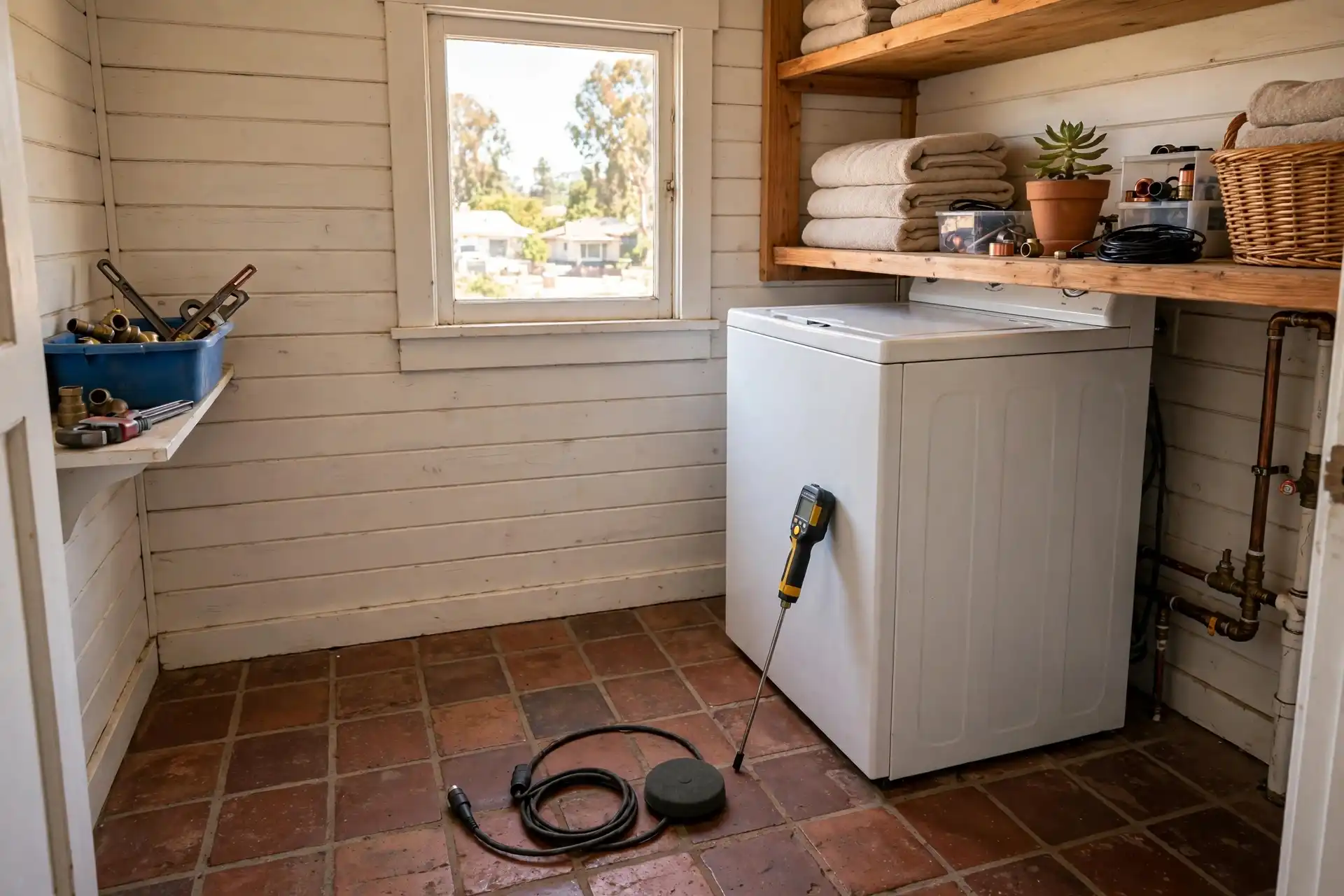
What you won't get is a jackhammer on day one. Detection is a no-dig discipline: meter, pressure gauges, microphones, and a camera. If a previous company told you they need to open the floor "just to look," that's exactly the exploratory digging electronic methods were invented to replace. Still unsure whether it's a slab leak? That's exactly what the call is for: (833) 713-2101.
Local Notes for Lomita 90717
The 90717 ZIP is Lomita, the Friendly City — Narbonne Avenue, Pacific Coast Highway, and Lomita Boulevard frame a compact grid of 1950s small-lot ranch homes. The Lomita Railroad Museum and Lomita Park are the local landmarks; the post office at 25131 Narbonne Avenue anchors the civic core. Nearly everything here is slab-on-grade 1950s construction with a copper-and-galvanized pipe mix and cast-iron drains. Small lots and short runs define the work: there's simply less pipe, less slab, and less ambiguity than anywhere else in the service area.
Lomita's simplicity is its advantage — use it. Small lots mean a detection visit is quick and a reroute is short, so don't let a small symptom become a big restoration by waiting. If you're a landlord or property manager, put the shutoff location and our number (833) 713-2101 in your property file today; rental-stock leaks get discovered late, and the delay is what turns a pipe fix into a flooring job. Tenants: report warm floors and running-water sounds immediately — early reports save everyone's money.
How this works: you call our line, we match you with a slab-leak specialist who serves 90717 — no fee for the call itself. Questions about slab leak detection in the 90717 ZIP? Call (833) 713-2101.
70-Year Copper on Small Lots: Detection in Lomita 90717
Lomita is the classic 1950s slab-ranch city — most homes built in a single decade, small lots, short pipe runs, and copper now at the 70-year corrosion mark. The ground helps: flat coastal plain at about 95 feet, alluvial soil, good drainage, quiet streets. Those are about the cleanest acoustic listening conditions in the service area, and short runs make the meter test beautifully decisive. Detection in Lomita is usually fast, honest, and unambiguous.
The local caveat is the rental stock, where deferred maintenance trains everyone to ignore plumbing symptoms — dripping fixtures, old supply stops — so the slab leak gets reported weeks late. The diagnosis sequence doesn't change, but the damage often has a head start. We rule the lookalikes out in order: meter test with every fixture off, hot-side versus cold-side pressure isolation, then acoustic and thermal to narrow the search to a section of slab. Deferred maintenance doesn't cause under-slab failures; it just hides them longer.
For a 1950s Lomita original, the honest guidance is respect for the age: 70 years is the far edge of under-slab copper's service life, and a warm floor or a meter that creeps with everything off deserves a prompt visit. The good news is the geometry — small lots mean even the repair is usually small. Call and describe what you're seeing; if it fits the Lomita pattern we'll schedule the detection visit, and if it doesn't we'll say so before you spend anything.
Suspect a Slab Leak? Talk to a Specialist Today
One call connects you with a local slab leak professional serving Rancho Palos Verdes, CA — day or night.
Call (833) 713-2101Frequently Asked Questions
Why are slab-leak jobs faster in Lomita than elsewhere?
Geometry. Small 1950s lots mean short under-slab runs — there's less pipe to search, less slab to open, and shorter reroutes when that's the answer. Flat ground, good drainage, no hillside or water-table complications. A Slab Leak Detection visit in Lomita is often the quickest in the service area, and the repair that follows is usually the simplest. The housing stock's uniformity is working for you here.
I'm a landlord in Lomita. What should I tell my tenants?
Three symptoms, plain language: a floor that's warm in one spot, the sound of running water when nothing's on, and a water bill that jumps. Tell them to report all three immediately — rental-stock leaks in 90717 get discovered late, and the delay is what turns a pipe repair into a flooring and drywall job. Keep the shutoff location and (833) 713-2101 in the property file. Early tenant reports are the cheapest insurance you have.
Does deferred maintenance really change the diagnosis?
It changes the timeline, not the diagnosis. Deferred maintenance — dripping fixtures, ignored pressure drops, old supply stops — doesn't cause under-slab failures, but it trains everyone to ignore plumbing symptoms, so the slab leak gets reported weeks late. Slab Leak Detection still follows the same sequence; we just more often find damage that's already done. The fix for the pattern is cultural: report early, every time.
My Lomita home is a 1950s original. Is the copper done?
It's at the mark — 70 years is the far edge of under-slab copper's service life. That doesn't mean failure is certain this year, but it means the symptoms deserve immediate respect: warm floors, meter movement, pressure changes. Slab Leak Detection on 1950s Lomita copper is routine work for us, and catching it at detection stage keeps everything small. The small lots are your friend here — even a reroute is short.
How long does a typical detection visit take in Lomita?
Most visits run one to two hours on site, plus the phone triage beforehand. 1950s small-lot ranch homes — most of Lomita was built in a single decade — the meter test and pressure isolation are quick; the acoustic and thermal survey takes the time it takes. What stretches a visit in the 90717 ZIP is usually access: rooms that need clearing, or a water heater tucked somewhere awkward. We'll tell you what to have ready when we schedule.
My water meter spins but I can't find any water. Is that a slab leak?
It's the single most common way a slab leak announces itself in Lomita: the meter moves with every fixture off, but nothing is visibly wet — because the water is escaping under the slab, into the soil. there's little exotic here — small lots, short runs, flat ground — which is why Lomita jobs are typically fast: easy detection, short reroutes, minimal restoration. The local risk is deferred maintenance on rental stock masking the real timeline Either way, a spinning meter with dry fixtures is worth a detection visit. It's the cheapest way to get a yes or no.
What if the tests show it isn't a slab leak after all?
Then the visit still did its job — it kept you from paying for concrete work you didn't need. In Lomita, the usual alternatives are deferred-maintenance plumbing issues in rental stock — old fixtures and supply stops that drip can mimic the symptoms of an under-slab failure. We'll tell you what the evidence points to and who actually handles that kind of problem, rather than inventing a slab leak to sell a repair.