Slab Leak Detection in Lawndale 90260, CA
Slab Leak Detection in Lawndale 90260, CA — non-destructive testing that confirms whether a hidden leak exists under your concrete slab — and which line it's on — before anyone talks about breaking concrete.
In Short
Slab Leak Detection in Lawndale 90260, CA — non-destructive testing that confirms whether a hidden leak exists under your concrete slab — and which line it's on — before anyone talks about breaking concrete. Serving the 90260 ZIP: meter test, pressure isolation, acoustic listening, thermal imaging. First step when you call (833) 713-2101: a guided five-minute meter check.
What the Detection Visit Looks Like in Lawndale (90260)
A detection visit in Lawndale is methodical, not dramatic. Nobody brings a jackhammer on day one — the whole point is to avoid one. Here's the sequence, and how 90260's conditions shape each step.
What to Expect When We Come Out to Lawndale
Plan on someone being home for the visit — we need access to the rooms above the suspected area, the water heater, and the main shutoff. Move what you can away from the walls where the listening happens; the equipment is sensitive and the visit goes faster in a quiet house. renters: report immediately and in writing; owners: keep the authorization path short — delays are what make Lawndale jobs expensive
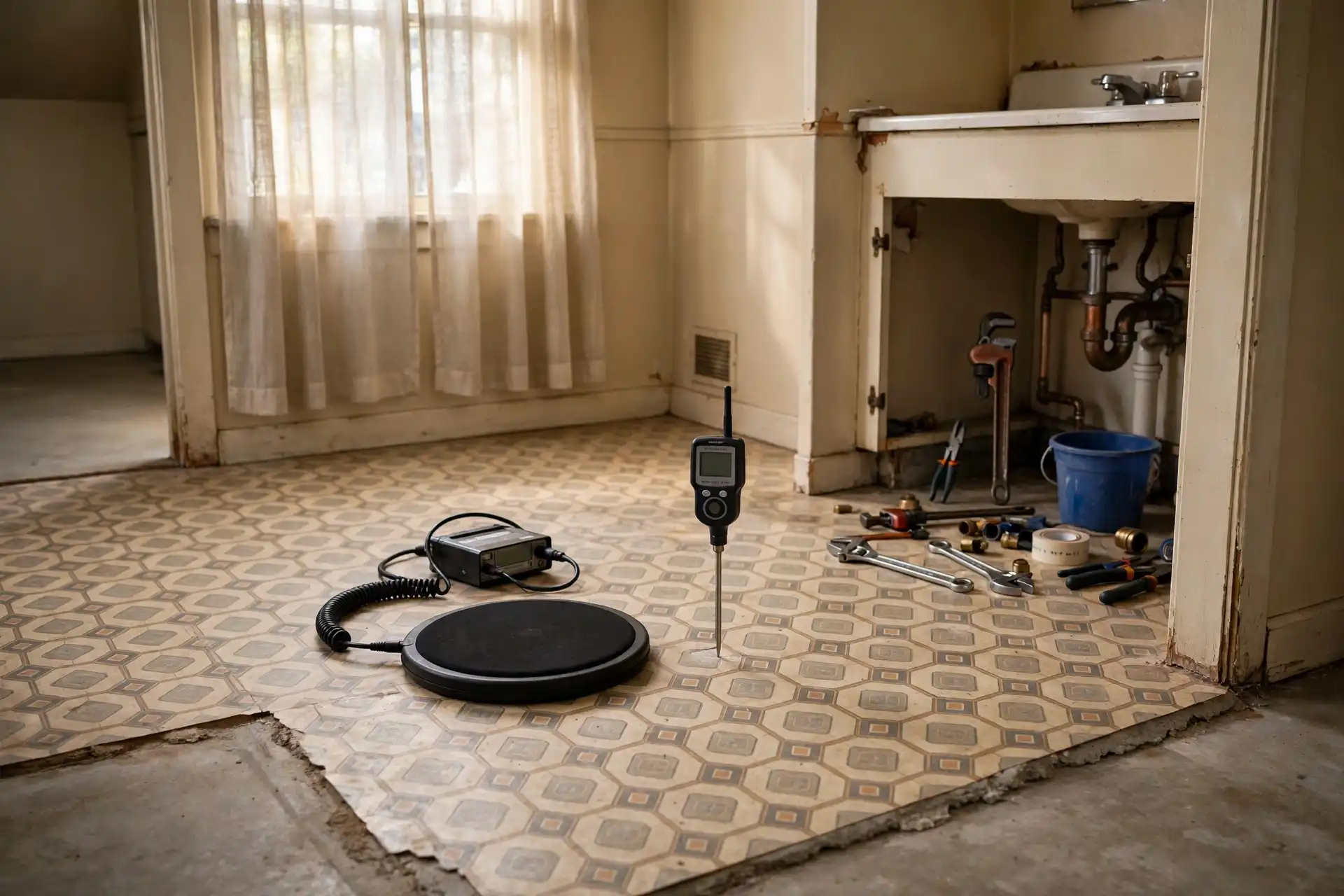
What you won't get is a jackhammer on day one. Detection is a no-dig discipline: meter, pressure gauges, microphones, and a camera. If a previous company told you they need to open the floor "just to look," that's exactly the exploratory digging electronic methods were invented to replace. Questions before you book? Call (833) 713-2101 — we'd rather answer them now than discover them mid-visit.
Local Notes for Lawndale 90260
The 90260 ZIP is Lawndale entire: Hawthorne Boulevard, Marine Avenue, Inglewood Avenue, and Redondo Beach Boulevard frame 1.97 square miles of 1950s small-lot homes. The Lawndale Community Center on Burin Avenue and the Lawndale Library are the civic anchors. Housing is overwhelmingly 1950s single-family on flat alluvial soil at about 59 feet of elevation — slab-on-grade, copper-and-galvanized pipe mix, cast-iron drains. Small lots, short runs, simple geometry — and a renter majority that reports late.
Lawndale's math is simple: the jobs are cheap to diagnose and the delays are expensive to repair. Owners and managers — put the shutoff location, the build era, and (833) 713-2101 in every property file, and give tenants a plain-language symptom sheet. Tenants — a warm floor or running-water sound is worth an immediate written report; it protects your home and your deposit. Everyone — a quarterly two-minute meter check is the cheapest maintenance in the South Bay. Late discovery is the tax Lawndale pays; early reporting is how you stop paying it.
We're a referral line: you talk to us, and we connect you with a slab-leak specialist serving the 90260 area. Questions about slab leak detection in the 90260 ZIP? Call (833) 713-2101.
Small Lots, Late Reports: Detection in Lawndale 90260
Lawndale's 1950s small-lot single-family stock is geometry in the detector's favor: short under-slab runs mean the acoustic sweep is quick, the thermal map is simple, and there's just not much pipe for ambiguity to hide in. Jobs here are typically fast and affordable — a detection visit often runs at the short end of the range, and a reroute, when that's the answer, is a short reroute. Flat ground, alluvial soil, no hillside or water-table complications.
The complication is tenancy: with 57 percent renters, leaks in 90260 get reported late, after flooring and drywall damage, and slab-leak work here often pairs with mold remediation scope. Late discovery changes the detection job — we use the thermal camera to map the full moisture spread and separate the active leak zone, which is still warm, from old damage that has gone cold. The meter test confirms the leak is still running before anyone plans restoration around it.
For landlords, the math is blunt: a detection visit costs little; a month of unreported warm water under the slab costs flooring. Tell tenants the three symptoms in plain language — warm floor, running-water sound, jumping bill — and keep the shutoff location and our number in the property file. If you're already looking at damage, call before you restore: we'll confirm whether the leak is active, because restoring over an active leak is the most expensive mistake in Lawndale.
Suspect a Slab Leak? Talk to a Specialist Today
One call connects you with a local slab leak professional serving Rancho Palos Verdes, CA — day or night.
Call (833) 713-2101Frequently Asked Questions
Why do Lawndale slab leaks always seem to involve mold?
They don't always — but the 57 percent renter occupancy means leaks get reported late, and late plus moisture plus warmth equals mold. By the time a Lawndale leak surfaces in a report, it's often been running for weeks, which is enough time for growth behind baseboards and under flooring. Slab Leak Detection diagnoses the pipe failure; the mold is a separate remediation scope we'll flag honestly. The prevention is reporting speed, not chemistry.
I'm a renter in Lawndale. What should I do if I suspect a leak?
Report it immediately and in writing — text or email to your landlord or manager, with dates and photos. The three symptoms: a warm spot on the floor, the sound of running water with taps off, a water bill that jumps. Written reports create the record that gets action; verbal reports evaporate. Slab Leak Detection can diagnose it — call (833) 713-2101 — but the repair authorization follows your lease chain. Don't wait for permission to report.
Are small lots really an advantage for slab-leak work?
Genuinely yes. Short under-slab runs mean less pipe to search, faster tracing, quicker pinpointing, and shorter reroutes when that's the answer. A Lawndale diagnostic visit is often the fastest in the service area, and the repair that follows is usually the simplest. The lot size is working for you — the reporting timeline is what's working against you. Fix the timeline and Lawndale is the easiest slab-leak ZIP in the South Bay.
What does 'late-reported' actually cost a homeowner?
The pipe repair costs the same — the break is the break. What late reporting adds is restoration scope: flooring, baseboards, drywall, and mold remediation that an early catch would have avoided. In Lawndale that delta is the whole story: early-report jobs stay pipe jobs, late-report jobs become restoration projects. A Slab Leak Detection visit at the warm-floor stage versus the mold stage is often the difference between hundreds and thousands in total scope.
How long does a typical detection visit take in Lawndale?
Most visits run one to two hours on site, plus the phone triage beforehand. 1950s small-lot single-family homes — with 57 percent renter occupancy — the meter test and pressure isolation are quick; the acoustic and thermal survey takes the time it takes. What stretches a visit in the 90260 ZIP is usually access: rooms that need clearing, or a water heater tucked somewhere awkward. We'll tell you what to have ready when we schedule.
Will you have to break my concrete to find the leak?
No. Detection is deliberately non-destructive — that's its whole job. We find the leak's line and its general location with meters, pressure, sound, and heat. Concrete only gets discussed after detection, when the repair plan is being chosen, and even then the goal is the smallest possible opening. If someone wants to cut first and diagnose second, that's backwards.
What if the tests show it isn't a slab leak after all?
Then the visit still did its job — it kept you from paying for concrete work you didn't need. In Lawndale, the usual alternatives are tenant-delayed reporting itself — by the time a Lawndale leak gets reported, secondary damage can mask the original failure point. We'll tell you what the evidence points to and who actually handles that kind of problem, rather than inventing a slab leak to sell a repair.