Slab Leak Detection in Hermosa Beach 90254, CA
Slab Leak Detection in Hermosa Beach 90254, CA — non-destructive testing that confirms whether a hidden leak exists under your concrete slab — and which line it's on — before anyone talks about breaking concrete.
In Short
Slab Leak Detection in Hermosa Beach 90254, CA — non-destructive testing that confirms whether a hidden leak exists under your concrete slab — and which line it's on — before anyone talks about breaking concrete. Serving the 90254 ZIP: meter test, pressure isolation, acoustic listening, thermal imaging. First step when you call (833) 713-2101: a guided five-minute meter check.
What the Detection Visit Looks Like in Hermosa Beach (90254)
A detection visit in Hermosa Beach is methodical, not dramatic. Nobody brings a jackhammer on day one — the whole point is to avoid one. Here's the sequence, and how 90254's conditions shape each step.
What to Expect When We Come Out to Hermosa Beach
Plan on someone being home for the visit — we need access to the rooms above the suspected area, the water heater, and the main shutoff. Move what you can away from the walls where the listening happens; the equipment is sensitive and the visit goes faster in a quiet house. zero-lot-line and condo visits need access coordination with neighbors or the HOA — line that up before we arrive
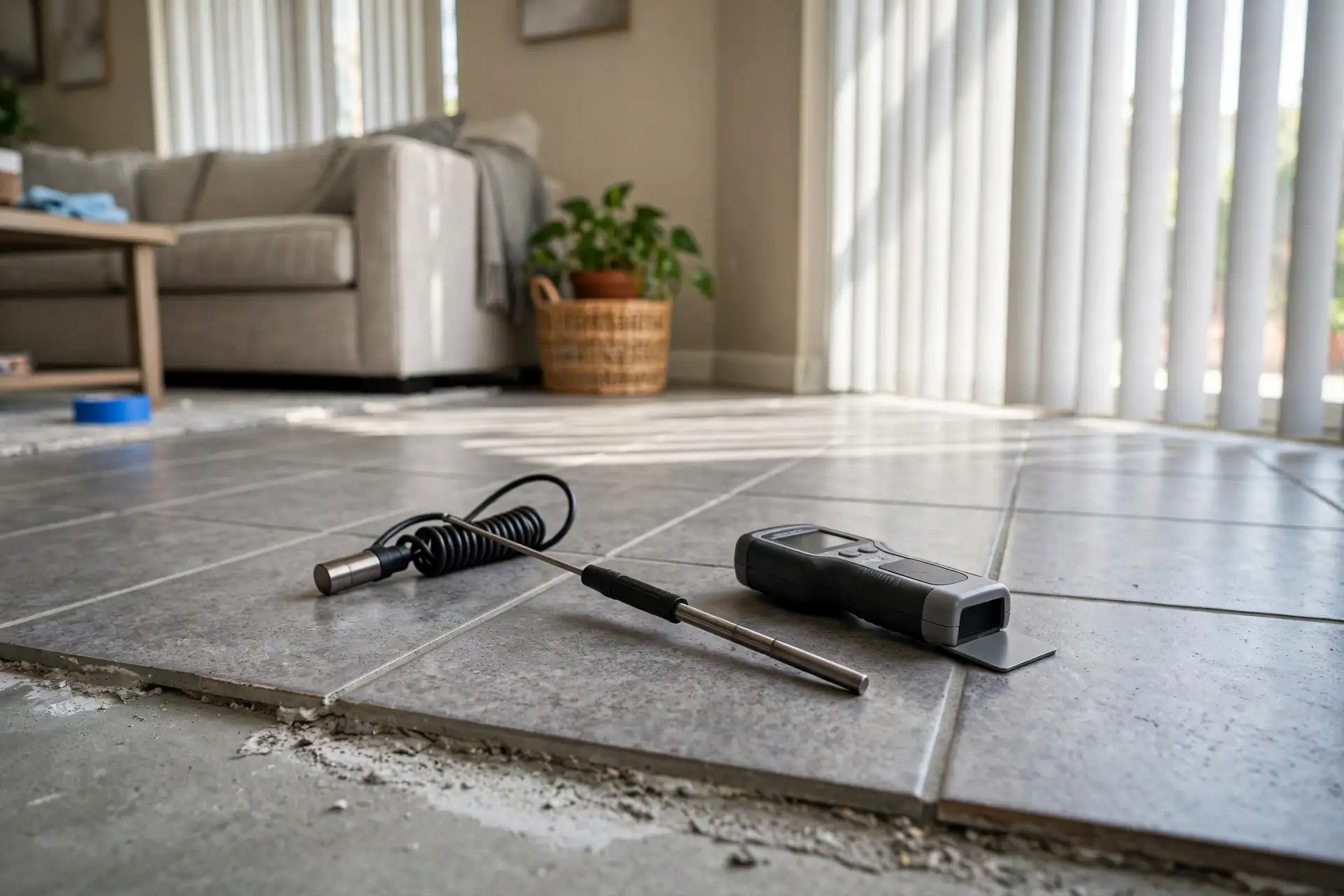
What you won't get is a jackhammer on day one. Detection is a no-dig discipline: meter, pressure gauges, microphones, and a camera. If a previous company told you they need to open the floor "just to look," that's exactly the exploratory digging electronic methods were invented to replace. Questions before you book? Call (833) 713-2101 — we'd rather answer them now than discover them mid-visit.
Local Notes for Hermosa Beach 90254
The 90254 ZIP is Hermosa Beach entire: the dense beachfront blocks along Hermosa Avenue and The Strand, the pier district, Pacific Coast Highway as the spine, and the Hill Section rising inland. Aviation Boulevard marks the eastern edge. Housing is 1970s single-family, condos, and townhomes on tight parcels — slab-on-grade throughout, 1970s copper supply, ABS drains. Beach sand and dune deposits over alluvium drain fast; the Hill Section adds grade to the eastern blocks.
Hermosa Beach homeowners and condo residents: know your shutoff and your HOA's plumbing process before you need either — in dense construction, access and authorization are the schedule drivers. If your 1970s copper is original, treat it as older than it is; the salt air has been billing you for decades. And on zero-lot-line parcels, understand that tunneling from outside is usually off the table — which makes the electronic mark the most valuable part of the job. Call (833) 713-2101 and mention the building type up front.
We're a referral line: you talk to us, and we connect you with a slab-leak specialist serving the 90254 area. Questions about slab leak detection in the 90254 ZIP? Call (833) 713-2101.
Tight Lots, Salt Air, Zero Margin for Error: Detection in Hermosa Beach 90254
Hermosa Beach packs 1970s copper under slab onto some of the tightest lots in the service area — zero-lot-line construction where tunneling in from outside often isn't an option. That makes detection precision unusually valuable: when the repair path is a reroute through walls and attic instead of a tunnel, knowing the leak's line and section exactly determines the whole scope. Acoustic listening and thermal imaging carry the full load here, because there's no "dig and see" fallback.
The other local factor is salt air, which accelerates copper pitting — 1970s copper in Hermosa is now 50-plus years into a service life the ocean has been attacking from day one. Pitted copper can weep from multiple points, so detection doesn't stop at the first warm anomaly; we pressure-isolate the full system and map every loss. The Hill Section east of Pacific Coast Highway sits on higher, drier ground and behaves slightly better than the beachfront blocks, and we note which side of the highway you're on.
Sandy dune soil drains fast, which means a leak here travels far before it surfaces — the warm spot on your floor may sit well away from the actual breach. Visual hunting fails in Hermosa; electronic detection earns its fee by closing that gap. If your water bill has been creeping up in a 1970s Hermosa home with no visible water anywhere, the pattern fits sand-drained copper weeping, and the detection visit is the fastest way to a yes or no.
Suspect a Slab Leak? Talk to a Specialist Today
One call connects you with a local slab leak professional serving Rancho Palos Verdes, CA — day or night.
Call (833) 713-2101Frequently Asked Questions
Why can't you just tunnel from outside my Hermosa Beach home?
Usually there's no 'outside' to tunnel from. Zero-lot-line construction and tight parcels mean the building sits at or near the property line — no side-yard access for tunneling equipment, and often a neighbor's structure where the tunnel would start. That's a geometry problem, not a preference. Slab Leak Detection accounts for it: with tunneling off the table, the repair paths narrow to a targeted interior opening or an overhead reroute, and the electronic mark decides between them.
Does salt air really age indoor pipes?
It ages the vulnerable parts: shallow runs, slab-edge exposure, crawlspace and wall-cavity pipe, and anything the marine air reaches. Deeply buried under-slab runs are somewhat protected, but 1970s Hermosa Beach copper has 50-plus years of salt-air exposure on its exposed sections — and pitting corrosion is local, so one bad section fails while the rest looks fine. Slab Leak Detection finds the failed section; the salt air explains why a 1970s pipe acts like a 1960s one.
My townhome shares walls. Could the leak be my neighbor's?
It's a real possibility with zero-lot-line and shared-wall construction — water follows the path of least resistance, which is often along the common wall into your unit. Slab Leak Detection doesn't assume the wet unit owns the leak: the meter test, pressure isolation, and tracing establish which line is actually failing, regardless of where the water shows up. This is also why HOA coordination matters — the responsible party might be next door.
Is rerouting better than tunneling in Hermosa Beach?
Usually, yes — and often it's the only practical option. Rerouting abandons the failed under-slab run and runs a new line overhead through attic and walls: no exterior access needed, no concrete opened, and you get new pipe for the trouble. Tunneling needs outside access that zero-lot-line parcels don't have. Slab Leak Detection gives us the break's location; the lot geometry usually points at reroute. We'll lay out both honestly where both are feasible.
How long does a typical detection visit take in Hermosa Beach?
Most visits run one to two hours on site, plus the phone triage beforehand. 1970s single-family homes, condos, and townhomes on tight, often zero-lot-line parcels — the meter test and pressure isolation are quick; the acoustic and thermal survey takes the time it takes. What stretches a visit in the 90254 ZIP is usually access: rooms that need clearing, or a water heater tucked somewhere awkward. We'll tell you what to have ready when we schedule.
Will you have to break my concrete to find the leak?
No. Detection is deliberately non-destructive — that's its whole job. We find the leak's line and its general location with meters, pressure, sound, and heat. Concrete only gets discussed after detection, when the repair plan is being chosen, and even then the goal is the smallest possible opening. If someone wants to cut first and diagnose second, that's backwards.
What if the tests show it isn't a slab leak after all?
Then the visit still did its job — it kept you from paying for concrete work you didn't need. In Hermosa Beach, the usual alternatives are condo and townhome shared-wall ambiguity — with zero-lot-line construction, a neighbor's leak can present inside your walls. We'll tell you what the evidence points to and who actually handles that kind of problem, rather than inventing a slab leak to sell a repair.