Slab Leak Detection in Harbor City 90710, CA
Slab Leak Detection in Harbor City 90710, CA — non-destructive testing that confirms whether a hidden leak exists under your concrete slab — and which line it's on — before anyone talks about breaking concrete.
In Short
Slab Leak Detection in Harbor City 90710, CA — non-destructive testing that confirms whether a hidden leak exists under your concrete slab — and which line it's on — before anyone talks about breaking concrete. Serving the 90710 ZIP: meter test, pressure isolation, acoustic listening, thermal imaging. First step when you call (833) 713-2101: a guided five-minute meter check.
What the Detection Visit Looks Like in Harbor City (90710)
A detection visit in Harbor City is methodical, not dramatic. Nobody brings a jackhammer on day one — the whole point is to avoid one. Here's the sequence, and how 90710's conditions shape each step.
What to Expect When We Come Out to Harbor City
Plan on someone being home for the visit — we need access to the rooms above the suspected area, the water heater, and the main shutoff. Move what you can away from the walls where the listening happens; the equipment is sensitive and the visit goes faster in a quiet house. multifamily visits need building access and, ideally, the manager on site — line up access before we arrive
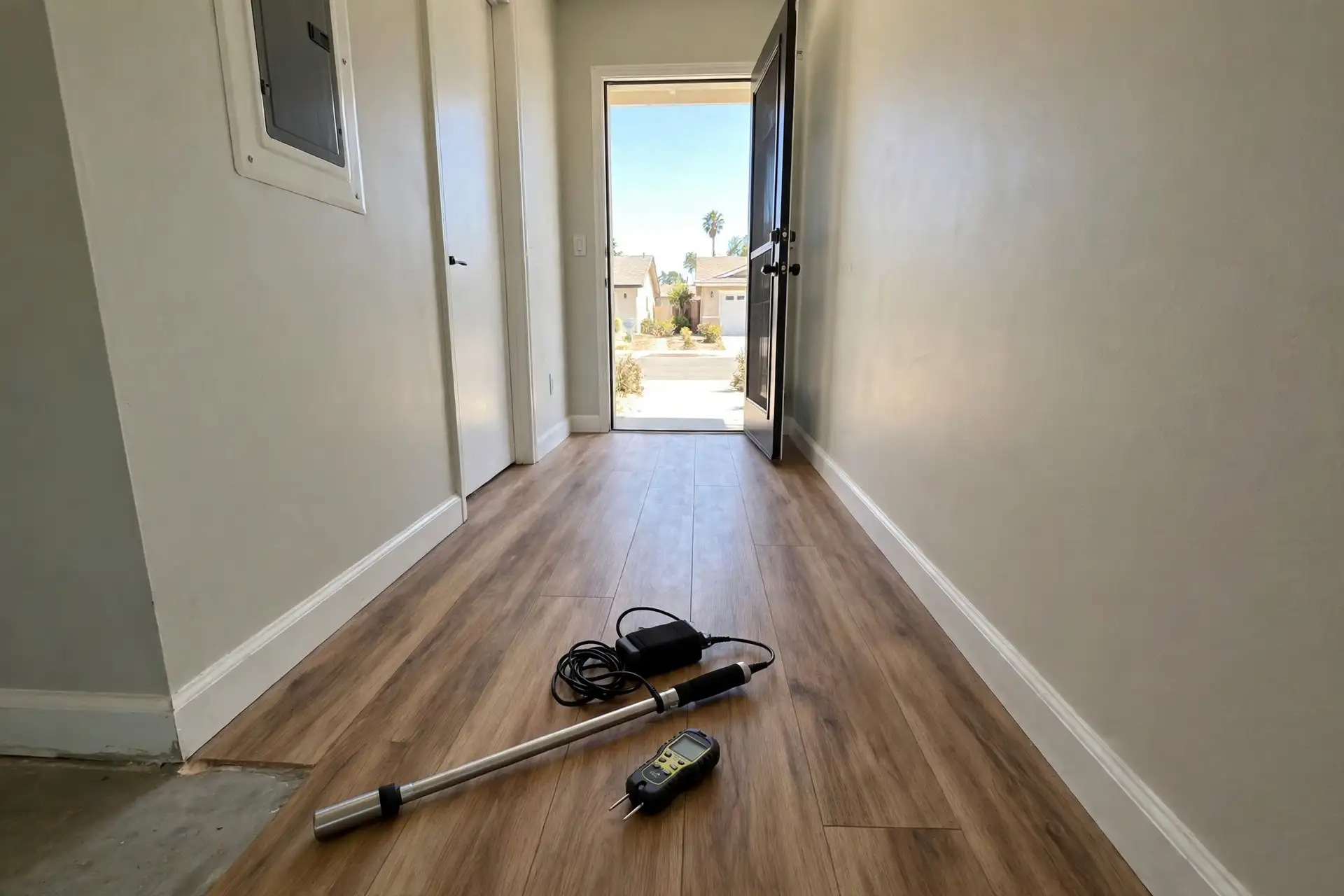
What you won't get is a jackhammer on day one. Detection is a no-dig discipline: meter, pressure gauges, microphones, and a camera. If a previous company told you they need to open the floor "just to look," that's exactly the exploratory digging electronic methods were invented to replace. Questions before you book? Call (833) 713-2101 — we'd rather answer them now than discover them mid-visit.
Local Notes for Harbor City 90710
The 90710 ZIP is Harbor City — Pacific Coast Highway, Vermont Avenue, Normandie Avenue, and 257th Street frame a compact, flat community of 1970s single-family homes and multifamily buildings. Ken Malloy Harbor Regional Park is the green anchor. Slab-on-grade is the norm, with 1970s copper supply lines and ABS drains. The high water table near the harbor keeps the alluvial soil saturated, which ages copper faster than the calendar suggests and smears acoustic signals the way it does in Wilmington next door.
Two Harbor City rules. First, don't let '1970s' lull you — 50-plus-year-old copper in saturated soil is in the pinhole window, and the water table here doesn't care that the pipe is younger than Torrance's. Second, multifamily residents: know your shutoff situation before an emergency, and get the building manager looped in early — shared lines mean shared decisions. Single-family owners: the meter test is your friend, same as everywhere. Call (833) 713-2101 and mention whether it's a house or a multifamily building — the visit plans differently.
We're a referral line: you talk to us, and we connect you with a slab-leak specialist serving the 90710 area. Questions about slab leak detection in the 90710 ZIP? Call (833) 713-2101.
Pinhole Leaks and Shared Lines: Detection in Harbor City 90710
Harbor City's stock is mostly 1970s — younger copper than the 1950s tracts nearby, but old enough for pinhole failures, especially where a high water table keeps the soil around the slab saturated. Pinholes are quiet leaks: the hiss is faint, and saturated ground conducts so much ambient sound that electronic listening takes patience and high-sensitivity equipment. Detection here leans on the meter and the pressure gauges first, and only then on the microphones — the quiet leak is found by elimination, not by volume.
The other Harbor City complication is density: the 90710 mix of single-family and multifamily means one slab leak can touch several units, and a leak in a shared line looks exactly like a leak in a dedicated one. Before anyone authorizes concrete work, detection must map which units each line serves. We isolate and pressure-test unit by unit — the meter for each unit tells its own story — so the repair happens under the right slab, not the neighbor's.
If you manage a Harbor City building and one unit reports a warm floor while another reports a high bill, treat them as one investigation, not two. The thermal camera sweeps common areas and adjacent units too, because water under a slab doesn't respect unit boundaries. And if your building is 1970s copper at the pinhole age, one confirmed leak is a reason to pressure-test the whole system — pinholes rarely travel alone.
Suspect a Slab Leak? Talk to a Specialist Today
One call connects you with a local slab leak professional serving Rancho Palos Verdes, CA — day or night.
Call (833) 713-2101Frequently Asked Questions
How do shared lines complicate a multifamily slab leak?
In multifamily buildings, supply lines are sometimes shared between units or run in common chases — so the unit with the wet floor isn't necessarily the unit with the broken pipe. Slab Leak Detection here always includes mapping: which lines serve which units, where the break actually is, and whose authorization the repair needs. Opening concrete over a shared line without that map is how you create a building-wide problem from a unit-level leak.
Who authorizes the work in a condo or apartment building?
It depends on the building's documents — unit owners, HOAs, and property managers split responsibility differently everywhere. What we can do: diagnose precisely, document clearly, and give you a written account of findings that you can take to whoever decides. Slab Leak Detection gives you the facts; the authorization chain is yours to run. Get the manager or HOA contact involved early — it prevents the visit from stalling at the decision step.
Does the high water table make Harbor City leaks worse?
It makes them earlier and harder to hear. Saturated alluvial soil accelerates outside-in copper corrosion — so 1970s pipe here ages faster than 1970s pipe on dry ground — and it smears acoustic signals, which complicates the listening. The meter test and pressure isolation cut through both problems. If you're in 90710, treat your plumbing as older than its birth certificate says.
What's the emergency protocol when multiple units are affected?
Contain first, sort out second. The emergency visit stops the water and maps the affected area across units — then the findings go to the building's decision-maker with a clear written account. Slab Leak Detection in a multi-unit emergency includes documenting which units show damage versus where the break actually is, because those are often different places. Call (833) 713-2101 immediately; coordination delays are the real enemy in multi-unit emergencies.
How long does a typical detection visit take in Harbor City?
Most visits run one to two hours on site, plus the phone triage beforehand. 1970s single-family and multifamily homes — younger pipe, but old enough for pinholes — the meter test and pressure isolation are quick; the acoustic and thermal survey takes the time it takes. What stretches a visit in the 90710 ZIP is usually access: rooms that need clearing, or a water heater tucked somewhere awkward. We'll tell you what to have ready when we schedule.
Will you have to break my concrete to find the leak?
No. Detection is deliberately non-destructive — that's its whole job. We find the leak's line and its general location with meters, pressure, sound, and heat. Concrete only gets discussed after detection, when the repair plan is being chosen, and even then the goal is the smallest possible opening. If someone wants to cut first and diagnose second, that's backwards.
What if the tests show it isn't a slab leak after all?
Then the visit still did its job — it kept you from paying for concrete work you didn't need. In Harbor City, the usual alternatives are multifamily shared-line confusion — in apartment and condo buildings, a leak on a shared run can present in a unit far from the break. We'll tell you what the evidence points to and who actually handles that kind of problem, rather than inventing a slab leak to sell a repair.