Hot Water Line Slab Leak Repair in Torrance, CA 90505
Hot water line slab leak repair in Torrance (90505) for the most common slab leak: a corroded hot-water copper line under the concrete.
In Short
Hot water line slab leak repair in Torrance (90505) for the most common slab leak: a corroded hot-water copper line under the concrete. Warm floors, a water heater that never rests, and climbing utility bills are the signs. Call (833) 713-2101 to describe what you are feeling underfoot - a local specialist will confirm it with electronic detection.
Hot Water, Hot Floors: Torrance's Most Common Slab Leak
Hot water lines are the hardest-working pipes under your slab - and in Torrance's 1950s-60s hillside homes, they are usually the first to fail. Heat accelerates copper corrosion from the inside, daily thermal expansion works every joint, and in homes with recirculation loops the hot water never really stops moving. That is why the most common slab leak in 90505 is not a mystery leak at all: it is a hot line giving out, and it announces itself as warmth underfoot.
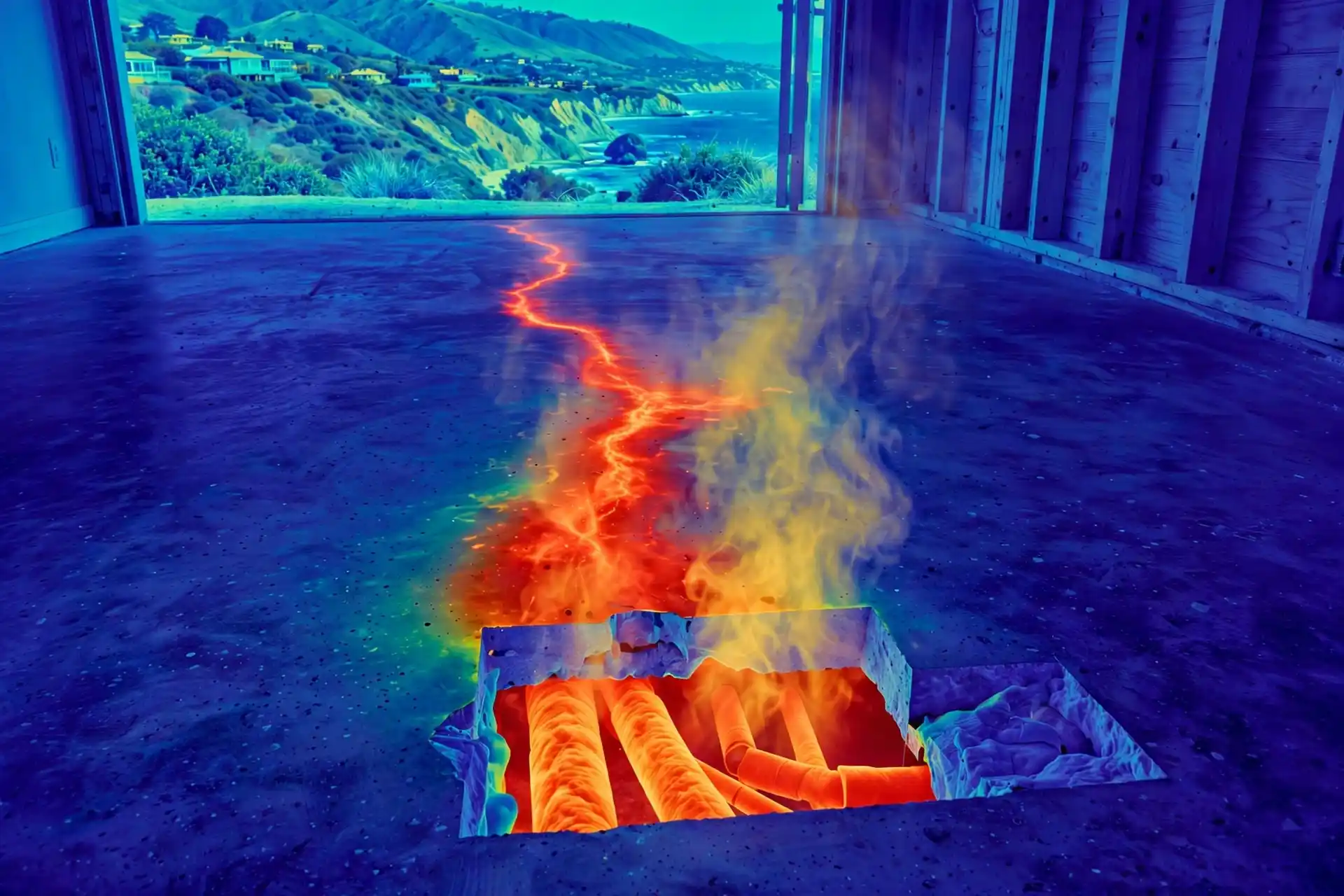
If you have found a warm patch on the tile or hardwood that was not there last season, you are looking at the signature symptom. The water heater runs longer to replace the lost hot water, gas or electric bills climb, and the leak keeps the surrounding soil warm - which thermal imaging picks up clearly. Detection confirms it in one visit; the repair is usually a reroute overhead rather than another line buried in the same conditions that wore out the first one.
Ground Truth in 90505: Heat, Soil, and Your Hot Water Line
Torrance (90505) sits on hillside grade rising toward the Peninsula with terraced lots, where runoff concentrates at retaining walls. Homes here are South Torrance 1950s-60s ranch and split-level homes, many on hillside lots with views, and the hot-water lines under those slabs are typically 60-to-70-year-old copper installed with the original construction. The local climate brings November-to-March rain that hillside lots shed fast. Around the Southwood Riviera neighborhood, and along corridors like Anza Avenue and Pacific Coast Highway, hot lines face a double load: heat working the pipe from the inside, and local soil and moisture working it from the outside.
Terraced lots make hot-line reroutes a routing puzzle - the overhead path has to follow the stepped rooflines, and stepped slabs mean the under-slab pipe changes elevation with the grade. Hillside water movement can also create warm-feeling damp spots that are not leaks at all. Detection has to be precise here because the repair geometry is unforgiving.
The practical upshot for Torrance: hot-line work here follows a proven sequence - thermal and acoustic detection, a full hot-side pressure test, then the repair that fits the pipe's condition and the home's layout. Stepped slabs on terraced lots complicate tunneling and rerouting, and hillside water movement can hide or mimic slab-leak symptoms. The warm floor is the invitation; the evaluation writes the plan.
The Hot-Line Repair Path in Torrance
Hot-line detection leans on heat: thermal imaging maps the warm plume under the slab, acoustic equipment listens for the leak's hiss, and pressure testing isolates the hot side from the cold to confirm which line is losing water. In Torrance homes the process is usually fast - heat makes hot leaks the easiest slab leaks to find.
The most common repair for a failed hot line in 90505 is an overhead reroute: the leaking under-slab line is abandoned in place and a new hot line runs through the attic or walls to the kitchen and bathrooms. It avoids breaking the slab, gets the new pipe out of the soil conditions that corroded the old one, and in single-story 1950s-60s hillside homes the routing is usually straightforward. Spot repair under the slab is the alternative when the failure is clearly isolated and the rest of the hot line tests sound.
Whether reroute or spot repair fits comes down to the hot line's overall condition - one pinhole versus systemic pitting - and your home's layout. The specialist pressure-tests the whole hot side during the evaluation so the decision is based on readings, not guesses. Call (833) 713-2101, describe the warm floor and what your water heater has been doing, and the on-site evaluation takes it from there.
The Telltale Signs of a Hot Water Slab Leak
Hot water slab leaks are the easiest to feel. In Torrance homes, watch for:
- A warm or distinctly hot patch on the floor - tile, wood, or carpet - that persists day and night.
- A water heater that runs far more often than it used to, or never seems to rest.
- Gas or electric bills climbing alongside the water bill.
- Hot water pressure dropping at fixtures while cold pressure stays normal.
- The sound of running water with everything off, near the warm area.
- Cracks, buckling, or mildew on flooring above the warm zone.
A warm floor plus a hard-working water heater is the combination that merits a call to (833) 713-2101.
Next Steps Once the Hot Leak Is Located
When you call (833) 713-2101 about a suspected hot-line leak in Torrance, the first questions are simple: where exactly is the warm spot, how long has it been there, and what has your water heater been doing? That locates the conversation before anyone visits. The on-site evaluation then confirms the leak with thermal and acoustic detection and pressure-tests the rest of the hot side.
You will walk through the findings with the specialist - where the leak is, how the rest of the hot line looks, and whether a spot repair or an overhead reroute makes more sense for your home's layout. In most 90505 homes the reroute wins: no slab demolition, new pipe out of the corrosive soil, and hot water restored with minimal disruption inside.
There is no pressure to decide on the spot. Most Torrance homeowners take the findings, compare the options, and schedule the repair that fits their hot line's condition and their home. The evaluation gives you the map; the decision stays yours.
How This Service Works in Torrance
When you call (833) 713-2101, you reach a referral service that connects you with an independent local slab leak specialist serving Torrance and the 90505 area. We help you understand your options and what to expect; the specialist performs the on-site evaluation and the repair itself. There is no obligation - just a clear picture of what is happening under your slab.
Suspect a Slab Leak? Talk to a Specialist Today
One call connects you with a local slab leak professional serving Rancho Palos Verdes, CA — day or night.
Call (833) 713-2101Frequently Asked Questions
Why do hot water lines fail under slabs more often than cold lines?
Heat is the accelerant. Hot water speeds the chemical corrosion of copper from the inside, daily heating and cooling cycles expand and contract the pipe - working every joint and bend - and in homes with recirculation pumps the hot water never stops moving, which wears the line continuously. A hot line and a cold line installed the same day in the same slab will almost always see the hot one fail first, sometimes by a decade.
Is a warm spot on my floor definitely a slab leak?
It is the strongest single indicator, but confirmation matters - sun exposure through windows, heating vents, and appliances can all warm a floor patch. The pattern that points to a leak: the warmth persists day and night, it is localized rather than room-wide, and it comes with supporting signs like a hard-working water heater or climbing bills. Electronic detection - thermal imaging plus pressure testing - confirms it definitively in one visit.
Can you reroute the hot water line instead of breaking up my slab?
Usually, yes - and it is often the better repair. The leaking under-slab line is abandoned in place and a new hot line runs overhead through the attic or inside walls to the kitchen and bathrooms. No slab demolition, no concrete dust through the house, and the new line leaves the soil conditions that corroded the old one. In single-story homes the routing is typically straightforward; multi-story or complex layouts need a closer look at the path.
Will repairing a hot water slab leak lower my utility bills?
In most cases, noticeably. A leaking hot line forces your water heater to heat replacement water around the clock - you are paying to heat water that goes straight into the ground, plus the water itself. Once the leak is repaired, the heater cycles normally again and both the water bill and the gas or electric bill typically drop back toward their old levels. Keep a few months of bills; the before-and-after is usually obvious.
Why are warm-floor calls so common in 90505's 1950s-60s hillside homes?
South Torrance 1950s-60s ranch and split-level homes, many on hillside lots with views - and the hot-water lines went in with the original construction. 60-to-70-year-old of daily heating cycles, constant pressure, and terraced-lot runoff and stepped slabs have brought the hot side to the end of its reliable life across whole neighborhoods at roughly the same time. That is why the calls cluster: it is not one bad installation, it is an entire generation of pipe aging out together.
Does terraced-lot runoff and stepped slabs make hot-water lines fail even faster in Torrance?
Hot lines already fail first - heat accelerates corrosion and thermal cycling stresses joints - and Torrance adds terraced-lot runoff and stepped slabs on top. Here, hillside grade rising toward the Peninsula with terraced lots, where runoff concentrates at retaining walls moves winter runoff fast down terraced grades, cycling buried pipe between wet and dry and stressing it at slab steps. The practical takeaway: when one hot-line pinhole appears in 90505, pressure-test the whole hot side, because the environment is working the entire run, not just the one spot.
My water heater in Torrance runs constantly. Is that enough to confirm a slab leak?
It is strong evidence, not confirmation. A failing water heater - a bad thermostat, sediment buildup, a worn element - can also run nonstop without any leak. The check that separates them takes minutes: turn off every tap and appliance, watch your water meter, and feel for a persistent warm patch on the floor. A moving meter plus a warm floor plus a hard-working heater is the trio that points under the slab - and electronic detection confirms it definitively.
Should I reroute the hot line overhead in my Torrance home, or repair it under the slab?
Overhead, with the terraces mapped first - the reroute path has to follow the stepped rooflines, which the evaluation plans before work starts.