Foundation Leak Repair in Rancho Palos Verdes, CA 90275
Need foundation leak repair in Rancho Palos Verdes, CA? We serve 90275 - Portuguese Bend and Lunada Bay - throughslab-leak specialists.
In Short
Need foundation leak repair in Rancho Palos Verdes, CA? We serve 90275 - Portuguese Bend and Lunada Bay - throughslab-leak specialists. On your first call we verify the ZIP, listen to what you're seeing, and the first step is a symptom review plus simple meter-test guidance to confirm a real leak before anyone visits. Reach us at (833) 713-2101.
How Foundation Leak Repair Works Differently in Rancho Palos Verdes 90275
Start with what the ground and the houses give you. Predominantly single-family detached homes, most built in the 1960s, with 1950s-1970s ranch and split-level homes on terraced hillside lots, plus ocean-view and bluff-top properties. The pipe underneath is typically 1960s-70s copper supply lines under slab (Type M/L); early-1950s pockets may still carry galvanized steel; cast-iron or ABS drains. Slab-on-grade prevalence is Very high - postwar slab-on-grade is the norm for 1950s-70s tracts. In 90275, more than one of those facts can produce water at a foundation - which is why the diagnostic phase here is longer and more careful than the repair phase.
In Rancho Palos Verdes 90275, foundation leak repair is inseparable from geology. The Greater Portuguese Bend Landslide Complex is actively creeping on a bentonite clay slide plane - 2023-24 storms pushed movement to inches per week - and that creeping ground shears under-slab copper and stresses slabs in ways corrosion alone never explains. So the repair conversation here has two layers: fix the leak, and account for the ground that caused it. A spot repair in the slide zone can be re-stressed by the next rainy season, which is why the plan considers flexible routing and movement-tolerant details rather than rigid patches. Just as critical is the diagnostic split: hillside groundwater seepage is common on these terraced lots, and seepage needs drainage answers, not pipe answers. Repairing a pipe when the water is coming through the hillside is an expensive misdiagnosis this area cannot afford.
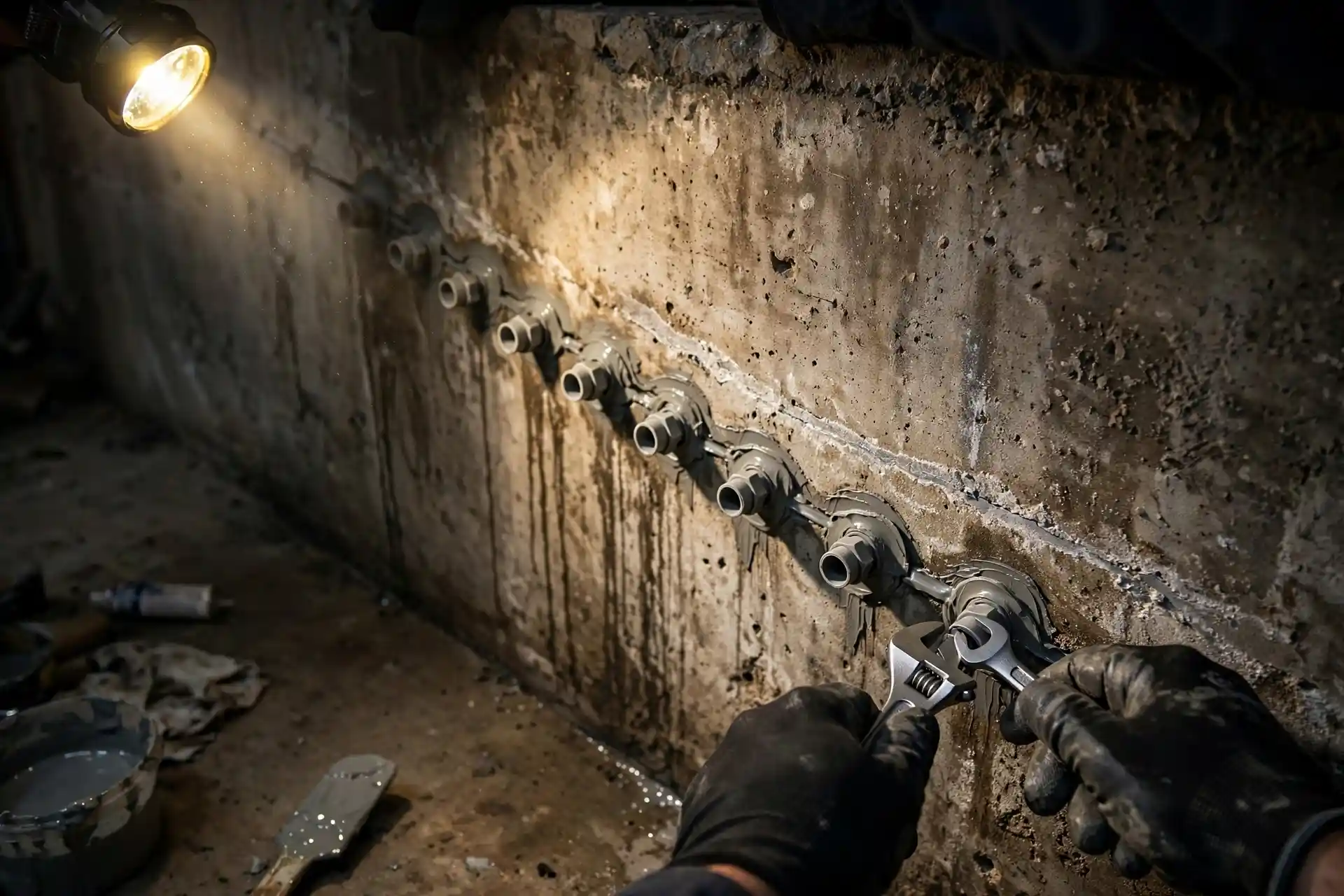
Foundation leak repair addresses water problems at the foundation itself: pressurized supply leaks under or through the slab, water intrusion through slab cracks, and drainage-driven moisture that presents like a plumbing leak. The work starts with separating true pipe leaks from groundwater, seepage and drainage failures, because each has a different fix. The 90275 sequence is deliberate: meter testing with everything off, pressure isolation line by line, moisture mapping, and only then a repair plan. Detection work here must rule out hillside groundwater seepage versus a true pipe leak, and any repair plan must account for ongoing soil movement - a spot repair in the slide zone can be re-stressed by the next rainy season.
The decision framework for Rancho Palos Verdes 90275 homeowners is diagnostic: demand meter testing, pressure isolation, and moisture mapping before authorizing any foundation work. The repair method - spot repair, tunneling, or reroute - follows the diagnosis, and any quote that skips straight to a method deserves a second opinion. Detection work here must rule out hillside groundwater seepage versus a true pipe leak, and any repair plan must account for ongoing soil movement - a spot repair in the slide zone can be re-stressed by the next rainy season.
When to Call About Foundation Leak Repair in Rancho Palos Verdes 90275
The calls that lead here include damp spots that never dry, efflorescence (white mineral crust) on slab edges or garage floors, musty rooms on the downhill side of a home, warm floor patches, unexplained water bills, and cracks that weep after rain. The tricky part is that hillside drainage, high water tables and bluff-edge moisture can all mimic a slab leak - diagnosis has to rule those out first. In Rancho Palos Verdes 90275, the local overlay matters: This is the one area in the service footprint where the ground itself moves. Sorting leak symptoms from soil and drainage symptoms is the whole game here, and it starts with a meter test, not a jackhammer.
What Foundation Leak Repair Looks Like Step by Step in 90275
Diagnosis comes first: meter testing, pressure isolation of each line, and moisture mapping to separate plumbing leaks from seepage. A confirmed pipe leak is then repaired by the least invasive sound method - spot repair, tunneling or reroute - while drainage-driven problems get drainage answers, not pipe answers. Every repair is verified with pressure testing before close-up. On a Rancho Palos Verdes 90275 property, that sequence adapts to local conditions: Detection work here must rule out hillside groundwater seepage versus a true pipe leak, and any repair plan must account for ongoing soil movement - a spot repair in the slide zone can be re-stressed by the next rainy season. The crew serving Portuguese Bend and Lunada Bay stages along Palos Verdes Drive South, Hawthorne Boulevard and Crenshaw Boulevard, and the diagnostic findings are shared with the homeowner before any repair decision - you approve the fix knowing what was found, not on faith.
Why Rancho Palos Verdes's Ground and Housing Stock Shape Foundation Leak Repair
Rancho Palos Verdes 90275 sits on Monterey Formation bedrock (Middle Miocene to Early Pliocene shale) with Altamira Shale and bentonite clay from the Portuguese Tuff, under surficial marine terrace soils, alluvium, colluvium and fill. Hilly terrain rising to about 1,276 feet near the Rolling Hills border, with bluffs along Palos Verdes Drive South. Semi-arid climate with roughly 13-15 inches of rain, nearly all of it November through March; winter storms saturate the slide mass and accelerate land movement. Homes here: Predominantly single-family detached homes, most built in the 1960s, with 1950s-1970s ranch and split-level homes on terraced hillside lots, plus ocean-view and bluff-top properties. Pipe underneath: 1960s-70s copper supply lines under slab (Type M/L); early-1950s pockets may still carry galvanized steel; cast-iron or ABS drains. Slab-on-grade prevalence is Very high - postwar slab-on-grade is the norm for 1950s-70s tracts. The key local fact for foundation leak repair: This is the one area in the service footprint where the ground itself moves. The Greater Portuguese Bend Landslide Complex, roughly 700 acres, is actively creeping on a bentonite clay slide plane; 2023-24 storms accelerated movement to inches per week, dewatering wells are in operation, and Ordinance 692 (2025) permanently bans new residential construction inside the complex. Creeping land shears under-slab copper and stresses slabs beyond what corrosion alone explains, and wet winters make it worse. On the ground that means: Detection work here must rule out hillside groundwater seepage versus a true pipe leak, and any repair plan must account for ongoing soil movement - a spot repair in the slide zone can be re-stressed by the next rainy season. And for reference: California Water Service (Cal Water) is the area's water provider, and City of Rancho Palos Verdes Building & Safety at 30940 Hawthorne Blvd is the permit authority for plumbing work.
What a Proper Rancho Palos Verdes Foundation-Leak Diagnosis Rules Out
A proper Rancho Palos Verdes diagnosis rules out, in order: groundwater and seepage (the Monterey Formation bedrock (Middle Miocene to Early Pliocene shale) with Altamira Shale and bentonite clay from the Portuguese Tuff, under surficial marine terrace soils, alluvium, colluvium and fill. makes this a live question in 90275), irrigation and drainage failures (downhill rooms and retaining-wall zones get special attention), drain-line leaks (different symptoms, different fix), and finally confirms a pressurized supply leak by isolation. Only then does the repair choice - spot, tunnel, or reroute - get made. Skipping straight to a method is how 90275 homeowners end up paying for the wrong repair. The rule is simple: the diagnosis must eliminate the innocent explanations before convicting the pipe.
Your First Call: What to Expect in Rancho Palos Verdes
Your call to (833) 713-2101 starts simply: we verify the 90275 ZIP, hear the symptoms in your words, and note anything already tried. Then Slab Leak Repair Experts - a referral service connecting Rancho Palos Verdes homeowners with local specialists - pairs you with a specialist who knows foundation leak repair on Portuguese Bend and Lunada Bay-area homes like yours. The specialist takes it from there: questions, a visit if needed, and a plain-spoken plan. Talk to a specialist at (833) 713-2101 at (833) 713-2101.
Suspect a Slab Leak? Talk to a Specialist Today
One call connects you with a local slab leak professional serving Rancho Palos Verdes, CA — day or night.
Call (833) 713-2101Frequently Asked Questions
Why does diagnosis take longer than the repair itself in 90275?
Because water at a foundation has many mothers in Rancho Palos Verdes: supply leaks, drain leaks, groundwater, irrigation, and slope drainage. Monterey Formation bedrock (Middle Miocene to Early Pliocene shale) with Altamira Shale and bentonite clay from the Portuguese Tuff, under surficial marine terrace soils, alluvium, colluvium and fill. Hilly terrain rising to about 1,276 feet near the Rolling Hills border, with bluffs along Palos Verdes Drive South. Each suspect is eliminated methodically - meter, pressure, moisture mapping - so the repair matches the actual cause. A fast diagnosis that skips steps is how homeowners pay for the wrong repair. The thorough version protects you.
What does Rancho Palos Verdes's soil have to do with my foundation leak?
Everything about how water behaves. Monterey Formation bedrock (Middle Miocene to Early Pliocene shale) with Altamira Shale and bentonite clay from the Portuguese Tuff, under surficial marine terrace soils, alluvium, colluvium and fill. Hilly terrain rising to about 1,276 feet near the Rolling Hills border, with bluffs along Palos Verdes Drive South. Soil determines whether a leak surfaces near its source or travels, whether groundwater masks the symptoms, and whether excavation needs shoring or dewatering. Semi-arid climate with roughly 13-15 inches of rain, nearly all of it November through March; winter storms saturate the slide mass and accelerate land movement. In 90275, the soil isn't background - it's a participant in every foundation leak story, which is why local experience matters.
What if my home is in a historic district or has a raised foundation in 90275?
Then the playbook changes. Very high - postwar slab-on-grade is the norm for 1950s-70s tracts. In Rancho Palos Verdes's older pockets, raised foundations mean leaks are often reachable from the crawlspace - simpler and cheaper than slab work. And in historic districts, exterior trenching or tunneling may face city requirements that have to be checked before quoting. The assessment must establish foundation type and any district rules first; a slab-leak quote for a raised-foundation home is the wrong job at the wrong price.
Why does diagnosis take longer than the repair itself in 90275?
Because water at a foundation has many mothers in Rancho Palos Verdes: supply leaks, drain leaks, groundwater, irrigation, and slope drainage. Monterey Formation bedrock (Middle Miocene to Early Pliocene shale) with Altamira Shale and bentonite clay from the Portuguese Tuff, under surficial marine terrace soils, alluvium, colluvium and fill. Hilly terrain rising to about 1,276 feet near the Rolling Hills border, with bluffs along Palos Verdes Drive South. Each suspect is eliminated methodically - meter, pressure, moisture mapping - so the repair matches the actual cause. A fast diagnosis that skips steps is how homeowners pay for the wrong repair. The thorough version protects you.