Epoxy Pipe Lining in Torrance, CA
Epoxy Pipe Lining in Torrance, CA 90503 renews failing under-slab water lines — from the inside, sealing pinholes and corrosion with no excavation. Torrance's 1950s homes with 70-year-old copper are prime candidates.
In Short
Epoxy Pipe Lining in Torrance, CA 90503 renews failing under-slab water lines — from the inside, sealing pinholes and corrosion with no excavation. Torrance's 1950s homes with 70-year-old copper are prime candidates. Call (833) 713-2101: first a symptom review with a specialist, then testing to confirm the leak.
Epoxy Pipe Lining in Torrance 90503: What Local Homes Need to Know
West Torrance 90503 — Southwood, Delthorne, the West Torrance cottage and ranch streets — is textbook slab-leak age. The 1955-vintage copper under these slabs is now past 70 years old, and warm-floor hot-line leaks are the signature call. High owner-occupancy means decisions get made fast once detection pinpoints the leak. Epoxy Pipe Lining here is usually a straightforward proposition: confirm it, fix it, protect the floors.
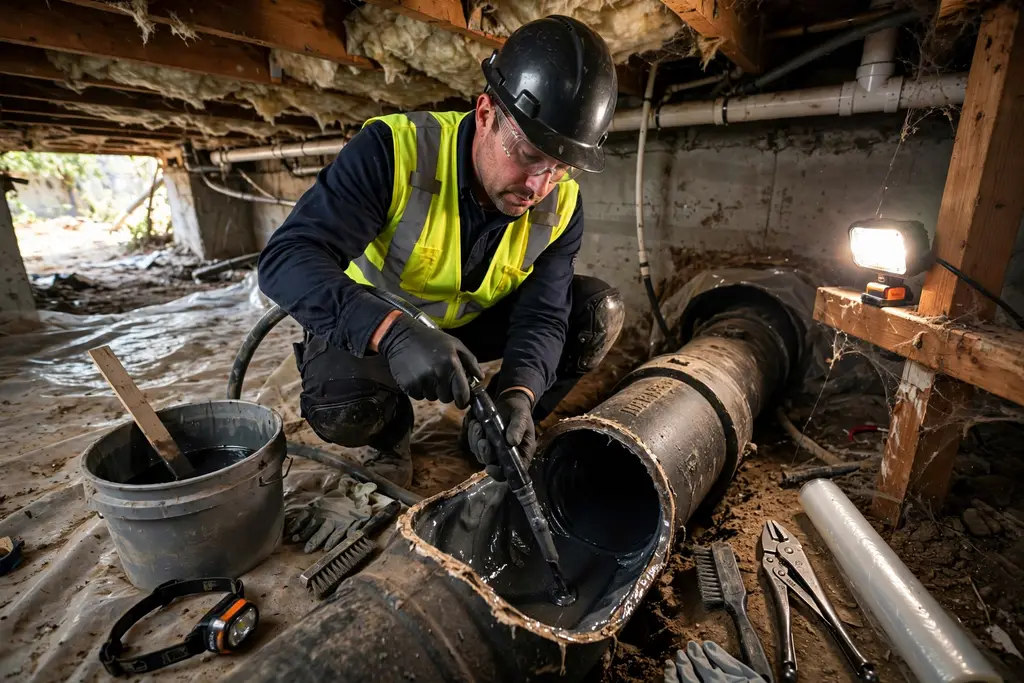
Epoxy pipe lining builds a new pipe inside the old one. After a camera inspection and a thorough cleaning, epoxy resin is applied to the interior wall of the existing line — either carried in on a liner that is inverted into the pipe, or applied directly onto the pipe wall — and cured until it hardens into a smooth, sealed barrier. Pinholes, pitting, and hairline cracks get covered from the inside, and the floor above never gets opened.
The appeal is direct: the pipe gets a new interior without a single trench or a lifted floor tile. In Torrance 90503, where the quiet soil and standard tract lots make for clean, predictable work, renewing the pipe from the inside is frequently the most sensible path available.
How it works here: we are the connector, not the crew. Your call to (833) 713-2101 reaches our referral line, and we match you with an independent slab-leak specialist who works in Torrance 90503. The specialist diagnoses, you approve the plan, and only then does work start.
Prefer to talk it through? Book Service and tell us what you are seeing in your Torrance home.
Why Torrance Changes How This Repair Works
The 90503 housing stock is 1950s–60s: cottages, bungalows, ranches, and Craftsman-influenced homes in West Torrance, mid-century homes in Southwood — many built around 1955. Pipe stock is 1950s–60s copper supply under slab-on-grade, with cast-iron or early ABS drains. The ground is flat coastal plain with good drainage; no hillside, no high water table, no salt air — just age. Seventy-year-old copper fails by pitting from the inside, and hot-water lines go first because heat accelerates the chemistry. That is why the warm spot on the floor is the 90503 cliché: it is the sound of a hot line pinholing under the slab. Detection is usually clean here — quiet soil, accessible tract lots — and repairs follow the book.
Seventy-year-old copper with length-wide pitting is the core epoxy case — seal the whole run's interior in one operation instead of chasing pinholes one slab opening at a time. Hot-water lines, the usual 90503 leakers, line well.
In Torrance, epoxy lining earns its place wherever digging is difficult, destructive, or simply unnecessary — a sealed pipe with the slab untouched. The deciding factors never change: pipe integrity, access for the equipment, and an honest camera inspection before anyone commits.
How Epoxy Lining Works — Without Tearing Up Your Home
The lining process is methodical. First, electronic detection confirms the leak's location and a camera inspection maps the pipe's interior — material, diameter, and every defect. Next comes cleaning: descaling tools remove corrosion and buildup so the epoxy can bond to sound pipe wall. The line is then dried completely, because epoxy and moisture do not mix. Application follows — either a resin-saturated liner pulled or inverted into place, or epoxy applied directly onto the pipe wall — and then curing, which hardens the resin into a structural inner pipe. A final camera pass verifies coverage. The finished liner is slightly smaller in diameter than the original pipe, but the smooth epoxy surface typically restores flow. Access happens through existing cleanouts or small openings; there is no trench across your yard and no jackhammer in your hallway. Hot-water lines can be lined too — heat accelerates the original corrosion, which is exactly why those lines are often the first candidates.
A little preparation goes a long way: clear access to cleanouts, the water heater, and the water meter before the specialist arrives. The line must be taken out of service during cleaning and curing, so plan for a water-off window — the specialist will tell you how long your specific run needs. Note any prior lining or coating work on the pipes, and any chemical drain cleaners used recently; both affect how the pipe cleans and how the epoxy bonds. Honest history here prevents a failed bond later.
What Happens When You Call (833) 713-2101
Step 1: The Call
Call (833) 713-2101. You will reach our referral line, where we connect you with an independent local specialist serving Torrance. Expect a few direct questions: warm spots on the floor, the sound of running water with taps off, a water bill that jumped, low pressure. Those answers tell the specialist what to test first.
Step 2: The Diagnosis
On site, the specialist pressure-tests, locates the leak electronically, and cameras the line. Lining lives or dies on this inspection: the pipe must be intact enough to host the epoxy, with no collapses or separations the resin cannot bridge.
Step 3: The Plan
You get a plain-language explanation of what was found and which repair paths fit — Epoxy Pipe Lining among them — before any work is authorized. No work starts on a guess.
When Epoxy Lining Isn't the Right Fix
Epoxy cannot save every pipe. Collapsed sections, major joint separations, and pipes deformed out of round are beyond what a liner can bridge. Heavy scale that cannot be fully cleaned will prevent bonding, and bellies that hold standing water need a different answer. If the camera shows failure across multiple runs rather than one bad section, lining each of them is rarely the sensible path — rerouting the supply system is usually the cleaner fix. Previous lining work can also complicate a second application. The camera inspection exists to catch all of this before resin is ever mixed.
Serving Torrance 90503: Neighborhoods We Cover
Serving Torrance 90503 — Southwood, Delthorne, and West Torrance along Hawthorne Boulevard, Sepulveda Boulevard, and Torrance Boulevard, near the Del Amo Fashion Center, Delthorne Park, and the Madrona Marsh Preserve. Warm spot on the floor? Say so when you call — it tells the specialist to prioritize the hot-water lines in testing.
Suspect a Slab Leak? Talk to a Specialist Today
One call connects you with a local slab leak professional serving Rancho Palos Verdes, CA — day or night.
Call (833) 713-2101Frequently Asked Questions
There is a warm spot on our living room floor. Is that a slab leak?
Very likely a hot-water line leak — escaping hot water warms the flooring above, and it is the signature 90503 symptom in 70-year-old copper. Pressure testing the hot lines confirms it in short order. Once confirmed, Epoxy Lining options are evaluated against what the camera shows. This is the core case for lining: the pipe's path stays, its interior gets renewed.
Our home was built in 1955. How much life is left in the copper?
At 70-plus years, 1950s copper is living on borrowed time — pitting is a when, not an if. One leak often means the run is broadly pitted, which is why the diagnostic assesses the whole run rather than just the loudest pinhole. The result points to Epoxy Lining or to replacement. A camera inspection confirms whether the pipe qualifies — lining needs an intact host pipe to bond to.
Should we fix just the leaking section?
Sometimes — a single pinhole in an otherwise sound run is a legitimate spot repair. But 70-year-old copper with system-wide pitting will keep producing leaks, and that is where rehabilitating or abandoning the run (Epoxy Lining) beats playing whack-a-mole. The camera footage makes the case either way. Epoxy lining addresses exactly this kind of interior pipe damage without opening the floor above it.
Will the repair damage our original hardwood floors?
That is exactly what Epoxy Pipe Lining is designed to prevent — the work happens through small access points or interior routes, not through your floors. Original 1950s finishes are worth protecting, and the specialist will show you the access plan before work begins. This is the core case for lining: the pipe's path stays, its interior gets renewed.
How fast can this be diagnosed?
Detection in 90503 is usually clean — quiet soil and accessible lots make for accurate testing. Call, describe the symptoms, and the specialist will lay out the diagnostic steps on arrival. No work is authorized until testing confirms the leak and its location. A camera inspection confirms whether the pipe qualifies — lining needs an intact host pipe to bond to.
Will epoxy lining stop the leak, or just slow it?
A properly installed liner seals pinholes, pitting, and hairline cracks — it is a repair, not a delay tactic. What it cannot do is bridge a collapsed section or a separated joint, which is why the camera inspection comes first. If the pipe qualifies, the seal is the fix.
Can you line a hot-water line?
Yes — and hot-water lines are often the best candidates, since heat-driven corrosion is what put the pinholes there in the first place. The epoxy systems used for this work are rated for hot-water service.