Emergency Slab Leak Repair in Torrance 90501, CA
Emergency Slab Leak Repair in Torrance 90501, CA — urgent response for an active under-slab leak — guided shutoff help, damage control, and fast stabilization of the failed line.
In Short
Emergency Slab Leak Repair in Torrance 90501, CA — urgent response for an active under-slab leak — guided shutoff help, damage control, and fast stabilization of the failed line. Serving the 90501 ZIP: guided shutoff help, damage control, priority visits. First step on your call: we walk you to the main shutoff.
What the Emergency Visit Looks Like in Torrance (90501)
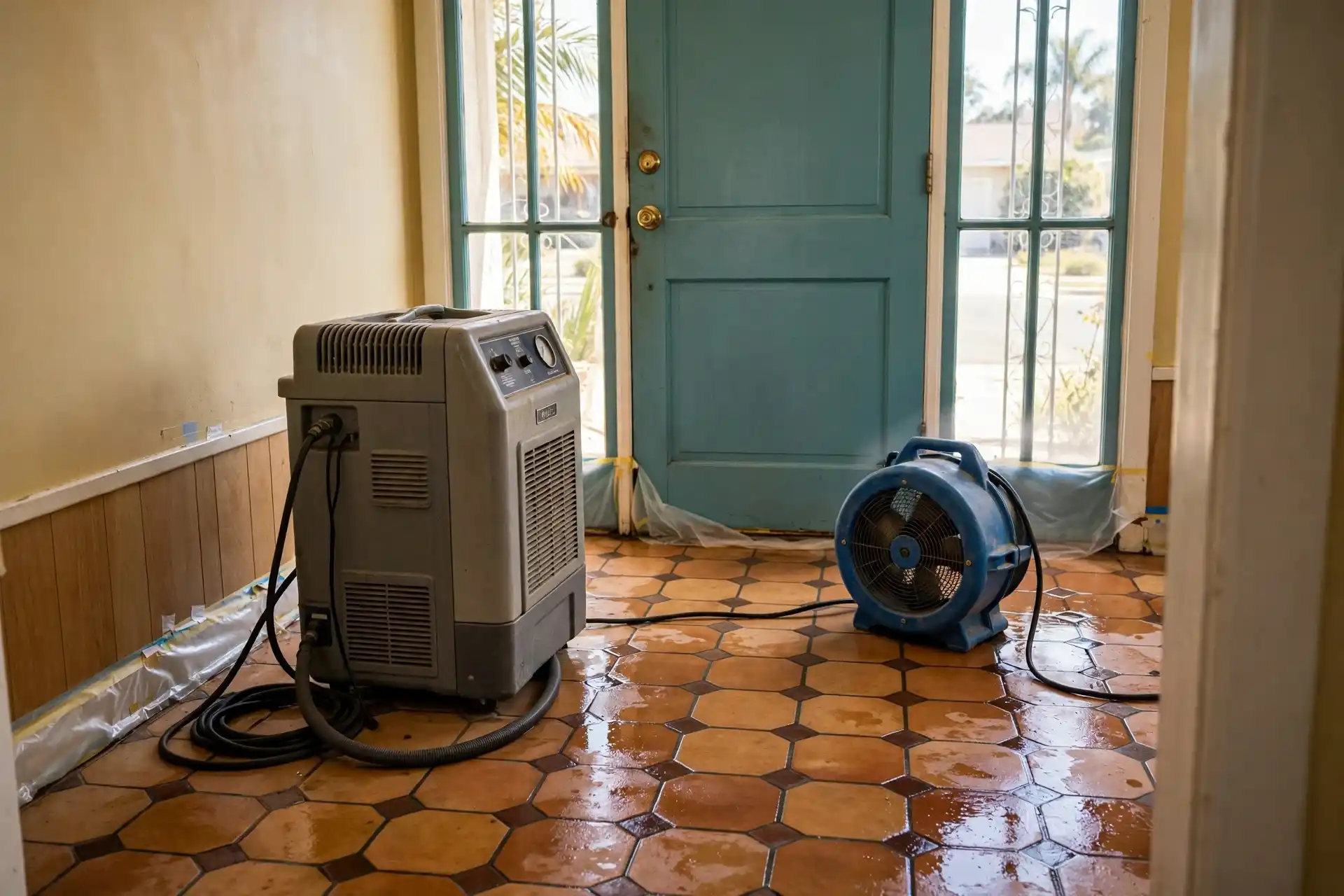
An emergency visit in Torrance runs on a different clock than a scheduled detection — the first goal is always to stop the water, the second is to stop the damage, and the repair plan comes third. Here's the sequence.
What Happens After the Water Is Stopped
Before we arrive: get the main water off (we'll guide you), move valuables and rugs away from the wet area, and take phone photos of everything — the flooring, the walls, the meter. Those photos are gold later, whether for your own records or an insurance conversation. if you know your home's decade, lead with it — 1930s versus 1950s is the single most useful fact on a 90501 call
Expect the water to stay off until the failed line is isolated or repaired — that's non-negotiable for safety and for stopping the damage. We'll restore service to the rest of the house as fast as the plumbing allows, and we'll tell you plainly what "fast" means for your specific layout. Questions before you book? Call (833) 713-2101 — we'd rather answer them now than discover them mid-visit.
Local Notes for Torrance 90501
Central and east Torrance make up 90501: Downtown and Old Torrance with its 1920s–40s bungalow streets near Torrance High School, Wilson Park as the green anchor, and the 1950s tracts spreading east of Hawthorne Boulevard. Torrance Boulevard, Carson Street, and Western Avenue are the main east-west routes. Slab-on-grade dominates the postwar tracts; raised foundations persist in the oldest stock near the core. Pipes follow the era: galvanized and cast iron in the 1920s–40s homes, copper under slab from the 1950s on.
The one thing that speeds up every 90501 visit: know your home's decade and foundation type. A 1935 bungalow on a raised foundation and a 1954 tract home on a slab are different jobs wearing the same ZIP code. If you're in the older stock and still on galvanized, treat pressure drops as urgent — that pipe is at the end of its life. If you're in the 1950s tracts, watch for the classic copper signs: warm floors, creeping bills. Call (833) 713-2101 with the build year handy and we'll start in the right era.
We're a referral line: you talk to us, and we connect you with a slab-leak specialist serving the 90501 area. Questions about emergency slab leak repair in the 90501 ZIP? Call (833) 713-2101.
1930s Galvanized or 1950s Copper? Why Old Torrance Emergencies Start With an ID Check
A 90501 emergency call could land on two completely different centuries of plumbing: a 1930s bungalow near Torrance High with galvanized steel and a raised foundation, or a 1953 tract ranch with copper under slab east of Hawthorne. The repair paths diverge completely — one is a repipe conversation, the other a spot-repair-or-reroute decision — so the first thing we establish on an emergency visit is what material we are standing on and what foundation sits under it. Guessing wrong costs you the wrong repair.
Your first 30 minutes: shut the main, then check what kind of home you actually have. Crawlspace access under the house? You are probably looking at an under-floor leak, which is a different, usually cheaper emergency than a slab leak. Slab with no crawlspace and a warm spot on the floor? That is the copper signature. Tell us the build year when you call — it changes what we load on the truck.
Old Torrance's era mix also means shutoffs vary wildly: 1930s gate valves seize, 1950s ball valves usually turn, and some downtown-street homes have the shutoff in the alley-side meter box. If yours will not budge, do not force it — a snapped valve stem turns a leak emergency into a flood emergency. We bring the meter key and handle it. In the raised-foundation pockets we check the crawlspace before any slab talk, because the cheapest fix never touches concrete.
Suspect a Slab Leak? Talk to a Specialist Today
One call connects you with a local slab leak professional serving Rancho Palos Verdes, CA — day or night.
Call (833) 713-2101Frequently Asked Questions
How do I know if my Torrance home is even on a slab?
Check the perimeter: if you can see a crawlspace access or the house sits visibly above grade on a stem wall, it's likely raised — common in 90501's 1920s–40s stock near Old Torrance. If the exterior walls meet the ground with no visible crawlspace, it's probably slab-on-grade, the norm for the 1950s tracts. Emergency Slab Leak Repair starts with this question because a raised-foundation leak is a different (usually simpler) job. When you call (833) 713-2101, we'll help you sort it before we roll a truck.
My 1930s Torrance home still has galvanized pipe. What are my real options?
Honest answer: at 90-plus years, galvanized is past end of life, and Emergency Slab Leak Repair will most likely confirm a system problem rather than a single fixable leak. The real options are a repipe or a planned reroute — spot repairs on century-old galvanized tend to buy months, not years. We'll diagnose first and give you the straight math; we'd rather talk you into the right long-term fix than sell you a short-term one.
Why do you ask for the build year on every 90501 call?
Because in this ZIP the build year predicts the plumbing: 1920s–40s means galvanized, cast iron, and possibly a raised foundation; 1950s means copper under slab at failure age. Those are different diagnostics, different repairs, and different budgets. The build year lets Emergency Slab Leak Repair start on the right track instead of discovering the era on site. It's the highest-value fact you can give us.
Does the flat ground in Torrance make detection easier?
It removes complications rather than adding ease: flat coastal-plain alluvium means no hillside seepage lookalikes, no terraced access problems, and clean acoustic conditions. What remains is the era question — and that's a records question, not a ground question. 90501 detection visits are among the most predictable in the service area, which is good news for accuracy and for your bill.
Will my water be off for the whole emergency visit?
Until the failed line is isolated or repaired, yes — running water through a broken under-slab line just feeds the damage. The good news: once we isolate the failed run, the rest of the house usually gets water back the same visit. 1920s–50s homes — bungalows near Torrance High and 1950s tracts east of Hawthorne Boulevard, so isolation is typically straightforward once we've found the break.
Can an emergency slab leak wait until morning?
Pressurized water under a slab doesn't pause overnight — it keeps wicking into flooring and framing, and every hour adds to the restoration scope. flat lots mean escaped water spreads rather than runs — check the full footprint, not just downhill If the meter is spinning with fixtures off or water is surfacing, treat it as now, not morning. The call costs nothing; the overnight damage doesn't.
Should I document anything for a possible insurance claim?
Yes, and start before we arrive: photos of the wet areas, the meter reading, the water bill spike if you have it, and keep every receipt from the visit onward. We're happy to explain what happened in plain terms for your records — that's advice and documentation, not claims handling, and it's part of why the emergency visit includes a written account of the findings.