Electronic Slab Leak Location in Wilmington 90744, CA
Electronic Slab Leak Location in Wilmington 90744, CA — pinpoint electronic location of a suspected under-slab leak — acoustic sensors, line tracing, and infrared imaging that mark the break within inches.
In Short
Electronic Slab Leak Location in Wilmington 90744, CA — pinpoint electronic location of a suspected under-slab leak — acoustic sensors, line tracing, and infrared imaging that mark the break within inches. Serving the 90744 ZIP: electronic line tracing, acoustic pinpointing, thermal cross-check. First step when you call (833) 713-2101: reviewing what's already confirmed, then scheduling.
What the Pinpointing Visit Looks Like in Wilmington (90744)
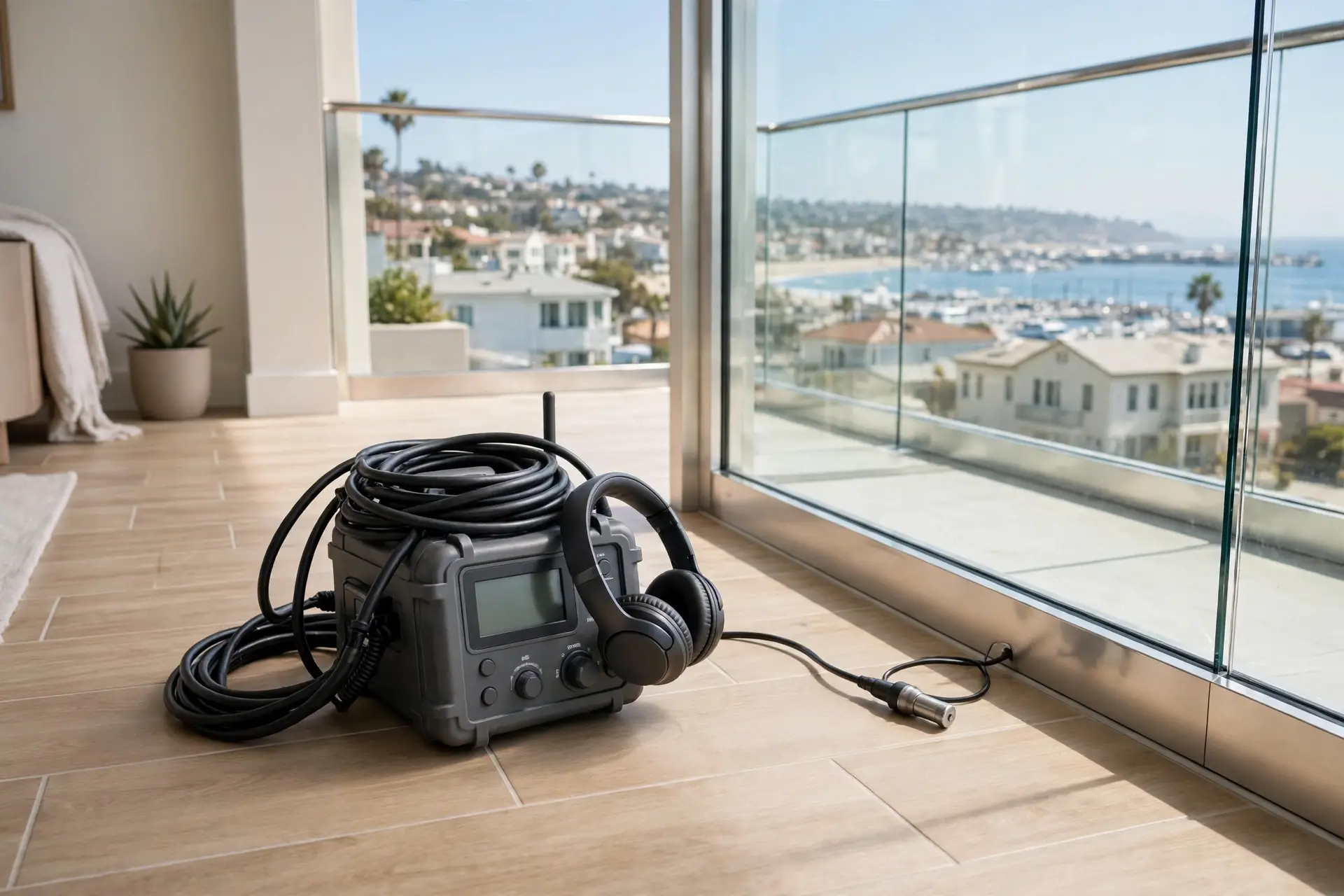
A location visit in Wilmington is quiet, technical work — headphones, sensors, and a marked floor at the end. Here's how it runs, and what 90744's ground conditions change about each step.
Getting Ready for the Pinpointing Visit in 90744
Clear the rooms above the suspected pipe run before we arrive — furniture a few feet off the walls, rugs rolled where the listening happens. We need access to the water heater and the main shutoff too. if your home is 1940s–50s and still on original pipe, say so up front — you're at the boundary where detection becomes planning, not just diagnosis
Expect a quiet house to work best: the acoustic sensors hear everything, including footsteps and appliances. We'll ask for the HVAC and laundry to stay off during the listening pass. It feels fussy; it's the difference between a mark you can trust and a guess. Questions before you book? Call (833) 713-2101 — we'd rather answer them now than discover them mid-visit.
Local Notes for Wilmington 90744
The 90744 ZIP covers Wilmington's working-class postwar neighborhoods along Pacific Coast Highway, Avalon Boulevard, and Anaheim Street — flat harbor plain, with the refinery and industrial corridor as the local landmark backdrop (the Banning Museum and the Drum Barracks Civil War Museum are the historic anchors). Housing is 1940s–1960s single-family with some multifamily, on flat alluvial soil with a high water table. Slab foundations are the norm, with galvanized-to-copper supply lines and cast-iron drains — the classic high-volume slab-leak profile.
Wilmington homeowners should treat the water meter as an early-warning instrument: check it quarterly with fixtures off, because the ground here will hide what the meter reveals. If your home is 1940s–50s on original galvanized or early copper, you're at the pipe-life boundary — a detection visit now is planning, not panic. And after heavy rain, remember that saturated soil mimics leak symptoms; the meter test is what separates groundwater wicking from a genuine failure. Call (833) 713-2101 — lead with the build era and we'll know exactly what we're walking into.
We're a referral line: you talk to us, and we connect you with a slab-leak specialist serving the 90744 area. Questions about electronic slab leak location in the 90744 ZIP? Call (833) 713-2101.
How Wilmington's Slab Leaks Get Found Despite a Masking Water Table
Wilmington pairs the area's highest slab-leak call density with some of its hardest detection conditions. The 1940s-1960s stock — many homes at the 70-to-80-year pipe-life boundary — sits on flat alluvium with a high water table. Groundwater corrodes aging pipe from the outside while masking small leaks: saturated soil spreads leak noise broadly that pinpointing is guesswork. The working protocol starts at the meter, not the slab — a meter test proves water is moving, then isolation between service line and house proves where it's going.
Once the leak is confirmed inside the house system, branch-by-branch pressure isolation quarters the search. Each fixture branch is shut off and pressure-tested separately; the branch that won't hold pressure gets the electronic treatment. This matters more in Wilmington than anywhere nearby because the stock skews toward long-running leaks — older galvanized fails gradually, and owners often call only after damage shows. Correlator sensors then compare readings from two slab points to compute position from time delay, cutting through groundwater noise far better than a single listening disc.
The 90744 detection visit also serves a documentation role. With so many homes at the end of pipe life, one located pinhole is frequently the first of several — and the electronic survey, gives homeowners evidence to choose between chasing individual leaks and re-piping the house. That evidence is especially valuable where every dollar counts: a precise mark keeps the immediate repair small and affordable, while the full picture prevents paying for three separate slab openings over two years. In Wilmington, good detection is budget protection.
Suspect a Slab Leak? Talk to a Specialist Today
One call connects you with a local slab leak professional serving Rancho Palos Verdes, CA — day or night.
Call (833) 713-2101Frequently Asked Questions
Why does Wilmington get so many slab-leak calls?
Two compounding factors: the housing stock and the ground. 1940s–60s pipes are at the 70–80-year life boundary — the age when corrosion failures spike — and the high water table in harbor-plain alluvium accelerates outside-in corrosion while hiding the early evidence. More failures, later discovery: that's the call-density formula. Electronic Slab Leak Location here is as much about timing as technique — catching it at the meter-test stage.
My home still has original 1940s pipe. Is replacement the only answer?
Not necessarily the only answer, but it's the conversation to have. At 70–80 years, original galvanized or early copper is past its design life — Electronic Slab Leak Location can tell you whether it's failing today and where, but the honest long-term advice for boundary-age pipe is usually a repipe or reroute plan rather than another decade of spot repairs. We'll give you the diagnosis first and the planning conversation second, in that order.
Does the refinery corridor affect plumbing?
Not the pipes themselves — that's cosmetic context, not a corrosion factor. What matters in Wilmington is the water table and the pipe age, full stop. Don't let the industrial backdrop distract from the actual diagnostics: meter, pressure, sound, heat. Electronic Slab Leak Location reads the same in 90744 as anywhere — the ground is just noisier about it.
How often should I check my meter in Wilmington?
Quarterly, minimum — it takes two minutes. All fixtures off, watch the dial: any movement means water is going somewhere. In 90744 the meter is genuinely your best early-warning system because the saturated ground hides what the meter reveals. If you see movement, call (833) 713-2101 before you see damage — the detection visit is cheapest when the leak is youngest.
What's the difference between leak detection and electronic location?
Detection answers "is there a leak, and on which line" — meter tests, pressure isolation, a general area. Electronic location answers "exactly where" — traced pipe path, acoustic pinpoint, thermal confirmation, a mark on the floor. In Wilmington, most jobs need both in sequence: detection first to prove the leak, location second to aim the repair. If you've already got a confirmed leak, you can start at location.
How accurate is electronic pinpointing?
Done properly — traced path, acoustic triangulation, thermal cross-check — it typically lands within inches of the actual break, not feet. It's not magic and it's not infallible: small leaks hide completely in saturated soil — by the time the acoustic signal is clear the leak is usually substantial, so the tracing and thermal cross-checks do the heavy lifting in 90744 What it reliably replaces is exploratory jackhammering, where the "search" used to be a trench. We'll tell you on site how clean the signal is before any mark goes down.
After you mark the spot, do I still have to open the slab?
Almost always, yes — but the opening is targeted: a small, deliberate cut at the mark rather than a exploratory trench. The alternative the mark enables is skipping the slab entirely: rerouting the line overhead through walls or attic. 1940s–60s working-class postwar homes, many at the 70–80-year pipe-life boundary, and the location report lays out which path makes sense for your lot and floor plan.