Electronic Slab Leak Location in Torrance 90503, CA
Electronic Slab Leak Location in Torrance 90503, CA — pinpoint electronic location of a suspected under-slab leak — acoustic sensors, line tracing, and infrared imaging that mark the break within inches.
In Short
Electronic Slab Leak Location in Torrance 90503, CA — pinpoint electronic location of a suspected under-slab leak — acoustic sensors, line tracing, and infrared imaging that mark the break within inches. Serving the 90503 ZIP: electronic line tracing, acoustic pinpointing, thermal cross-check. First step when you call (833) 713-2101: reviewing what's already confirmed, then scheduling.
What the Pinpointing Visit Looks Like in Torrance (90503)
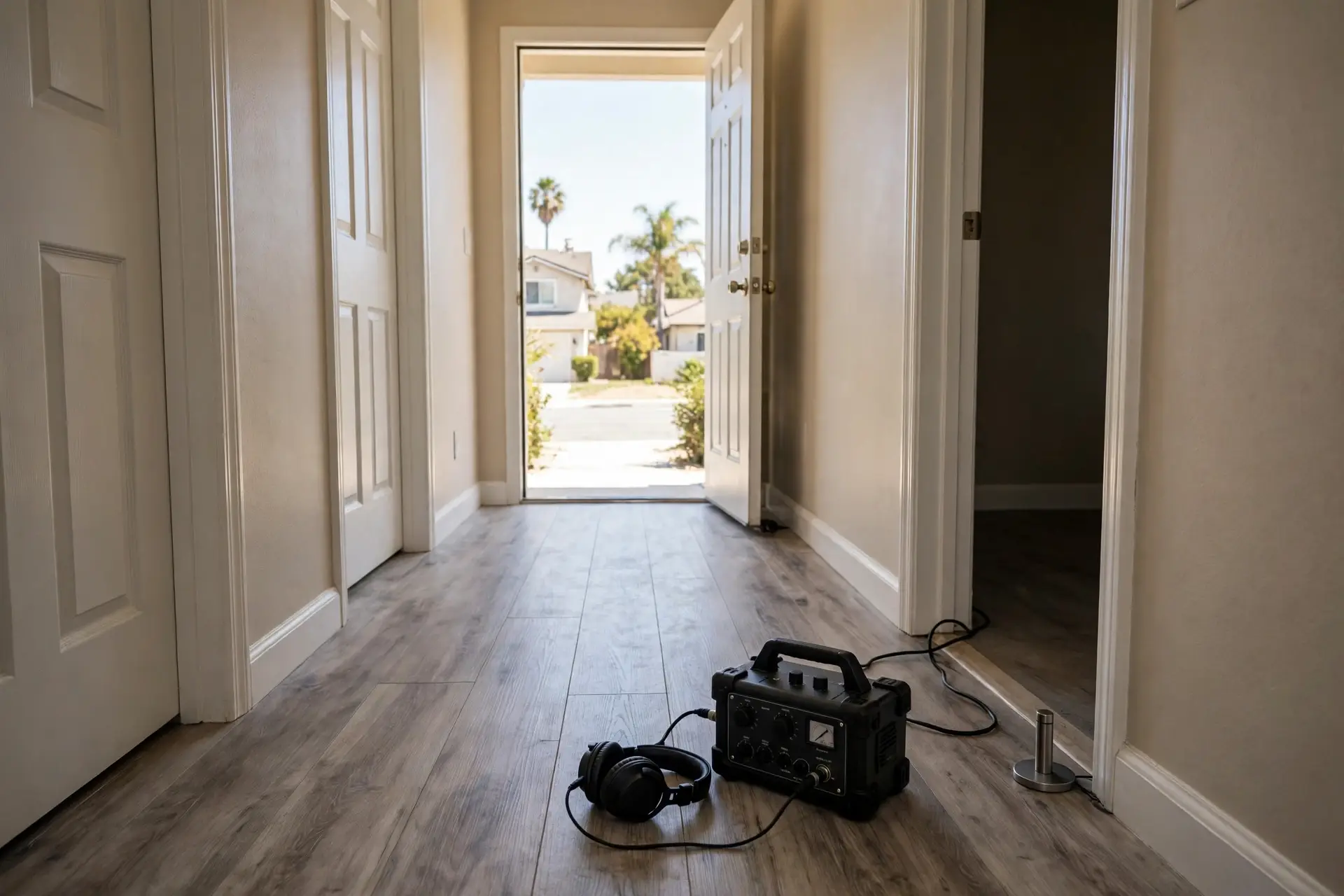
A location visit in Torrance is quiet, technical work — headphones, sensors, and a marked floor at the end. Here's how it runs, and what 90503's ground conditions change about each step.
Getting Ready for the Pinpointing Visit in 90503
Clear the rooms above the suspected pipe run before we arrive — furniture a few feet off the walls, rugs rolled where the listening happens. We need access to the water heater and the main shutoff too. high owner-occupancy here means decisions get made fast — have your questions ready and we'll answer them on the visit
Expect a quiet house to work best: the acoustic sensors hear everything, including footsteps and appliances. We'll ask for the HVAC and laundry to stay off during the listening pass. It feels fussy; it's the difference between a mark you can trust and a guess. Questions before you book? Call (833) 713-2101 — we'd rather answer them now than discover them mid-visit.
Local Notes for Torrance 90503
West Torrance fills the 90503 ZIP: the cottage and bungalow streets, the Southwood mid-century tracts, and the neighborhoods around Del Amo Fashion Center. Hawthorne Boulevard, Sepulveda Boulevard, and Torrance Boulevard frame the area; Delthorne Park and the Madrona Marsh Preserve are the green landmarks. Housing is 1950s–60s single-family on flat lots — slab-on-grade throughout, copper supply lines underneath, cast-iron or early ABS drains. This is the highest-volume, most predictable slab-leak territory in Torrance, and the diagnostics here are refreshingly straightforward.
If your West Torrance home is 1950s–60s original and you've noticed a warm spot on the floor — that's the signature. Hot-water lines fail first because heat accelerates corrosion, and a warm floor is the symptom that names the line before we even test. Don't wait on it: hot-line leaks run constantly and do the most damage per day. Check your meter with fixtures off; if it moves, call (833) 713-2101. In 90503, early detection almost always means a smaller repair.
We're a referral line: you talk to us, and we connect you with a slab-leak specialist serving the 90503 area. Questions about electronic slab leak location in the 90503 ZIP? Call (833) 713-2101.
Thermal Imaging Leads the Way on West Torrance's Hot-Line Leaks
In Southwood and West Torrance, the signature call starts with a warm spot on the floor. The 1950s-1960s copper under these slabs is 60 to 70 years old — textbook failure age — and hot-water lines fail first, pinholing under heat and pressure. A hot-line leak warms the concrete above it, and an infrared camera reads that warmth as a bright patch. Thermal imaging therefore leads the 90503 sequence: a camera sweep often reveals the leak's neighborhood in minutes, before a single acoustic sensor is placed.
The thermal image is a lead, not a verdict — confirmed the old-fashioned way. The technician places a sensor on the warm patch and listens for the pressure-driven hiss distinguishing a live leak from residual warmth or heat conducted along the pipe from a distant break. Correlator readings from two points then tighten the mark to inches. This two-method confirmation matters because concrete holds heat: a repaired leak can leave ghost warmth, and a hot line can paint a misleading glow. The camera finds candidates; the microphone convicts.
West Torrance's flat lots make the whole process fast — short runs, uniform soil, strong signal transmission, easy sensor coupling. High owner-occupancy means quick decisions once the mark is on the floor: most visits end the same day with a repair plan. The practical takeaway: a warm floor in a 1955-to-1965 home deserves a detection call, not wait-and-see — hot-line leaks run continuously, eroding soil and raising the water bill daily. In 90503, the camera usually finds in an hour what guessing would take weeks to find.
Suspect a Slab Leak? Talk to a Specialist Today
One call connects you with a local slab leak professional serving Rancho Palos Verdes, CA — day or night.
Call (833) 713-2101Frequently Asked Questions
My floor feels warm in one spot. Is that really a slab-leak sign?
In 90503, it's the signature. A warm patch on the floor — especially in a hallway or bedroom — is the classic symptom of a hot-water line leaking under the slab. Hot lines corrode faster than cold ones because heat accelerates the chemistry, and 1950s–60s copper here is 70-plus years into that process. Electronic Slab Leak Location will confirm it with pressure isolation (hot side versus cold side) in minutes. Don't wait on a warm floor — hot-line leaks run around the clock.
Why do hot-water lines fail before cold lines?
Heat speeds corrosion — it's that simple. The same copper that lasts decades on the cold side gives up years earlier on the hot side, which is why the warm-floor symptom is so diagnostic: it names the failing line before any test. In 90503's 1955-vintage stock, hot-line pinholes are the most common failure we confirm. Electronic Slab Leak Location treats hot-side and cold-side as separate suspects from the first pressure test.
Is 70-year-old copper definitely going to fail?
Not definitely, but the odds are no longer in its favor — 70-plus years is the far edge of copper's service life under slab, and 90503 is full of original 1950s lines. Some runs last longer; water chemistry and installation quality matter. But Electronic Slab Leak Location at the first symptom is the rational move here, because when this vintage fails it tends to fail actively. Think of detection as scheduled maintenance for a 70-year-old system.
Are irrigation leaks ever confused with slab leaks in 90503?
Regularly — established landscaping with old sprinkler zones can produce damp soil and even damp slab edges that mimic a supply leak. The divider is the meter: irrigation runs on its own schedule and its own valve, so a meter test with the irrigation off separates the two cleanly. Electronic Slab Leak Location always includes that separation here before any under-slab conclusions. If it's the sprinklers, we'll tell you — that's a landscaper's fix, not ours.
How accurate is electronic pinpointing?
Done properly — traced path, acoustic triangulation, thermal cross-check — it typically lands within inches of the actual break, not feet. It's not magic and it's not infallible: warm-floor hot-line leaks are the signature 90503 failure, and hot lines announce themselves beautifully to both acoustic sensors and thermal cameras — pinpointing here is fast and decisive What it reliably replaces is exploratory jackhammering, where the "search" used to be a trench. We'll tell you on site how clean the signal is before any mark goes down.
Does electronic location work under tile and wood floors?
Yes — the sensors read through standard floor coverings, and thermal imaging actually reads surface temperature, so tile and stone show the anomaly well. Thick engineered wood and some underlayments muffle the thermal signal, which is why we never rely on one method alone. Whatever's on your Torrance floors, the acoustic pass still hears through it.
After you mark the spot, do I still have to open the slab?
Almost always, yes — but the opening is targeted: a small, deliberate cut at the mark rather than a exploratory trench. The alternative the mark enables is skipping the slab entirely: rerouting the line overhead through walls or attic. 1950s–60s cottage, bungalow, ranch, and Craftsman homes — 1955-vintage copper now past 70 years old, and the location report lays out which path makes sense for your lot and floor plan.