Electronic Slab Leak Location in Torrance 90501, CA
Electronic Slab Leak Location in Torrance 90501, CA — pinpoint electronic location of a suspected under-slab leak — acoustic sensors, line tracing, and infrared imaging that mark the break within inches.
In Short
Electronic Slab Leak Location in Torrance 90501, CA — pinpoint electronic location of a suspected under-slab leak — acoustic sensors, line tracing, and infrared imaging that mark the break within inches. Serving the 90501 ZIP: electronic line tracing, acoustic pinpointing, thermal cross-check. First step when you call (833) 713-2101: reviewing what's already confirmed, then scheduling.
What the Pinpointing Visit Looks Like in Torrance (90501)
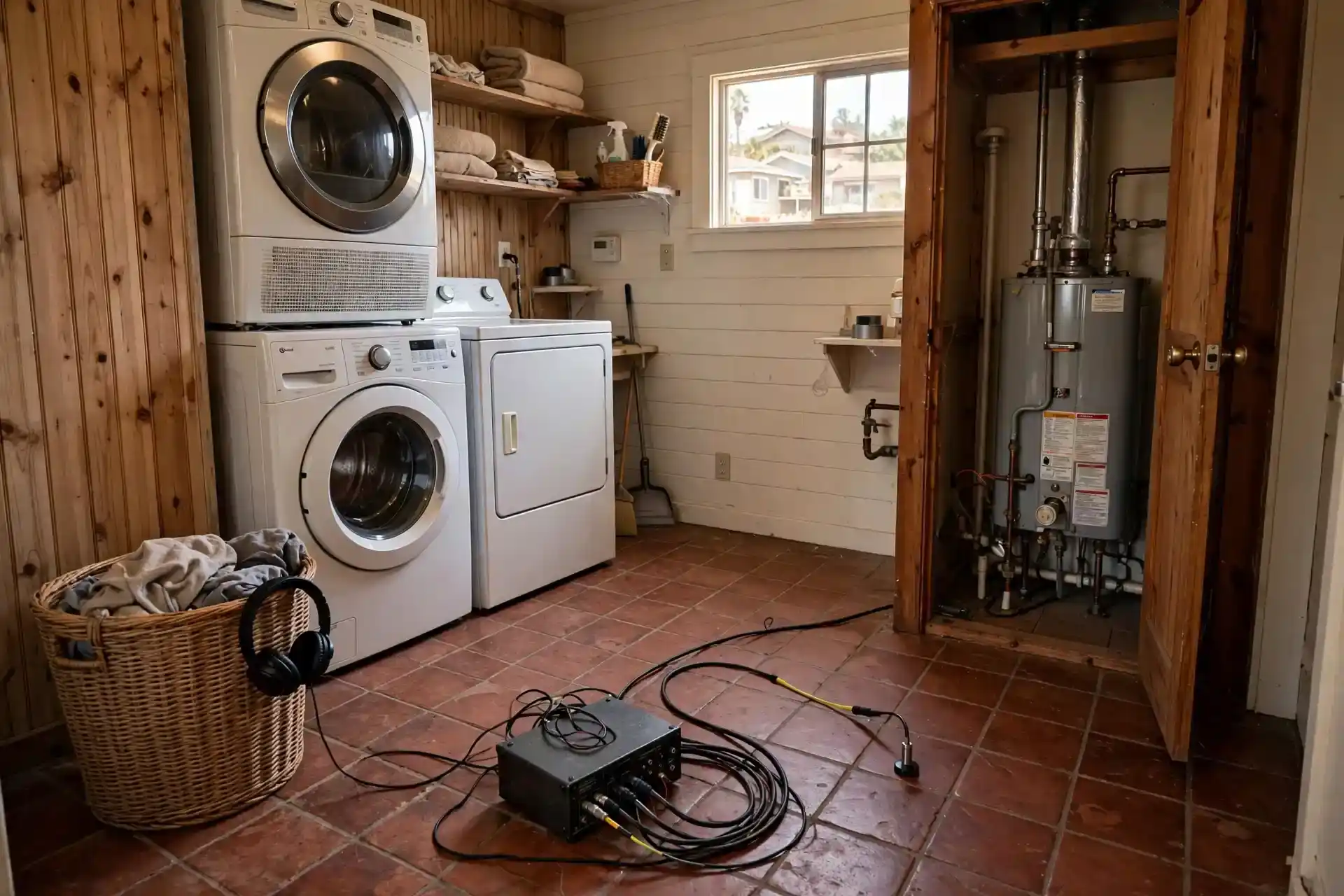
A location visit in Torrance is quiet, technical work — headphones, sensors, and a marked floor at the end. Here's how it runs, and what 90501's ground conditions change about each step.
Getting Ready for the Pinpointing Visit in 90501
Clear the rooms above the suspected pipe run before we arrive — furniture a few feet off the walls, rugs rolled where the listening happens. We need access to the water heater and the main shutoff too. if you know your home's decade, lead with it — 1930s versus 1950s is the single most useful fact on a 90501 call
Expect a quiet house to work best: the acoustic sensors hear everything, including footsteps and appliances. We'll ask for the HVAC and laundry to stay off during the listening pass. It feels fussy; it's the difference between a mark you can trust and a guess. Still unsure whether it's a slab leak? That's exactly what the call is for: (833) 713-2101.
Local Notes for Torrance 90501
Central and east Torrance make up 90501: Downtown and Old Torrance with its 1920s–40s bungalow streets near Torrance High School, Wilson Park as the green anchor, and the 1950s tracts spreading east of Hawthorne Boulevard. Torrance Boulevard, Carson Street, and Western Avenue are the main east-west routes. Slab-on-grade dominates the postwar tracts; raised foundations persist in the oldest stock near the core. Pipes follow the era: galvanized and cast iron in the 1920s–40s homes, copper under slab from the 1950s on.
The one thing that speeds up every 90501 visit: know your home's decade and foundation type. A 1935 bungalow on a raised foundation and a 1954 tract home on a slab are different jobs wearing the same ZIP code. If you're in the older stock and still on galvanized, treat pressure drops as urgent — that pipe is at the end of its life. If you're in the 1950s tracts, watch for the classic copper signs: warm floors, creeping bills. Call (833) 713-2101 with the build year handy and we'll start in the right era.
How this works: you call our line, we match you with a slab-leak specialist who serves 90501 — no fee for the call itself. Questions about electronic slab leak location in the 90501 ZIP? Call (833) 713-2101.
First Identify, Then Locate: Slab-Leak Detection in Old Torrance
A 90501 call could be two different jobs wearing the same symptoms. Near Torrance High, 1920s-1940s bungalows carry galvanized steel and cast iron — while postwar tracts east of Hawthorne Boulevard run 1950s copper under slab. Detection planning starts with identification, not equipment: the technician confirms pipe material and foundation type before choosing a method. A 1930s galvanized system at end of life is usually a re-pipe candidate, where mapping system condition beats pinpointing one leak; a 1950s copper slab leak is a spot-repair question.
Foundation type is the other fork. The oldest 90501 stock sits on raised foundations, where a “slab leak” report sends the technician under the floor with a flashlight — not across the slab with acoustic sensors. Electronic detection only earns its keep on true slab-on-grade construction, and even there the method adapts: aging galvanized leaks quietly and often needs correlator or tracer-gas confirmation, while copper pinholes announce themselves loudly enough for direct listening. Mixed-era blocks mean the technician may run two different playbooks on the same street.
This diagnostic-first approach saves 90501 homeowners from the trade's most common waste: paying for detection on a system that should be replaced, or a re-pipe quote on a house needing one repair. The visit typically ends with a plain-English map — what the pipes are, where they run, where the leak is. In a ZIP where a 1935 bungalow can sit two doors from a 1955 tract home, that house-specific answer is the value of the call. Generic detection finds leaks; identified detection prevents the wrong repair.
Suspect a Slab Leak? Talk to a Specialist Today
One call connects you with a local slab leak professional serving Rancho Palos Verdes, CA — day or night.
Call (833) 713-2101Frequently Asked Questions
How do I know if my Torrance home is even on a slab?
Check the perimeter: if you can see a crawlspace access or the house sits visibly above grade on a stem wall, it's likely raised — common in 90501's 1920s–40s stock near Old Torrance. If the exterior walls meet the ground with no visible crawlspace, it's probably slab-on-grade, the norm for the 1950s tracts. Electronic Slab Leak Location starts with this question because a raised-foundation leak is a different (usually simpler) job. When you call (833) 713-2101, we'll help you sort it before we roll a truck.
My 1930s Torrance home still has galvanized pipe. What are my real options?
Honest answer: at 90-plus years, galvanized is past end of life, and Electronic Slab Leak Location will most likely confirm a system problem rather than a single fixable leak. The real options are a repipe or a planned reroute — spot repairs on century-old galvanized tend to buy months, not years. We'll diagnose first and give you the straight math; we'd rather talk you into the right long-term fix than sell you a short-term one.
Are the 1950s tracts east of Hawthorne Boulevard at slab-leak age?
Yes — 1950s copper under slab is 70-plus years old, squarely in the failure window. The Southwood-style tracts in 90501 are textbook territory: warm-floor hot-line leaks, pinhole failures, creeping water bills. If your tract home is mid-50s original and never re-piped, Electronic Slab Leak Location at the first symptom is just prudent. Call (833) 713-2101 — this is the most straightforward diagnostic we do.
Does the flat ground in Torrance make detection easier?
It removes complications rather than adding ease: flat coastal-plain alluvium means no hillside seepage lookalikes, no terraced access problems, and clean acoustic conditions. What remains is the era question — and that's a records question, not a ground question. 90501 detection visits are among the most predictable in the service area, which is good news for accuracy and for your bill.
What's the difference between leak detection and electronic location?
Detection answers "is there a leak, and on which line" — meter tests, pressure isolation, a general area. Electronic location answers "exactly where" — traced pipe path, acoustic pinpoint, thermal confirmation, a mark on the floor. In Torrance, most jobs need both in sequence: detection first to prove the leak, location second to aim the repair. If you've already got a confirmed leak, you can start at location.
How accurate is electronic pinpointing?
Done properly — traced path, acoustic triangulation, thermal cross-check — it typically lands within inches of the actual break, not feet. It's not magic and it's not infallible: the era mix means the pipe path and material can surprise you mid-trace — a 1930s galvanized run behaves differently under the sensors than 1950s copper, so we verify material as we trace What it reliably replaces is exploratory jackhammering, where the "search" used to be a trench. We'll tell you on site how clean the signal is before any mark goes down.
Does electronic location work under tile and wood floors?
Yes — the sensors read through standard floor coverings, and thermal imaging actually reads surface temperature, so tile and stone show the anomaly well. Thick engineered wood and some underlayments muffle the thermal signal, which is why we never rely on one method alone. Whatever's on your Torrance floors, the acoustic pass still hears through it.