Electronic Slab Leak Location in San Pedro 90732, CA
Electronic Slab Leak Location in San Pedro 90732, CA — pinpoint electronic location of a suspected under-slab leak — acoustic sensors, line tracing, and infrared imaging that mark the break within inches.
In Short
Electronic Slab Leak Location in San Pedro 90732, CA — pinpoint electronic location of a suspected under-slab leak — acoustic sensors, line tracing, and infrared imaging that mark the break within inches. Serving the 90732 ZIP: electronic line tracing, acoustic pinpointing, thermal cross-check. First step when you call (833) 713-2101: reviewing what's already confirmed, then scheduling.
What the Pinpointing Visit Looks Like in San Pedro (90732)
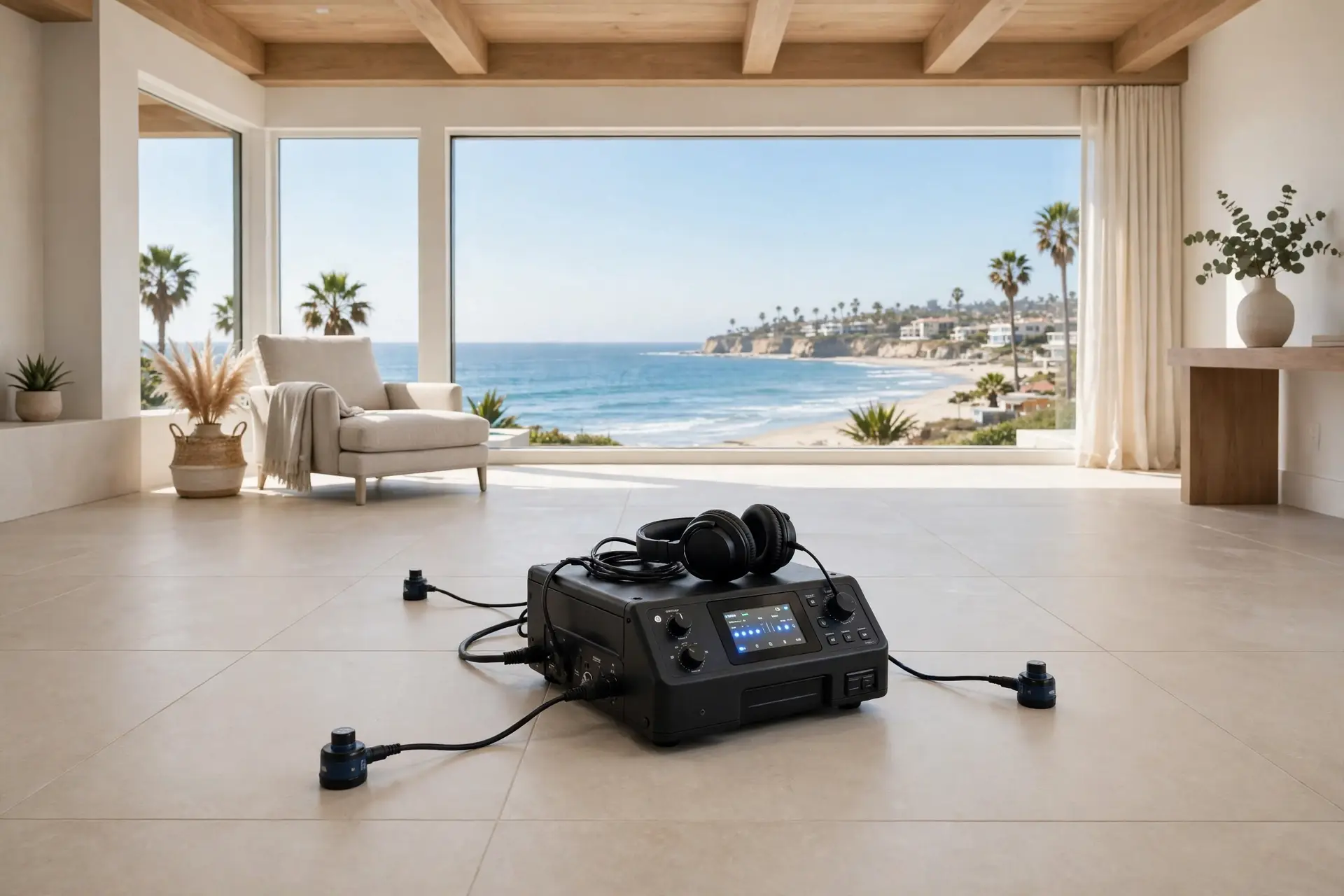
A location visit in San Pedro is quiet, technical work — headphones, sensors, and a marked floor at the end. Here's how it runs, and what 90732's ground conditions change about each step.
Getting Ready for the Pinpointing Visit in 90732
Clear the rooms above the suspected pipe run before we arrive — furniture a few feet off the walls, rugs rolled where the listening happens. We need access to the water heater and the main shutoff too. if your lot is on the bluff edge or a terraced street, say so when you call — drainage gets ruled out first and access gets planned around the grade
Expect a quiet house to work best: the acoustic sensors hear everything, including footsteps and appliances. We'll ask for the HVAC and laundry to stay off during the listening pass. It feels fussy; it's the difference between a mark you can trust and a guess. Questions before you book? Call (833) 713-2101 — we'd rather answer them now than discover them mid-visit.
Local Notes for San Pedro 90732
The 90732 ZIP covers south and west San Pedro: the Point Fermin lighthouse and park, the Cabrillo Marine Aquarium, the Korean Bell of Friendship at Angels Gate Park, and White Point/Royal Palms Beach below the bluffs. Gaffey Street and 25th Street run the grid; Paseo del Mar terraces along the bluff edge. Housing is 1950s–1970s hillside single-family — 53.6 percent detached — on coastal bluffs and hillsides with slope-drainage pressure, terraced streets, and ocean-bluff lots. Slab-on-grade is the norm but often stepped; copper supply lines from the 1950s–70s run underneath with cast-iron or ABS drains.
90732 homeowners: your two pre-emergency homework items are the shutoff route (hillside meters are usually at the street, downhill from the house — walk it once before you need it at speed) and the drainage baseline (know what's normal hillside dampness on your lot after rain, so abnormal stands out). Bluff-edge lots should treat any sudden new dampness as guilty until the meter test proves otherwise — call (833) 713-2101 and lead with the lot position. Stepped-slab homes: mention the terracing; it changes the access plan from the first minute.
We're a referral line: you talk to us, and we connect you with a slab-leak specialist serving the 90732 area. Questions about electronic slab leak location in the 90732 ZIP? Call (833) 713-2101.
Two-Axis Detection: Hillside Drainage Meets Ocean Bluff in 90732
San Pedro's 90732 hillside neighborhoods — Point Fermin, Vista del Oro, Paseo del Mar — face detection pressure from two directions at once. From uphill comes slope drainage: winter rain shedding down terraced streets. From the ocean side come bluff-edge moisture and salt air, dampening soils and corroding copper faster. A damp floor in a 1960s hillside home could be a supply-line leak, uphill drainage intrusion, or bluff moisture — three problems with similar symptoms and completely different repairs. Detection here is as much elimination as location.
The elimination sequence is methodical. Pressure isolation comes first: if supply lines hold pressure, the dampness isn't a pipe leak, and no sensor can find what doesn't exist. Moisture-meter profiling maps the pattern — slope drainage wets the uphill slab edge broadly, a pipe leak centers tightly on the line. Only after the pattern points to plumbing do acoustic sensors come out, working across stepped slabs where correlator math must account for depth changes between levels.
The 90732 detection report reads like a site assessment, not just a leak mark: which slab step, what depth, the line's path — and critically, what was ruled out. That documentation matters because hillside repairs are access-complicated: stepped lots and retaining walls make every opening expensive, so a mark accurate to inches prevents exploratory work these jobs can least afford. In the service set's second-most geotechnically sensitive area, after Rancho Palos Verdes itself, precise detection isn't a premium service — it's the minimum standard for a repair that holds.
Suspect a Slab Leak? Talk to a Specialist Today
One call connects you with a local slab leak professional serving Rancho Palos Verdes, CA — day or night.
Call (833) 713-2101Frequently Asked Questions
How do you separate bluff moisture from a real pipe leak?
The meter and the pressure gauge — bluff-edge moisture is the great mimic of 90732, pushing hillside water toward foundations in ways that dampen floors and smell musty, but it can't spin a water meter with the fixtures off and it can't make an isolated line lose pressure. Electronic Slab Leak Location runs those two tests first precisely because everything else (dampness, sound, even thermal hints) can be bluff-related. If the gauges are clean, it's the hill, not the pipe.
Are stepped slabs common in 90732?
Very — the terraced streets above the bluffs (Paseo del Mar is the textbook example) mean homes step with the grade, and the slabs step with the homes. That matters because pipe runs step too, repair access has to handle elevation changes, and tunneling or rerouting gets geometrically interesting. Electronic Slab Leak Location maps the steps: the electronic trace follows the grade, not just the floor plan. Mention the terracing when you call (833) 713-2101.
What makes 90732 different from 90731 for slab leaks?
Ground and grade, completely. 90731 is flat, dense, port-adjacent — high water table, alluvial soil, transition-era pipes, groundwater noise. 90732 is hillside and bluff — slope drainage, stepped slabs, bluff-edge moisture, salt air. Detection in 90731 fights the water table; detection in 90732 fights the hill. Same city, different diagnostic puzzles — which is why we ask for your ZIP on every call.
Should bluff-edge homeowners worry about erosion affecting pipes?
Erosion is the slow background pressure on bluff lots — it changes drainage patterns and can expose or stress buried lines over years, not days. It's not an emergency by itself, but it's a reason bluff-edge homeowners should be more attentive, not less: know your drainage baseline, watch for new dampness, and call (833) 713-2101 at the first anomaly. The pipe emergency and the erosion timeline are separate problems that share one lot — we handle the pipe side and flag anything that looks like a soils question for the right professional.
What's the difference between leak detection and electronic location?
Detection answers "is there a leak, and on which line" — meter tests, pressure isolation, a general area. Electronic location answers "exactly where" — traced pipe path, acoustic pinpoint, thermal confirmation, a mark on the floor. In San Pedro, most jobs need both in sequence: detection first to prove the leak, location second to aim the repair. If you've already got a confirmed leak, you can start at location.
How accurate is electronic pinpointing?
Done properly — traced path, acoustic triangulation, thermal cross-check — it typically lands within inches of the actual break, not feet. It's not magic and it's not infallible: stepped slabs on terraced streets mean the pipe run steps with the grade — the electronic trace maps elevation as well as plan, and the mark has to account for which terrace level the break is on What it reliably replaces is exploratory jackhammering, where the "search" used to be a trench. We'll tell you on site how clean the signal is before any mark goes down.
After you mark the spot, do I still have to open the slab?
Almost always, yes — but the opening is targeted: a small, deliberate cut at the mark rather than a exploratory trench. The alternative the mark enables is skipping the slab entirely: rerouting the line overhead through walls or attic. 1950s–70s hillside single-family homes, many with stepped slabs on terraced lots, and the location report lays out which path makes sense for your lot and floor plan.