Electronic Slab Leak Location in San Pedro 90731, CA
Electronic Slab Leak Location in San Pedro 90731, CA — pinpoint electronic location of a suspected under-slab leak — acoustic sensors, line tracing, and infrared imaging that mark the break within inches.
In Short
Electronic Slab Leak Location in San Pedro 90731, CA — pinpoint electronic location of a suspected under-slab leak — acoustic sensors, line tracing, and infrared imaging that mark the break within inches. Serving the 90731 ZIP: electronic line tracing, acoustic pinpointing, thermal cross-check. First step when you call (833) 713-2101: reviewing what's already confirmed, then scheduling.
What the Pinpointing Visit Looks Like in San Pedro (90731)
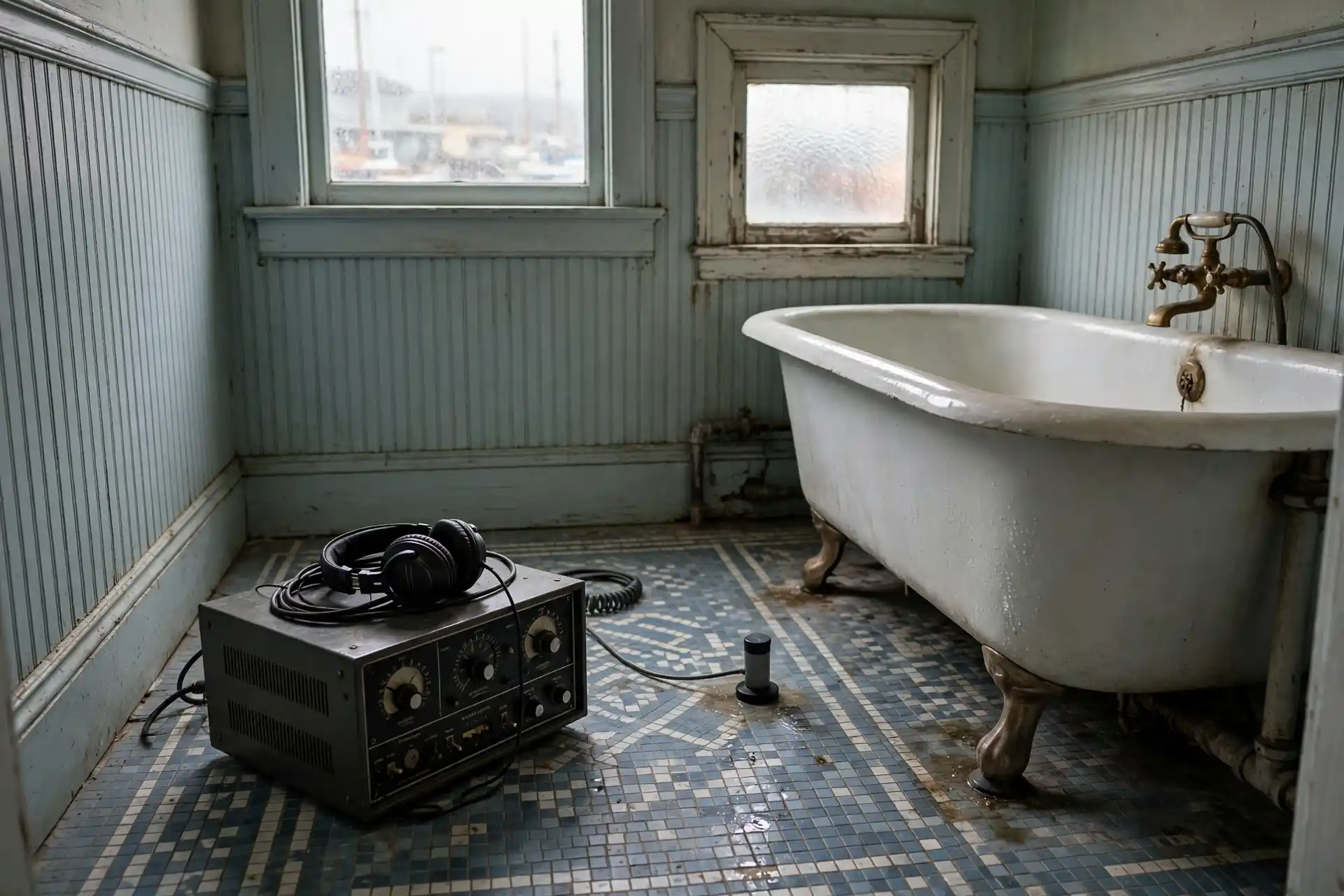
A location visit in San Pedro is quiet, technical work — headphones, sensors, and a marked floor at the end. Here's how it runs, and what 90731's ground conditions change about each step.
Getting Ready for the Pinpointing Visit in 90731
Clear the rooms above the suspected pipe run before we arrive — furniture a few feet off the walls, rugs rolled where the listening happens. We need access to the water heater and the main shutoff too. if you know whether your home still has galvanized or was converted to copper, tell us — in 90731 that single fact changes the diagnostic odds
Expect a quiet house to work best: the acoustic sensors hear everything, including footsteps and appliances. We'll ask for the HVAC and laundry to stay off during the listening pass. It feels fussy; it's the difference between a mark you can trust and a guess. Still unsure whether it's a slab leak? That's exactly what the call is for: (833) 713-2101.
Local Notes for San Pedro 90731
The 90731 ZIP covers central and east San Pedro: the downtown core, the Gaffey Street corridor, Pacific Avenue and Harbor Boulevard down toward the port. You'll know the Vincent Thomas Bridge, the Los Angeles Maritime Museum, the SS Lane Victory, and the Ports O' Call area. This is the denser, flatter half of San Pedro — 1940s through 1970s single-family homes mixed with multifamily buildings — on flat coastal-plain alluvium. Slab foundations dominate the postwar tracts; the older downtown stock is more mixed.
Two 90731 realities to plan around. First, the high water table: after heavy rain, saturated soil can mimic leak symptoms, so the meter test is your arbiter — learn where your meter is and how to read the dial. Second, the galvanized-to-copper transition: if your home is 1940s–50s and never re-piped, treat pressure drops as urgent, because that pipe fails from the inside with no visible warning. In multifamily buildings, sort out which shutoff controls your unit before you need it. Call (833) 713-2101 — mention the build era and we'll calibrate from there.
How this works: you call our line, we match you with a slab-leak specialist who serves 90731 — no fee for the call itself. Questions about electronic slab leak location in the 90731 ZIP? Call (833) 713-2101.
Locating Slab Leaks Through San Pedro's High Water Table
The port-adjacent lowlands of 90731 sit on damp alluvial soil with a high water table, changing the physics of detection. Water conducts sound excellently — a leak's noise spreads farther through saturated soil, which sounds helpful until every other vibration spreads farther too. Groundwater movement, harbor-area ambient rumble, and moisture-driven soil sounds raise the background noise floor, making small leaks harder to isolate. Here the protocol flips the usual order: pressure testing and line isolation come first, acoustic sensors second, confirming a location isolation already narrowed.
The classic 90731 call is a pressure drop with no visible water — 1940s-1950s galvanized lines failing from the inside out, constricting flow until the meter tells the story. These lines leak internally at low volume, so the acoustic signature is faint and saturated soil smears what little signal. Tracer gas outperforms microphones here: hydrogen-nitrogen pushed into the isolated line escapes only at the break, where a sniffer finds it. The practical difference is reliability: a gas-verified mark means the repair crew opens concrete once, not twice.
Water-table awareness guards against false positives. In 90731's damp ground, meters and cameras can flag cool, wet patches that are simply groundwater — especially after winter rains. A disciplined visit cross-checks every electronic reading against pressure data: if the line holds pressure, the damp spot stays untouched. That discipline matters: unnecessary slab work in saturated soil is messier and costlier than on dry ground. The honest outcome of a 90731 visit is sometimes “no pipe leak” — and that answer, delivered with proof, saves the homeowner the most money.
Suspect a Slab Leak? Talk to a Specialist Today
One call connects you with a local slab leak professional serving Rancho Palos Verdes, CA — day or night.
Call (833) 713-2101Frequently Asked Questions
My water pressure dropped but there's no water anywhere. What does that mean?
In 90731, that's the signature of 1940s–50s galvanized failing from the inside out. Galvanized pipe corrodes internally, narrowing and then breaching without any external drama — so the first symptom is pressure loss, not a puddle. Electronic Slab Leak Location will confirm whether the loss is under the slab or in the walls, but don't wait on this symptom: inside-out failures escalate. Call (833) 713-2101 and mention the pressure drop first.
Does the high water table cause slab leaks, or just hide them?
Both, in different ways. Constantly damp alluvial soil accelerates copper corrosion from the outside — that's causation. And saturated ground smears acoustic signals and can wick moisture into slabs that looks like a leak — that's masking and mimicking. So 90731 gets more genuine corrosion failures and harder diagnoses. The meter test cuts through all of it: groundwater can't spin a meter.
I'm in a multifamily building. Does that change the visit?
It changes the first fifteen minutes. We have to establish which shutoff controls your unit and whether the leaking line is dedicated to you or shared — because opening a slab over a shared line without mapping it first is how you surprise the neighbors. Electronic Slab Leak Location in multifamily buildings always includes that mapping step. Have your building's shutoff layout ready if you can; if you can't, we'll sort it on site.
What's the difference between 90731 and 90732 for slab leaks?
Ground and grade. 90731 is the flat, dense, port-adjacent half — high water table, alluvial soil, transition-era pipes. 90732 is the hillier south and west — bluff lots, stepped slabs, slope drainage, salt air. Detection in 90731 fights groundwater noise; detection in 90732 fights hillside seepage and access. Same city, different diagnostic puzzles. Tell us your ZIP when you call (833) 713-2101 and we'll bring the right playbook.
What's the difference between leak detection and electronic location?
Detection answers "is there a leak, and on which line" — meter tests, pressure isolation, a general area. Electronic location answers "exactly where" — traced pipe path, acoustic pinpoint, thermal confirmation, a mark on the floor. In San Pedro, most jobs need both in sequence: detection first to prove the leak, location second to aim the repair. If you've already got a confirmed leak, you can start at location.
Does electronic location work under tile and wood floors?
Yes — the sensors read through standard floor coverings, and thermal imaging actually reads surface temperature, so tile and stone show the anomaly well. Thick engineered wood and some underlayments muffle the thermal signal, which is why we never rely on one method alone. Whatever's on your San Pedro floors, the acoustic pass still hears through it.
After you mark the spot, do I still have to open the slab?
Almost always, yes — but the opening is targeted: a small, deliberate cut at the mark rather than a exploratory trench. The alternative the mark enables is skipping the slab entirely: rerouting the line overhead through walls or attic. 1940s–70s single-family and multifamily homes, denser and flatter than the rest of San Pedro, and the location report lays out which path makes sense for your lot and floor plan.