Electronic Slab Leak Location in Rolling Hills Estates 90274, CA
Electronic Slab Leak Location in Rolling Hills Estates 90274, CA — pinpoint electronic location of a suspected under-slab leak — acoustic sensors, line tracing, and infrared imaging that mark the break within inches.
In Short
Electronic Slab Leak Location in Rolling Hills Estates 90274, CA — pinpoint electronic location of a suspected under-slab leak — acoustic sensors, line tracing, and infrared imaging that mark the break within inches. Serving the 90274 ZIP: electronic line tracing, acoustic pinpointing, thermal cross-check. First step when you call (833) 713-2101: reviewing what's already confirmed, then scheduling.
What the Pinpointing Visit Looks Like in Rolling Hills Estates (90274)
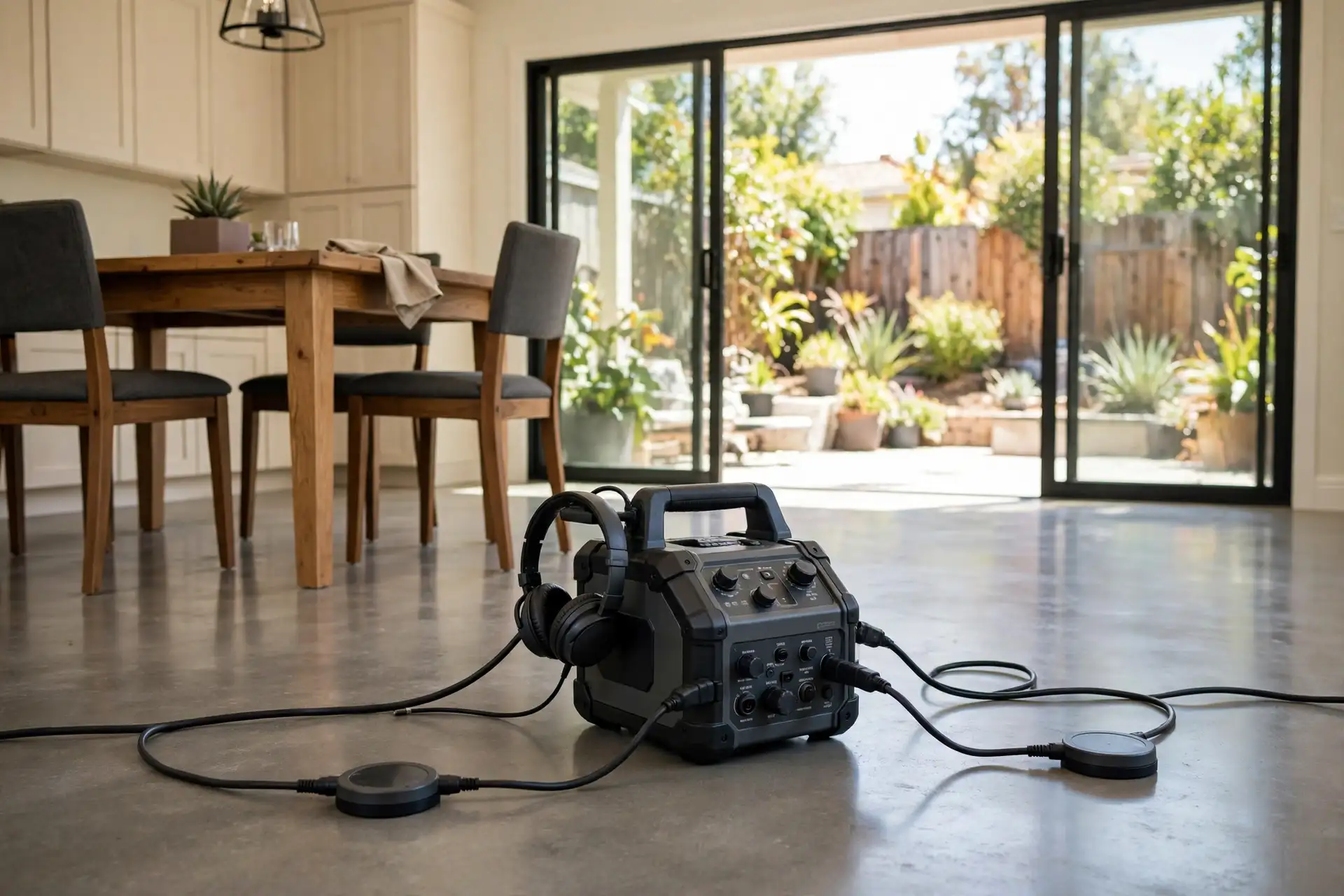
A location visit in Rolling Hills Estates is quiet, technical work — headphones, sensors, and a marked floor at the end. Here's how it runs, and what 90274's ground conditions change about each step.
Getting Ready for the Pinpointing Visit in 90274
Clear the rooms above the suspected pipe run before we arrive — furniture a few feet off the walls, rugs rolled where the listening happens. We need access to the water heater and the main shutoff too. if your lot backs to a canyon on the north side, say so when you call — drainage gets ruled out first on those lots
Expect a quiet house to work best: the acoustic sensors hear everything, including footsteps and appliances. We'll ask for the HVAC and laundry to stay off during the listening pass. It feels fussy; it's the difference between a mark you can trust and a guess. Questions before you book? Call (833) 713-2101 — we'd rather answer them now than discover them mid-visit.
Local Notes for Rolling Hills Estates 90274
The 90274 ZIP in Rolling Hills Estates covers the suburban tracts along Palos Verdes Drive North, Hawthorne Boulevard, and Silver Spur Road — distinct from the gated equestrian city next door. The commercial core sits at Peninsula Center and The Promenade on the Peninsula, with the Peninsula Center Library and South Coast Botanic Garden nearby as landmarks. Housing is 1950s–1970s single-family tracts plus newer infill, nearly all slab-on-grade, with the classic mid-century pipe mix: copper supply, cast-iron or ABS drains. The north side of the city backs toward canyons, and those lots carry the slope-drainage caveat.
This is the most predictable slab-leak territory in the 90274 ZIP — 1960s copper under slab at failure age, flat workable lots, quiet streets. The practical advice is simple: don't ignore the early signs. A warm spot on the floor or a bill that creeps up in a 1960s tract home is the textbook opening chapter, and catching it at the detection stage keeps the repair small. If your lot is canyon-adjacent on the north side, mention it on the call — we'll rule drainage out first. Call (833) 713-2101 at the first symptom, not the fifth.
We're a referral line: you talk to us, and we connect you with a slab-leak specialist serving the 90274 area. Questions about electronic slab leak location in the 90274 ZIP? Call (833) 713-2101.
Textbook Electronic Detection for Rolling Hills Estates' Mid-Century Homes
Rolling Hills Estates is the closest thing this area has to textbook detection country. Its 1950s-1960s tract homes sit on flat to gently rolling pads with short, predictable pipe runs — copper supply lines in their prime failure window. The standard sequence runs cleanly: verify with a meter and pressure test, trace the line, then listen with acoustic sensors for the loudest point. Short runs and uniform terrace soil deliver strong signals, and correlator readings converge fast. Most jobs reach a confident mark within a single visit.
The one wrinkle sits on the north side, where canyon-adjacent lots perch above slopes collecting winter runoff. Downhill rooms there can show damp flooring or musty odors identical to a slab leak but caused by slope drainage. Detection must rule that out before concrete is touched: moisture-meter profiling across the slab and pressure-hold testing of the supply lines. If pressure holds steady while the floor stays damp, the problem is drainage, not plumbing — and no electronic listening will find a leak that doesn't exist.
Hot-line leaks are the signature call here, and thermal imaging is the star tool. A 1960s hot-water pinhole warms the concrete above, and an infrared camera reads that warmth as a glowing patch — faster than acoustic methods. The technician confirms with a listening sensor, then marks the spot. Because detection is so straightforward here, the visit usually leaves time for what homeowners value most: a clear explanation of repair options — spot repair, reroute, or re-pipe — priced against a known leak location.
Suspect a Slab Leak? Talk to a Specialist Today
One call connects you with a local slab leak professional serving Rancho Palos Verdes, CA — day or night.
Call (833) 713-2101Frequently Asked Questions
My home was built in 1965 and never re-piped. Should I be worried?
Realistic, not worried. 1960s copper under slab is in its prime failure window right now — that's just the calendar. It doesn't mean a leak is imminent, but it does mean the classic symptoms (warm floor spots, creeping water bills, the sound of running water with taps off) deserve a prompt Electronic Slab Leak Location call rather than a wait-and-see. In the 90274 ZIP, a 1965 original with untouched copper is the single most common profile we see. Call (833) 713-2101 at the first sign.
How do you rule out canyon drainage versus a real leak?
Drainage is a winter-runoff problem; a pipe leak doesn't care about the weather. The meter test with fixtures off is the divider — slope moisture can't spin a meter — followed by pressure isolation to name the failing side. On canyon-adjacent lots on the north side, we run that sequence explicitly before any under-slab conclusions. If it's drainage, Electronic Slab Leak Location still did its job: it kept you from buying a plumbing repair for a grading problem.
Is Rolling Hills Estates easier to work in than the gated city next door?
Considerably. Public streets, standard tract lots, no gate procedure, and tract plumbing that follows the original floor plans — detection and location visits run fast here. The trade-off is just volume: this is high-probability slab-leak-age housing, so the calls are frequent. Straightforward ground, straightforward work, honest answers.
What's the difference between my area and Rolling Hills for slab leaks?
The lots. Rolling Hills means acre-plus equestrian parcels with very long pipe runs and shared outbuilding lines; Rolling Hills Estates means standard suburban tract lots with short, predictable runs. Same 90274 ZIP, same 1950s–70s copper era — completely different diagnostic geometry. Electronic Slab Leak Location here is faster and simpler, which is good news for your repair bill.
How accurate is electronic pinpointing?
Done properly — traced path, acoustic triangulation, thermal cross-check — it typically lands within inches of the actual break, not feet. It's not magic and it's not infallible: canyon-adjacent lots and terraced grades make every extra foot of opened concrete expensive, so the mark needs to be exact — and long tract runs reward the tracing step What it reliably replaces is exploratory jackhammering, where the "search" used to be a trench. We'll tell you on site how clean the signal is before any mark goes down.
Does electronic location work under tile and wood floors?
Yes — the sensors read through standard floor coverings, and thermal imaging actually reads surface temperature, so tile and stone show the anomaly well. Thick engineered wood and some underlayments muffle the thermal signal, which is why we never rely on one method alone. Whatever's on your Rolling Hills Estates floors, the acoustic pass still hears through it.
After you mark the spot, do I still have to open the slab?
Almost always, yes — but the opening is targeted: a small, deliberate cut at the mark rather than a exploratory trench. The alternative the mark enables is skipping the slab entirely: rerouting the line overhead through walls or attic. 1950s–70s suburban tract homes, many with original copper still under slab, and the location report lays out which path makes sense for your lot and floor plan.