Electronic Slab Leak Location in Rolling Hills 90274, CA
Electronic Slab Leak Location in Rolling Hills 90274, CA — pinpoint electronic location of a suspected under-slab leak — acoustic sensors, line tracing, and infrared imaging that mark the break within inches.
In Short
Electronic Slab Leak Location in Rolling Hills 90274, CA — pinpoint electronic location of a suspected under-slab leak — acoustic sensors, line tracing, and infrared imaging that mark the break within inches. Serving the 90274 ZIP: electronic line tracing, acoustic pinpointing, thermal cross-check. First step when you call (833) 713-2101: reviewing what's already confirmed, then scheduling.
What the Pinpointing Visit Looks Like in Rolling Hills (90274)
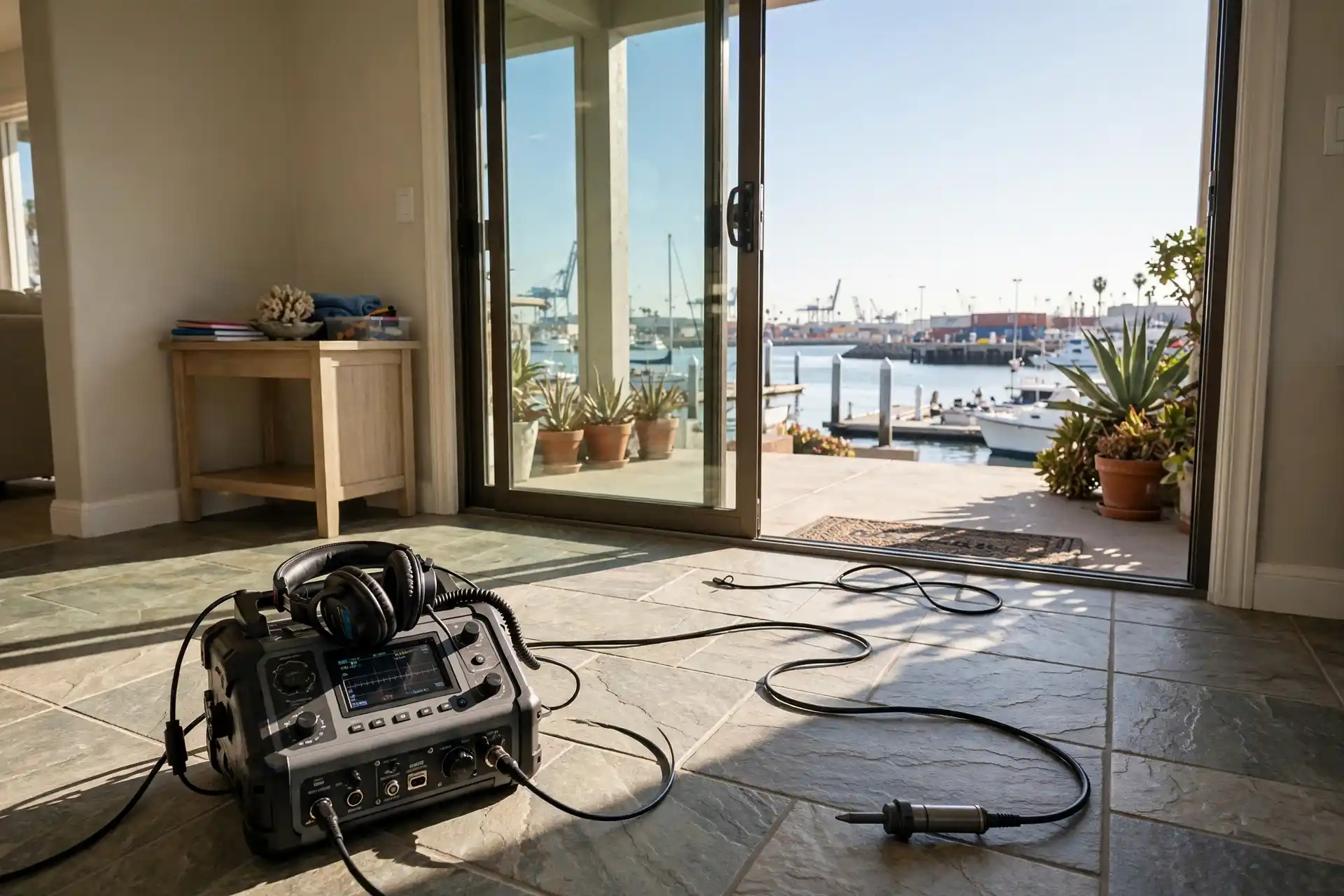
A location visit in Rolling Hills is quiet, technical work — headphones, sensors, and a marked floor at the end. Here's how it runs, and what 90274's ground conditions change about each step.
Getting Ready for the Pinpointing Visit in 90274
Clear the rooms above the suspected pipe run before we arrive — furniture a few feet off the walls, rugs rolled where the listening happens. We need access to the water heater and the main shutoff too. gated access means scheduling needs the gate procedure — have your entry instructions ready when you call so the visit doesn't stall at the gate
Expect a quiet house to work best: the acoustic sensors hear everything, including footsteps and appliances. We'll ask for the HVAC and laundry to stay off during the listening pass. It feels fussy; it's the difference between a mark you can trust and a guess. Still unsure whether it's a slab leak? That's exactly what the call is for: (833) 713-2101.
Local Notes for Rolling Hills 90274
Rolling Hills is entirely private gated roads behind the gates off Palos Verdes Drive North — Rolling Hills City Hall sits at the center, and the equestrian trail system threads the whole city. The 90274 ZIP is shared with Palos Verdes Estates and Rolling Hills Estates, but the housing couldn't be more different: ranch-style homes on one-acre-plus lots, most built from the 1950s through the 1970s, with barns, outbuildings, and extensive hardscape. Slab-on-grade foundations are the norm for the ranch stock, with 1950s–70s copper underneath and cast-iron or ABS drains.
Two things to know before you call from Rolling Hills. First, figure out whether your barns or outbuildings share the house's water service — a quick check is whether their water dies when you shut the house main. That one answer can save a full diagnostic visit aimed at the wrong building. Second, gated entry: have your gate procedure ready when scheduling, because the visit can't start at the gate. Call (833) 713-2101 and mention the outbuildings up front — we'll plan the isolation sequence around them.
How this works: you call our line, we match you with a slab-leak specialist who serves 90274 — no fee for the call itself. Questions about electronic slab leak location in the 90274 ZIP? Call (833) 713-2101.
Leak Locating Across Acre-Plus Lots in Rolling Hills
Distance is the defining challenge in Rolling Hills. On one-acre-plus lots, an under-slab copper run can stretch dozens of feet from the meter to the house — and barns sometimes share the same service. Acoustic signals weaken with every foot through soil, so a distant leak arrives as a whisper. The response is to shrink the search zone: pressure isolation divides the system into quarters, letting equipment work a twenty-foot segment. Correlator sensors, measuring time delay between two pickup points, compute position where the ear gives up.
Horse properties add a detective step suburbs never need. When the meter spins with the house shut off, the leak might be in the main slab — or in the line to a barn or wash rack. Each outbuilding gets its own isolation test first, because chasing a phantom slab leak while the real break sits under a paddock wastes a full day. Long driveway aprons and hardscape matter too: pipes often run beneath concrete that conducts sound differently, and sensors pick up vibration that must be filtered.
The detection result feeds a different repair calculus. When a leak is pinpointed thirty feet from the nearest accessible slab edge, breaking concrete can cost more than abandoning the line and rerouting overhead or through walls. That's why the locating report includes the full traced path of the line, not just the leak point — knowing the geometry lets homeowners compare a surgical repair against a reroute with real numbers. On acre lots, finding the leak is the easy part; mapping the run informs the repair.
Suspect a Slab Leak? Talk to a Specialist Today
One call connects you with a local slab leak professional serving Rancho Palos Verdes, CA — day or night.
Call (833) 713-2101Frequently Asked Questions
Could my 'slab leak' actually be a line to the barn?
It happens more often than you'd think in Rolling Hills. Outbuildings and barns on horse property sometimes share the house's water service, and a failed line out there spins the meter exactly like an under-slab leak. Electronic Slab Leak Location starts by isolating: shut the outbuilding feeds and watch the meter. If the meter stops, the house slab is innocent. Mention the outbuildings when you call (833) 713-2101 — it changes the whole sequence.
Why is rerouting so often recommended on acre lots?
Simple geometry: under-slab runs on one-acre-plus lots are very long, and opening dozens of feet of slab to chase one break is the most expensive repair in the book. Abandoning the failed under-slab run and routing a new line overhead — through attic and walls — usually costs less, disrupts nothing, and gets you a brand-new line for the trouble. Electronic Slab Leak Location gives us the facts; the math usually points at reroute.
Does the gated entry complicate scheduling?
Only if we don't know about it. Have your gate procedure — codes, guard instructions, whatever your HOA requires — ready when you call (833) 713-2101, and the visit runs on time. What stalls Rolling Hills visits is the technician waiting at the gate while nobody answers. Five minutes of prep on your end prevents it.
Are 1950s copper lines on these lots at failure age?
Squarely. 1950s–70s copper under slab is 50–70 years old, which is the prime failure window for pinhole and corrosion failures — and long runs mean more pipe, more joints, and more chances. If your Rolling Hills ranch still has its original under-slab copper, Electronic Slab Leak Location isn't a question of if you'll need it, it's when. A baseline detection visit now beats an emergency later.
What's the difference between leak detection and electronic location?
Detection answers "is there a leak, and on which line" — meter tests, pressure isolation, a general area. Electronic location answers "exactly where" — traced pipe path, acoustic pinpoint, thermal confirmation, a mark on the floor. In Rolling Hills, most jobs need both in sequence: detection first to prove the leak, location second to aim the repair. If you've already got a confirmed leak, you can start at location.
How accurate is electronic pinpointing?
Done properly — traced path, acoustic triangulation, thermal cross-check — it typically lands within inches of the actual break, not feet. It's not magic and it's not infallible: acre-plus lots mean very long under-slab pipe runs, and chasing a leak through dozens of feet of slab is the most expensive way to fix it — pinpointing the exact break, or proving a reroute is cheaper, is the whole game on these lots What it reliably replaces is exploratory jackhammering, where the "search" used to be a trench. We'll tell you on site how clean the signal is before any mark goes down.
Does electronic location work under tile and wood floors?
Yes — the sensors read through standard floor coverings, and thermal imaging actually reads surface temperature, so tile and stone show the anomaly well. Thick engineered wood and some underlayments muffle the thermal signal, which is why we never rely on one method alone. Whatever's on your Rolling Hills floors, the acoustic pass still hears through it.