Electronic Slab Leak Location in Redondo Beach 90278, CA
Electronic Slab Leak Location in Redondo Beach 90278, CA — pinpoint electronic location of a suspected under-slab leak — acoustic sensors, line tracing, and infrared imaging that mark the break within inches.
In Short
Electronic Slab Leak Location in Redondo Beach 90278, CA — pinpoint electronic location of a suspected under-slab leak — acoustic sensors, line tracing, and infrared imaging that mark the break within inches. Serving the 90278 ZIP: electronic line tracing, acoustic pinpointing, thermal cross-check. First step when you call (833) 713-2101: reviewing what's already confirmed, then scheduling.
What the Pinpointing Visit Looks Like in Redondo Beach (90278)
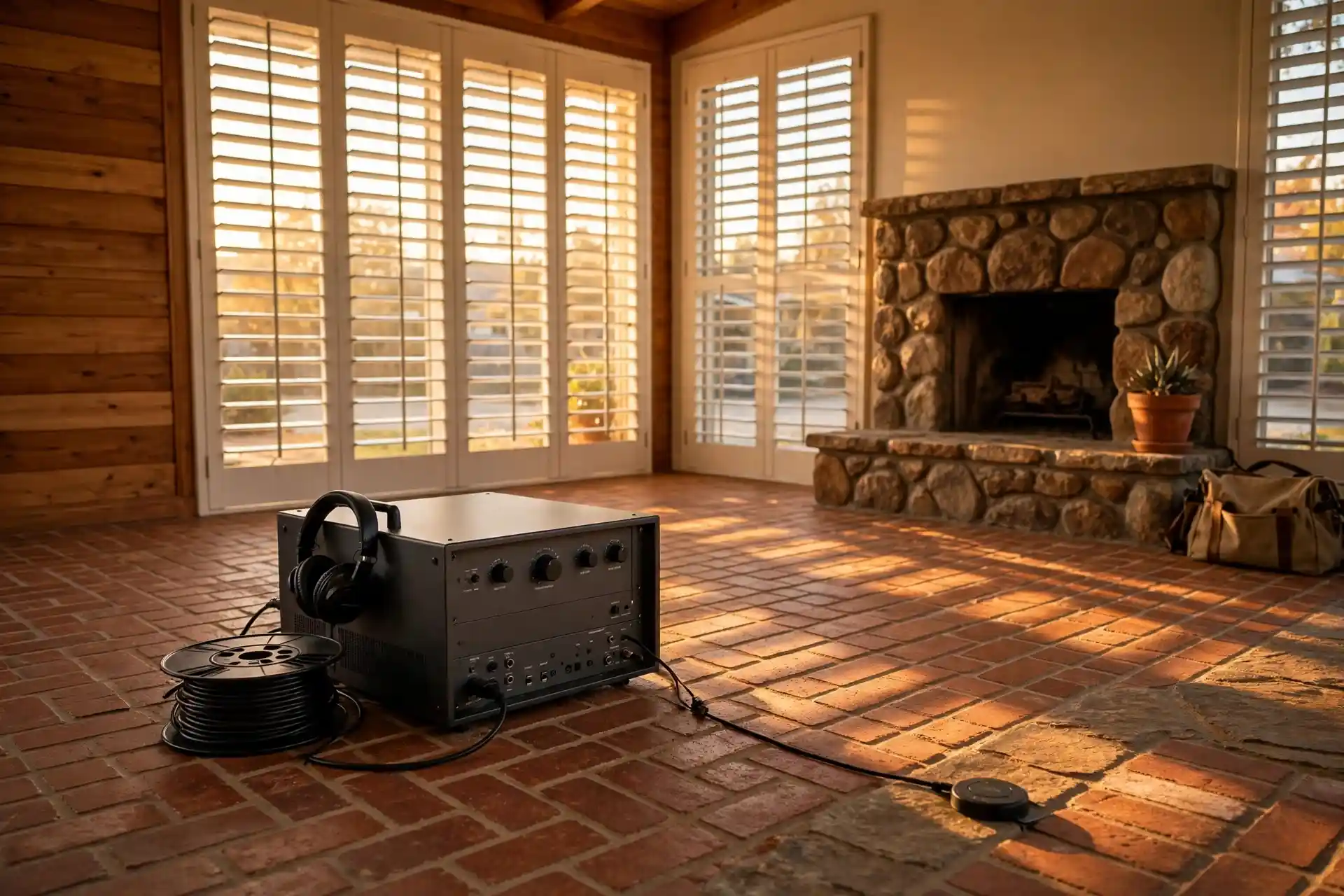
A location visit in Redondo Beach is quiet, technical work — headphones, sensors, and a marked floor at the end. Here's how it runs, and what 90278's ground conditions change about each step.
Getting Ready for the Pinpointing Visit in 90278
Clear the rooms above the suspected pipe run before we arrive — furniture a few feet off the walls, rugs rolled where the listening happens. We need access to the water heater and the main shutoff too. if your cottage still has original galvanized or a raised foundation, say so — South Redondo's oldest stock splits into two very different jobs
Expect a quiet house to work best: the acoustic sensors hear everything, including footsteps and appliances. We'll ask for the HVAC and laundry to stay off during the listening pass. It feels fussy; it's the difference between a mark you can trust and a guess. Still unsure whether it's a slab leak? That's exactly what the call is for: (833) 713-2101.
Local Notes for Redondo Beach 90278
South Redondo fills the 90278 ZIP: the beach cottage streets near the water, the denser multifamily blocks by the Redondo Beach Pier and King Harbor, and the mid-century infill spreading inland. Pacific Coast Highway, Catalina Avenue, and The Esplanade are the main routes; Veterans Park overlooks the water. Foundations are mixed — raised in the oldest cottages, slab in the postwar infill — and pipes follow the era: 1920s–40s galvanized and cast iron where original, copper from the 1950s on, much of it replumbed during rebuilds.
South Redondo's salt air is the quiet accelerator — if you're within a few blocks of the water on original or older copper, treat your pipes as a decade older than the permit says. And never trust the location of a damp spot in sandy soil: water travels, and the break is often well away from where it surfaces. That's not a reason to panic, it's a reason to call (833) 713-2101 for electronic methods instead of guessing. Cottage owners: check whether you're on a raised foundation first — it changes the job completely.
How this works: you call our line, we match you with a slab-leak specialist who serves 90278 — no fee for the call itself. Questions about electronic slab leak location in the 90278 ZIP? Call (833) 713-2101.
Why South Redondo Leaks Hide in Sand — and How Electronics Find Them
Beach sand is the least cooperative soil here for leak detection, and South Redondo sits on plenty of it. Loose sand attenuates acoustic signals — grains shift and absorb vibration — so a leak that would roar through dense clay arrives faint. Worse, sand drains fast: escaping water travels far from the break before surfacing, so every visible clue — damp spots, lush patches — can sit many feet from the actual leak. Visual hunting is nearly useless here; electronic methods are the only approach that works.
Salt air adds urgency to the timeline. Exposed copper corrodes faster in salt-laden soil and air, so beachside homes show slab leaks a decade earlier than the same pipe would inland. That accelerated aging means more pinhole-scale leaks: small, high-frequency, exactly the signal sand swallows. The effective protocol layers methods: pressure isolation to prove the leak and identify the branch, tracer gas to find the escape point through sand acoustic confirmation only where sand is compacted enough to carry sound. Each method covers ground the others can't.
The payoff for methodical detection in sand is avoiding the classic South Redondo waste: opening the slab where water surfaced instead of where the pipe broke. Because sand carries water sideways, the damp spot and the leak are routinely feet apart. A visit ending with a gas-verified mark means the repair crew cuts once, at the right place. In a ZIP code where the soil misleads the eye, the electronic survey isn't just locating a leak; it's correcting every false lead the sand planted.
Suspect a Slab Leak? Talk to a Specialist Today
One call connects you with a local slab leak professional serving Rancho Palos Verdes, CA — day or night.
Call (833) 713-2101Frequently Asked Questions
How does salt air actually damage buried pipes?
It's the shallow and exposed copper that suffers most — salt-laden air and soil moisture accelerate outside-in corrosion on pipe near the surface, at the slab edge, and in crawlspaces. Deeply buried runs are somewhat shielded, but beachside homes have enough shallow exposure that the effect is real: South Redondo copper fails roughly a decade earlier than the same vintage inland. Electronic Slab Leak Location here always factors the distance from the water into the diagnosis.
Why can't you just follow the wet spot to the leak?
Because in beach sand, water travels. Sandy soil drains fast laterally, so a leak's water can surface many feet from the break — following the dampness leads you to the symptom, not the source. That's the core argument for electronic methods in 90278: acoustic sensors hear the break itself, and line tracing maps the pipe, while your eyes just see where the water gave up. Electronic Slab Leak Location ignores the wet spot's location and finds the break's.
My cottage was rebuilt in the 2000s. Am I safe?
Mostly — rebuilds usually mean new plumbing in modern materials, which aren't in any failure window. The exceptions are partial rebuilds that tied new work into old lines, and original detached structures the rebuild didn't touch. Electronic Slab Leak Location on a 2000s rebuild is a short visit with a usually reassuring answer. Tell us the rebuild year when you call (833) 713-2101; it resets the whole diagnostic clock.
Does the sand help or hurt leak detection?
Both. Sand transmits the acoustic signature of a leak well — good for listening — but it lets water travel far from the break — bad for visual location. Net: electronic methods thrive here and eyeballing fails here. That's why Electronic Slab Leak Location in South Redondo leans on sensors over sight, and why a damp spot's location is treated as a hint about the water's journey, not the break's address.
What's the difference between leak detection and electronic location?
Detection answers "is there a leak, and on which line" — meter tests, pressure isolation, a general area. Electronic location answers "exactly where" — traced pipe path, acoustic pinpoint, thermal confirmation, a mark on the floor. In Redondo Beach, most jobs need both in sequence: detection first to prove the leak, location second to aim the repair. If you've already got a confirmed leak, you can start at location.
Does electronic location work under tile and wood floors?
Yes — the sensors read through standard floor coverings, and thermal imaging actually reads surface temperature, so tile and stone show the anomaly well. Thick engineered wood and some underlayments muffle the thermal signal, which is why we never rely on one method alone. Whatever's on your Redondo Beach floors, the acoustic pass still hears through it.
After you mark the spot, do I still have to open the slab?
Almost always, yes — but the opening is targeted: a small, deliberate cut at the mark rather than a exploratory trench. The alternative the mark enables is skipping the slab entirely: rerouting the line overhead through walls or attic. 1920s–40s beach cottages near the water with mid-century infill and modern rebuilds, and the location report lays out which path makes sense for your lot and floor plan.