Electronic Slab Leak Location in Palos Verdes Estates 90274, CA
Electronic Slab Leak Location in Palos Verdes Estates 90274, CA — pinpoint electronic location of a suspected under-slab leak — acoustic sensors, line tracing, and infrared imaging that mark the break within inches.
In Short
Electronic Slab Leak Location in Palos Verdes Estates 90274, CA — pinpoint electronic location of a suspected under-slab leak — acoustic sensors, line tracing, and infrared imaging that mark the break within inches. Serving the 90274 ZIP: electronic line tracing, acoustic pinpointing, thermal cross-check. First step when you call (833) 713-2101: reviewing what's already confirmed, then scheduling.
What the Pinpointing Visit Looks Like in Palos Verdes Estates (90274)
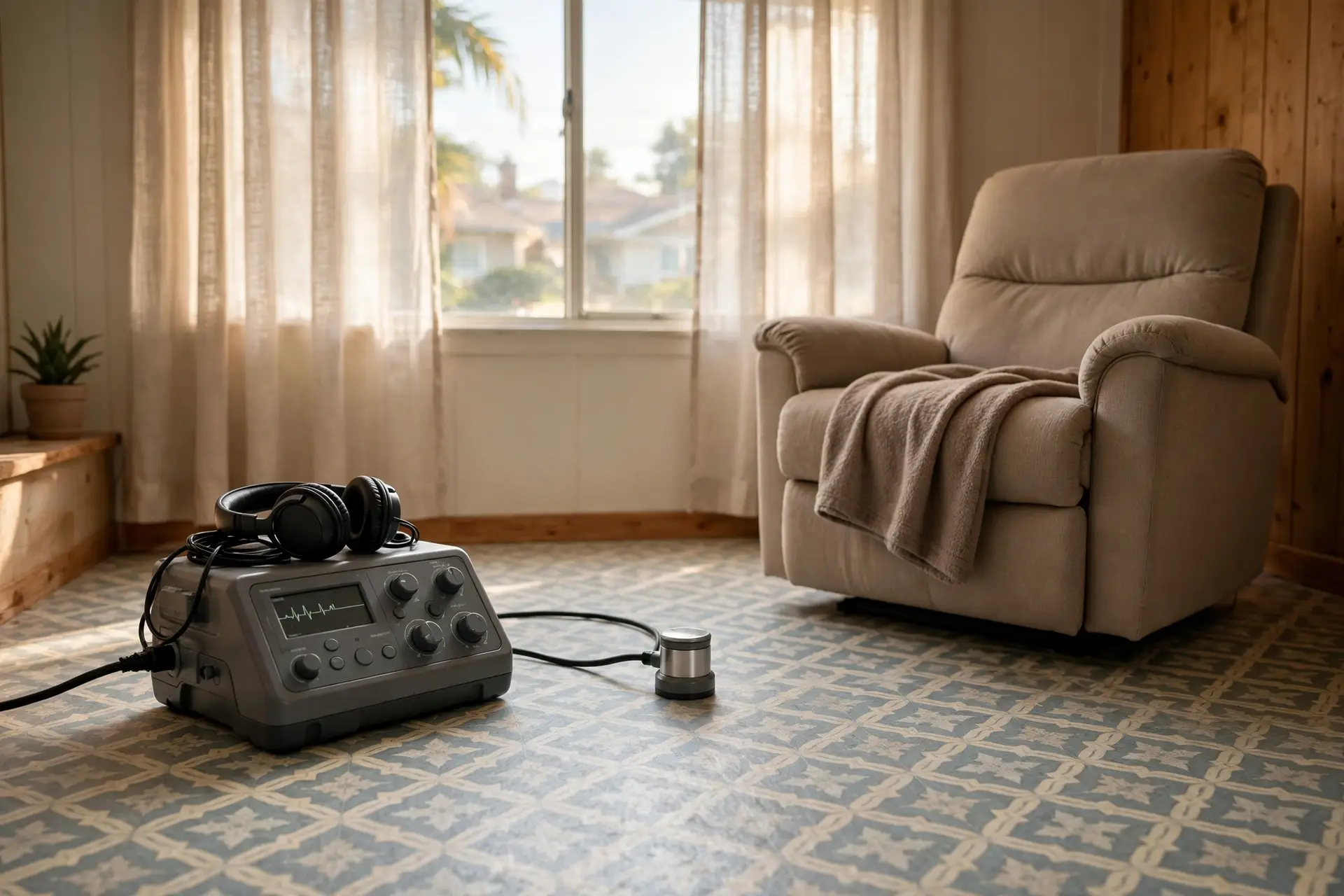
A location visit in Palos Verdes Estates is quiet, technical work — headphones, sensors, and a marked floor at the end. Here's how it runs, and what 90274's ground conditions change about each step.
Getting Ready for the Pinpointing Visit in 90274
Clear the rooms above the suspected pipe run before we arrive — furniture a few feet off the walls, rugs rolled where the listening happens. We need access to the water heater and the main shutoff too. know your home's era before we arrive if you can — 1920s original versus 1960s tract changes the entire diagnostic path
Expect a quiet house to work best: the acoustic sensors hear everything, including footsteps and appliances. We'll ask for the HVAC and laundry to stay off during the listening pass. It feels fussy; it's the difference between a mark you can trust and a guess. Questions before you book? Call (833) 713-2101 — we'd rather answer them now than discover them mid-visit.
Local Notes for Palos Verdes Estates 90274
The 90274 ZIP covers Palos Verdes Estates' master-planned neighborhoods — Malaga Cove with its 1920s–30s Spanish and Mediterranean Revival homes around Malaga Cove Plaza, plus the Lunada Bay, Montemalaga, and Valmonte tracts that filled in through the 1940s–60s. Palos Verdes Drive West and Palos Verdes Drive North are the main routes; Via Chico winds through the bluff neighborhoods. You'll know the Neptune Fountain, Malaga Cove Library, and the Palos Verdes Golf Club. Foundation types here are mixed: raised foundations in the pre-war stock, slab-on-grade in the postwar tracts — and that mix is the first thing we sort out on a call.
Before anything else, find out whether your home sits on a raised foundation or a slab — in Palos Verdes Estates the answer genuinely varies by block and era, and it changes the whole job. If your home still has original 1920s–40s galvanized, treat any pressure drop as urgent: that pipe doesn't have another decade in it. And on bluff-edge lots, don't assume dampness is a leak or assume a leak is dampness — that's exactly what the meter test is for. Call (833) 713-2101 and we'll start with the era and the meter.
We're a referral line: you talk to us, and we connect you with a slab-leak specialist serving the 90274 area. Questions about electronic slab leak location in the 90274 ZIP? Call (833) 713-2101.
Pinpoint-Accurate Leak Locating for Palos Verdes Estates' Vintage Homes
On the steep bluff-side lots of Malaga Cove and Lunada Bay, excavation is the most expensive part of any slab-leak job — terraced yards and retaining walls make every square foot of digging costly. Electronic detection carries extra weight here: the goal is one precise opening. Where 1920s-1930s homes still run original galvanized steel, the leak profile differs — internal corrosion constricts flow, producing a quiet, uneven hiss rather than a copper pinhole's spray. Standard listening can miss it; correlator sensors compare two points to compute position mathematically.
Bluff-edge moisture complicates every reading. Fog drip keeps bluff soils damp year-round, and that moisture can fool moisture meters and thermal cameras into flagging areas unrelated to plumbing. Before sensors come out, the diagnostic sequence establishes what the house actually has: many pre-war homes here stand on raised foundations, where a “slab leak” call is a crawlspace job. For homes re-piped onto or under slabs — now carrying aging copper — pressure isolation comes first: closing fixture shutoffs branch by branch to prove which line is losing pressure.
The payoff shows at the repair stage. With the leak pinned to within inches, a plumber can open a single access point instead of trenching across a terrace or undermining a retaining wall. Where vintage galvanized is past end of life, precise detection documents the pattern — one pinhole on a 95-year-old line usually means the system is failing in sequence. On bluff lots, precision is what keeps the repair bill proportionate to the leak.
Suspect a Slab Leak? Talk to a Specialist Today
One call connects you with a local slab leak professional serving Rancho Palos Verdes, CA — day or night.
Call (833) 713-2101Frequently Asked Questions
My Palos Verdes Estates home was built in the 1920s. Is it even a slab leak?
Maybe not — and that's the first thing Electronic Slab Leak Location establishes here. Pre-war homes in Malaga Cove and the older tracts often sit on raised foundations, which means the leak may be under the floor in a crawlspace rather than under a slab — a different, usually simpler job. We'll ask about your home's era and foundation on the call, because the diagnostic path splits there. Call (833) 713-2101 with your best guess at the build year and we'll take it from there.
How do you tell bluff-edge moisture apart from a real leak?
Bluff-edge moisture is the great mimic of 90274: fog drip keeps these soils damp year-round, and damp soil under a slab looks and smells like a supply leak. The difference is in the meter and the pressure gauge — moisture doesn't spin a meter with the fixtures off, and it doesn't make one isolated side lose pressure. Electronic Slab Leak Location runs those two tests precisely to draw that line before anyone talks about repairs.
My home was re-piped in the 1990s. Am I in the clear?
Clearer, not clear. A 1990s re-pipe moved you from century-old galvanized to copper with a fresh clock — but that copper is now 30-plus years into its own life, and under-slab or in-slab runs still age. Electronic Slab Leak Location treats a re-piped home like any other: the meter test doesn't care when the pipe was installed, only whether it's holding pressure today.
Does the fog really affect plumbing, or is that just weather talk?
It affects diagnosis, which amounts to the same thing. Year-round marine-layer fog drip keeps bluff soils perpetually damp, and that dampness is what mimics slab leaks — cool, musty floors with no pipe failure behind them. It doesn't corrode buried copper faster in any meaningful way, but it means Electronic Slab Leak Location in 90274 always starts by ruling moisture out. Skip that step and you'll chase ghosts.
What's the difference between leak detection and electronic location?
Detection answers "is there a leak, and on which line" — meter tests, pressure isolation, a general area. Electronic location answers "exactly where" — traced pipe path, acoustic pinpoint, thermal confirmation, a mark on the floor. In Palos Verdes Estates, most jobs need both in sequence: detection first to prove the leak, location second to aim the repair. If you've already got a confirmed leak, you can start at location.
How accurate is electronic pinpointing?
Done properly — traced path, acoustic triangulation, thermal cross-check — it typically lands within inches of the actual break, not feet. It's not magic and it's not infallible: steep bluff-side lots make excavation access punishingly hard and expensive, so the mark has to be exact — every foot of unnecessary concrete work on a terrace costs multiples of what it would on flat ground What it reliably replaces is exploratory jackhammering, where the "search" used to be a trench. We'll tell you on site how clean the signal is before any mark goes down.
After you mark the spot, do I still have to open the slab?
Almost always, yes — but the opening is targeted: a small, deliberate cut at the mark rather than a exploratory trench. The alternative the mark enables is skipping the slab entirely: rerouting the line overhead through walls or attic. 1920s–1960s homes ranging from Spanish Revival originals to postwar tract houses, and the location report lays out which path makes sense for your lot and floor plan.