Electronic Slab Leak Location in Long Beach 90813, CA
Electronic Slab Leak Location in Long Beach 90813, CA — pinpoint electronic location of a suspected under-slab leak — acoustic sensors, line tracing, and infrared imaging that mark the break within inches.
In Short
Electronic Slab Leak Location in Long Beach 90813, CA — pinpoint electronic location of a suspected under-slab leak — acoustic sensors, line tracing, and infrared imaging that mark the break within inches. Serving the 90813 ZIP: electronic line tracing, acoustic pinpointing, thermal cross-check. First step when you call (833) 713-2101: reviewing what's already confirmed, then scheduling.
What the Pinpointing Visit Looks Like in Long Beach (90813)
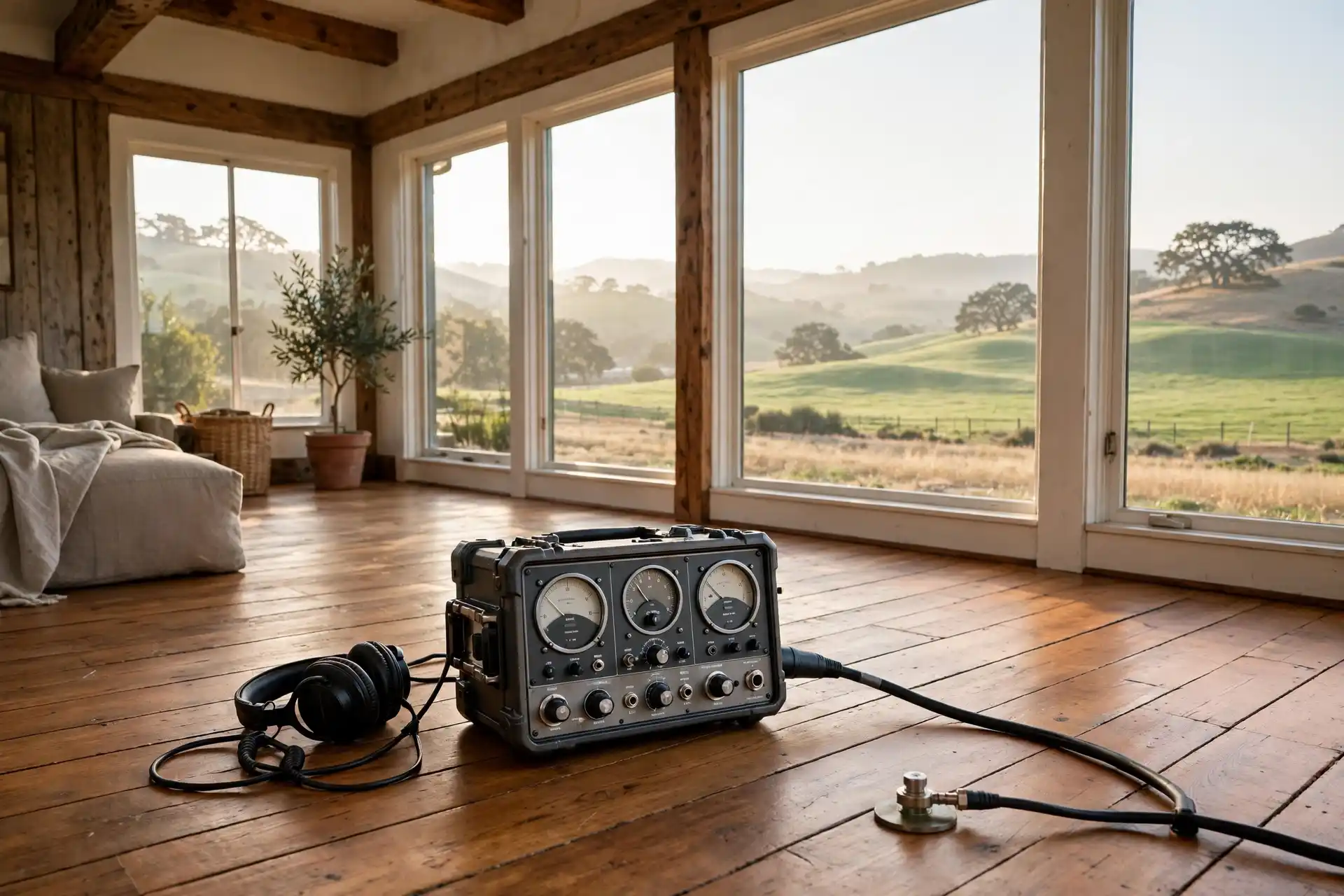
A location visit in Long Beach is quiet, technical work — headphones, sensors, and a marked floor at the end. Here's how it runs, and what 90813's ground conditions change about each step.
Getting Ready for the Pinpointing Visit in 90813
Clear the rooms above the suspected pipe run before we arrive — furniture a few feet off the walls, rugs rolled where the listening happens. We need access to the water heater and the main shutoff too. if your home is in a historic district (Hellman, Drake Park/Willmore City), mention it — exterior work may need city coordination, and we plan around that
Expect a quiet house to work best: the acoustic sensors hear everything, including footsteps and appliances. We'll ask for the HVAC and laundry to stay off during the listening pass. It feels fussy; it's the difference between a mark you can trust and a guess. Still unsure whether it's a slab leak? That's exactly what the call is for: (833) 713-2101.
Local Notes for Long Beach 90813
The 90813 ZIP covers Long Beach's historic core: Willmore City, Cambodia Town, the East Village, Hellman, Rose Park, and Craftsman Village. Pacific Coast Highway, Long Beach Boulevard, Atlantic Avenue, and Anaheim Street frame the grid; the Long Beach Courthouse, Convention Center, Cesar Chavez Park, and Drake Park are the landmarks. Housing is 1902–1934 Craftsman and bungalow stock — raised foundations dominant, with postwar slab additions and infill mixed in — on flat coastal plain with urban fill in the oldest blocks and a high water table near the LA River and ports.
90813 homeowners: the highest-value action is establishing your foundation type before you ever need us. Raised foundation? Your 'slab leak' is probably a crawlspace leak — simpler, cheaper, no concrete. Slab addition? Then it's the standard slab-leak playbook on that section. If you're in a historic district, understand that exterior trenching and tunneling may face city requirements — interior reroutes often become the path of least resistance. Call (833) 713-2101 with the build year and foundation type; in this ZIP those two facts are the whole triage.
How this works: you call our line, we match you with a slab-leak specialist who serves 90813 — no fee for the call itself. Questions about electronic slab leak location in the 90813 ZIP? Call (833) 713-2101.
When the ‘Slab Leak’ Isn't Under a Slab: Detection in 90813
The 90813 ZIP — Willmore City, Cambodia Town, the historic districts — is the one area in the service set where electronic slab-leak detection is frequently the wrong tool. The stock runs 1902 to 1934: Craftsman and bungalow homes on raised foundations, with crawlspaces rather than slabs. A “slab leak” call here is usually an under-floor supply leak — found with a flashlight and visual inspection in the crawlspace, at a fraction of the cost of electronic detection. Any 90813 visit's first step is foundation verification.
The exceptions prove the rule. Postwar additions from the 1940s-1960s — a rear bedroom, a converted garage — often sit on slab while the original house stands raised, carrying copper at failure age. Detection on a hybrid house is a two-zone job: crawlspace inspection for the original, electronic methods for the addition. Urban fill and the high water table near the LA River and ports complicate the electronic side — saturated fill conducts sound broadly, so pressure isolation and tracer gas carry more load than acoustic listening.
Historic-district rules add a planning layer found nowhere else in the service area. Exterior trenching near designated structures can face city review, so the 90813 detection report typically notes repair-access implications: where the leak sits relative to historic fabric, and whether interior rerouting avoids exterior work. For century-home owners, the visit's most valuable outcome is often the system map — galvanized and cast iron partially repiped over decades, and a clear statement of which plumbing generation is failing. In the oldest stock here, diagnosis outranks technology.
Suspect a Slab Leak? Talk to a Specialist Today
One call connects you with a local slab leak professional serving Rancho Palos Verdes, CA — day or night.
Call (833) 713-2101Frequently Asked Questions
My 1915 Long Beach home has water under it. Is that a slab leak?
Almost certainly not a slab leak in the technical sense — a 1915 home is overwhelmingly likely to sit on a raised foundation, which means the water is in the crawlspace under the floor, not under a concrete slab. That's good news: crawlspace leaks are accessed directly, with no concrete cutting and much simpler repairs. Electronic Slab Leak Location here starts by confirming the foundation — call (833) 713-2101 with your build year and we'll triage correctly from the first minute.
Do historic-district rules really affect plumbing repairs?
They can affect exterior work — trenching, tunneling access points, and anything that alters the site's appearance may fall under the city's historic-district requirements. Interior work (reroutes through attic and walls, under-floor repairs in crawlspaces) is generally unaffected. Electronic Slab Leak Location itself is non-invasive and unrestricted; the district question matters at the repair-planning stage. We flag it early so the repair plan doesn't hit a permitting surprise.
Is century-old galvanized ever worth repairing, or is it repipe time?
At 90–120 years old, galvanized is well past its design life, and Electronic Slab Leak Location will usually confirm a system problem rather than an isolated failure. Spot repairs on century-old pipe buy time in months, not years. The honest conversation for 90813's oldest stock is repipe or strategic reroute — and because many of these homes are raised-foundation, that repipe is dramatically simpler and cheaper than it would be under a slab. We'll diagnose first, then give you the straight math.
Why is the water table mentioned for Long Beach?
The 90813 ZIP sits on flat coastal plain near the LA River and the ports, with a high water table — which means saturated soil, faster outside-in corrosion on buried pipe, and damp conditions that can mimic leak symptoms. For raised-foundation homes it also means damp crawlspaces as a baseline, so Electronic Slab Leak Location has to separate groundwater dampness from actual pipe failure. The meter test is the divider, same as everywhere: groundwater can't spin a meter.
What's the difference between leak detection and electronic location?
Detection answers "is there a leak, and on which line" — meter tests, pressure isolation, a general area. Electronic location answers "exactly where" — traced pipe path, acoustic pinpoint, thermal confirmation, a mark on the floor. In Long Beach, most jobs need both in sequence: detection first to prove the leak, location second to aim the repair. If you've already got a confirmed leak, you can start at location.
Does electronic location work under tile and wood floors?
Yes — the sensors read through standard floor coverings, and thermal imaging actually reads surface temperature, so tile and stone show the anomaly well. Thick engineered wood and some underlayments muffle the thermal signal, which is why we never rely on one method alone. Whatever's on your Long Beach floors, the acoustic pass still hears through it.
After you mark the spot, do I still have to open the slab?
Almost always, yes — but the opening is targeted: a small, deliberate cut at the mark rather than a exploratory trench. The alternative the mark enables is skipping the slab entirely: rerouting the line overhead through walls or attic. 1902–1934 Craftsman and bungalow homes, the only stock in the service area where raised foundations dominate, and the location report lays out which path makes sense for your lot and floor plan.