Electronic Slab Leak Location in Lawndale 90260, CA
Electronic Slab Leak Location in Lawndale 90260, CA — pinpoint electronic location of a suspected under-slab leak — acoustic sensors, line tracing, and infrared imaging that mark the break within inches.
In Short
Electronic Slab Leak Location in Lawndale 90260, CA — pinpoint electronic location of a suspected under-slab leak — acoustic sensors, line tracing, and infrared imaging that mark the break within inches. Serving the 90260 ZIP: electronic line tracing, acoustic pinpointing, thermal cross-check. First step when you call (833) 713-2101: reviewing what's already confirmed, then scheduling.
What the Pinpointing Visit Looks Like in Lawndale (90260)
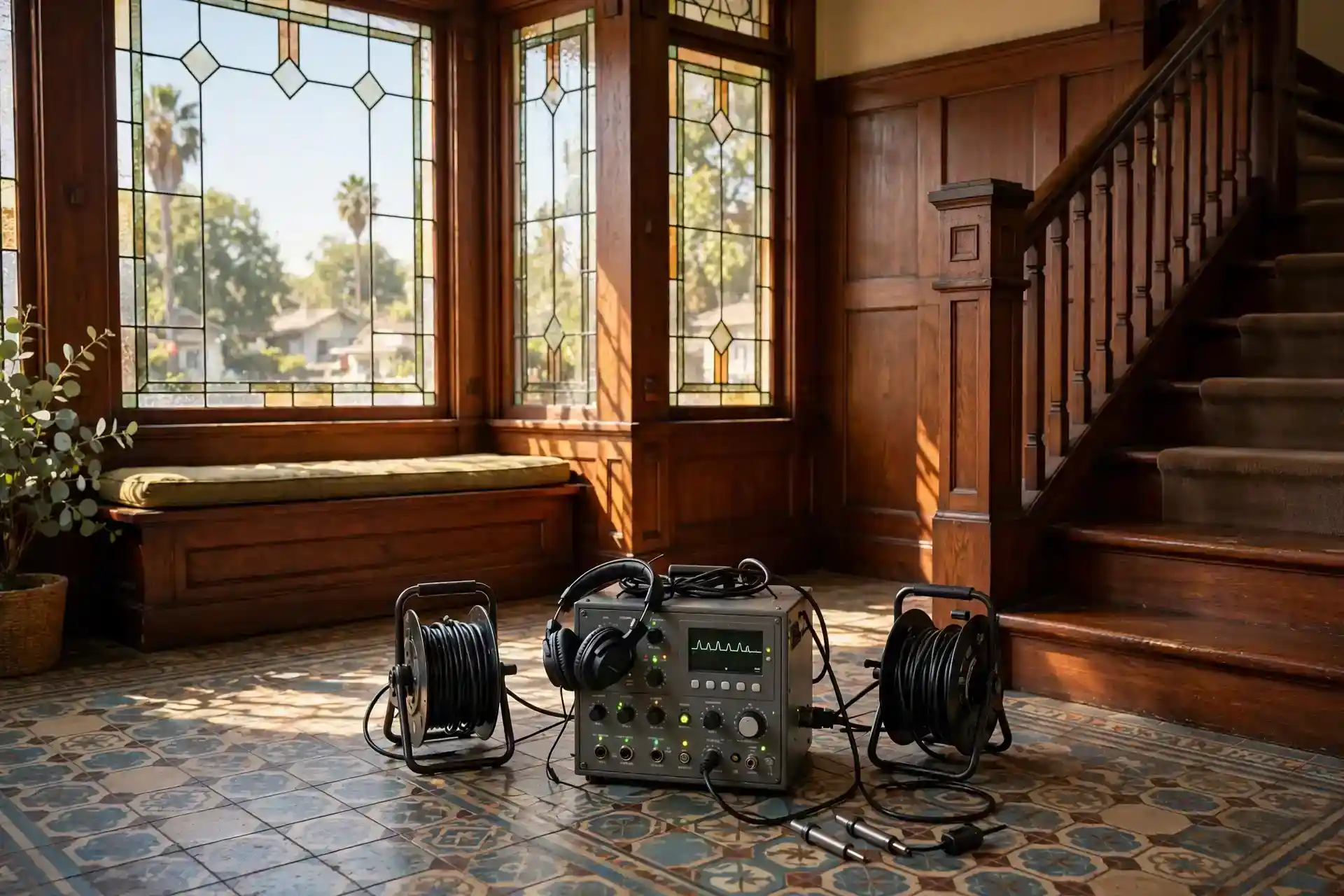
A location visit in Lawndale is quiet, technical work — headphones, sensors, and a marked floor at the end. Here's how it runs, and what 90260's ground conditions change about each step.
Getting Ready for the Pinpointing Visit in 90260
Clear the rooms above the suspected pipe run before we arrive — furniture a few feet off the walls, rugs rolled where the listening happens. We need access to the water heater and the main shutoff too. renters: report immediately and in writing; owners: keep the authorization path short — delays are what make Lawndale jobs expensive
Expect a quiet house to work best: the acoustic sensors hear everything, including footsteps and appliances. We'll ask for the HVAC and laundry to stay off during the listening pass. It feels fussy; it's the difference between a mark you can trust and a guess. Still unsure whether it's a slab leak? That's exactly what the call is for: (833) 713-2101.
Local Notes for Lawndale 90260
The 90260 ZIP is Lawndale entire: Hawthorne Boulevard, Marine Avenue, Inglewood Avenue, and Redondo Beach Boulevard frame 1.97 square miles of 1950s small-lot homes. The Lawndale Community Center on Burin Avenue and the Lawndale Library are the civic anchors. Housing is overwhelmingly 1950s single-family on flat alluvial soil at about 59 feet of elevation — slab-on-grade, copper-and-galvanized pipe mix, cast-iron drains. Small lots, short runs, simple geometry — and a renter majority that reports late.
Lawndale's math is simple: the jobs are cheap to diagnose and the delays are expensive to repair. Owners and managers — put the shutoff location, the build era, and (833) 713-2101 in every property file, and give tenants a plain-language symptom sheet. Tenants — a warm floor or running-water sound is worth an immediate written report; it protects your home and your deposit. Everyone — a quarterly two-minute meter check is the cheapest maintenance in the South Bay. Late discovery is the tax Lawndale pays; early reporting is how you stop paying it.
How this works: you call our line, we match you with a slab-leak specialist who serves 90260 — no fee for the call itself. Questions about electronic slab leak location in the 90260 ZIP? Call (833) 713-2101.
Small Lots, Fast Signals: Slab-Leak Detection in Lawndale
Lawndale's 1950s small-lot homes are built for fast detection. Short pipe runs under compact slabs mean acoustic signals reach sensors with minimal attenuation — correlator readings from two slab points converge in minutes, and leak position computes cleanly from time delay. The stock is uniform: 1950s copper and galvanized at 70-year corrosion age, slab-on-grade across 1.97 square miles, no hillsides or bluffs complicating the signal. A standard visit — meter verification, pressure isolation, line trace, acoustic confirmation — typically produces a confident mark in one short appointment.
The complication is timing: with 57 percent renter occupancy, leaks get reported late, after flooring and drywall have suffered. A months-old leak is louder and easier to hear, but the visit must scope secondary damage too — moisture-meter profiling across slab and wall bases, thermal imaging for the full footprint of hot-line saturation, documentation of conditions pointing toward mold remediation. Dense small lots also mean neighbor noise — adjacent plumbing and activity bleed into readings — so two-point correlator techniques outperform single-sensor listening in 90260's close quarters.
Detection economics favor Lawndale homeowners: short runs keep the visit affordable, and a precise mark keeps the repair to one modest opening or a short reroute. For landlords, the electronic survey is also a portfolio tool — the line-path trace shows the original 1950s layout. The practical lesson of Lawndale detection is about reporting speed, not technology: the equipment finds these leaks quickly whenever called; the damage comes from the months before the call. A fast visit after a fast report is this stock's cheapest slab-leak outcome.
Suspect a Slab Leak? Talk to a Specialist Today
One call connects you with a local slab leak professional serving Rancho Palos Verdes, CA — day or night.
Call (833) 713-2101Frequently Asked Questions
Why do Lawndale slab leaks always seem to involve mold?
They don't always — but the 57 percent renter occupancy means leaks get reported late, and late plus moisture plus warmth equals mold. By the time a Lawndale leak surfaces in a report, it's often been running for weeks, which is enough time for growth behind baseboards and under flooring. Electronic Slab Leak Location diagnoses the pipe failure; the mold is a separate remediation scope we'll flag honestly. The prevention is reporting speed, not chemistry.
I'm a renter in Lawndale. What should I do if I suspect a leak?
Report it immediately and in writing — text or email to your landlord or manager, with dates and photos. The three symptoms: a warm spot on the floor, the sound of running water with taps off, a water bill that jumps. Written reports create the record that gets action; verbal reports evaporate. Electronic Slab Leak Location can diagnose it — call (833) 713-2101 — but the repair authorization follows your lease chain. Don't wait for permission to report.
Are small lots really an advantage for slab-leak work?
Genuinely yes. Short under-slab runs mean less pipe to search, faster tracing, quicker pinpointing, and shorter reroutes when that's the answer. A Lawndale diagnostic visit is often the fastest in the service area, and the repair that follows is usually the simplest. The lot size is working for you — the reporting timeline is what's working against you. Fix the timeline and Lawndale is the easiest slab-leak ZIP in the South Bay.
How does 90260 differ from Hawthorne's 90250 next door?
Same 1950s era, same flat ground, same pipe mix — but Lawndale is smaller, more uniformly small-lot, and carries the 57-percent-renter statistic that shapes its timelines. Hawthorne adds multifamily density and the pre-1950 foundation pockets; Lawndale is more purely the small-lot 1950s story with late reporting. Electronic Slab Leak Location is the same method in both; the conversation around the findings differs.
What's the difference between leak detection and electronic location?
Detection answers "is there a leak, and on which line" — meter tests, pressure isolation, a general area. Electronic location answers "exactly where" — traced pipe path, acoustic pinpoint, thermal confirmation, a mark on the floor. In Lawndale, most jobs need both in sequence: detection first to prove the leak, location second to aim the repair. If you've already got a confirmed leak, you can start at location.
How accurate is electronic pinpointing?
Done properly — traced path, acoustic triangulation, thermal cross-check — it typically lands within inches of the actual break, not feet. It's not magic and it's not infallible: short runs make pinpointing quick, but late-reported leaks have spread wide — the mark has to find the break, not the center of the damage field, and those are different places after weeks of running What it reliably replaces is exploratory jackhammering, where the "search" used to be a trench. We'll tell you on site how clean the signal is before any mark goes down.
Does electronic location work under tile and wood floors?
Yes — the sensors read through standard floor coverings, and thermal imaging actually reads surface temperature, so tile and stone show the anomaly well. Thick engineered wood and some underlayments muffle the thermal signal, which is why we never rely on one method alone. Whatever's on your Lawndale floors, the acoustic pass still hears through it.