Electronic Slab Leak Location in Hawthorne 90250, CA
Electronic Slab Leak Location in Hawthorne 90250, CA — pinpoint electronic location of a suspected under-slab leak — acoustic sensors, line tracing, and infrared imaging that mark the break within inches.
In Short
Electronic Slab Leak Location in Hawthorne 90250, CA — pinpoint electronic location of a suspected under-slab leak — acoustic sensors, line tracing, and infrared imaging that mark the break within inches. Serving the 90250 ZIP: electronic line tracing, acoustic pinpointing, thermal cross-check. First step when you call (833) 713-2101: reviewing what's already confirmed, then scheduling.
What the Pinpointing Visit Looks Like in Hawthorne (90250)
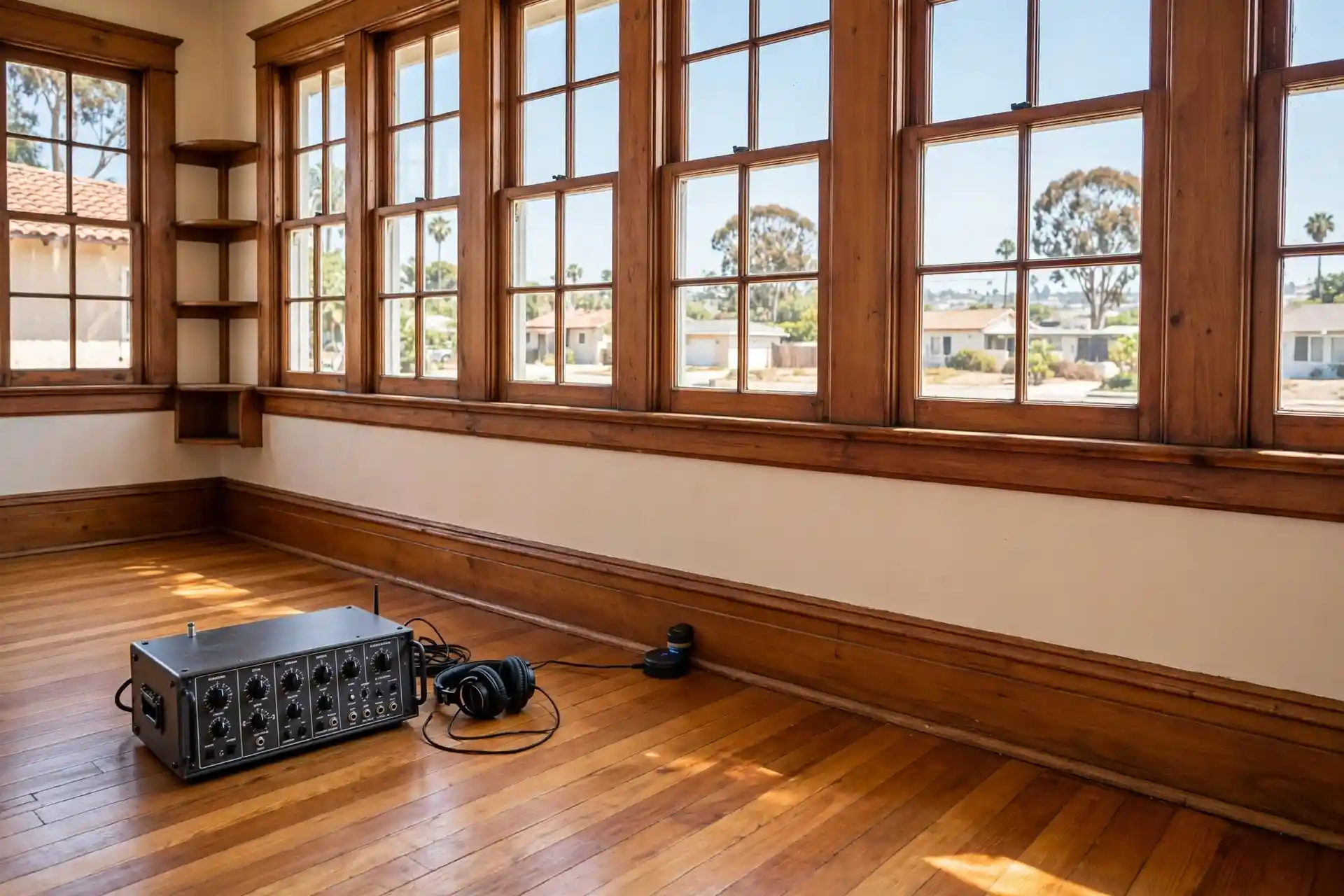
A location visit in Hawthorne is quiet, technical work — headphones, sensors, and a marked floor at the end. Here's how it runs, and what 90250's ground conditions change about each step.
Getting Ready for the Pinpointing Visit in 90250
Clear the rooms above the suspected pipe run before we arrive — furniture a few feet off the walls, rugs rolled where the listening happens. We need access to the water heater and the main shutoff too. multifamily visits need the manager and building access arranged ahead — the diagnostic can't start at a locked door
Expect a quiet house to work best: the acoustic sensors hear everything, including footsteps and appliances. We'll ask for the HVAC and laundry to stay off during the listening pass. It feels fussy; it's the difference between a mark you can trust and a guess. Questions before you book? Call (833) 713-2101 — we'd rather answer them now than discover them mid-visit.
Local Notes for Hawthorne 90250
The 90250 ZIP covers Hawthorne's 1950s tract grids along Hawthorne Boulevard, Crenshaw Boulevard, and Inglewood Avenue, between the I-105 and I-405 corridors. The SpaceX headquarters and Hawthorne Municipal Airport (Jack Northrop Field) mark the industrial edge; Hollyglen and Del Aire are the named residential pockets. Housing is predominantly 1950s single-family slab tracts with dense multifamily infill — copper-and-galvanized pipe mix, cast-iron drains — on flat coastal-plain alluvium. The pre-1950 raised-foundation pockets hide among the tracts.
Hawthorne's one non-negotiable: verify the foundation type before anything else. If your home is 1940s or earlier, check for a crawlspace — a 1944 home with a floor furnace is almost certainly raised, not slab, and the 'slab leak' is really an under-floor leak with easier access and a smaller bill. Tract homeowners: 1950s copper at peak age means the standard vigilance — meter checks, warm floors, quick calls to (833) 713-2101. Multifamily managers: keep the shutoff map and our number together; coordination is the job here.
We're a referral line: you talk to us, and we connect you with a slab-leak specialist serving the 90250 area. Questions about electronic slab leak location in the 90250 ZIP? Call (833) 713-2101.
Confirm the Foundation Before the Sensors Come Out in Hawthorne
Hawthorne holds a trap for detection companies quoting over the phone: pockets of pre-1950 homes still stand on raised foundations, while surrounding 1950s tracts are slab-on-grade. A “slab leak” call from a raised house is a crawlspace job: visual inspection under the floor — no acoustic sensors, no correlator, a fraction of the cost. The disciplined 90250 visit confirms foundation type before quoting detection at all. Electronic location is a precision tool for a specific construction type; deploying it on a raised house is wasted money.
On the true 1950s slab tracts — most Hawthorne homes date to the 1950s — the standard protocol applies to copper-and-galvanized-mix plumbing at peak failure age. Flat coastal-plain lots, short runs, uniform alluvium: signals travel well, correlator readings converge fast. Multifamily buildings add the shared-line question — one leak affecting several units — so unit-by-unit pressure isolation precedes any listening. Industrial corridors along Crenshaw contribute ambient vibration, filtered by scheduling and sensor placement, but the flat, consistent ground keeps the acoustic picture clean.
The foundation-first discipline is what makes Hawthorne detection honest. Owners in pre-1950 pockets get a simpler, cheaper answer — an under-floor leak located visually and repaired without concrete work — while tract owners get the full electronic survey. For buyers and new owners, the visit doubles as education: what the house stands on, what the pipes are, what the next decade likely holds. In a city where construction type can change block to block, the most important detection tool is the question asked before the equipment comes out.
Suspect a Slab Leak? Talk to a Specialist Today
One call connects you with a local slab leak professional serving Rancho Palos Verdes, CA — day or night.
Call (833) 713-2101Frequently Asked Questions
How do I know if my Hawthorne home is on a raised foundation?
Look for the signs: a visible crawlspace access, the house sitting above grade on a stem wall, or a floor furnace — the 1940s Hawthorne homes with floor furnaces are the classic raised-foundation profile. If the walls meet the ground with no crawlspace, it's slab. Electronic Slab Leak Location starts here because the jobs diverge completely: under-floor leaks are accessed from the crawlspace, slab leaks from above. Call (833) 713-2101 with your best guess and we'll confirm before dispatching the right approach.
Why does the foundation type change the cost so much?
Access. A raised-foundation leak is reached through a crawlspace — no concrete cutting, no flooring restoration, often a straightforward pipe fix with simpler access. A slab leak needs detection, pinpointing, concrete work, and patching. Same symptom (water where it shouldn't be), very different jobs. That's why Electronic Slab Leak Location in 90250 always establishes the foundation first: quoting a slab repair for a crawlspace leak — or vice versa — is the most expensive mistake in this ZIP.
How do multifamily slab leaks work in Hawthorne?
One break, several affected units: water follows structure, not leases. The diagnostic has to map shared versus dedicated lines and establish which unit's run actually failed — the wettest unit isn't always the source unit. Electronic Slab Leak Location includes that mapping, and the written findings go to whoever authorizes building work. Unit shutoffs versus building mains get sorted before any conclusions. It's coordination-heavy work, but the method is the same: meter, pressure, sound, heat.
What are Hollyglen and Del Aire like for slab leaks?
Variations on the theme: established residential pockets with their own micro-character, but the same 1950s-era plumbing fundamentals as the rest of 90250. Electronic Slab Leak Location doesn't change by pocket — the meter test is the meter test. Mention your pocket when you call (833) 713-2101 mainly so we route efficiently; diagnostically, Hollyglen copper fails like Hawthorne copper.
What's the difference between leak detection and electronic location?
Detection answers "is there a leak, and on which line" — meter tests, pressure isolation, a general area. Electronic location answers "exactly where" — traced pipe path, acoustic pinpoint, thermal confirmation, a mark on the floor. In Hawthorne, most jobs need both in sequence: detection first to prove the leak, location second to aim the repair. If you've already got a confirmed leak, you can start at location.
How accurate is electronic pinpointing?
Done properly — traced path, acoustic triangulation, thermal cross-check — it typically lands within inches of the actual break, not feet. It's not magic and it's not infallible: in the multifamily buildings, the mark has to land on the right unit's line — shared runs and stacked plumbing mean the wet unit and the broken line aren't always the same address What it reliably replaces is exploratory jackhammering, where the "search" used to be a trench. We'll tell you on site how clean the signal is before any mark goes down.
After you mark the spot, do I still have to open the slab?
Almost always, yes — but the opening is targeted: a small, deliberate cut at the mark rather than a exploratory trench. The alternative the mark enables is skipping the slab entirely: rerouting the line overhead through walls or attic. 1950s slab tracts at peak failure age, plus dense multifamily — with pre-1950 raised-foundation pockets still present, and the location report lays out which path makes sense for your lot and floor plan.